

AMD Aims to Capture AI Market from Nvidia; Government Purchases Ongoing; Fed Split on Decisions


AMD Investor Day Insights: AMD aims to capture over 10% of the AI market share from NVIDIA, projecting a 35% annual growth rate and targeting $20 earnings per share by 2030, while its total addressable market has increased to over $1 trillion.
Market Reactions and Economic Indicators: Following AMD's investor day, stock volatility was influenced by high investor expectations, while the Fed is considering interest rate cuts amid mixed economic signals, including stagnant wages and a potential trade deal with the U.S. for India.
Trends in Wage and Consumer Spending: There are signs of declining wages for hourly workers, which could negatively impact low-end consumers and companies catering to them, as exemplified by Walgreens' recent wage cuts.
Investment Strategies and Market Positioning: Investors are advised to maintain long-term positions while considering protective measures like cash or short-term trades, and to focus on high-quality bonds in a traditional 60/40 portfolio strategy due to current market conditions.
Trade with 70% Backtested Accuracy
Analyst Views on AMD

About AMD
About the author

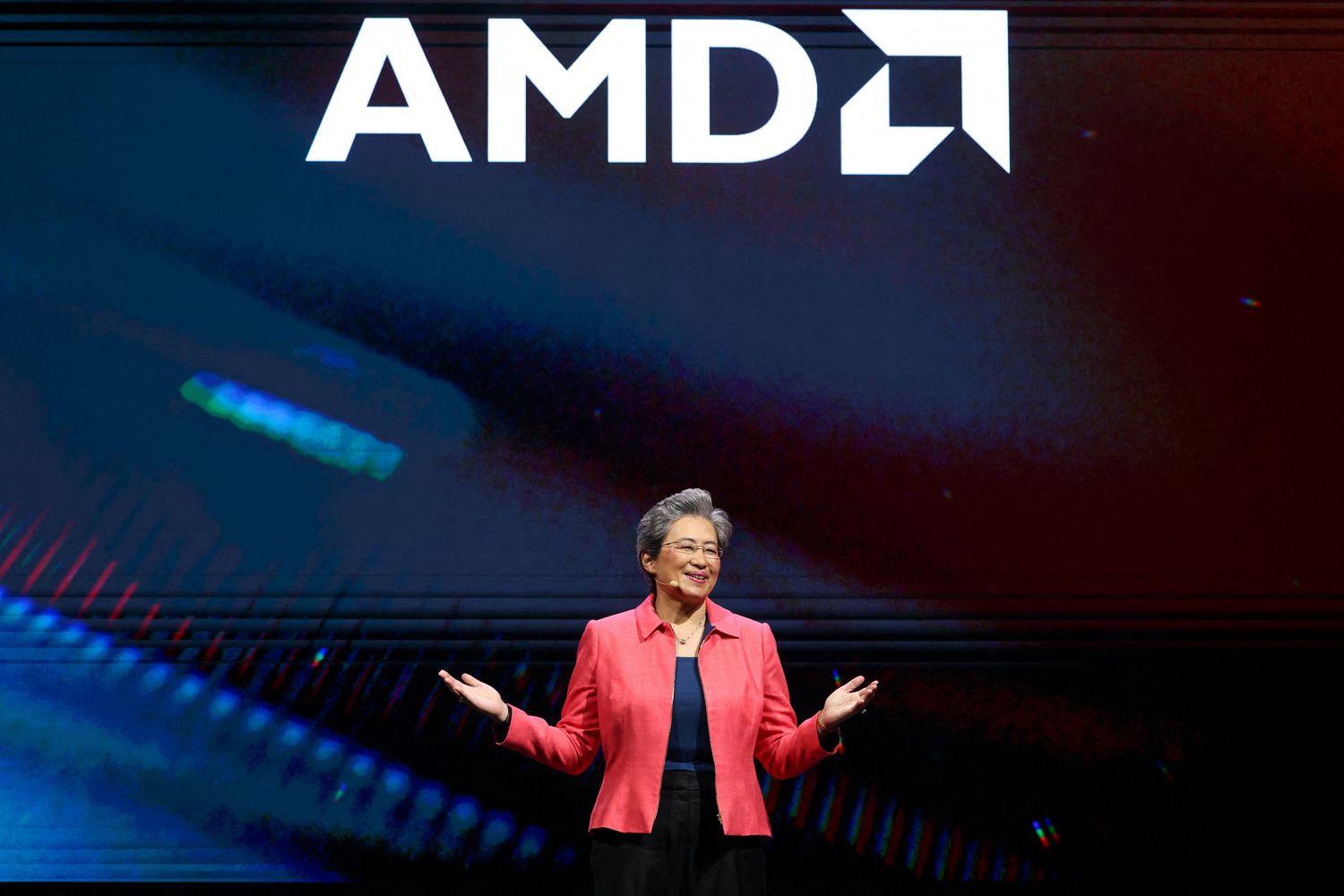
AMD Poised to Announce Major New Chip Customer

- Optimistic Market Outlook: Citi analysts project that as agentic AI workflows move into production, AMD's strong position in the CPU market will significantly expand, with the total addressable market for CPUs expected to grow from $29 billion to $131 billion by 2030, indicating substantial future growth potential for AMD.
- Upcoming Summit: AMD is set to host the 'Advancing AI' summit on July 22-23, with analysts suggesting that the event could feature industry-shaking announcements, particularly regarding the expanded adoption of AMD's MI series chips, which may attract new customers and bolster market confidence.
- Strong Stock Performance: AMD's stock has appreciated 159% by mid-2026, leading to a forward price-to-earnings ratio of 75, reflecting significant market expectations for AMD's future success, although the shares appear increasingly pricey.
- Investment Strategy Advice: Despite AMD's compelling prospects in the AI ecosystem, analysts recommend a dollar-cost averaging strategy rather than attempting to time market fluctuations, allowing investors to benefit from the expanding CPU opportunity and AMD's potential market share growth over the long term.

AMD Approaches $1 Trillion Market Value Milestone

- Data Center Growth: AMD's data center revenue surged 57% year-over-year in Q1 2026 to approximately $5.8 billion, accounting for over 50% of total sales, highlighting strong demand and growth potential in the AI infrastructure market.
- Overall Revenue Boost: In 2025, AMD's total revenue increased by 34% to $34.6 billion, with net income more than doubling at 164% growth, indicating robust performance in AI accelerators and server processors, which continues to attract investor interest.
- Optimistic Market Outlook: Management anticipates the server processor market will exceed $120 billion by 2030, with AMD steadily gaining market share, reflecting confidence in future growth despite fierce competition from rivals.
- Valuation Risks: While AMD has the potential to reach a $1 trillion market value by 2026, its current valuation exceeds 180 times earnings, indicating high market expectations for future growth, which introduces significant risks that investors must carefully consider.

AMD Approaches $1 Trillion Market Value as Data Center Revenue Soars
- Data Center Revenue Surge: In Q1 2026, AMD's data center revenue rose 57% year-over-year to approximately $5.8 billion, accounting for 54% of total sales, highlighting its strong performance in the AI infrastructure market and solidifying its market position.
- Significant Profitability Increase: In 2025, AMD's total revenue grew 34% to $34.6 billion, with net income soaring 164%, indicating robust profitability in the rapidly expanding AI market, which has drawn investor interest.
- Market Share Expansion: AMD's server processors continue to capture market share from Intel, with expectations that the overall server processor market will exceed $120 billion by 2030, providing ample growth opportunities for AMD in the future.
- Valuation Risk: Despite AMD's stock trading above $554 with a P/E ratio exceeding 180, the market has already priced in expectations for future growth, prompting investors to carefully consider potential valuation risks.
AMD Shares Surge 300% with Optimistic Outlook
- Strong Financial Performance: AMD's revenue surged 38% year-over-year to $10.3 billion in Q1, with its data center segment achieving a remarkable 57% growth to $5.8 billion, underscoring the company's robust position in the rapidly expanding semiconductor market.
- Surge in AI Demand: As the AI industry shifts from training to inference, demand for AMD's CPUs is expected to rise significantly, particularly with its EPYC processors gaining market share in the server segment, which will provide strong support for the company's future financial performance.
- Competitive Risk Analysis: Despite AMD's optimistic outlook, rivals Intel and Nvidia are also aggressively pursuing the market, with Nvidia's launch of the Vera CPU posing a potential threat, and the sustainability of AI demand remains a critical factor to monitor.
- Valuation and Investment Appeal: Although AMD's price-to-earnings ratio stands at 73.5, significantly above the industry average, its projected 35% compound annual growth rate indicates substantial future growth potential, making it an attractive investment opportunity as market confidence in its performance strengthens.

BlackRock: U.S. Stocks to Dominate AI Race

- Investment Preference: BlackRock Investment Institute maintains a neutral stance on Chinese stocks while staying overweight on U.S. equities, indicating a belief that U.S. companies will dominate the AI race, reflecting confidence in the U.S. market.
- Market Performance Comparison: While the Nasdaq Composite has gained over 12% this year, China's ChiNext index has surged more than 20%, indicating strong short-term performance of Chinese tech stocks; however, the overall MSCI China index has fallen over 10%, reflecting market uncertainty.
- Policy Support and Challenges: Beijing has rolled out policies to support domestic AI development amid U.S. restrictions on high-end technology, yet the unclear profitability of companies in the context of slower economic growth and fierce competition highlights market complexities.
- Investment Opportunities: BlackRock analysts see potential in physical AI, emphasizing the integration of AI technology into hardware, while recommending stocks exposed to scarce industry inputs, showcasing a focus on infrastructure investments.

Three Tech Stocks Targeting $1 Trillion Valuation


- Flash Memory Surge: Sandisk's NAND flash memory chips have seen stock price gains exceeding 4,500% over the past year, elevating its market cap to $300 billion, with expectations for continued robust growth in Q4 2026, enhancing profitability with a net profit margin above 60%.
- AMD's Strong Performance: Advanced Micro Devices has reached an $850 billion market cap, with Q1 2026 revenue up 38% year-over-year and operating income up 83%, positioning the company to potentially achieve a $1 trillion valuation by 2030 as a key player in the AI chip market.
- Caterpillar's Power Growth: Caterpillar reported a 22% revenue increase in Q1 2026, with a record backlog of $62.7 billion, up 79% year-over-year, indicating strong revenue visibility for the future, and is expected to reach a $1 trillion market cap by 2030 driven by AI demand.
- AI-Driven Market Trends: All three stocks benefit from the surge in AI investments, and as hyperscalers continue to invest heavily in AI, these stocks are likely to keep rising, attracting more investor attention.
AMD Poised to Announce Major New Chip Customer
- Optimistic Market Outlook: Citi analysts project that as agentic AI workflows move into production, AMD's strong position in the CPU market will significantly expand, with the total addressable market for CPUs expected to grow from $29 billion to $131 billion by 2030, indicating substantial future growth potential for AMD.
- Upcoming Summit: AMD is set to host the 'Advancing AI' summit on July 22-23, with analysts suggesting that the event could feature industry-shaking announcements, particularly regarding the expanded adoption of AMD's MI series chips, which may attract new customers and bolster market confidence.
- Strong Stock Performance: AMD's stock has appreciated 159% by mid-2026, leading to a forward price-to-earnings ratio of 75, reflecting significant market expectations for AMD's future success, although the shares appear increasingly pricey.
- Investment Strategy Advice: Despite AMD's compelling prospects in the AI ecosystem, analysts recommend a dollar-cost averaging strategy rather than attempting to time market fluctuations, allowing investors to benefit from the expanding CPU opportunity and AMD's potential market share growth over the long term.
AMD Approaches $1 Trillion Market Value Milestone
- Data Center Growth: AMD's data center revenue surged 57% year-over-year in Q1 2026 to approximately $5.8 billion, accounting for over 50% of total sales, highlighting strong demand and growth potential in the AI infrastructure market.
- Overall Revenue Boost: In 2025, AMD's total revenue increased by 34% to $34.6 billion, with net income more than doubling at 164% growth, indicating robust performance in AI accelerators and server processors, which continues to attract investor interest.
- Optimistic Market Outlook: Management anticipates the server processor market will exceed $120 billion by 2030, with AMD steadily gaining market share, reflecting confidence in future growth despite fierce competition from rivals.
- Valuation Risks: While AMD has the potential to reach a $1 trillion market value by 2026, its current valuation exceeds 180 times earnings, indicating high market expectations for future growth, which introduces significant risks that investors must carefully consider.
AMD Approaches $1 Trillion Market Value as Data Center Revenue Soars
- Data Center Revenue Surge: In Q1 2026, AMD's data center revenue rose 57% year-over-year to approximately $5.8 billion, accounting for 54% of total sales, highlighting its strong performance in the AI infrastructure market and solidifying its market position.
- Significant Profitability Increase: In 2025, AMD's total revenue grew 34% to $34.6 billion, with net income soaring 164%, indicating robust profitability in the rapidly expanding AI market, which has drawn investor interest.
- Market Share Expansion: AMD's server processors continue to capture market share from Intel, with expectations that the overall server processor market will exceed $120 billion by 2030, providing ample growth opportunities for AMD in the future.
- Valuation Risk: Despite AMD's stock trading above $554 with a P/E ratio exceeding 180, the market has already priced in expectations for future growth, prompting investors to carefully consider potential valuation risks.
AMD Shares Surge 300% with Optimistic Outlook
- Strong Financial Performance: AMD's revenue surged 38% year-over-year to $10.3 billion in Q1, with its data center segment achieving a remarkable 57% growth to $5.8 billion, underscoring the company's robust position in the rapidly expanding semiconductor market.
- Surge in AI Demand: As the AI industry shifts from training to inference, demand for AMD's CPUs is expected to rise significantly, particularly with its EPYC processors gaining market share in the server segment, which will provide strong support for the company's future financial performance.
- Competitive Risk Analysis: Despite AMD's optimistic outlook, rivals Intel and Nvidia are also aggressively pursuing the market, with Nvidia's launch of the Vera CPU posing a potential threat, and the sustainability of AI demand remains a critical factor to monitor.
- Valuation and Investment Appeal: Although AMD's price-to-earnings ratio stands at 73.5, significantly above the industry average, its projected 35% compound annual growth rate indicates substantial future growth potential, making it an attractive investment opportunity as market confidence in its performance strengthens.
BlackRock: U.S. Stocks to Dominate AI Race
- Investment Preference: BlackRock Investment Institute maintains a neutral stance on Chinese stocks while staying overweight on U.S. equities, indicating a belief that U.S. companies will dominate the AI race, reflecting confidence in the U.S. market.
- Market Performance Comparison: While the Nasdaq Composite has gained over 12% this year, China's ChiNext index has surged more than 20%, indicating strong short-term performance of Chinese tech stocks; however, the overall MSCI China index has fallen over 10%, reflecting market uncertainty.
- Policy Support and Challenges: Beijing has rolled out policies to support domestic AI development amid U.S. restrictions on high-end technology, yet the unclear profitability of companies in the context of slower economic growth and fierce competition highlights market complexities.
- Investment Opportunities: BlackRock analysts see potential in physical AI, emphasizing the integration of AI technology into hardware, while recommending stocks exposed to scarce industry inputs, showcasing a focus on infrastructure investments.
Three Tech Stocks Targeting $1 Trillion Valuation
- Flash Memory Surge: Sandisk's NAND flash memory chips have seen stock price gains exceeding 4,500% over the past year, elevating its market cap to $300 billion, with expectations for continued robust growth in Q4 2026, enhancing profitability with a net profit margin above 60%.
- AMD's Strong Performance: Advanced Micro Devices has reached an $850 billion market cap, with Q1 2026 revenue up 38% year-over-year and operating income up 83%, positioning the company to potentially achieve a $1 trillion valuation by 2030 as a key player in the AI chip market.
- Caterpillar's Power Growth: Caterpillar reported a 22% revenue increase in Q1 2026, with a record backlog of $62.7 billion, up 79% year-over-year, indicating strong revenue visibility for the future, and is expected to reach a $1 trillion market cap by 2030 driven by AI demand.
- AI-Driven Market Trends: All three stocks benefit from the surge in AI investments, and as hyperscalers continue to invest heavily in AI, these stocks are likely to keep rising, attracting more investor attention.





