Airlines' Premium Cabins Face Safety Certification Challenges
Written by Emily J. Thompson, Senior Investment Analyst
Updated: 47 minutes ago
0mins
Source: seekingalpha
- Certification Bottlenecks: FAA Administrator Bryan Bedford highlighted that innovative seating layouts in premium cabins are failing human factors tests, causing delays in safety certifications that impact new aircraft deliveries, thereby increasing operational pressure on airlines and manufacturers.
- Safety Impact of Complex Layouts: The design of new seats and suites is increasingly scrutinized for its impact on passenger safety during emergencies, with the FAA evaluating how seat positioning, buckle designs, and bed configurations affect safe evacuations, potentially leading to stricter safety standards for airlines.
- Delivery Delays: Boeing CEO Kelly Ortberg stated that seat certifications have become a major obstacle for aircraft deliveries, with many planes sitting idle post-production, awaiting seat approvals, which disrupts airlines' operational plans and customer satisfaction.
- Regulatory Involvement Timing: Bedford noted that delays in certification arise because regulators often engage too late in the process, after cabin installations, leading to the discovery of non-compliance issues during certification, which adds to the frustration of airlines and manufacturers.
Trade with 70% Backtested Accuracy
Stop guessing "Should I Buy BA?" and start using high-conviction signals backed by rigorous historical data.
Sign up today to access powerful investing tools and make smarter, data-driven decisions.
Analyst Views on BA
Wall Street analysts forecast BA stock price to rise
16 Analyst Rating
14 Buy
1 Hold
1 Sell
Strong Buy
Current: 224.300

Low
150.00
Averages
269.14
High
298.00
Current: 224.300
Low
150.00
Averages
269.14
High
298.00
About BA
The Boeing Company is an aerospace company. Its segments include Commercial Airplanes (BCA), Defense, Space & Security (BDS), and Global Services (BGS). Its BCA segment develops, produces and markets commercial jet aircraft principally for the commercial airline industry worldwide. Its family of commercial jet aircraft in production includes the 737 narrow-body model and the 767, 777 and 787 wide-body models. Its BDS segment is engaged in the research, development, production and modification of manned and unmanned military aircraft and weapons systems for strike, surveillance and mobility. Its BGS segment provides services to its commercial and defense customers worldwide. It sustains aerospace platforms and systems with a range of products and services, including supply chain and logistics management, engineering, maintenance and modifications, upgrades and conversions, spare parts, pilot and maintenance training systems and services, technical and maintenance documents, and others.
About the author

Emily J. Thompson
Emily J. Thompson, a Chartered Financial Analyst (CFA) with 12 years in investment research, graduated with honors from the Wharton School. Specializing in industrial and technology stocks, she provides in-depth analysis for Intellectia’s earnings and market brief reports.

SpaceX IPO Sparks Potential Aerospace and Defense Disruption

- Launch Service Dominance: SpaceX plans to conduct over 160 launches in 2025, nearly ten times more than its closest competitor Rocket Lab, demonstrating its clear leadership in launch services, with expectations for this lead to widen further, enhancing its market competitiveness.
- Cost Reduction Potential: SpaceX's Starship rocket is projected to lower launch costs to below $1,000 per kilogram, significantly undercutting competitors, potentially opening commercial markets from orbital AI computing to Mars exploration, although the near-term impact on Pentagon spending is expected to be limited.
- Military Communication Network Threat: SpaceX's $2.3 billion Space Data Network Backbone contract replaces a planned satellite constellation, indicating a potential threat to traditional defense contractors in military communications networks, which could face greater disruption.
- Defense Spending Stability: Despite competitive pressures, BNP maintains a positive outlook on major defense companies, emphasizing that the Pentagon is unlikely to rely solely on SpaceX, continuing to support multiple suppliers, which highlights the enduring technological and political advantages of the traditional defense industry.
See More

Airlines' Premium Cabins Face Safety Certification Challenges
- Certification Bottlenecks: FAA Administrator Bryan Bedford highlighted that innovative seating layouts in premium cabins are failing human factors tests, causing delays in safety certifications that impact new aircraft deliveries, thereby increasing operational pressure on airlines and manufacturers.
- Safety Impact of Complex Layouts: The design of new seats and suites is increasingly scrutinized for its impact on passenger safety during emergencies, with the FAA evaluating how seat positioning, buckle designs, and bed configurations affect safe evacuations, potentially leading to stricter safety standards for airlines.
- Delivery Delays: Boeing CEO Kelly Ortberg stated that seat certifications have become a major obstacle for aircraft deliveries, with many planes sitting idle post-production, awaiting seat approvals, which disrupts airlines' operational plans and customer satisfaction.
- Regulatory Involvement Timing: Bedford noted that delays in certification arise because regulators often engage too late in the process, after cabin installations, leading to the discovery of non-compliance issues during certification, which adds to the frustration of airlines and manufacturers.
See More
UBS Analysts Favor AI and Electrification Themes in Industrial Stocks

- Electrification Supercycle: UBS analysts believe GE Vernova (GEV) will benefit from an electrification supercycle, with a price target of $1,400 implying about 35% upside from May 22 levels, reflecting strong expectations for data center and electricity demand growth.
- Robust Order Backlog: GE Vernova's backlog has reached approximately $163 billion, or 3.5 times its annual sales, with projected organic sales growth of 14% annually through 2028 and EBITDA margins expected to rise to 22.7%, demonstrating its strong competitive position in the market.
- Aerospace Potential: UBS names Boeing (BA) as its top pick with a price target of $285, forecasting free cash flow of $13.5 billion by 2028 and $20 billion by 2030, indicating a significant underestimation of its cash flow potential by the market.
- Airline Growth Outlook: United Airlines (UAL) has a target price of $148, with expectations of over 60% EPS growth in 2027, driven by recovering airfare prices and lower fuel costs, highlighting the recovery potential and profitability enhancement in the airline sector.
See More
U.S. Capital Goods Orders Unexpectedly Decline Amid AI Spending Boom
- Unexpected Order Decline: U.S. non-defense capital goods orders unexpectedly fell by 1.1% in April after a revised 3.9% increase in March, contrasting sharply with economists' expectations of a 0.4% rise, indicating pressure on business spending.
- AI Investment Supports Demand: Despite the overall decline, businesses continue to ramp up investments in artificial intelligence, fueling demand for information processing equipment and related products, which helps sustain manufacturing performance amid supply chain challenges.
- Durable Goods Surge: Durable goods orders soared by 7.9% in April, primarily driven by a staggering 165.9% increase in non-defense aircraft and parts orders, reflecting robust demand in the aerospace sector.
- Transportation Equipment Orders Rise: Boeing reported receiving 136 orders in April, a significant increase from 33 in March, indicating a rising demand for higher-end aircraft models, further contributing to the overall growth in capital goods orders.
See More

Snowflake Reports Strong Q1 Results, Shares Surge 37%


- Strong Earnings Performance: Snowflake reported first-quarter results that exceeded expectations, leading to a more than 37% surge in shares during after-hours trading, indicating a potential best trading day ever and reflecting strong market confidence in its growth prospects.
- Significant Investment Commitment: The company announced a $6 billion investment in Amazon Web Services (AWS) to enhance its cloud computing capabilities and accelerate the development of AI-related products, thereby improving its competitive edge and customer service capabilities.
- Acquisition Strategy: Snowflake also revealed the acquisition of AI startup Natoma, further expanding its technological capabilities and signaling a strategic focus on AI, which is expected to support future product innovation and market expansion.
- Industry Dynamics Impact: Alongside Snowflake's strong performance, Salesforce also beat Wall Street's first-quarter estimates, although its full-year outlook fell slightly short, indicating signs of recovery in the tech sector that may attract more investor interest in related stocks.
See More

Market Dynamics and Investment Opportunities Analysis


- Market Outlook: Stock futures are lower this morning, although oil prices are rebounding after strikes in Iran, and the PCE index showed a year-over-year increase of 3.8%, which, while high, did not exceed expectations, indicating a potential easing of inflationary pressures that could positively impact market sentiment.
- Snowflake Breakout: Snowflake shares soared over 35% today as it enhances its competitiveness against private Databricks by securing a $6 billion spending deal with Amazon Web Services, signaling a rerating in the cloud consumption AI sector.
- Salesforce Growth: Salesforce reported strong earnings last night, particularly in Agentforce, bolstered by a significant buyback; however, sluggish performance in Tableau and the commerce vertical led to a stock decline of over 1.5%, reflecting market caution regarding its future growth.
- Marvell's Strong Performance: Marvell delivered impressive earnings with accelerating revenue in data center chips and robust optical business performance, despite challenges in parts supply; shares rose 3.5%, indicating market confidence in its long-term growth potential.
See More
SpaceX IPO Sparks Potential Aerospace and Defense Disruption
- Launch Service Dominance: SpaceX plans to conduct over 160 launches in 2025, nearly ten times more than its closest competitor Rocket Lab, demonstrating its clear leadership in launch services, with expectations for this lead to widen further, enhancing its market competitiveness.
- Cost Reduction Potential: SpaceX's Starship rocket is projected to lower launch costs to below $1,000 per kilogram, significantly undercutting competitors, potentially opening commercial markets from orbital AI computing to Mars exploration, although the near-term impact on Pentagon spending is expected to be limited.
- Military Communication Network Threat: SpaceX's $2.3 billion Space Data Network Backbone contract replaces a planned satellite constellation, indicating a potential threat to traditional defense contractors in military communications networks, which could face greater disruption.
- Defense Spending Stability: Despite competitive pressures, BNP maintains a positive outlook on major defense companies, emphasizing that the Pentagon is unlikely to rely solely on SpaceX, continuing to support multiple suppliers, which highlights the enduring technological and political advantages of the traditional defense industry.
See More
Airlines' Premium Cabins Face Safety Certification Challenges
- Certification Bottlenecks: FAA Administrator Bryan Bedford highlighted that innovative seating layouts in premium cabins are failing human factors tests, causing delays in safety certifications that impact new aircraft deliveries, thereby increasing operational pressure on airlines and manufacturers.
- Safety Impact of Complex Layouts: The design of new seats and suites is increasingly scrutinized for its impact on passenger safety during emergencies, with the FAA evaluating how seat positioning, buckle designs, and bed configurations affect safe evacuations, potentially leading to stricter safety standards for airlines.
- Delivery Delays: Boeing CEO Kelly Ortberg stated that seat certifications have become a major obstacle for aircraft deliveries, with many planes sitting idle post-production, awaiting seat approvals, which disrupts airlines' operational plans and customer satisfaction.
- Regulatory Involvement Timing: Bedford noted that delays in certification arise because regulators often engage too late in the process, after cabin installations, leading to the discovery of non-compliance issues during certification, which adds to the frustration of airlines and manufacturers.
See More
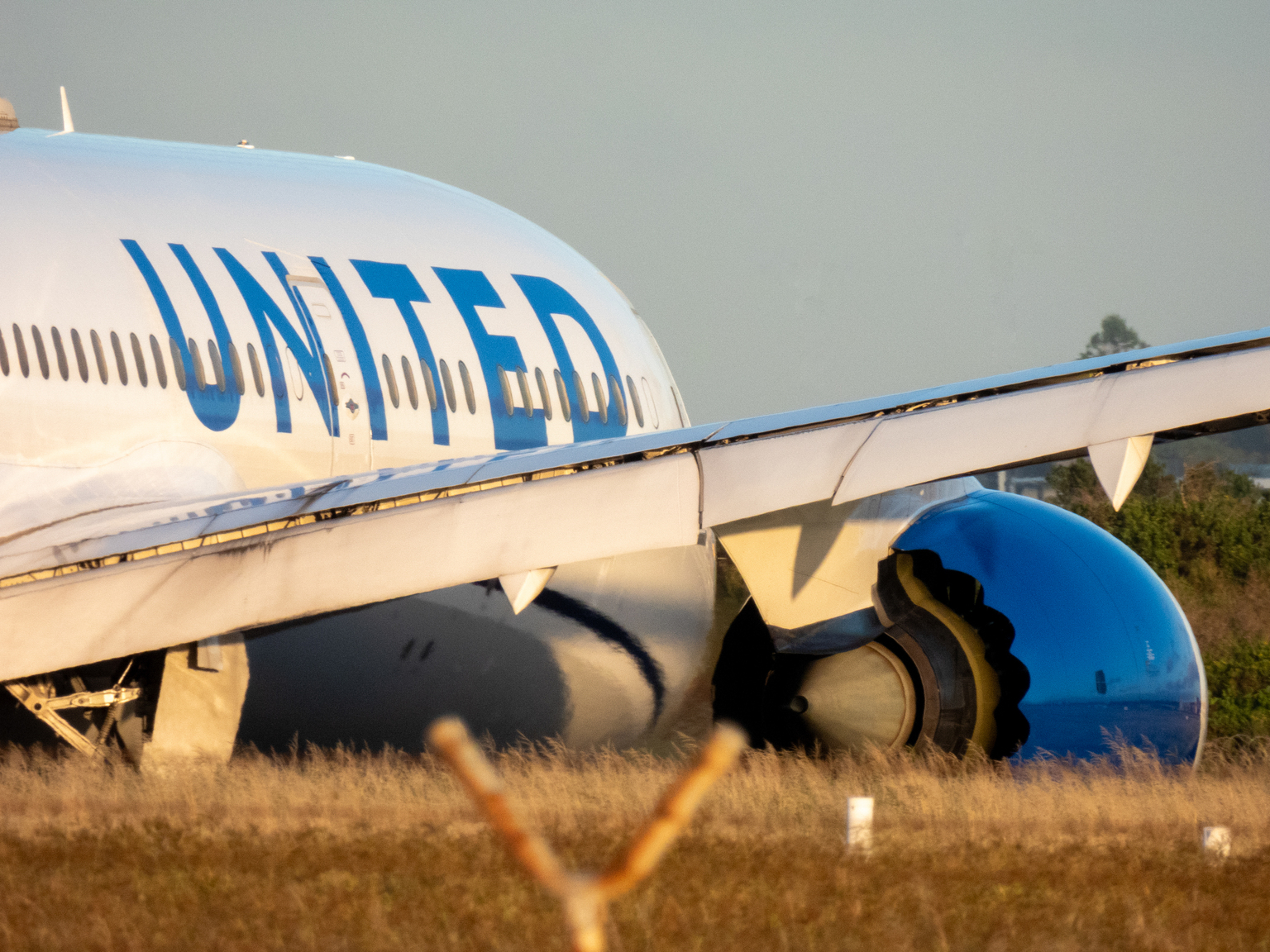
UBS Analysts Favor AI and Electrification Themes in Industrial Stocks
- Electrification Supercycle: UBS analysts believe GE Vernova (GEV) will benefit from an electrification supercycle, with a price target of $1,400 implying about 35% upside from May 22 levels, reflecting strong expectations for data center and electricity demand growth.
- Robust Order Backlog: GE Vernova's backlog has reached approximately $163 billion, or 3.5 times its annual sales, with projected organic sales growth of 14% annually through 2028 and EBITDA margins expected to rise to 22.7%, demonstrating its strong competitive position in the market.
- Aerospace Potential: UBS names Boeing (BA) as its top pick with a price target of $285, forecasting free cash flow of $13.5 billion by 2028 and $20 billion by 2030, indicating a significant underestimation of its cash flow potential by the market.
- Airline Growth Outlook: United Airlines (UAL) has a target price of $148, with expectations of over 60% EPS growth in 2027, driven by recovering airfare prices and lower fuel costs, highlighting the recovery potential and profitability enhancement in the airline sector.
See More
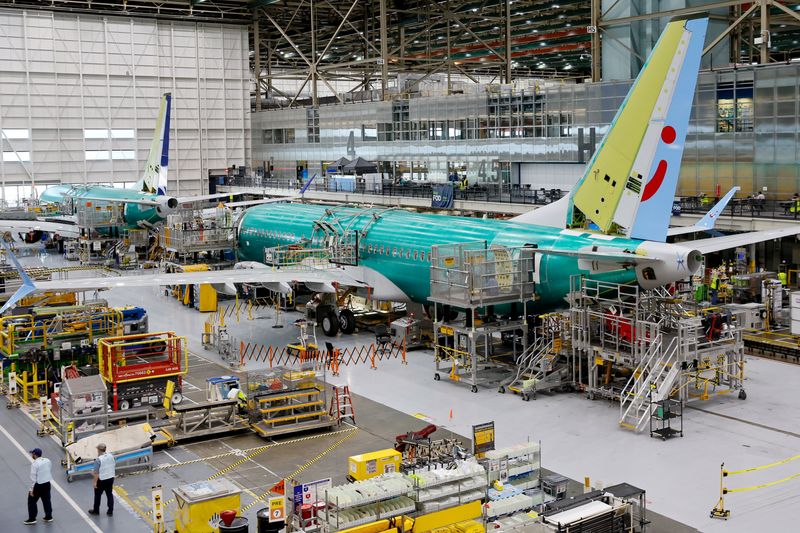
U.S. Capital Goods Orders Unexpectedly Decline Amid AI Spending Boom
- Unexpected Order Decline: U.S. non-defense capital goods orders unexpectedly fell by 1.1% in April after a revised 3.9% increase in March, contrasting sharply with economists' expectations of a 0.4% rise, indicating pressure on business spending.
- AI Investment Supports Demand: Despite the overall decline, businesses continue to ramp up investments in artificial intelligence, fueling demand for information processing equipment and related products, which helps sustain manufacturing performance amid supply chain challenges.
- Durable Goods Surge: Durable goods orders soared by 7.9% in April, primarily driven by a staggering 165.9% increase in non-defense aircraft and parts orders, reflecting robust demand in the aerospace sector.
- Transportation Equipment Orders Rise: Boeing reported receiving 136 orders in April, a significant increase from 33 in March, indicating a rising demand for higher-end aircraft models, further contributing to the overall growth in capital goods orders.
See More
Snowflake Reports Strong Q1 Results, Shares Surge 37%
- Strong Earnings Performance: Snowflake reported first-quarter results that exceeded expectations, leading to a more than 37% surge in shares during after-hours trading, indicating a potential best trading day ever and reflecting strong market confidence in its growth prospects.
- Significant Investment Commitment: The company announced a $6 billion investment in Amazon Web Services (AWS) to enhance its cloud computing capabilities and accelerate the development of AI-related products, thereby improving its competitive edge and customer service capabilities.
- Acquisition Strategy: Snowflake also revealed the acquisition of AI startup Natoma, further expanding its technological capabilities and signaling a strategic focus on AI, which is expected to support future product innovation and market expansion.
- Industry Dynamics Impact: Alongside Snowflake's strong performance, Salesforce also beat Wall Street's first-quarter estimates, although its full-year outlook fell slightly short, indicating signs of recovery in the tech sector that may attract more investor interest in related stocks.
See More
Market Dynamics and Investment Opportunities Analysis
- Market Outlook: Stock futures are lower this morning, although oil prices are rebounding after strikes in Iran, and the PCE index showed a year-over-year increase of 3.8%, which, while high, did not exceed expectations, indicating a potential easing of inflationary pressures that could positively impact market sentiment.
- Snowflake Breakout: Snowflake shares soared over 35% today as it enhances its competitiveness against private Databricks by securing a $6 billion spending deal with Amazon Web Services, signaling a rerating in the cloud consumption AI sector.
- Salesforce Growth: Salesforce reported strong earnings last night, particularly in Agentforce, bolstered by a significant buyback; however, sluggish performance in Tableau and the commerce vertical led to a stock decline of over 1.5%, reflecting market caution regarding its future growth.
- Marvell's Strong Performance: Marvell delivered impressive earnings with accelerating revenue in data center chips and robust optical business performance, despite challenges in parts supply; shares rose 3.5%, indicating market confidence in its long-term growth potential.
See More