

AI Transitioning to Production Phase, Boosting Chip Demand
Written by Emily J. Thompson, Senior Investment Analyst
Updated: 1 hour ago
0mins

Source: Fool
- Inference Workload Surge: Deloitte estimates that AI inference workloads will account for two-thirds of computing power in AI data centers in 2026, up from one-third in 2023, indicating a significant shift that will drive demand for specialized chips, benefiting AMD and Broadcom.
- Broadcom Revenue Surge: Broadcom's AI revenue soared 143% year-over-year to $10.8 billion in Q2 2026, with expectations to reach $16 billion this quarter, showcasing strong growth momentum in the custom AI processor market, projected to capture 60% market share by 2027.
- AMD's Optimistic Outlook: AMD's Epyc server CPUs are expected to see a 70% year-over-year revenue increase in Q2, with its addressable market forecasted to rise to $120 billion by 2030, reflecting its potential in the AI sector driven by inference demand.
- Nvidia's Market Dominance: Despite the rise in inference demand, Nvidia commands 74% of the AI inference chip market, with Q1 sales reaching $41 billion, significantly higher than last year's $18 billion, demonstrating its strong competitive position in the AI inference landscape.
Trade with 70% Backtested Accuracy
Stop guessing "Should I Buy NVDA?" and start using high-conviction signals backed by rigorous historical data.
Sign up today to access powerful investing tools and make smarter, data-driven decisions.
Analyst Views on NVDA
Wall Street analysts forecast NVDA stock price to rise
41 Analyst Rating
39 Buy
1 Hold
1 Sell
Strong Buy
Current: 200.040

Low
200.00
Averages
264.97
High
352.00
Current: 200.040
Low
200.00
Averages
264.97
High
352.00
About NVDA
NVIDIA Corporation is an artificial intelligence (AI) infrastructure company. The Company is engaged in accelerated computing to help solve the challenging computational problems. Its segments include Compute & Networking and Graphics. The Compute & Networking segment includes its Data Center accelerated computing and networking platforms and AI solutions and software, and automotive platforms and autonomous and electric vehicle solutions, including software. The Graphics segment includes GeForce GPUs for gaming and personal computers (PCs), and Quadro/NVIDIA RTX GPUs for enterprise workstation graphics. Its technology stack includes the foundational NVIDIA CUDA development platform that runs on all NVIDIA GPUs, as well as hundreds of domain-specific software libraries, frameworks, algorithms, software development kits (SDKs), and application programming interfaces (APIs). Its platforms address four markets, which include Data Center, Gaming, Professional Visualization, and Automotive.
About the author

Emily J. Thompson
Emily J. Thompson, a Chartered Financial Analyst (CFA) with 12 years in investment research, graduated with honors from the Wharton School. Specializing in industrial and technology stocks, she provides in-depth analysis for Intellectia’s earnings and market brief reports.

Analysis of Investment Choices in Vanguard ETFs

- Growth ETF Performance: The Vanguard S&P 500 Growth ETF has achieved an 18.2% annualized return over the past decade, with 52.6% of its assets concentrated in tech stocks, indicating strong performance in the tech sector that attracts growth-oriented investors.
- Defensive High Dividend ETF: The Vanguard High Dividend Yield ETF has delivered an 11.85% annualized return over the past ten years, with a diversified portfolio of 605 holdings primarily in financially strong value stocks, making it suitable for investors seeking stable income.
- Expense Ratio Advantage: The Vanguard S&P 500 Growth ETF has an expense ratio of 0.07%, while the Vanguard High Dividend Yield ETF is even lower at 0.04%, providing cost efficiency for both funds that appeals to different types of investors over the long term.
- Market Performance Comparison: During the 2022 bear market in U.S. tech stocks, the Vanguard High Dividend Yield ETF outperformed both the Nasdaq-100 and the S&P 500, demonstrating its defensive qualities in market volatility, making it a suitable choice for investors cautious about future tech stock performance.
See More

2026 ETF Investment Outlook Amid Market Surge
- Strong Market Performance: The stock market in 2026 has started robustly, with the S&P 500 index up approximately 8%, following a nearly 18% gain in 2025, indicating sustained investor confidence and market vitality that may attract more capital into ETFs.
- Investment Strategy Recommendation: Investors are advised to adopt a dollar-cost averaging strategy by consistently investing in ETFs each month, which helps smooth out the cost basis and build wealth over the long term, a method proven effective in the current bull market environment.
- Outstanding ETF Performance: The Vanguard S&P 500 ETF has produced an average annual return of 15.4% over the past decade, while the Invesco QQQ Trust leads with an annualized return of 21.8%, showcasing the strong performance of tech stocks and attracting investors seeking high returns.
- Stable Dividend Yields: The Schwab U.S. Dividend Equity ETF has shown a strong start in 2026 with a 16.3% increase and offers a 3.3% dividend yield, appealing to investors seeking stable cash flow, even though its returns are lower than growth-oriented ETFs.
See More

Broadcom and OpenAI Launch New Chip Jalapeno to Boost AI Performance


- Chip Launch: Broadcom and OpenAI have unveiled the Jalapeno chip, designed to lower AI computation token costs by enhancing performance per watt, thereby strengthening the company's competitive position in the AI accelerator market.
- Market Reaction: Broadcom shares have dropped nearly 20% since early June, and the launch of Jalapeno may provide a floor for the stock, although the market remains cautious about the company's future earnings potential.
- Custom Chip Strategy: CEO Hock Tan stated that developing custom silicon will help developers reduce costs and improve efficiency, although custom chips lack the flexibility of Nvidia's GPU solutions.
- Future Outlook: Jalapeno is expected to see initial deployment later in 2023, with plans for scaling up production by 2027, demonstrating Broadcom's strong confidence in future market demand.
See More
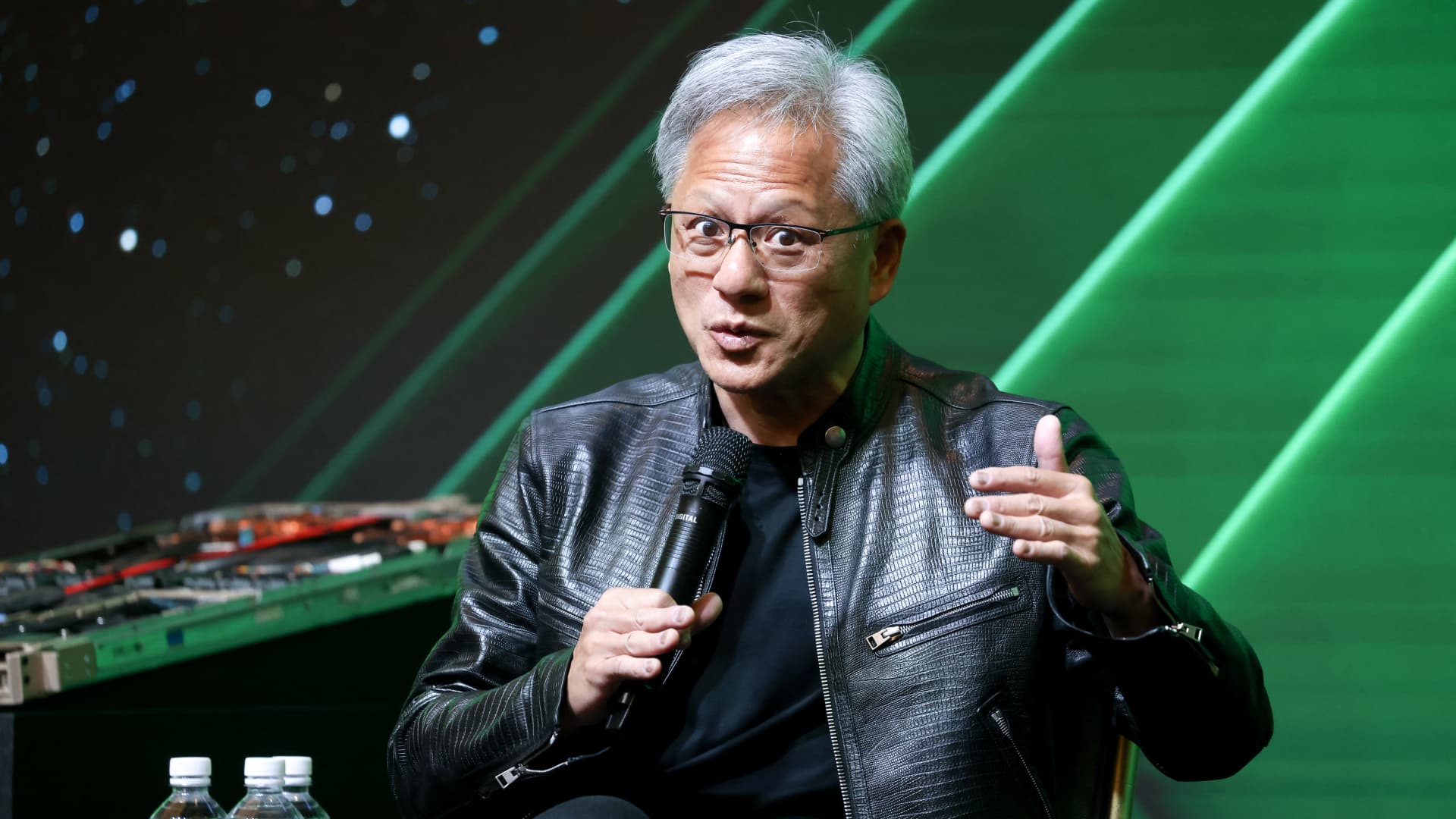
AI Transitioning to Production Phase, Boosting Chip Demand
- Inference Workload Surge: Deloitte estimates that AI inference workloads will account for two-thirds of computing power in AI data centers in 2026, up from one-third in 2023, indicating a significant shift that will drive demand for specialized chips, benefiting AMD and Broadcom.
- Broadcom Revenue Surge: Broadcom's AI revenue soared 143% year-over-year to $10.8 billion in Q2 2026, with expectations to reach $16 billion this quarter, showcasing strong growth momentum in the custom AI processor market, projected to capture 60% market share by 2027.
- AMD's Optimistic Outlook: AMD's Epyc server CPUs are expected to see a 70% year-over-year revenue increase in Q2, with its addressable market forecasted to rise to $120 billion by 2030, reflecting its potential in the AI sector driven by inference demand.
- Nvidia's Market Dominance: Despite the rise in inference demand, Nvidia commands 74% of the AI inference chip market, with Q1 sales reaching $41 billion, significantly higher than last year's $18 billion, demonstrating its strong competitive position in the AI inference landscape.
See More

Nvidia Continues to Lead in AI Inference Market
- Market Share Growth: Nvidia now holds a 74% share of the AI inference chip market, with first-quarter sales reaching $41 billion, a significant increase from $18 billion in the previous year, demonstrating its strong competitive position in AI inference.
- Revenue Surge Expectations: Broadcom's AI revenue in Q2 of fiscal 2026 increased by 143% year-over-year to $10.8 billion, with expectations of a 200% jump to $16 billion this quarter, indicating rapid expansion in the custom AI processor market.
- Rising Demand for AMD: AMD's Epyc server CPUs are seeing a 70% year-over-year revenue growth in Q2, with its addressable market projected to reach $120 billion by 2030, showcasing strong market potential driven by inference demand.
- Technological Advancements Impact: Nvidia's latest Vera Rubin processors are designed to significantly reduce inference costs, which is expected to further solidify its dominance in the AI inference market, attracting more investor interest in its stock.
See More

Alphabet Joins Dow Jones Industrial Average, Reflecting Tech Evolution

- Dow Inclusion: Alphabet will join the Dow Jones Industrial Average on Monday, replacing Verizon, symbolizing the index's evolution in response to new economic forces, although this inclusion does not directly drive stock purchases.
- Price Impact: With Alphabet trading at $350 compared to Verizon's $46, Alphabet's higher volatility will have a more significant impact on the Dow average, potentially influencing investor sentiment in the market.
- AI Strategic Edge: Google's leadership in AI is bolstered by its cloud computing services, the strong AI model Gemini, and custom AI chips, although recent concerns over executive departures and AI spending plans have led to a 6% drop in stock price.
- Technical Analysis Support: Technical analysis indicates that Alphabet's stock is finding support around $343, and while recent negative news may cap near-term upside, long-term investors might find current levels opportunistic for entry.
See More
Analysis of Investment Choices in Vanguard ETFs
- Growth ETF Performance: The Vanguard S&P 500 Growth ETF has achieved an 18.2% annualized return over the past decade, with 52.6% of its assets concentrated in tech stocks, indicating strong performance in the tech sector that attracts growth-oriented investors.
- Defensive High Dividend ETF: The Vanguard High Dividend Yield ETF has delivered an 11.85% annualized return over the past ten years, with a diversified portfolio of 605 holdings primarily in financially strong value stocks, making it suitable for investors seeking stable income.
- Expense Ratio Advantage: The Vanguard S&P 500 Growth ETF has an expense ratio of 0.07%, while the Vanguard High Dividend Yield ETF is even lower at 0.04%, providing cost efficiency for both funds that appeals to different types of investors over the long term.
- Market Performance Comparison: During the 2022 bear market in U.S. tech stocks, the Vanguard High Dividend Yield ETF outperformed both the Nasdaq-100 and the S&P 500, demonstrating its defensive qualities in market volatility, making it a suitable choice for investors cautious about future tech stock performance.
See More
2026 ETF Investment Outlook Amid Market Surge
- Strong Market Performance: The stock market in 2026 has started robustly, with the S&P 500 index up approximately 8%, following a nearly 18% gain in 2025, indicating sustained investor confidence and market vitality that may attract more capital into ETFs.
- Investment Strategy Recommendation: Investors are advised to adopt a dollar-cost averaging strategy by consistently investing in ETFs each month, which helps smooth out the cost basis and build wealth over the long term, a method proven effective in the current bull market environment.
- Outstanding ETF Performance: The Vanguard S&P 500 ETF has produced an average annual return of 15.4% over the past decade, while the Invesco QQQ Trust leads with an annualized return of 21.8%, showcasing the strong performance of tech stocks and attracting investors seeking high returns.
- Stable Dividend Yields: The Schwab U.S. Dividend Equity ETF has shown a strong start in 2026 with a 16.3% increase and offers a 3.3% dividend yield, appealing to investors seeking stable cash flow, even though its returns are lower than growth-oriented ETFs.
See More
Broadcom and OpenAI Launch New Chip Jalapeno to Boost AI Performance
- Chip Launch: Broadcom and OpenAI have unveiled the Jalapeno chip, designed to lower AI computation token costs by enhancing performance per watt, thereby strengthening the company's competitive position in the AI accelerator market.
- Market Reaction: Broadcom shares have dropped nearly 20% since early June, and the launch of Jalapeno may provide a floor for the stock, although the market remains cautious about the company's future earnings potential.
- Custom Chip Strategy: CEO Hock Tan stated that developing custom silicon will help developers reduce costs and improve efficiency, although custom chips lack the flexibility of Nvidia's GPU solutions.
- Future Outlook: Jalapeno is expected to see initial deployment later in 2023, with plans for scaling up production by 2027, demonstrating Broadcom's strong confidence in future market demand.
See More
AI Transitioning to Production Phase, Boosting Chip Demand
- Inference Workload Surge: Deloitte estimates that AI inference workloads will account for two-thirds of computing power in AI data centers in 2026, up from one-third in 2023, indicating a significant shift that will drive demand for specialized chips, benefiting AMD and Broadcom.
- Broadcom Revenue Surge: Broadcom's AI revenue soared 143% year-over-year to $10.8 billion in Q2 2026, with expectations to reach $16 billion this quarter, showcasing strong growth momentum in the custom AI processor market, projected to capture 60% market share by 2027.
- AMD's Optimistic Outlook: AMD's Epyc server CPUs are expected to see a 70% year-over-year revenue increase in Q2, with its addressable market forecasted to rise to $120 billion by 2030, reflecting its potential in the AI sector driven by inference demand.
- Nvidia's Market Dominance: Despite the rise in inference demand, Nvidia commands 74% of the AI inference chip market, with Q1 sales reaching $41 billion, significantly higher than last year's $18 billion, demonstrating its strong competitive position in the AI inference landscape.
See More
Nvidia Continues to Lead in AI Inference Market
- Market Share Growth: Nvidia now holds a 74% share of the AI inference chip market, with first-quarter sales reaching $41 billion, a significant increase from $18 billion in the previous year, demonstrating its strong competitive position in AI inference.
- Revenue Surge Expectations: Broadcom's AI revenue in Q2 of fiscal 2026 increased by 143% year-over-year to $10.8 billion, with expectations of a 200% jump to $16 billion this quarter, indicating rapid expansion in the custom AI processor market.
- Rising Demand for AMD: AMD's Epyc server CPUs are seeing a 70% year-over-year revenue growth in Q2, with its addressable market projected to reach $120 billion by 2030, showcasing strong market potential driven by inference demand.
- Technological Advancements Impact: Nvidia's latest Vera Rubin processors are designed to significantly reduce inference costs, which is expected to further solidify its dominance in the AI inference market, attracting more investor interest in its stock.
See More
Alphabet Joins Dow Jones Industrial Average, Reflecting Tech Evolution
- Dow Inclusion: Alphabet will join the Dow Jones Industrial Average on Monday, replacing Verizon, symbolizing the index's evolution in response to new economic forces, although this inclusion does not directly drive stock purchases.
- Price Impact: With Alphabet trading at $350 compared to Verizon's $46, Alphabet's higher volatility will have a more significant impact on the Dow average, potentially influencing investor sentiment in the market.
- AI Strategic Edge: Google's leadership in AI is bolstered by its cloud computing services, the strong AI model Gemini, and custom AI chips, although recent concerns over executive departures and AI spending plans have led to a 6% drop in stock price.
- Technical Analysis Support: Technical analysis indicates that Alphabet's stock is finding support around $343, and while recent negative news may cap near-term upside, long-term investors might find current levels opportunistic for entry.
See More




