Actinium Pharmaceuticals Presents New Data for ATNM-400 at 2025 San Antonio Breast Cancer Symposium
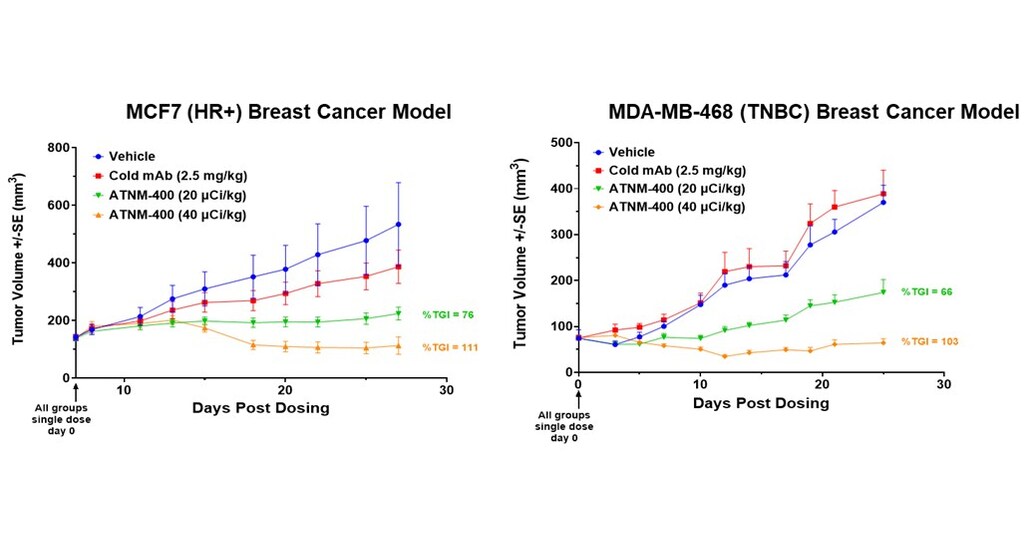
Actinium Pharmaceuticals announced the presentation of new preclinical data for ATNM-400, its first-in-class Actinium-225 based antibody radioconjugate, at the 2025 San Antonio Breast Cancer Symposium. The poster, titled "Anti-Tumor Activity of ATNM-400, a First-in-Class Actinium-225 Antibody Radioconjugate, in Hormone-Positive, Triple-Negative, Tamoxifen-Resistant and Trastuzumab-Resistant Breast Cancer Models," showcases the following key findings: Potent Efficacy Across Breast Cancer Subtypes: ATNM-400 demonstrated significant tumor-growth inhibition in HR+ and TNBC in vivo models, with all treatment regimens well tolerated and no significant changes in body weight observed. Potent Activity in Standard-of-care Treatment-Resistant Breast Cancer Models: Trastuzumab-resistant BT474-Clone5 breast cancer cells or Tamoxifen-resistant MCF7-Tam1 breast cancer cells exhibited increased target expression, resulting in enhanced in vitro cytotoxicity with ATNM-400. Combining ATNM-400 with either trastuzumab or tamoxifen resulted in greater cytotoxicity versus monotherapy and produced in vivo tumor regression in the trastuzumab-resistant model. Mechanistic Evidence of Irreversible DNA Damage: Activation of phosphorylation of AKT was observed in trastuzumab resistant BT474-Clone5 breast cancer cells, as well as a significant increase in the total level of the ATNM-400 target antigen in the in vivo trastuzumab-resistant breast cancer model. ATNM-400 treatment of these trastuzumab-resistant breast cancer cells caused significant increase in phosphorylated H2AZ, consistent with alpha-particle-driven double-strand DNA damage. Favorable Biodistribution: Sustained tumor uptake in a breast cancer model through 144 hours and rapid clearance from normal organs supports a potentially differentiated safety profile. Pan-Tumor Potential: These results, together with previously published ATNM-400 data in prostate and lung cancer, reinforce the program's broad applicability across solid tumors.
Trade with 70% Backtested Accuracy
Analyst Views on ATNM


No data
About ATNM
About the author


SLS and ATNM Present Key Data Catalysts Ahead of AACR Summit


- Optimistic Outlook for SLS009: Sellas is set to present preclinical AML data on SLS009 at the AACR meeting, demonstrating significant increases in cancer cell death in models with ASXL1 and TP53 mutations, which could attract investor attention and drive stock price appreciation.
- ATNM Data Highlights: Actinium will showcase new data from its Actinium-225 radiotherapy platform at AACR, particularly regarding ATNM-400 and Actimab-A across leukemia and solid tumor programs, potentially boosting market confidence in its treatment options.
- Analyst Target Discrepancies: According to consensus estimates from Koyfin, ATNM has a 12-month average analyst price target of $5.75, implying a 342% upside, while SLS's target is $8.67, suggesting about 66% upside, indicating a higher appeal for ATNM among investors.
- Retail Sentiment Comparison: On Stocktwits, retail sentiment for ATNM is deemed 'extremely bullish', while SLS appears 'bearish', which may influence investor decisions and market performance.

Actinium Pharmaceuticals Unveils Promising Data for ATNM-400 and Actimab-A
- Data Presentation: Actinium Pharmaceuticals will present new data for ATNM-400 and Actimab-A at the 2026 AACR Annual Meeting, highlighting their broad efficacy across multiple solid tumor models, which could potentially redefine current treatment standards.
- ATNM-400 Potential: As a first-in-class Ac-225 radioconjugate, ATNM-400 demonstrates the ability to combat various tumors, particularly those resistant to existing targeted therapies, positioning it as a leading treatment option for large solid tumor indications.
- Actimab-A Mechanism Innovation: Actimab-A's newly identified mechanism enhances responses to standard acute myeloid leukemia (AML) therapies through transcriptional reprogramming, showcasing its mutation-agnostic efficacy and offering new treatment options for AML patients.
- Future Outlook: Multiple data catalysts for ATNM-400 and Actimab-A are expected in 2026, with Actinium's strategy focused on continuous innovation and a diversified product pipeline, which is anticipated to drive significant value opportunities for the company.

Healthcare Stocks with Strong Earnings Momentum Earn A+ EPS Revision Grades
- Investor Attention: As the earnings season unfolds, mid to low market capitalization healthcare stocks are drawing investor attention due to their strong earnings momentum, indicating growing market confidence in this sector.
- Analyst Expectations: The EPS Revision Grade reflects the trend in analyst earnings estimates, with A+ ratings indicating optimistic projections for future performance, potentially driving stock prices higher.
- List of A+ Rated Stocks: Currently, companies such as Aldeyra Therapeutics, Altimmune, Annovis Bio, and Assertio Holdings have received A+ EPS Revision Grades, showcasing their strong performance in the eyes of analysts.
- Market Strategy Impact: These A+ rated healthcare stocks are likely to attract more investor interest, potentially triggering positive sentiment towards the healthcare sector as a whole, thereby enhancing the performance of related ETFs.

FibroBiologics (FBLG) Stock Rises 7.68%, Attracts Market Attention

- FibroBiologics Outperformance: FibroBiologics, Inc. (FBLG) surged 7.68% in after-hours trading to close at $0.41, indicating speculative interest or technical momentum despite no specific news.
- Nyxoah Earnings Boost Confidence: Nyxoah SA (NYXH) advanced 3.94% to $5.28 after reporting preliminary Q4 and full-year 2025 results, with guidance for Q1 2026 enhancing investor confidence in its growth trajectory.
- Fortress Biotech's Continued Volatility: Fortress Biotech, Inc. (FBIO) climbed 6.90% to $4.49 in after-hours trading, continuing a trend of volatility without any fresh news impacting the stock.
- Revvity Collaboration Drives Growth: Revvity, Inc. (RVTY) posted a 4.92% gain to close at $109.00, as investors digest the January announcement of a collaboration with Eli Lilly to expand access to predictive models via the Revvity Signals platform.
Actinium Presents ATNM-400 Breast Cancer Data, Demonstrating Strong Anti-Tumor Activity
- Strong Anti-Tumor Activity: ATNM-400 demonstrated significant tumor growth inhibition across various breast cancer models, particularly in hormone receptor-positive and triple-negative cases, with all treatment regimens well tolerated and no significant body weight changes observed, indicating its potential clinical value.
- Effectiveness Against Resistant Tumors: The drug induced irreversible DNA damage in standard treatment-resistant breast cancer models, showcasing its unique advantage in addressing resistant tumors and potentially offering new treatment options for patients.
- Broad Applicability: ATNM-400 not only shows strong efficacy in breast cancer but also exhibits promising anti-tumor activity in prostate cancer and non-small cell lung cancer, supporting its potential as a targeted radiotherapy for multiple solid tumors.
- Market Demand Alignment: With an estimated increase to 250,000 women living with metastatic breast cancer by 2030, the development of ATNM-400 aligns perfectly with this growing market need, potentially providing new hope for patients with hard-to-treat breast cancer.
Actinium Presents New ATNM-400 Breast Cancer Data Showing Potent Efficacy
- Potent Anti-Tumor Activity: ATNM-400 demonstrated significant tumor growth inhibition across various breast cancer models, particularly in hormone receptor-positive and triple-negative types, with all treatment regimens well tolerated and no significant weight changes observed, indicating its potential for clinical application.
- Efficacy in Resistant Models: In trastuzumab- and tamoxifen-resistant breast cancer cells, ATNM-400 exhibited enhanced cytotoxicity, and combining it with standard treatments resulted in greater cytotoxicity and tumor regression, showcasing its promise as a combination therapy.
- Mechanistic Evidence of DNA Damage: Treatment with ATNM-400 led to irreversible double-strand DNA breaks in breast cancer cells, activating AKT phosphorylation, which indicates its effective mechanism in resistant models and may provide new options for treating hard-to-treat breast cancer.
- Broad Applicability: Beyond breast cancer, ATNM-400 has shown potential efficacy in prostate cancer and non-small cell lung cancer, supporting its development as a multi-indication targeted radiotherapy to meet clinical needs.
SLS and ATNM Present Key Data Catalysts Ahead of AACR Summit
- Optimistic Outlook for SLS009: Sellas is set to present preclinical AML data on SLS009 at the AACR meeting, demonstrating significant increases in cancer cell death in models with ASXL1 and TP53 mutations, which could attract investor attention and drive stock price appreciation.
- ATNM Data Highlights: Actinium will showcase new data from its Actinium-225 radiotherapy platform at AACR, particularly regarding ATNM-400 and Actimab-A across leukemia and solid tumor programs, potentially boosting market confidence in its treatment options.
- Analyst Target Discrepancies: According to consensus estimates from Koyfin, ATNM has a 12-month average analyst price target of $5.75, implying a 342% upside, while SLS's target is $8.67, suggesting about 66% upside, indicating a higher appeal for ATNM among investors.
- Retail Sentiment Comparison: On Stocktwits, retail sentiment for ATNM is deemed 'extremely bullish', while SLS appears 'bearish', which may influence investor decisions and market performance.
Actinium Pharmaceuticals Unveils Promising Data for ATNM-400 and Actimab-A
- Data Presentation: Actinium Pharmaceuticals will present new data for ATNM-400 and Actimab-A at the 2026 AACR Annual Meeting, highlighting their broad efficacy across multiple solid tumor models, which could potentially redefine current treatment standards.
- ATNM-400 Potential: As a first-in-class Ac-225 radioconjugate, ATNM-400 demonstrates the ability to combat various tumors, particularly those resistant to existing targeted therapies, positioning it as a leading treatment option for large solid tumor indications.
- Actimab-A Mechanism Innovation: Actimab-A's newly identified mechanism enhances responses to standard acute myeloid leukemia (AML) therapies through transcriptional reprogramming, showcasing its mutation-agnostic efficacy and offering new treatment options for AML patients.
- Future Outlook: Multiple data catalysts for ATNM-400 and Actimab-A are expected in 2026, with Actinium's strategy focused on continuous innovation and a diversified product pipeline, which is anticipated to drive significant value opportunities for the company.
Healthcare Stocks with Strong Earnings Momentum Earn A+ EPS Revision Grades
- Investor Attention: As the earnings season unfolds, mid to low market capitalization healthcare stocks are drawing investor attention due to their strong earnings momentum, indicating growing market confidence in this sector.
- Analyst Expectations: The EPS Revision Grade reflects the trend in analyst earnings estimates, with A+ ratings indicating optimistic projections for future performance, potentially driving stock prices higher.
- List of A+ Rated Stocks: Currently, companies such as Aldeyra Therapeutics, Altimmune, Annovis Bio, and Assertio Holdings have received A+ EPS Revision Grades, showcasing their strong performance in the eyes of analysts.
- Market Strategy Impact: These A+ rated healthcare stocks are likely to attract more investor interest, potentially triggering positive sentiment towards the healthcare sector as a whole, thereby enhancing the performance of related ETFs.
FibroBiologics (FBLG) Stock Rises 7.68%, Attracts Market Attention
- FibroBiologics Outperformance: FibroBiologics, Inc. (FBLG) surged 7.68% in after-hours trading to close at $0.41, indicating speculative interest or technical momentum despite no specific news.
- Nyxoah Earnings Boost Confidence: Nyxoah SA (NYXH) advanced 3.94% to $5.28 after reporting preliminary Q4 and full-year 2025 results, with guidance for Q1 2026 enhancing investor confidence in its growth trajectory.
- Fortress Biotech's Continued Volatility: Fortress Biotech, Inc. (FBIO) climbed 6.90% to $4.49 in after-hours trading, continuing a trend of volatility without any fresh news impacting the stock.
- Revvity Collaboration Drives Growth: Revvity, Inc. (RVTY) posted a 4.92% gain to close at $109.00, as investors digest the January announcement of a collaboration with Eli Lilly to expand access to predictive models via the Revvity Signals platform.
Actinium Presents ATNM-400 Breast Cancer Data, Demonstrating Strong Anti-Tumor Activity
- Strong Anti-Tumor Activity: ATNM-400 demonstrated significant tumor growth inhibition across various breast cancer models, particularly in hormone receptor-positive and triple-negative cases, with all treatment regimens well tolerated and no significant body weight changes observed, indicating its potential clinical value.
- Effectiveness Against Resistant Tumors: The drug induced irreversible DNA damage in standard treatment-resistant breast cancer models, showcasing its unique advantage in addressing resistant tumors and potentially offering new treatment options for patients.
- Broad Applicability: ATNM-400 not only shows strong efficacy in breast cancer but also exhibits promising anti-tumor activity in prostate cancer and non-small cell lung cancer, supporting its potential as a targeted radiotherapy for multiple solid tumors.
- Market Demand Alignment: With an estimated increase to 250,000 women living with metastatic breast cancer by 2030, the development of ATNM-400 aligns perfectly with this growing market need, potentially providing new hope for patients with hard-to-treat breast cancer.
Actinium Presents New ATNM-400 Breast Cancer Data Showing Potent Efficacy
- Potent Anti-Tumor Activity: ATNM-400 demonstrated significant tumor growth inhibition across various breast cancer models, particularly in hormone receptor-positive and triple-negative types, with all treatment regimens well tolerated and no significant weight changes observed, indicating its potential for clinical application.
- Efficacy in Resistant Models: In trastuzumab- and tamoxifen-resistant breast cancer cells, ATNM-400 exhibited enhanced cytotoxicity, and combining it with standard treatments resulted in greater cytotoxicity and tumor regression, showcasing its promise as a combination therapy.
- Mechanistic Evidence of DNA Damage: Treatment with ATNM-400 led to irreversible double-strand DNA breaks in breast cancer cells, activating AKT phosphorylation, which indicates its effective mechanism in resistant models and may provide new options for treating hard-to-treat breast cancer.
- Broad Applicability: Beyond breast cancer, ATNM-400 has shown potential efficacy in prostate cancer and non-small cell lung cancer, supporting its development as a multi-indication targeted radiotherapy to meet clinical needs.