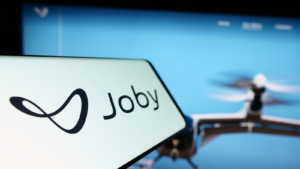
Joby Aviation Stock Declines Amid Market Weakness
Joby Aviation Inc's stock has fallen 3.61% as it hits a 20-day low, reflecting broader market challenges.
Despite a strong quarterly report released on May 5, which showed sales of $24 million exceeding estimates, Joby's stock has dropped approximately 19.8% in June. This decline is attributed to a shift to risk-off positioning among investors, particularly due to concerns over potential interest rate hikes by the Federal Reserve, which has negatively impacted overall market sentiment. The company's narrowed revenue guidance for the year, now between $105 million and $115 million, has also contributed to valuation pressures.
The implications of this decline suggest that Joby may face continued volatility as investor sentiment remains cautious amid broader market weakness, particularly in growth stocks, which have seen a downturn.
Trade with 70% Backtested Accuracy
Analyst Views on JOBY

About JOBY
About the author


Analysis of Competition in the eVTOL Market


- Market Outlook: According to Eve Air Mobility's Global Market Outlook, by 2045, there could be 30,000 eVTOLs in operation carrying three billion passengers, despite Joby and Archer lacking FAA approval for commercial flights, which has led to depressed stock prices for both companies.
- Technical Comparison: Joby's S4 and Archer's Midnight exhibit significant design differences, with the S4 achieving a maximum range of 150 miles and a speed of 200 mph, while the Midnight has a range of 100 miles and a speed of 150 mph, highlighting Joby's technological advantage.
- Financial Projections: Analysts expect Joby's revenue to grow from $53 million in 2025 to $458 million in 2028, with a net loss narrowing to $722 million, whereas Archer's revenue is projected to surge from under $1 million in 2025 to $482 million in 2028, but its net loss is expected to widen to $868 million.
- Investment Advantages: Joby's market cap stands at $9.2 billion, trading at 20 times its 2028 sales, reflecting its potential in the
Joby and Archer's eVTOL Aircraft Prospects
- Market Outlook: According to Eve Air Mobility's Global Market Outlook, by 2045, there could be 30,000 eVTOLs operating globally, carrying three billion passengers, presenting potential market opportunities for both Joby and Archer.
- FAA Approval Challenges: Both Joby and Archer must navigate the lengthy multi-stage approval process from the Federal Aviation Administration (FAA), with full commercial flight approvals likely not occurring until late 2026 or 2027, contributing to stock pressure this year.
- Financial Projections Comparison: Analysts expect Joby's revenue to grow from $53 million in 2025 to $458 million in 2028, while Archer's revenue is projected to surge from under $1 million to $482 million, although both companies are expected to widen their net losses, indicating differing market expectations.
- Investment Value Assessment: Joby trades at a market cap of $9.2 billion at 20 times its 2028 sales, while Archer's $4.0 billion market cap trades at just eight times its 2028 sales; despite Archer appearing more attractive, Joby's vertically integrated model and stronger liquidity position it as a more compelling long-term investment.
Joby Aviation: Future of eVTOL Aircraft
- Market Performance Fluctuations: Joby Aviation went public via SPAC on August 11, 2021, opening at $10.62 per share and reaching a record high of $20.39 on August 4, 2025, but now trades around $9, indicating waning investor confidence in its commercialization progress.
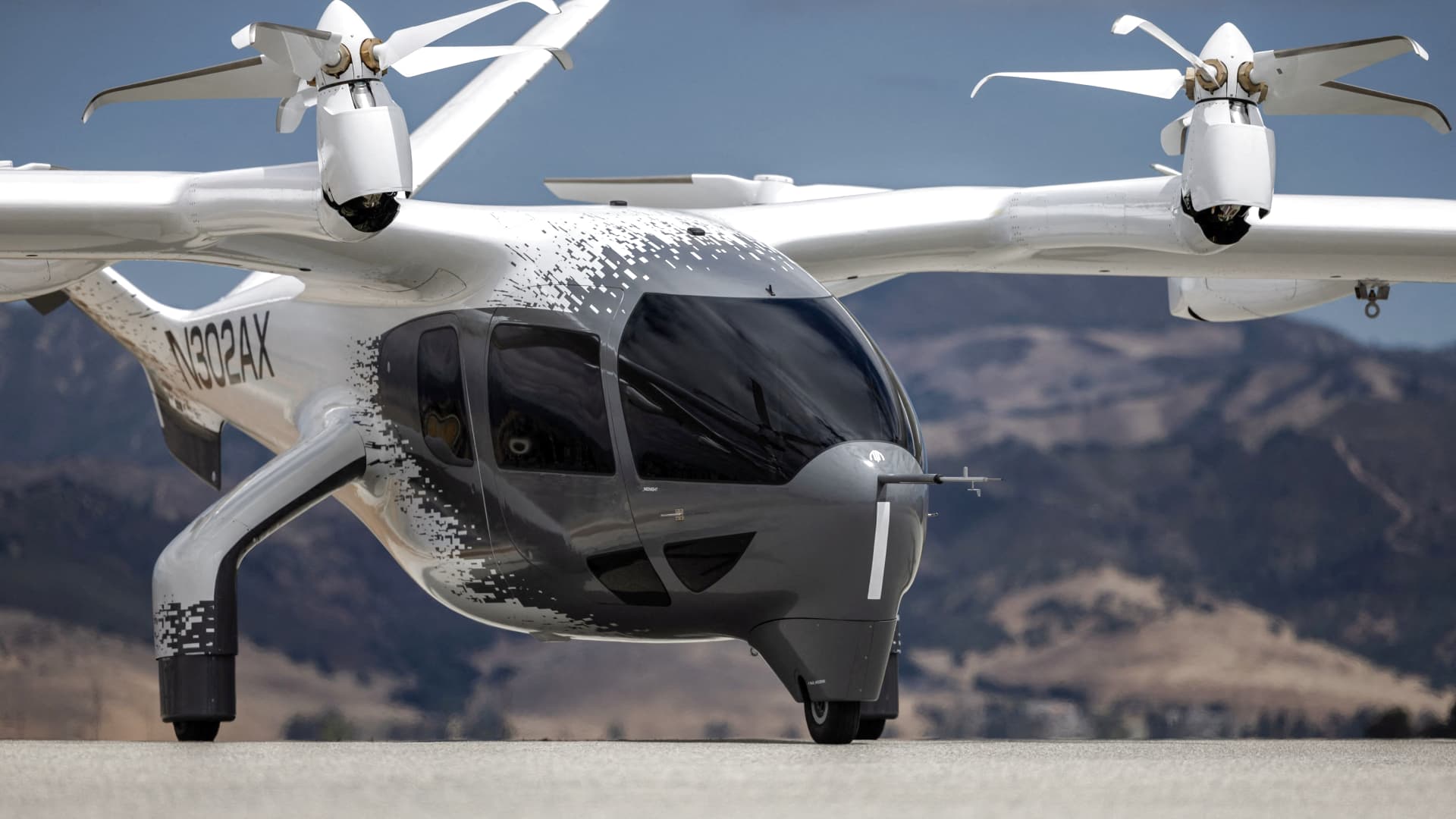
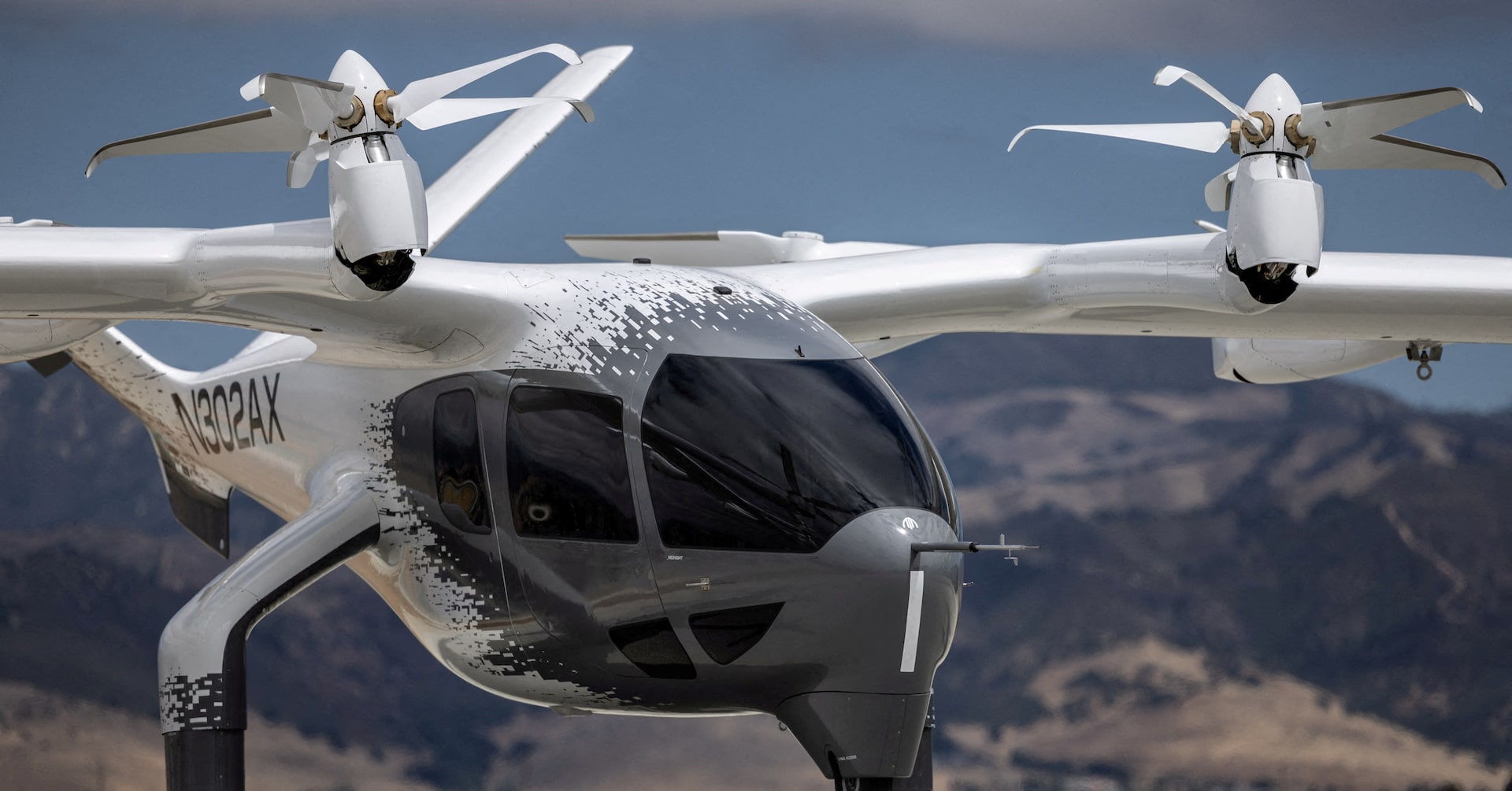
- Significant Technical Advantages: Joby's S4 eVTOL can carry one pilot and four passengers, travel 150 miles on a single charge, and reach speeds of 200 mph, surpassing competitor Archer Aviation's Midnight eVTOL due to its tilt-rotor design.
- Strategic Partnerships: Joby is backed by major investors like Toyota, Delta Air Lines, and Uber, with Toyota assisting in mass production, Delta planning to use the S4 for airport-to-home air taxi services, and Uber integrating these flights into its app.
- Future Growth Potential: Joby's revenue is expected to surge from $53 million in 2025 to $458 million by 2028, and if the FAA approves its commercial flights, its eVTOLs could replace traditional helicopters, potentially tripling its stock price over the next five years.

Joby Aviation Stock Poised for Growth Pending FAA Approval
- Lackluster Market Performance: Since its public debut on August 11, 2021, Joby Aviation's stock has fluctuated from an opening price of $10.62 to a peak of $20.39 on August 4, 2025, but currently trades around $9, indicating waning investor confidence in its commercial progress.
- Significant Technological Edge: Joby's S4 eVTOL can travel 150 miles on a single charge and reach speeds of 200 miles per hour, utilizing tilt-rotor technology that allows it to outperform its closest competitor, Archer Aviation's Midnight eVTOL, thereby enhancing its competitive positioning in the market.
- Key Partnerships: Joby has secured backing from major investors like Toyota, Delta Air Lines, and Uber, with Toyota assisting in mass production of its eVTOLs, Delta planning to use the S4 for airport-to-home air taxi services, and Uber integrating these flights into its app, which strengthens its market presence.
- Future Growth Potential: Analysts project Joby's revenue to surge from $53 million in 2025 to $458 million by 2028, and if the FAA approves its commercial flights, Joby's eVTOLs could replace traditional helicopters, potentially tripling its stock price over the next five years.

Joby Aviation Shares Plunge 20% Amid Rate Hike Fears

- Stock Volatility: Joby Aviation's shares plummeted 20.2% last week, resulting in a negative one-year return, which reflects investor concerns about future growth amid an uncertain macroeconomic environment.
- Impact of Employment Data: The announcement of 172,000 new nonfarm jobs in May, which should be seen as positive, instead raised fears of Federal Reserve interest rate hikes due to consecutive strong job reports, prompting investors to sell off high-growth stocks, including Joby.
- Rival Companies Affected: Joby's competitor Archer Aviation also suffered a 19% drop in stock price, indicating a broader sell-off in the high-growth stock market due to rising interest rate expectations, further exacerbating industry uncertainty.
- Uncertain Market Outlook: Despite Joby completing New York City's first eVTOL air taxi demonstration flights and winning a legal battle, the market remains pessimistic about its future, believing that operations will face greater challenges in a high-interest-rate environment.
Joby Aviation Stock Volatility Analysis
- Stock Price Volatility: Joby Aviation's stock surged over 75% in July 2025, reaching a peak of 107.8% in early August, but subsequently plummeted by 20.2%, resulting in negative returns for investors, highlighting the market's intense interest and associated risks in eVTOL aircraft.
- Economic Data Impact: The Bureau of Labor Statistics reported an addition of 172,000 nonfarm jobs in May, significantly exceeding expectations; although this does not directly affect Joby's operations, it raised investor concerns about potential interest rate hikes by the Federal Reserve, leading to a stock sell-off.
- Rising Rate Expectations: The strong job report has led analysts to believe that the Federal Reserve will likely raise interest rates soon, which typically negatively impacts high-growth companies like Joby that rely on borrowing, prompting investors to seek safer investment alternatives.
- Uncertain Market Outlook: Joby's stock has fallen over 50% from its all-time high, and while there is potential for significant price recovery if FAA approval for commercial operations is granted, the company remains speculative and volatile, with its long-term outlook still in question.
Analysis of Competition in the eVTOL Market
- Market Outlook: According to Eve Air Mobility's Global Market Outlook, by 2045, there could be 30,000 eVTOLs in operation carrying three billion passengers, despite Joby and Archer lacking FAA approval for commercial flights, which has led to depressed stock prices for both companies.
- Technical Comparison: Joby's S4 and Archer's Midnight exhibit significant design differences, with the S4 achieving a maximum range of 150 miles and a speed of 200 mph, while the Midnight has a range of 100 miles and a speed of 150 mph, highlighting Joby's technological advantage.
- Financial Projections: Analysts expect Joby's revenue to grow from $53 million in 2025 to $458 million in 2028, with a net loss narrowing to $722 million, whereas Archer's revenue is projected to surge from under $1 million in 2025 to $482 million in 2028, but its net loss is expected to widen to $868 million.
- Investment Advantages: Joby's market cap stands at $9.2 billion, trading at 20 times its 2028 sales, reflecting its potential in the
Joby and Archer's eVTOL Aircraft Prospects
- Market Outlook: According to Eve Air Mobility's Global Market Outlook, by 2045, there could be 30,000 eVTOLs operating globally, carrying three billion passengers, presenting potential market opportunities for both Joby and Archer.
- FAA Approval Challenges: Both Joby and Archer must navigate the lengthy multi-stage approval process from the Federal Aviation Administration (FAA), with full commercial flight approvals likely not occurring until late 2026 or 2027, contributing to stock pressure this year.
- Financial Projections Comparison: Analysts expect Joby's revenue to grow from $53 million in 2025 to $458 million in 2028, while Archer's revenue is projected to surge from under $1 million to $482 million, although both companies are expected to widen their net losses, indicating differing market expectations.
- Investment Value Assessment: Joby trades at a market cap of $9.2 billion at 20 times its 2028 sales, while Archer's $4.0 billion market cap trades at just eight times its 2028 sales; despite Archer appearing more attractive, Joby's vertically integrated model and stronger liquidity position it as a more compelling long-term investment.
Joby Aviation: Future of eVTOL Aircraft
- Market Performance Fluctuations: Joby Aviation went public via SPAC on August 11, 2021, opening at $10.62 per share and reaching a record high of $20.39 on August 4, 2025, but now trades around $9, indicating waning investor confidence in its commercialization progress.
- Significant Technical Advantages: Joby's S4 eVTOL can carry one pilot and four passengers, travel 150 miles on a single charge, and reach speeds of 200 mph, surpassing competitor Archer Aviation's Midnight eVTOL due to its tilt-rotor design.
- Strategic Partnerships: Joby is backed by major investors like Toyota, Delta Air Lines, and Uber, with Toyota assisting in mass production, Delta planning to use the S4 for airport-to-home air taxi services, and Uber integrating these flights into its app.
- Future Growth Potential: Joby's revenue is expected to surge from $53 million in 2025 to $458 million by 2028, and if the FAA approves its commercial flights, its eVTOLs could replace traditional helicopters, potentially tripling its stock price over the next five years.
Joby Aviation Stock Poised for Growth Pending FAA Approval
- Lackluster Market Performance: Since its public debut on August 11, 2021, Joby Aviation's stock has fluctuated from an opening price of $10.62 to a peak of $20.39 on August 4, 2025, but currently trades around $9, indicating waning investor confidence in its commercial progress.
- Significant Technological Edge: Joby's S4 eVTOL can travel 150 miles on a single charge and reach speeds of 200 miles per hour, utilizing tilt-rotor technology that allows it to outperform its closest competitor, Archer Aviation's Midnight eVTOL, thereby enhancing its competitive positioning in the market.
- Key Partnerships: Joby has secured backing from major investors like Toyota, Delta Air Lines, and Uber, with Toyota assisting in mass production of its eVTOLs, Delta planning to use the S4 for airport-to-home air taxi services, and Uber integrating these flights into its app, which strengthens its market presence.
- Future Growth Potential: Analysts project Joby's revenue to surge from $53 million in 2025 to $458 million by 2028, and if the FAA approves its commercial flights, Joby's eVTOLs could replace traditional helicopters, potentially tripling its stock price over the next five years.
Joby Aviation Shares Plunge 20% Amid Rate Hike Fears
- Stock Volatility: Joby Aviation's shares plummeted 20.2% last week, resulting in a negative one-year return, which reflects investor concerns about future growth amid an uncertain macroeconomic environment.
- Impact of Employment Data: The announcement of 172,000 new nonfarm jobs in May, which should be seen as positive, instead raised fears of Federal Reserve interest rate hikes due to consecutive strong job reports, prompting investors to sell off high-growth stocks, including Joby.
- Rival Companies Affected: Joby's competitor Archer Aviation also suffered a 19% drop in stock price, indicating a broader sell-off in the high-growth stock market due to rising interest rate expectations, further exacerbating industry uncertainty.
- Uncertain Market Outlook: Despite Joby completing New York City's first eVTOL air taxi demonstration flights and winning a legal battle, the market remains pessimistic about its future, believing that operations will face greater challenges in a high-interest-rate environment.
Joby Aviation Stock Volatility Analysis
- Stock Price Volatility: Joby Aviation's stock surged over 75% in July 2025, reaching a peak of 107.8% in early August, but subsequently plummeted by 20.2%, resulting in negative returns for investors, highlighting the market's intense interest and associated risks in eVTOL aircraft.
- Economic Data Impact: The Bureau of Labor Statistics reported an addition of 172,000 nonfarm jobs in May, significantly exceeding expectations; although this does not directly affect Joby's operations, it raised investor concerns about potential interest rate hikes by the Federal Reserve, leading to a stock sell-off.
- Rising Rate Expectations: The strong job report has led analysts to believe that the Federal Reserve will likely raise interest rates soon, which typically negatively impacts high-growth companies like Joby that rely on borrowing, prompting investors to seek safer investment alternatives.
- Uncertain Market Outlook: Joby's stock has fallen over 50% from its all-time high, and while there is potential for significant price recovery if FAA approval for commercial operations is granted, the company remains speculative and volatile, with its long-term outlook still in question.