GlobalFoundries faces stock decline amid semiconductor investment focus
GlobalFoundries Inc. saw its stock price drop by 5.78% as it crossed below the 5-day SMA, reflecting broader market trends.
The decline comes amid a significant focus on semiconductor manufacturing, as highlighted by recent White House data indicating that companies like GlobalFoundries are part of a national strategic priority for reshoring investments. This emphasis on technological self-sufficiency is reshaping the competitive landscape, with major players like Nvidia and TSMC also benefiting from increased capital flows into the sector.
The implications of this shift suggest that while GlobalFoundries is positioned within a growing industry, the current market conditions and stock performance reflect a challenging environment, particularly as the Nasdaq-100 and S&P 500 indices are also experiencing declines.
Trade with 70% Backtested Accuracy
Analyst Views on GFS

About GFS
About the author


GlobalFoundries Completes Acquisition of Synopsys ARC Business
- Acquisition Completed: GlobalFoundries (GF) has successfully completed the acquisition of Synopsys' ARC Processor IP Solutions business, enhancing GF's technological capabilities in Physical AI and forming a robust software-to-silicon solution alongside MIPS to meet customer needs in automotive, industrial robotics, and embedded systems.
- Technology Integration: By combining MIPS with ARC, GF offers a RISC-V processor IP suite that spans high-performance, mid-range, and ultra-low-power compute and AI cores, backed by over 150 patents and more than 300 IP customers, significantly boosting its competitive edge in the market.
- Market Demand Response: As automotive and industrial systems increasingly require real-time and AI-driven solutions, GF's offerings provide differentiated silicon solutions under tight power and latency constraints, helping customers gain an advantage in the rapidly evolving intelligent systems market.
- Smooth Transition: GF is working closely with Synopsys to ensure a seamless transition for employees, customers, and partners, further solidifying its leadership position in the global semiconductor manufacturing sector and promoting the widespread adoption of Physical AI.
U.S. Government Invests $2 Billion in Quantum Computing


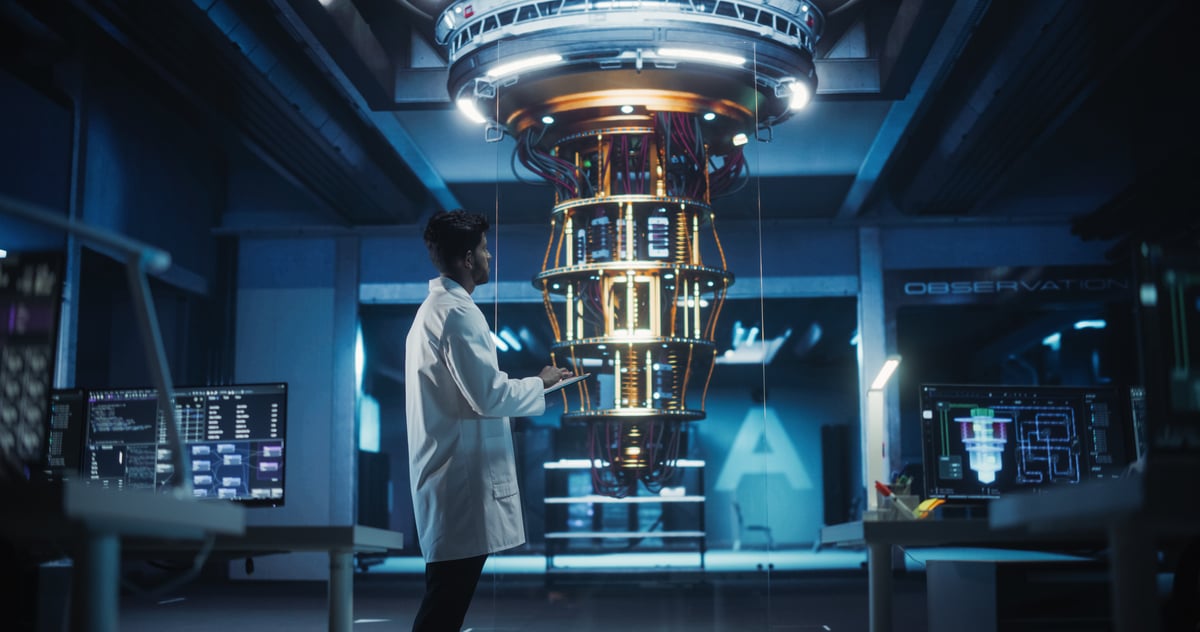
- Large Investment Scale: The U.S. Department of Commerce announced a $2 billion investment across nine quantum computing companies under the CHIPS and Science Act, granting the government minority equity stakes in each, highlighting the importance of quantum technology and its potential in AI.
- Key Companies Funded: International Business Machines (IBM) will receive $1 billion to establish a new quantum foundry subsidiary called Anderon, while GlobalFoundries is raising $375 million to build a complementary foundry, enhancing the domestic manufacturing base for quantum chips.
- Multiple Companies Benefit: Other firms like D-Wave, Rigetti, and Infleqtion each received up to $100 million to address specific engineering variables and modalities, further advancing the research and development of quantum computing.
- Investor Focus: While IBM and GlobalFoundries are publicly traded, quantum computing represents a small part of their overall business, prompting investors to be selective and consider pure-play quantum companies like D-Wave and Rigetti, or indirectly invest through Honeywell and Nvidia for quantum exposure.
Sivers Partners with GlobalFoundries to Advance Photonics Technology
- Strategic Collaboration: Sivers Semiconductors has partnered with GlobalFoundries to develop advanced silicon photonics solutions targeting the $25 billion pluggable optics market by 2030, showcasing a strong synergy in the high-growth AI infrastructure sector.
- Technology Integration: Sivers' laser arrays will be integrated into reference designs on GF's silicon photonics platform, supporting various optical connectivity architectures, including co-packaged optics and linear pluggable optics, enhancing the flexibility and efficiency of data center interconnect solutions.
- Market Demand: The rapid expansion of AI workloads and hyperscale data center architectures is driving the demand for higher bandwidth, improved energy efficiency, and scalable optical connectivity, making Sivers and GF's collaboration a crucial response to this market trend.
- Innovation Leadership: This partnership not only enhances the innovation capabilities in silicon photonics technology but also provides customers with advanced solutions for high-bandwidth co-packaged optics and optical interconnects, further solidifying their market leadership in photonics technology.

Sivers Partners with GlobalFoundries to Advance Photonics Technology
- Strategic Collaboration: Sivers Semiconductors has partnered with GlobalFoundries to develop advanced silicon photonics solutions targeting a $25 billion pluggable optics market by 2030, integrating Sivers' laser arrays with GF's silicon photonics platform to enhance optical connectivity architectures in data centers.
- Technology Integration: Sivers' laser arrays will be incorporated into GF's Silicon Photonics Co-packaged Advanced Light Engine (SCALE™) platform, supporting high-bandwidth co-packaged optics and optical interconnect solutions, thereby improving bandwidth density and system scalability to meet the rapid growth demands of the AI infrastructure market.
- Market Demand: The rapid expansion of AI workloads and hyperscale data center architectures is driving the demand for photonics technologies that deliver higher bandwidth and improved energy efficiency, positioning both companies at the forefront of silicon photonics innovation.
- Customer Value: By combining Sivers' laser array technology with GF's silicon photonics and SCALE CPO platforms, customers will gain access to advanced, scalable optical engine solutions that enhance high-bandwidth co-packaged optics and optical interconnect applications, thereby increasing overall market competitiveness.

GlobalFoundries Launches Silicon Photonics Platform for AI
- Technological Innovation: GlobalFoundries' SCALE silicon photonics co-packaged optical engine solution is the first platform to meet Optical Compute Interconnect Multi-Source Agreement specifications for AI architectures, marking a significant advancement in achieving faster, cooler, and more efficient data transmission in AI infrastructure.
- Market Demand: The company identifies data transmission as the bottleneck in AI infrastructure rather than compute power, with silicon photonics revenue expected to nearly double in 2026, indicating strong market demand for efficient data transfer solutions.
- Acquisition Advantage: By acquiring Advanced Micro Foundry in Singapore, GlobalFoundries has gained silicon photonics manufacturing capabilities, enhancing supply chain diversification amid U.S.-China semiconductor tensions and ensuring its competitive edge in the market.
- Government Support: The U.S. government has proposed a $375 million award to assist GlobalFoundries in building domestic quantum manufacturing infrastructure, further solidifying its strategic position in the AI and quantum computing sectors.

GlobalFoundries Innovates Photonic Technology to Solve AI Bottlenecks
- Breakthrough in Photonics: GlobalFoundries launched the SCALE platform, utilizing co-packaged optics technology to significantly enhance bandwidth density and scalability of AI infrastructure, addressing heat and signal loss issues associated with traditional copper wiring in data transmission.
- Acquisition Boosts Capacity: By acquiring Advanced Micro Foundry in Singapore, GlobalFoundries gained manufacturing assets and intellectual property in silicon photonics, strengthening its competitive edge in supply chain diversification amid U.S.-China semiconductor tensions.
- Strong Market Demand: Silicon photonics revenue is expected to nearly double in 2026, with over 500 design wins logged in 2025, indicating robust market demand for efficient data transmission solutions and further solidifying the company's market position.
- Government Support: The U.S. government proposed a $375 million funding award to assist GlobalFoundries in building domestic quantum manufacturing infrastructure, reflecting recognition of its technology and market potential.
GlobalFoundries Completes Acquisition of Synopsys ARC Business
- Acquisition Completed: GlobalFoundries (GF) has successfully completed the acquisition of Synopsys' ARC Processor IP Solutions business, enhancing GF's technological capabilities in Physical AI and forming a robust software-to-silicon solution alongside MIPS to meet customer needs in automotive, industrial robotics, and embedded systems.
- Technology Integration: By combining MIPS with ARC, GF offers a RISC-V processor IP suite that spans high-performance, mid-range, and ultra-low-power compute and AI cores, backed by over 150 patents and more than 300 IP customers, significantly boosting its competitive edge in the market.
- Market Demand Response: As automotive and industrial systems increasingly require real-time and AI-driven solutions, GF's offerings provide differentiated silicon solutions under tight power and latency constraints, helping customers gain an advantage in the rapidly evolving intelligent systems market.
- Smooth Transition: GF is working closely with Synopsys to ensure a seamless transition for employees, customers, and partners, further solidifying its leadership position in the global semiconductor manufacturing sector and promoting the widespread adoption of Physical AI.
U.S. Government Invests $2 Billion in Quantum Computing
- Large Investment Scale: The U.S. Department of Commerce announced a $2 billion investment across nine quantum computing companies under the CHIPS and Science Act, granting the government minority equity stakes in each, highlighting the importance of quantum technology and its potential in AI.
- Key Companies Funded: International Business Machines (IBM) will receive $1 billion to establish a new quantum foundry subsidiary called Anderon, while GlobalFoundries is raising $375 million to build a complementary foundry, enhancing the domestic manufacturing base for quantum chips.
- Multiple Companies Benefit: Other firms like D-Wave, Rigetti, and Infleqtion each received up to $100 million to address specific engineering variables and modalities, further advancing the research and development of quantum computing.
- Investor Focus: While IBM and GlobalFoundries are publicly traded, quantum computing represents a small part of their overall business, prompting investors to be selective and consider pure-play quantum companies like D-Wave and Rigetti, or indirectly invest through Honeywell and Nvidia for quantum exposure.
Sivers Partners with GlobalFoundries to Advance Photonics Technology
- Strategic Collaboration: Sivers Semiconductors has partnered with GlobalFoundries to develop advanced silicon photonics solutions targeting the $25 billion pluggable optics market by 2030, showcasing a strong synergy in the high-growth AI infrastructure sector.
- Technology Integration: Sivers' laser arrays will be integrated into reference designs on GF's silicon photonics platform, supporting various optical connectivity architectures, including co-packaged optics and linear pluggable optics, enhancing the flexibility and efficiency of data center interconnect solutions.
- Market Demand: The rapid expansion of AI workloads and hyperscale data center architectures is driving the demand for higher bandwidth, improved energy efficiency, and scalable optical connectivity, making Sivers and GF's collaboration a crucial response to this market trend.
- Innovation Leadership: This partnership not only enhances the innovation capabilities in silicon photonics technology but also provides customers with advanced solutions for high-bandwidth co-packaged optics and optical interconnects, further solidifying their market leadership in photonics technology.
Sivers Partners with GlobalFoundries to Advance Photonics Technology
- Strategic Collaboration: Sivers Semiconductors has partnered with GlobalFoundries to develop advanced silicon photonics solutions targeting a $25 billion pluggable optics market by 2030, integrating Sivers' laser arrays with GF's silicon photonics platform to enhance optical connectivity architectures in data centers.
- Technology Integration: Sivers' laser arrays will be incorporated into GF's Silicon Photonics Co-packaged Advanced Light Engine (SCALE™) platform, supporting high-bandwidth co-packaged optics and optical interconnect solutions, thereby improving bandwidth density and system scalability to meet the rapid growth demands of the AI infrastructure market.
- Market Demand: The rapid expansion of AI workloads and hyperscale data center architectures is driving the demand for photonics technologies that deliver higher bandwidth and improved energy efficiency, positioning both companies at the forefront of silicon photonics innovation.
- Customer Value: By combining Sivers' laser array technology with GF's silicon photonics and SCALE CPO platforms, customers will gain access to advanced, scalable optical engine solutions that enhance high-bandwidth co-packaged optics and optical interconnect applications, thereby increasing overall market competitiveness.
GlobalFoundries Launches Silicon Photonics Platform for AI
- Technological Innovation: GlobalFoundries' SCALE silicon photonics co-packaged optical engine solution is the first platform to meet Optical Compute Interconnect Multi-Source Agreement specifications for AI architectures, marking a significant advancement in achieving faster, cooler, and more efficient data transmission in AI infrastructure.
- Market Demand: The company identifies data transmission as the bottleneck in AI infrastructure rather than compute power, with silicon photonics revenue expected to nearly double in 2026, indicating strong market demand for efficient data transfer solutions.
- Acquisition Advantage: By acquiring Advanced Micro Foundry in Singapore, GlobalFoundries has gained silicon photonics manufacturing capabilities, enhancing supply chain diversification amid U.S.-China semiconductor tensions and ensuring its competitive edge in the market.
- Government Support: The U.S. government has proposed a $375 million award to assist GlobalFoundries in building domestic quantum manufacturing infrastructure, further solidifying its strategic position in the AI and quantum computing sectors.
GlobalFoundries Innovates Photonic Technology to Solve AI Bottlenecks
- Breakthrough in Photonics: GlobalFoundries launched the SCALE platform, utilizing co-packaged optics technology to significantly enhance bandwidth density and scalability of AI infrastructure, addressing heat and signal loss issues associated with traditional copper wiring in data transmission.
- Acquisition Boosts Capacity: By acquiring Advanced Micro Foundry in Singapore, GlobalFoundries gained manufacturing assets and intellectual property in silicon photonics, strengthening its competitive edge in supply chain diversification amid U.S.-China semiconductor tensions.
- Strong Market Demand: Silicon photonics revenue is expected to nearly double in 2026, with over 500 design wins logged in 2025, indicating robust market demand for efficient data transmission solutions and further solidifying the company's market position.
- Government Support: The U.S. government proposed a $375 million funding award to assist GlobalFoundries in building domestic quantum manufacturing infrastructure, reflecting recognition of its technology and market potential.