Fortinet's Threat Landscape Report Highlights Cybercrime Trends
Fortinet Inc's stock rose by 3.14% as it reached a 20-day high, reflecting positive market conditions.
The company released its 2026 Global Threat Landscape Report, which reveals a significant increase in ransomware victims, surging to 7,831, a 389% rise from 2025. This alarming trend underscores the urgent need for enhanced corporate defenses against cyber threats, particularly as cybercriminals are increasingly leveraging AI to accelerate attacks. The report also highlights increased risks in cloud security, particularly for sectors like healthcare and retail, which are becoming prime targets for cyberattacks.
This report positions Fortinet as a leader in cybersecurity, emphasizing the critical need for businesses to adapt to evolving threats. The findings may drive demand for Fortinet's solutions, potentially boosting future revenues.
Trade with 70% Backtested Accuracy
Analyst Views on FTNT

About FTNT
About the author


Fortinet vs. CrowdStrike Revenue Insights


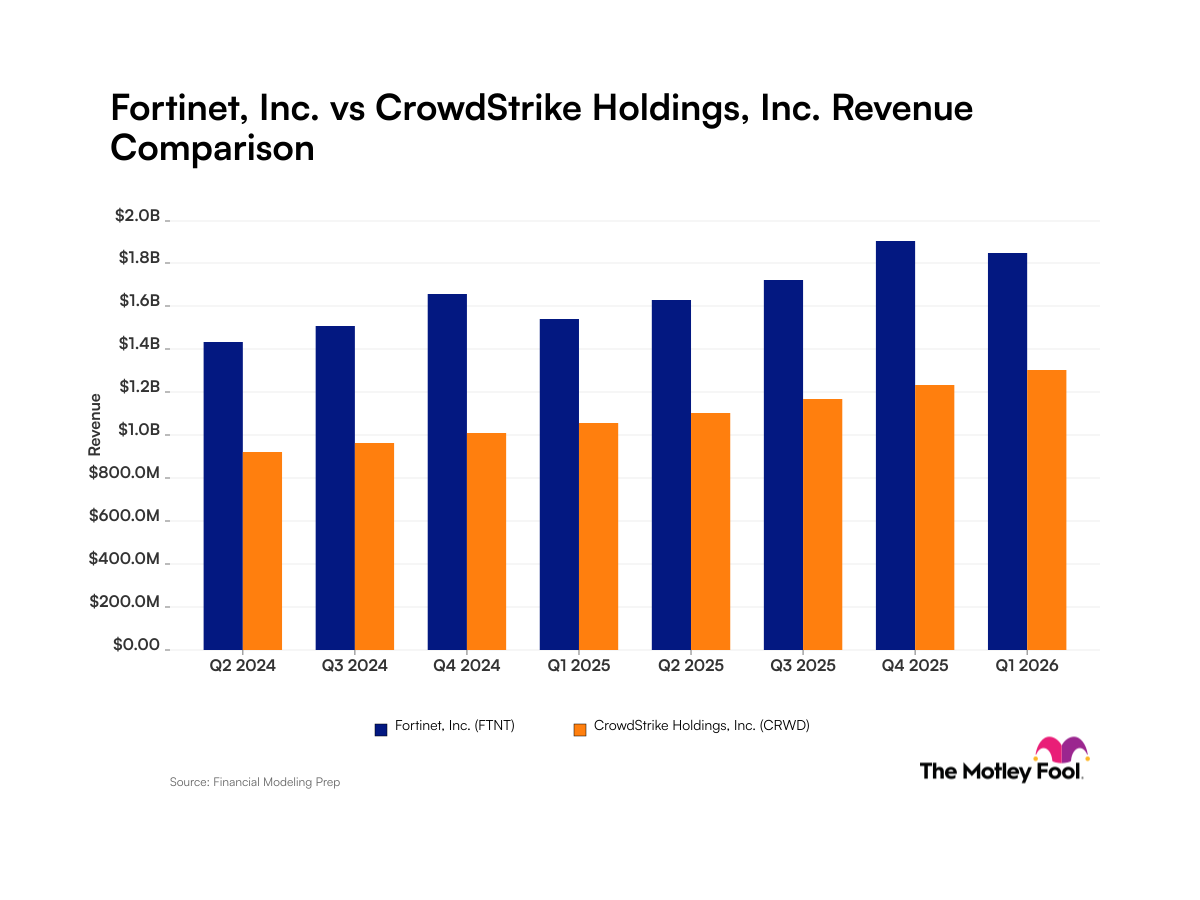
- Revenue Comparison: Fortinet consistently reports higher total revenue than CrowdStrike during the observed periods, indicating its strong market position in cybersecurity hardware and software, while CrowdStrike shows steady quarter-over-quarter revenue growth, reflecting robust customer demand.
- Profitability Analysis: Fortinet achieved approximately a 29% net income margin for the quarter ended March 31, 2026, compared to CrowdStrike's net income margin of about 5% for the quarter ended January 31, 2026, highlighting significant differences in profitability that may influence investor expectations for future growth.
- Market Dynamics: The consistent revenue growth trend of CrowdStrike suggests ongoing demand in the cybersecurity sector, and if this trend continues, CrowdStrike is likely to surpass Fortinet in total sales over time, indicating intensifying market competition.
- Strategic Investments: CrowdStrike's authorization of a $500 million share repurchase increase and a 5% workforce reduction aims to optimize its cost structure and enhance market competitiveness, demonstrating its agility in responding to market challenges.
Fortinet and CrowdStrike Financial Report Analysis
- Fortinet Financial Performance: Fortinet reported approximately a 29% net income margin for Q1 2026, maintaining strong sales of integrated cybersecurity hardware and software despite facing shareholder legal investigations, indicating sustained demand from enterprise customers.
- CrowdStrike Growth Momentum: CrowdStrike achieved about a 5% net income margin in Q1 2026 and announced a $500 million share repurchase increase alongside a 5% workforce reduction, demonstrating the company's focus on resource optimization to support ongoing growth.
- Revenue Comparison Analysis: Fortinet's revenue for Q2 2024 was $1.4 billion, while CrowdStrike's was $921 million; although Fortinet has higher total sales, CrowdStrike's consistent quarterly revenue growth trend reflects strong market demand.
- Strategic Partnerships and Innovation: CrowdStrike's Project QuiltWorks focuses on security risks associated with artificial intelligence and partners with insurance providers like Liberty Mutual, expanding its product line to address potential financial liabilities arising from AI mistakes.
Fortinet vs CrowdStrike: Revenue Trends Analysis
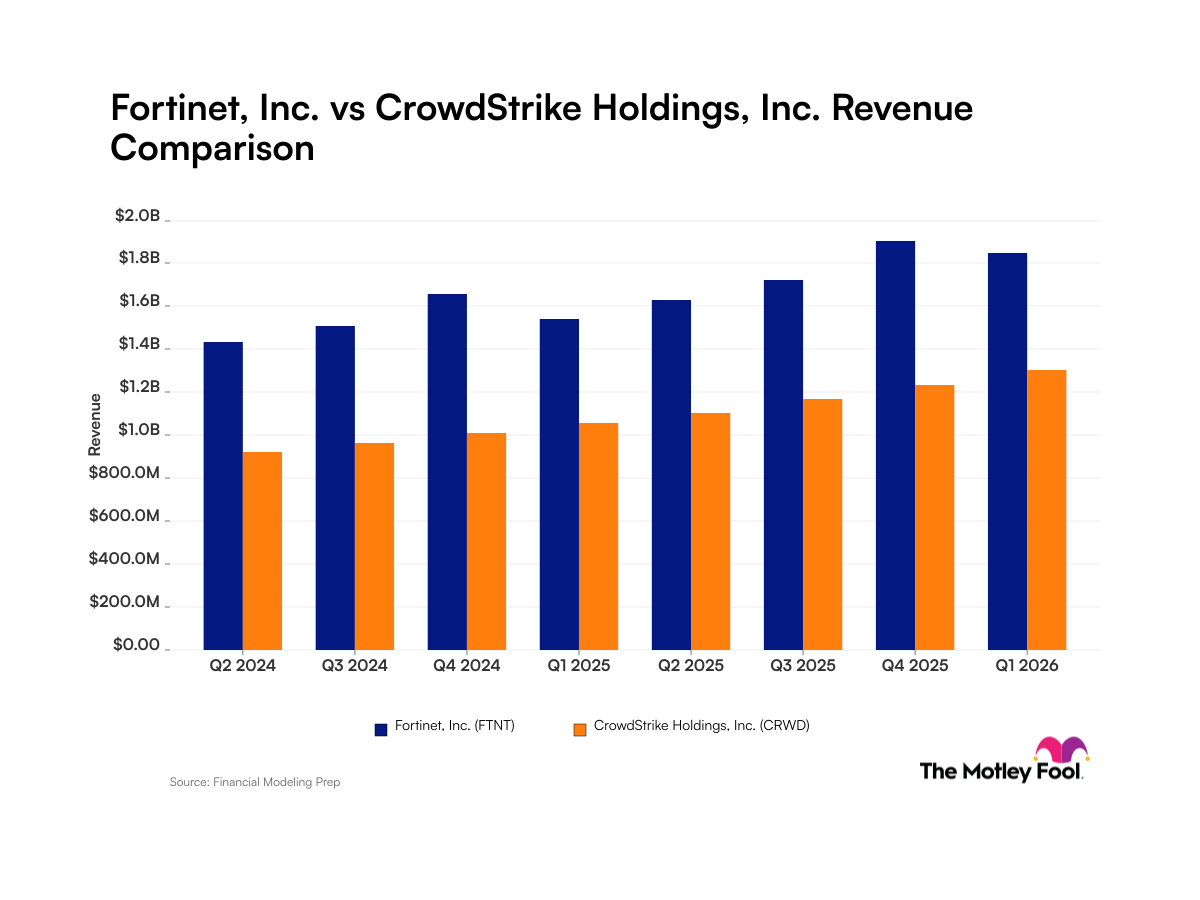
- Fortinet Revenue Performance: Fortinet reported $1.8 billion in revenue for Q1 2026 with a net income margin of approximately 29%, demonstrating strong performance in the cybersecurity hardware and software sector despite facing shareholder legal investigations.
- CrowdStrike Growth Momentum: CrowdStrike generated $1.3 billion in revenue for Q1 2026 with a net income margin of about 5%, while announcing a $500 million share repurchase increase and a 5% workforce reduction, indicating its ongoing growth in the cloud security market and effective cost management.
- Revenue Comparison Analysis: While Fortinet's total sales exceed those of CrowdStrike, the latter has achieved consistent revenue growth nearly every quarter over the past two years, reflecting strong customer demand that may lead to it surpassing Fortinet in total sales in the future.
- Strategic Investment Focus: CrowdStrike's Project QuiltWorks addresses security risks associated with artificial intelligence and has partnered with insurance providers like Liberty Mutual, showcasing its innovation and adaptability in the cybersecurity landscape.

US Stock Indices Reach All-Time Highs Amid Positive Economic Signals


- Strong Market Performance: The S&P 500 rose by 0.22%, the Dow Jones Industrial Average increased by 0.72%, and the Nasdaq 100 climbed by 0.36%, with all three indices reaching new all-time highs, reflecting market confidence in economic recovery.
- Tech Stocks Lead Gains: Dell Technologies surged 32% after reporting Q1 total revenue of $43.84 billion, significantly exceeding the consensus estimate of $35.52 billion, and raised its 2027 revenue forecast to between $165 billion and $169 billion, indicating strong market demand and growth potential.
- Positive Economic Data: The May Chicago PMI rose by 13.5 to 62.7, far surpassing expectations of 50.3, marking the fastest expansion pace in 4.25 years, which further bolstered market confidence in stocks.
- Oil Price Decline Benefits Stocks: Crude oil prices fell over 1% to a five-week low due to a preliminary agreement between the US and Iran, easing inflation concerns and supporting the upward trend in the stock market.

US Stock Indices Reach All-Time Highs Amid Positive Economic Signals
- Market Surge: The S&P 500 rose by 0.21%, the Dow Jones Industrial Average increased by 0.65%, and the Nasdaq 100 climbed by 0.25%, with all three indices reaching new all-time highs, reflecting strong market confidence in economic recovery.
- Tech Stocks Rally: Dell Technologies surged over 31% after reporting Q1 total revenue of $43.84 billion, significantly exceeding the consensus estimate of $35.52 billion, and raised its 2027 revenue forecast to $165 billion to $169 billion, indicating robust demand for AI infrastructure.
- Positive Economic Indicators: The May MNI Chicago PMI jumped 13.5 to 62.7, well above the expected 50.3, marking the strongest expansion pace in 4.25 years, which supports the bullish sentiment in the stock market.
- Oil Price Decline: Crude oil prices fell more than 1% to a five-week low as the US and Iran tentatively agreed to extend a ceasefire, easing inflation concerns and fostering optimism about the economic outlook.

U.S. Stock Indices Reach All-Time Highs Amid Positive Market Sentiment


- Market Optimism: The U.S. stock indices reached all-time highs today, with the S&P 500 up 0.41%, the Dow Jones up 0.43%, and the Nasdaq 100 up 0.66%, driven by improved prospects for a peace deal in the Middle East, reflecting investor confidence in economic recovery.
- Tech Stock Surge: Dell Technologies surged over 30% after providing a sales outlook that exceeded analyst expectations, highlighting relentless demand for AI infrastructure upgrades, which further boosted the entire tech sector's attractiveness to investors.
- Crude Oil Price Decline: Crude oil prices fell more than 1% to a five-week low due to a preliminary agreement between the U.S. and Iran, easing inflation concerns and fostering optimism about a potential recovery in oil supply, which could benefit related industries.
- Strong Corporate Earnings: As of now, 84% of S&P 500 companies have beaten Q1 earnings estimates, with overall earnings projected to rise 12% year-over-year, although excluding the tech sector, growth is only expected at 3%, indicating market reliance on tech for future growth amidst uncertainty.
Fortinet vs. CrowdStrike Revenue Insights
- Revenue Comparison: Fortinet consistently reports higher total revenue than CrowdStrike during the observed periods, indicating its strong market position in cybersecurity hardware and software, while CrowdStrike shows steady quarter-over-quarter revenue growth, reflecting robust customer demand.
- Profitability Analysis: Fortinet achieved approximately a 29% net income margin for the quarter ended March 31, 2026, compared to CrowdStrike's net income margin of about 5% for the quarter ended January 31, 2026, highlighting significant differences in profitability that may influence investor expectations for future growth.
- Market Dynamics: The consistent revenue growth trend of CrowdStrike suggests ongoing demand in the cybersecurity sector, and if this trend continues, CrowdStrike is likely to surpass Fortinet in total sales over time, indicating intensifying market competition.
- Strategic Investments: CrowdStrike's authorization of a $500 million share repurchase increase and a 5% workforce reduction aims to optimize its cost structure and enhance market competitiveness, demonstrating its agility in responding to market challenges.
Fortinet and CrowdStrike Financial Report Analysis
- Fortinet Financial Performance: Fortinet reported approximately a 29% net income margin for Q1 2026, maintaining strong sales of integrated cybersecurity hardware and software despite facing shareholder legal investigations, indicating sustained demand from enterprise customers.
- CrowdStrike Growth Momentum: CrowdStrike achieved about a 5% net income margin in Q1 2026 and announced a $500 million share repurchase increase alongside a 5% workforce reduction, demonstrating the company's focus on resource optimization to support ongoing growth.
- Revenue Comparison Analysis: Fortinet's revenue for Q2 2024 was $1.4 billion, while CrowdStrike's was $921 million; although Fortinet has higher total sales, CrowdStrike's consistent quarterly revenue growth trend reflects strong market demand.
- Strategic Partnerships and Innovation: CrowdStrike's Project QuiltWorks focuses on security risks associated with artificial intelligence and partners with insurance providers like Liberty Mutual, expanding its product line to address potential financial liabilities arising from AI mistakes.
Fortinet vs CrowdStrike: Revenue Trends Analysis
- Fortinet Revenue Performance: Fortinet reported $1.8 billion in revenue for Q1 2026 with a net income margin of approximately 29%, demonstrating strong performance in the cybersecurity hardware and software sector despite facing shareholder legal investigations.
- CrowdStrike Growth Momentum: CrowdStrike generated $1.3 billion in revenue for Q1 2026 with a net income margin of about 5%, while announcing a $500 million share repurchase increase and a 5% workforce reduction, indicating its ongoing growth in the cloud security market and effective cost management.
- Revenue Comparison Analysis: While Fortinet's total sales exceed those of CrowdStrike, the latter has achieved consistent revenue growth nearly every quarter over the past two years, reflecting strong customer demand that may lead to it surpassing Fortinet in total sales in the future.
- Strategic Investment Focus: CrowdStrike's Project QuiltWorks addresses security risks associated with artificial intelligence and has partnered with insurance providers like Liberty Mutual, showcasing its innovation and adaptability in the cybersecurity landscape.
US Stock Indices Reach All-Time Highs Amid Positive Economic Signals
- Strong Market Performance: The S&P 500 rose by 0.22%, the Dow Jones Industrial Average increased by 0.72%, and the Nasdaq 100 climbed by 0.36%, with all three indices reaching new all-time highs, reflecting market confidence in economic recovery.
- Tech Stocks Lead Gains: Dell Technologies surged 32% after reporting Q1 total revenue of $43.84 billion, significantly exceeding the consensus estimate of $35.52 billion, and raised its 2027 revenue forecast to between $165 billion and $169 billion, indicating strong market demand and growth potential.
- Positive Economic Data: The May Chicago PMI rose by 13.5 to 62.7, far surpassing expectations of 50.3, marking the fastest expansion pace in 4.25 years, which further bolstered market confidence in stocks.
- Oil Price Decline Benefits Stocks: Crude oil prices fell over 1% to a five-week low due to a preliminary agreement between the US and Iran, easing inflation concerns and supporting the upward trend in the stock market.
US Stock Indices Reach All-Time Highs Amid Positive Economic Signals
- Market Surge: The S&P 500 rose by 0.21%, the Dow Jones Industrial Average increased by 0.65%, and the Nasdaq 100 climbed by 0.25%, with all three indices reaching new all-time highs, reflecting strong market confidence in economic recovery.
- Tech Stocks Rally: Dell Technologies surged over 31% after reporting Q1 total revenue of $43.84 billion, significantly exceeding the consensus estimate of $35.52 billion, and raised its 2027 revenue forecast to $165 billion to $169 billion, indicating robust demand for AI infrastructure.
- Positive Economic Indicators: The May MNI Chicago PMI jumped 13.5 to 62.7, well above the expected 50.3, marking the strongest expansion pace in 4.25 years, which supports the bullish sentiment in the stock market.
- Oil Price Decline: Crude oil prices fell more than 1% to a five-week low as the US and Iran tentatively agreed to extend a ceasefire, easing inflation concerns and fostering optimism about the economic outlook.
U.S. Stock Indices Reach All-Time Highs Amid Positive Market Sentiment
- Market Optimism: The U.S. stock indices reached all-time highs today, with the S&P 500 up 0.41%, the Dow Jones up 0.43%, and the Nasdaq 100 up 0.66%, driven by improved prospects for a peace deal in the Middle East, reflecting investor confidence in economic recovery.
- Tech Stock Surge: Dell Technologies surged over 30% after providing a sales outlook that exceeded analyst expectations, highlighting relentless demand for AI infrastructure upgrades, which further boosted the entire tech sector's attractiveness to investors.
- Crude Oil Price Decline: Crude oil prices fell more than 1% to a five-week low due to a preliminary agreement between the U.S. and Iran, easing inflation concerns and fostering optimism about a potential recovery in oil supply, which could benefit related industries.
- Strong Corporate Earnings: As of now, 84% of S&P 500 companies have beaten Q1 earnings estimates, with overall earnings projected to rise 12% year-over-year, although excluding the tech sector, growth is only expected at 3%, indicating market reliance on tech for future growth amidst uncertainty.