D-Wave Quantum Inc. Launches Advantage2, Driving Stock Surge
D-Wave Quantum Inc. (QBTS) experienced a price increase of 5.01%, reaching a 5-day high. This movement comes amid broader market strength, with the Nasdaq-100 up 0.78% and the S&P 500 up 0.51%.
The surge is attributed to the company's recent launch of the Advantage2 quantum computer, which enhances its capabilities in solving complex computational problems. This product launch positions D-Wave as a leader in the quantum computing space, especially as 2025 is expected to be a pivotal year for the company, driving significant market opportunity capture.
Investors are showing strong interest in D-Wave's advancements, reflecting confidence in the future of quantum computing technology. The company's unique position in developing both annealing and gate model quantum computers further solidifies its market potential.
Trade with 70% Backtested Accuracy
Analyst Views on QBTS

About QBTS
About the author


D-Wave Quantum Faces Challenges and Opportunities Amid Market Volatility
- Market Volatility Impact: D-Wave Quantum's stock has plummeted by about two-thirds from its high last fall, although it has risen over 35% since its IPO; the combination of high valuations and uncertainty surrounding AI has led to significant investor sell-offs, reflecting market caution towards quantum computing.
- Deteriorating Financials: The company anticipates $25 million in revenue for 2025, a 180% increase year-over-year, yet it faces a staggering net loss of $355 million, up from $144 million the previous year, indicating a need for substantial funding to remain competitive in a challenging market.
- Customer Base Expansion: D-Wave Quantum has attracted over 70 commercial clients, leveraging quantum annealing technology to address real-world issues such as portfolio optimization in finance and minimizing downtime in manufacturing, marking a successful shift from research to practical applications.
- Shareholder Dilution Risk: The number of outstanding shares increased by 27% last year, suggesting the company raised funds through stock issuance at high prices; despite having $884 million in liquidity, shareholders face a daunting price-to-sales ratio of around 180, highlighting the high risks and costs of investing in this stock.

Investment Outlook in Quantum Computing Sector

- D-Wave Performance Growth: D-Wave achieved $24.6 million in sales for 2025, marking a 179% year-over-year increase, and secured over $30 million in customer bookings in January 2026, indicating enhanced market traction and potential for further revenue growth.
- Rigetti Financial Challenges: Rigetti reported $7.1 million in sales for 2025, a 34% decline, with an operating loss of $84.7 million; despite having $443.5 million in cash and short-term investments, the company faces significant profitability pressures.
- Acquisition Strategy Impact: D-Wave's acquisition of Quantum Circuits in 2026 strengthens its competitive position in quantum computing, particularly in solving optimization problems, thereby filling a critical gap in its product offerings and enhancing market competitiveness.
- Investment Choice Analysis: Between D-Wave and Rigetti, D-Wave is viewed as the superior investment due to its higher cash reserves and growing revenue, along with a lower price-to-sales ratio, reflecting stronger investor confidence in its future growth prospects.

D-Wave and Rigetti Quantum Stocks Drop Double Digits Year-to-Date
- Poor Market Performance: D-Wave and Rigetti stocks have dropped 47% and 40% year-to-date, respectively, indicating a decline in investor confidence in the quantum computing sector, particularly following Wall Street's shift towards lower-valued stocks in the 'great rotation' of 2026.
- Financial Strain: Rigetti reported $7.1 million in sales for 2025, a 34% decline year-over-year, with an operating loss of $84.7 million; despite holding $443.5 million in cash and short-term investments, the company faces significant profitability challenges.
- Rapid Growth for D-Wave: D-Wave's customer bookings exceeded $30 million in January 2026, a substantial increase from $13.4 million in Q4 2025, indicating accelerating market demand, although it recorded an operating loss of $100.4 million in 2025.
- Acquisition Strategy Enhances Competitiveness: D-Wave's acquisition of Quantum Circuits in 2026 fills a gap in its offerings related to gate-model technology, which is expected to strengthen its position in solving optimization problems, thereby enhancing its competitive edge.

D-Wave Quantum Stock Sell-Off Raises Concerns
- Stock Price Plunge: D-Wave Quantum's stock has fallen by about two-thirds from its high last fall, and despite a 35% increase since its IPO, high valuations and market uncertainty have led to significant sell-offs, reflecting investor concerns about the quantum computing sector.
- Revenue Growth vs. Losses: The company is projected to generate $25 million in revenue by 2025, marking a 180% increase year-over-year; however, it is also expected to incur a net loss of $355 million, up from $144 million last year, indicating financial strain amid fierce competition.
- Intensifying Market Competition: Competing against tech giants like Alphabet and IBM, D-Wave Quantum's use of quantum annealing to solve real-world problems is overshadowed by its astronomical price-to-sales ratio of around 180, compelling investors to pay a hefty premium and increasing investment risks.
- Uncertain Profitability Outlook: While D-Wave Quantum has made strides in practical applications of quantum computing, analysts generally believe it may take years to achieve profitability, prompting investors to reassess its investment value, especially in light of well-funded competitors in the market.
Analysis of Quantum Computing Investment Prospects
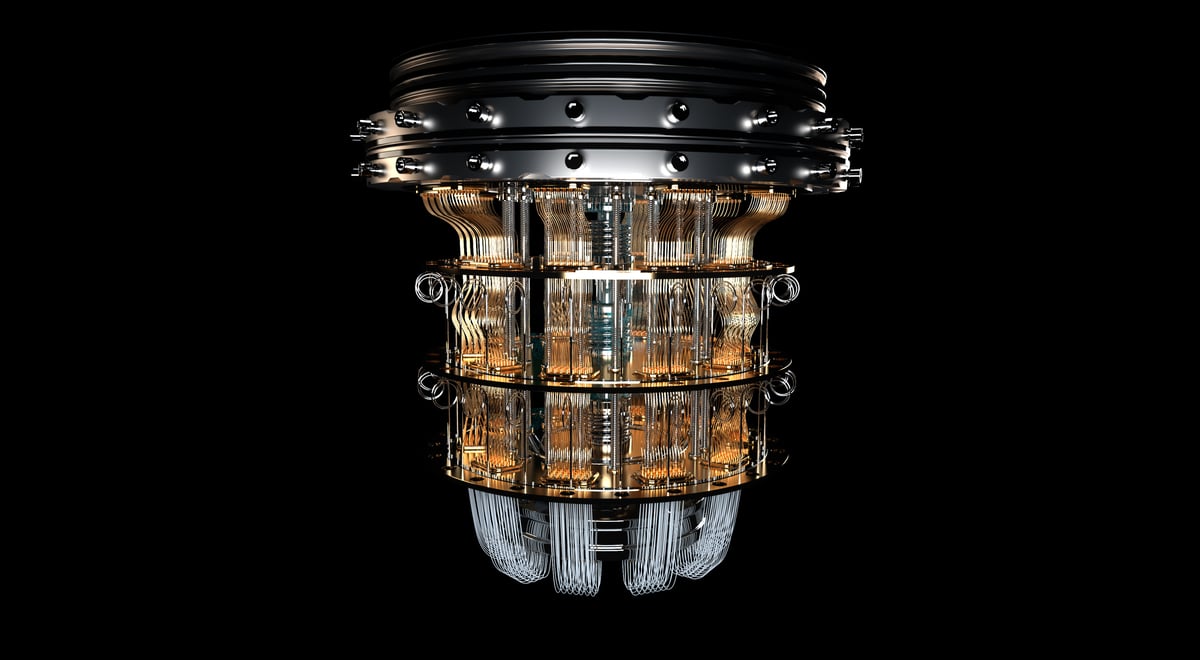
- Technology Comparison: Rigetti Computing utilizes superconducting technology by cooling particles to near absolute zero for computing, while D-Wave Quantum employs quantum annealing, focusing on searching multiple solutions simultaneously; although the latter has limited adaptability for general computing, it excels in specific applications.
- Financial Health Assessment: D-Wave Quantum shows healthier financials with announced early-stage system sales, including a $20 million contract with Florida Atlantic University and a €10 million ($11.5 million) booking in Italy, whereas Rigetti's flagship sale was only $8.4 million, indicating a declining business trend.
- Importance of Partnerships: Rigetti was eliminated in the DARPA contract bid, indicating its technology is lagging behind competitors, while D-Wave has established partnerships with several manufacturing companies, enhancing its market competitiveness and positioning for future growth.
- Investment Recommendation: Despite D-Wave Quantum outperforming Rigetti in various aspects with a final score of 2-1, its strategy of specializing in specific areas is deemed wise, making it the more attractive stock to invest in at this time.

D-Wave Quantum's Market Advantage in Quantum Computing
- Technological Differentiation: D-Wave Quantum utilizes quantum annealing technology, focusing on simultaneously searching for multiple solutions, which, while not suitable for general-purpose computing, shows unique advantages in areas like AI training and logistics networks, thereby securing a leading position in specific markets.
- Financial Performance Comparison: D-Wave Quantum recently announced several early-stage system sales, including a $20 million system to Florida Atlantic University, while Rigetti Computing's flagship system sale was only $8.4 million, highlighting D-Wave's clear advantage in financial growth.
- Partnerships: D-Wave Quantum has established early partnerships with several companies in the manufacturing sector, whereas Rigetti failed to secure the crucial DARPA contract, indicating its technology is lagging behind competitors and potentially affecting its future market position.
- Market Outlook: Although quantum computing may take years to become mainstream, D-Wave Quantum demonstrates stronger market potential by focusing on specific areas and building robust partnerships, attracting investor interest in its long-term growth opportunities.
D-Wave Quantum Faces Challenges and Opportunities Amid Market Volatility
- Market Volatility Impact: D-Wave Quantum's stock has plummeted by about two-thirds from its high last fall, although it has risen over 35% since its IPO; the combination of high valuations and uncertainty surrounding AI has led to significant investor sell-offs, reflecting market caution towards quantum computing.
- Deteriorating Financials: The company anticipates $25 million in revenue for 2025, a 180% increase year-over-year, yet it faces a staggering net loss of $355 million, up from $144 million the previous year, indicating a need for substantial funding to remain competitive in a challenging market.
- Customer Base Expansion: D-Wave Quantum has attracted over 70 commercial clients, leveraging quantum annealing technology to address real-world issues such as portfolio optimization in finance and minimizing downtime in manufacturing, marking a successful shift from research to practical applications.
- Shareholder Dilution Risk: The number of outstanding shares increased by 27% last year, suggesting the company raised funds through stock issuance at high prices; despite having $884 million in liquidity, shareholders face a daunting price-to-sales ratio of around 180, highlighting the high risks and costs of investing in this stock.
Investment Outlook in Quantum Computing Sector
- D-Wave Performance Growth: D-Wave achieved $24.6 million in sales for 2025, marking a 179% year-over-year increase, and secured over $30 million in customer bookings in January 2026, indicating enhanced market traction and potential for further revenue growth.
- Rigetti Financial Challenges: Rigetti reported $7.1 million in sales for 2025, a 34% decline, with an operating loss of $84.7 million; despite having $443.5 million in cash and short-term investments, the company faces significant profitability pressures.
- Acquisition Strategy Impact: D-Wave's acquisition of Quantum Circuits in 2026 strengthens its competitive position in quantum computing, particularly in solving optimization problems, thereby filling a critical gap in its product offerings and enhancing market competitiveness.
- Investment Choice Analysis: Between D-Wave and Rigetti, D-Wave is viewed as the superior investment due to its higher cash reserves and growing revenue, along with a lower price-to-sales ratio, reflecting stronger investor confidence in its future growth prospects.
D-Wave and Rigetti Quantum Stocks Drop Double Digits Year-to-Date
- Poor Market Performance: D-Wave and Rigetti stocks have dropped 47% and 40% year-to-date, respectively, indicating a decline in investor confidence in the quantum computing sector, particularly following Wall Street's shift towards lower-valued stocks in the 'great rotation' of 2026.
- Financial Strain: Rigetti reported $7.1 million in sales for 2025, a 34% decline year-over-year, with an operating loss of $84.7 million; despite holding $443.5 million in cash and short-term investments, the company faces significant profitability challenges.
- Rapid Growth for D-Wave: D-Wave's customer bookings exceeded $30 million in January 2026, a substantial increase from $13.4 million in Q4 2025, indicating accelerating market demand, although it recorded an operating loss of $100.4 million in 2025.
- Acquisition Strategy Enhances Competitiveness: D-Wave's acquisition of Quantum Circuits in 2026 fills a gap in its offerings related to gate-model technology, which is expected to strengthen its position in solving optimization problems, thereby enhancing its competitive edge.
D-Wave Quantum Stock Sell-Off Raises Concerns
- Stock Price Plunge: D-Wave Quantum's stock has fallen by about two-thirds from its high last fall, and despite a 35% increase since its IPO, high valuations and market uncertainty have led to significant sell-offs, reflecting investor concerns about the quantum computing sector.
- Revenue Growth vs. Losses: The company is projected to generate $25 million in revenue by 2025, marking a 180% increase year-over-year; however, it is also expected to incur a net loss of $355 million, up from $144 million last year, indicating financial strain amid fierce competition.
- Intensifying Market Competition: Competing against tech giants like Alphabet and IBM, D-Wave Quantum's use of quantum annealing to solve real-world problems is overshadowed by its astronomical price-to-sales ratio of around 180, compelling investors to pay a hefty premium and increasing investment risks.
- Uncertain Profitability Outlook: While D-Wave Quantum has made strides in practical applications of quantum computing, analysts generally believe it may take years to achieve profitability, prompting investors to reassess its investment value, especially in light of well-funded competitors in the market.
Analysis of Quantum Computing Investment Prospects
- Technology Comparison: Rigetti Computing utilizes superconducting technology by cooling particles to near absolute zero for computing, while D-Wave Quantum employs quantum annealing, focusing on searching multiple solutions simultaneously; although the latter has limited adaptability for general computing, it excels in specific applications.
- Financial Health Assessment: D-Wave Quantum shows healthier financials with announced early-stage system sales, including a $20 million contract with Florida Atlantic University and a €10 million ($11.5 million) booking in Italy, whereas Rigetti's flagship sale was only $8.4 million, indicating a declining business trend.
- Importance of Partnerships: Rigetti was eliminated in the DARPA contract bid, indicating its technology is lagging behind competitors, while D-Wave has established partnerships with several manufacturing companies, enhancing its market competitiveness and positioning for future growth.
- Investment Recommendation: Despite D-Wave Quantum outperforming Rigetti in various aspects with a final score of 2-1, its strategy of specializing in specific areas is deemed wise, making it the more attractive stock to invest in at this time.
D-Wave Quantum's Market Advantage in Quantum Computing
- Technological Differentiation: D-Wave Quantum utilizes quantum annealing technology, focusing on simultaneously searching for multiple solutions, which, while not suitable for general-purpose computing, shows unique advantages in areas like AI training and logistics networks, thereby securing a leading position in specific markets.
- Financial Performance Comparison: D-Wave Quantum recently announced several early-stage system sales, including a $20 million system to Florida Atlantic University, while Rigetti Computing's flagship system sale was only $8.4 million, highlighting D-Wave's clear advantage in financial growth.
- Partnerships: D-Wave Quantum has established early partnerships with several companies in the manufacturing sector, whereas Rigetti failed to secure the crucial DARPA contract, indicating its technology is lagging behind competitors and potentially affecting its future market position.
- Market Outlook: Although quantum computing may take years to become mainstream, D-Wave Quantum demonstrates stronger market potential by focusing on specific areas and building robust partnerships, attracting investor interest in its long-term growth opportunities.