Deere Reports Strong Q1 Earnings and Positive Outlook
Written by Emily J. Thompson, Senior Investment Analyst
Updated: Feb 19 2026
0mins
Source: seekingalpha
Deere & Company shares rose 6.19% in pre-market trading, crossing above the 5-day SMA.
The company reported a net income of $656 million for Q1 2026, down 25% year-over-year, but global net sales increased by 13% to $9.611 billion, driven by strong demand in the small agriculture and construction segments. Additionally, Deere raised its net income guidance for fiscal 2026 to between $4.5 billion and $5.0 billion, reflecting confidence in market recovery and sustained investment in R&D, which is expected to enhance competitiveness and drive future growth.
This strong performance and optimistic outlook have attracted investor interest, suggesting that Deere is well-positioned for continued success in the agricultural equipment sector.
Trade with 70% Backtested Accuracy
Stop guessing "Should I Buy DE?" and start using high-conviction signals backed by rigorous historical data.
Sign up today to access powerful investing tools and make smarter, data-driven decisions.
Analyst Views on DE
Wall Street analysts forecast DE stock price to fall
15 Analyst Rating
8 Buy
7 Hold
0 Sell
Moderate Buy
Current: 588.470

Low
458.00
Averages
514.25
High
560.00
Current: 588.470
Low
458.00
Averages
514.25
High
560.00
About DE
Deere & Company is engaged in the delivery of agricultural, construction and forestry equipment. Its segments include production and precision agriculture (PPA), small agriculture and turf (SAT), construction and forestry (CF), and financial services (FS). PPA segment defines, develops and delivers global equipment and technology solutions for production-scale growers of large grains, small grains, cotton and sugarcane. SAT segment defines, develops and delivers global equipment and technology solutions for dairy and livestock producers, high-value and small acreage crop producers, and turf and utility customers. CF segment defines, develops and delivers a range of machines and technology solutions organized along the earthmoving, forestry and roadbuilding production systems. FS segment finances sales and leases by John Deere dealers of new and used production and precision agriculture equipment and others. Its products include John Deere Autonomous 8R Tractor and E-Power Backhoe.
About the author

Emily J. Thompson
Emily J. Thompson, a Chartered Financial Analyst (CFA) with 12 years in investment research, graduated with honors from the Wharton School. Specializing in industrial and technology stocks, she provides in-depth analysis for Intellectia’s earnings and market brief reports.

Agricultural Equipment Makers Approach New Upcycle Amid Market Pressures


- Market Cycle Outlook: UBS analyst Steven Fisher highlights that agricultural equipment manufacturers may be approaching a new growth cycle despite near-term pressures in the grain markets due to improving U.S. weather, as rising crop prices and stronger farm profitability are expected to support equipment demand.
- Crop Price Volatility: Recent declines in corn and soybean prices, driven by rain forecasts in the U.S. Corn Belt, could negatively impact farmer sentiment, leading to delayed machinery purchases and creating short-term pressures on equipment manufacturers, according to Fisher.
- Long-Term Market Factors: UBS believes that while short-term uncertainties regarding weather and fertilizer availability may affect crop yields, long-term factors such as rising energy market demand and China's commitment to U.S. agricultural products will help support farm incomes and equipment demand.
- Investor Focus: Although current market turbulence may lead to subdued machinery orders, a rebound in crop prices could improve farmer confidence and trigger renewed investment in agricultural equipment, signaling potential recovery prospects for investors to watch.
See More

Deere & Company Shares Snap Seven-Day Gain
- Stock Pullback: Deere & Company shares closed 1.4% lower at $583.44 on Friday after a seven-day rally, indicating short-term market volatility following a strong performance.
- Strong Growth: The stock gained approximately 11.8% over the previous seven sessions and is up 1.3% over the past month, reflecting sustained demand in the agriculture and construction sectors.
- Analyst Ratings: According to Seeking Alpha's Quant Rating, DE holds a score of 3.20 with a Hold rating, achieving an A+ for profitability but receiving D- and D+ for valuation and growth, indicating cautious market sentiment regarding future growth.
- Sales Growth Outlook: Analysts anticipate 15-20% sales growth in key segments for Deere, while management prioritizes share repurchases and debt reduction to enhance financial health.
See More

DFUS Stock Price Analysis and ETF Dynamics

- Price Fluctuation Analysis: DFUS's 52-week low is $64.12 per share and the high is $82.965, with the last trade at $82.32, indicating the stock is oscillating near its high, which may influence investor buying decisions.
- Technical Analysis Tool: Comparing the latest share price to the 200-day moving average can provide valuable insights for investors, helping to assess market trends and potential buying opportunities.
- ETF Trading Mechanism: Exchange-traded funds (ETFs) trade similarly to stocks, where investors are buying and selling 'units' that can be created or destroyed based on investor demand, impacting the liquidity and market performance of the ETF.
- Inflows and Outflows Monitoring: Weekly monitoring of changes in shares outstanding for ETFs helps identify those experiencing significant inflows or outflows, allowing investors to evaluate the impact on underlying assets and make more informed investment decisions.
See More
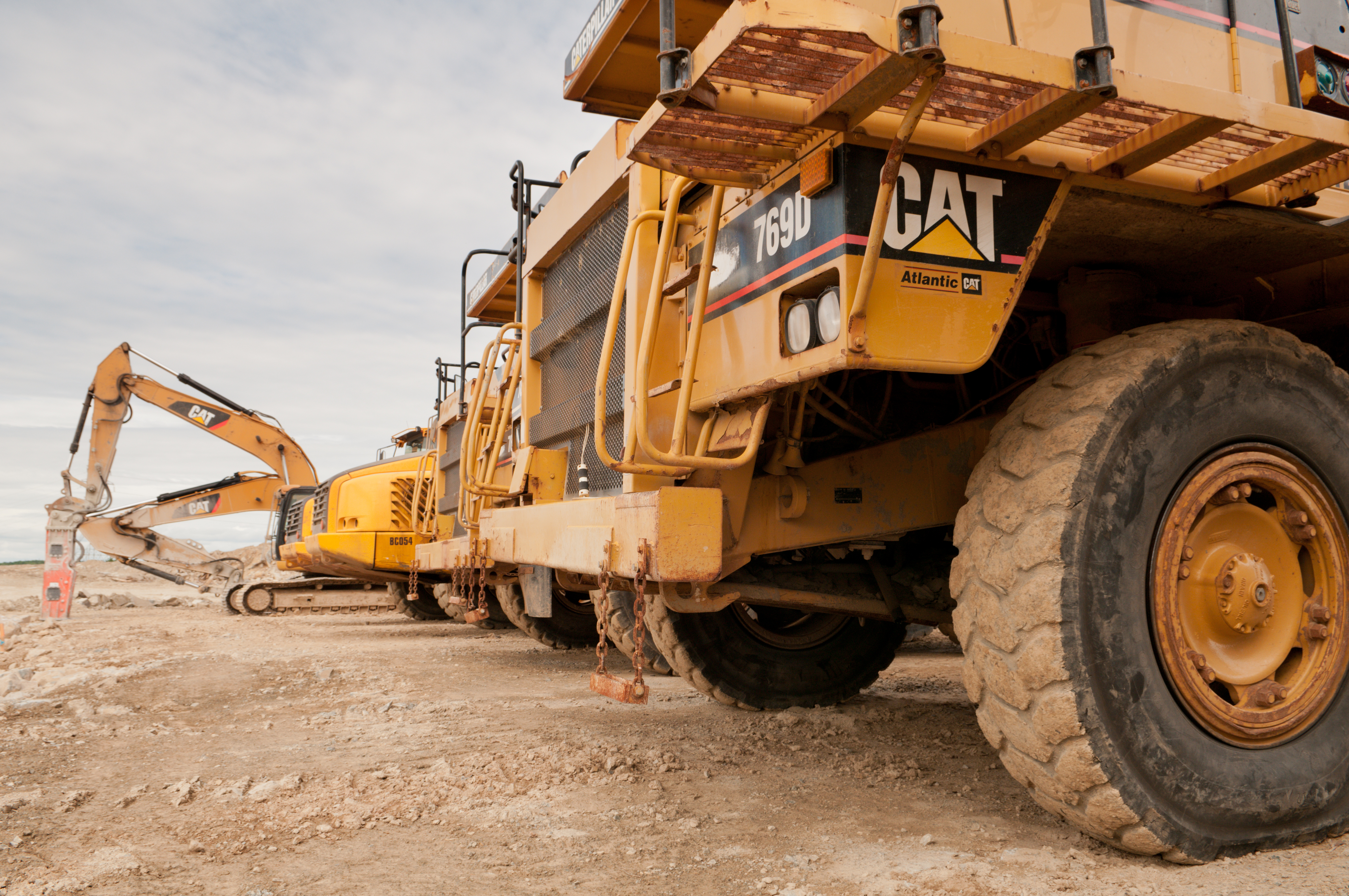
White House Tariff Cuts Boost Caterpillar and Deere Shares

- Stock Price Surge: Caterpillar (CAT) shares have risen approximately 5% over the past five trading sessions following the White House's tariff reductions on certain agricultural and industrial equipment, nearing the record high of $931.35 set on May 7, indicating strong market optimism regarding cost reductions.
- Deere's Performance: Deere & Co. (DE) has advanced roughly 8.1% during the same period, although its shares remain about $90 below the all-time high reached in February, reflecting investor optimism about the policy changes that could stimulate demand for heavy machinery and farm equipment.
- Policy Impact: President Trump signed an executive order lowering tariffs on agricultural equipment from 25% to 15% and expanded the category of industrial equipment eligible for the 15% rate, which is expected to alleviate cost pressures for manufacturers reliant on imported components, thereby enhancing industry competitiveness.
- Long-Term Outlook: The tariff adjustments are set to remain in effect until the end of 2027, marking the latest shift in the administration's metal tariff policy, which may provide greater policy certainty for industrial companies in the coming years and stabilize global supply chains.
See More

US Stocks Close at All-Time Highs as AI Investments Surge

- Strong Market Performance: The S&P 500 rose by 0.13%, the Dow Jones by 0.45%, and the Nasdaq 100 by 0.48%, with all three indices reaching new all-time highs, reflecting strong investor confidence in tech stocks amid a surge in AI investments.
- Marvell Technology Soars: Marvell Technology's stock surged over 32% after Nvidia CEO Jensen Huang predicted the company would be the next to achieve a $1 trillion valuation, significantly boosting investor confidence in its future growth prospects.
- Hewlett Packard Enterprise's Strong Earnings: Hewlett Packard Enterprise's stock jumped more than 19% after reporting Q2 adjusted EPS of 79 cents, well above the consensus estimate of 54 cents, and raising its full-year adjusted EPS forecast to $3.35-$3.45, reflecting robust demand driven by AI.
- Labor Market Strength: US April JOLTS job openings unexpectedly rose by 731,000 to a 23-month high of 7.618 million, surpassing expectations of a decline to 6.866 million, indicating resilience in the labor market and further propelling stock market gains.
See More

Trump Lowers Tariffs on Agricultural Equipment
- Tariff Adjustment Impact: The proclamation signed by Trump lowers agricultural equipment tariffs from 25% to 15%, which is expected to add $0.10 to $0.15 per share in earnings for Deere in fiscal 2026, significantly enhancing the company's profitability.
- Positive Market Reaction: Following the tariff adjustment, shares of Deere, CNH Industrial, and AGCO rose on Tuesday, with Deere up 5%, CNH jumping over 9%, and AGCO climbing 5%, reflecting market optimism regarding the policy.
- Improved Retail Sentiment: On Stocktwits, retail sentiment for Deere improved from 'bearish' to 'neutral', while CNH and AGCO shifted from 'neutral' to 'bullish', indicating increased investor confidence in future prospects.
- Policy Encourages Investment: The White House statement noted that the tariff changes are temporary, lasting until December 31, 2027, aimed at encouraging near-term investments to rebuild the nation's industrial base while promoting the use of U.S. steel and aluminum by foreign companies.
See More
Agricultural Equipment Makers Approach New Upcycle Amid Market Pressures
- Market Cycle Outlook: UBS analyst Steven Fisher highlights that agricultural equipment manufacturers may be approaching a new growth cycle despite near-term pressures in the grain markets due to improving U.S. weather, as rising crop prices and stronger farm profitability are expected to support equipment demand.
- Crop Price Volatility: Recent declines in corn and soybean prices, driven by rain forecasts in the U.S. Corn Belt, could negatively impact farmer sentiment, leading to delayed machinery purchases and creating short-term pressures on equipment manufacturers, according to Fisher.
- Long-Term Market Factors: UBS believes that while short-term uncertainties regarding weather and fertilizer availability may affect crop yields, long-term factors such as rising energy market demand and China's commitment to U.S. agricultural products will help support farm incomes and equipment demand.
- Investor Focus: Although current market turbulence may lead to subdued machinery orders, a rebound in crop prices could improve farmer confidence and trigger renewed investment in agricultural equipment, signaling potential recovery prospects for investors to watch.
See More
Deere & Company Shares Snap Seven-Day Gain
- Stock Pullback: Deere & Company shares closed 1.4% lower at $583.44 on Friday after a seven-day rally, indicating short-term market volatility following a strong performance.
- Strong Growth: The stock gained approximately 11.8% over the previous seven sessions and is up 1.3% over the past month, reflecting sustained demand in the agriculture and construction sectors.
- Analyst Ratings: According to Seeking Alpha's Quant Rating, DE holds a score of 3.20 with a Hold rating, achieving an A+ for profitability but receiving D- and D+ for valuation and growth, indicating cautious market sentiment regarding future growth.
- Sales Growth Outlook: Analysts anticipate 15-20% sales growth in key segments for Deere, while management prioritizes share repurchases and debt reduction to enhance financial health.
See More
DFUS Stock Price Analysis and ETF Dynamics
- Price Fluctuation Analysis: DFUS's 52-week low is $64.12 per share and the high is $82.965, with the last trade at $82.32, indicating the stock is oscillating near its high, which may influence investor buying decisions.
- Technical Analysis Tool: Comparing the latest share price to the 200-day moving average can provide valuable insights for investors, helping to assess market trends and potential buying opportunities.
- ETF Trading Mechanism: Exchange-traded funds (ETFs) trade similarly to stocks, where investors are buying and selling 'units' that can be created or destroyed based on investor demand, impacting the liquidity and market performance of the ETF.
- Inflows and Outflows Monitoring: Weekly monitoring of changes in shares outstanding for ETFs helps identify those experiencing significant inflows or outflows, allowing investors to evaluate the impact on underlying assets and make more informed investment decisions.
See More
White House Tariff Cuts Boost Caterpillar and Deere Shares
- Stock Price Surge: Caterpillar (CAT) shares have risen approximately 5% over the past five trading sessions following the White House's tariff reductions on certain agricultural and industrial equipment, nearing the record high of $931.35 set on May 7, indicating strong market optimism regarding cost reductions.
- Deere's Performance: Deere & Co. (DE) has advanced roughly 8.1% during the same period, although its shares remain about $90 below the all-time high reached in February, reflecting investor optimism about the policy changes that could stimulate demand for heavy machinery and farm equipment.
- Policy Impact: President Trump signed an executive order lowering tariffs on agricultural equipment from 25% to 15% and expanded the category of industrial equipment eligible for the 15% rate, which is expected to alleviate cost pressures for manufacturers reliant on imported components, thereby enhancing industry competitiveness.
- Long-Term Outlook: The tariff adjustments are set to remain in effect until the end of 2027, marking the latest shift in the administration's metal tariff policy, which may provide greater policy certainty for industrial companies in the coming years and stabilize global supply chains.
See More
US Stocks Close at All-Time Highs as AI Investments Surge
- Strong Market Performance: The S&P 500 rose by 0.13%, the Dow Jones by 0.45%, and the Nasdaq 100 by 0.48%, with all three indices reaching new all-time highs, reflecting strong investor confidence in tech stocks amid a surge in AI investments.
- Marvell Technology Soars: Marvell Technology's stock surged over 32% after Nvidia CEO Jensen Huang predicted the company would be the next to achieve a $1 trillion valuation, significantly boosting investor confidence in its future growth prospects.
- Hewlett Packard Enterprise's Strong Earnings: Hewlett Packard Enterprise's stock jumped more than 19% after reporting Q2 adjusted EPS of 79 cents, well above the consensus estimate of 54 cents, and raising its full-year adjusted EPS forecast to $3.35-$3.45, reflecting robust demand driven by AI.
- Labor Market Strength: US April JOLTS job openings unexpectedly rose by 731,000 to a 23-month high of 7.618 million, surpassing expectations of a decline to 6.866 million, indicating resilience in the labor market and further propelling stock market gains.
See More
Trump Lowers Tariffs on Agricultural Equipment
- Tariff Adjustment Impact: The proclamation signed by Trump lowers agricultural equipment tariffs from 25% to 15%, which is expected to add $0.10 to $0.15 per share in earnings for Deere in fiscal 2026, significantly enhancing the company's profitability.
- Positive Market Reaction: Following the tariff adjustment, shares of Deere, CNH Industrial, and AGCO rose on Tuesday, with Deere up 5%, CNH jumping over 9%, and AGCO climbing 5%, reflecting market optimism regarding the policy.
- Improved Retail Sentiment: On Stocktwits, retail sentiment for Deere improved from 'bearish' to 'neutral', while CNH and AGCO shifted from 'neutral' to 'bullish', indicating increased investor confidence in future prospects.
- Policy Encourages Investment: The White House statement noted that the tariff changes are temporary, lasting until December 31, 2027, aimed at encouraging near-term investments to rebuild the nation's industrial base while promoting the use of U.S. steel and aluminum by foreign companies.
See More