Acadia Healthcare Shares Surge After Einhorn's Endorsement
Acadia Healthcare (ACHC) shares surged approximately 12% on Wednesday after hedge fund manager David Einhorn endorsed the company, indicating growing market confidence in its future prospects.
The stock's rise follows a significant endorsement from David Einhorn, which has led to increased investor interest, as evidenced by nearly 6 million shares traded, far exceeding the 65-day average of 3.4 million shares. This surge also marks the second-largest intraday gain for 2026, reflecting a potential rebound in market expectations for Acadia.
This rally comes after a challenging year for Acadia, which saw a decline of over 64%. However, with new leadership under CEO Debra Osteen since January 2023, the company has gained approximately 9% year-to-date, suggesting a positive shift in its trajectory.
Trade with 70% Backtested Accuracy
Analyst Views on ACHC

About ACHC
About the author


Acadia Healthcare Stock Surpasses Analyst Target Price
- Price Target Breach: Acadia Healthcare Company (ACHC) shares have reached $29.53, surpassing the average analyst 12-month target price of $28.73, indicating market optimism about the company's future performance, which may prompt analysts to reassess their target prices.
- Analyst Target Variability: Among the 15 analysts covered by Zacks, target prices range from $13.00 to $39.00, with a standard deviation of $5.404, reflecting differing market perspectives on the company's future, necessitating cautious evaluation by investors.
- Investor Signal: The stock's breach of the target price provides investors with a signal to reassess the company, prompting them to consider whether the current price is merely a stop on the way to a higher target or if it is time to think about taking profits.
- Analyst Rating Overview: Analysts' average rating for Acadia Healthcare ranges from 1 to 5, where 1 is Strong Buy and 5 is Strong Sell, indicating varied market opinions on the stock, and investors should pay attention to the latest research reports for more insights.

Mid-Cap Healthcare Stocks Valuation Analysis

- Valuation Score Overview: According to Seeking Alpha's valuation grades, Acadia Healthcare Company (ACHC) and Waystar Holding (WAY) received an A rating, indicating their attractiveness relative to peers and suggesting potential investor interest for gains.
- Market Performance Highlights: Among mid-cap healthcare stocks with market capitalizations between $2B and $10B, BioCryst Pharmaceuticals (BCRX) stands out with a B+ valuation grade, reflecting its competitiveness and investment appeal in the biopharmaceutical sector.
- Valuation Metrics Analysis: The valuation scores are derived from a comprehensive analysis of multiple metrics, including P/E, PEG, EV/Sales, and EV/EBITDA, providing investors with a robust basis for informed investment decisions.
- Industry Trend Insights: As the healthcare sector continues to evolve, investor focus on mid-cap healthcare stocks is increasing, particularly those demonstrating strong valuation performance, which may attract greater investment inflows in the future.

13D Management Fully Exits WEX Stake Worth $4.59 Million
- Share Sale Overview: On May 15, 2026, 13D Management disclosed the sale of 29,350 shares of WEX, valued at approximately $4.59 million, indicating a cautious outlook on WEX's future prospects.
- Market Performance Analysis: As of May 14, 2026, WEX shares were priced at $134.02, remaining flat over the past year and significantly underperforming the S&P 500, which rose 25% in the same period, reflecting market concerns about its growth potential.
- Financial Performance Highlights: Despite the poor stock performance, WEX reported a nearly 6% year-over-year revenue increase in Q1, reaching $673.8 million, while adjusted earnings per share rose 18% to $4.15, indicating robust fundamentals.
- Future Outlook and Market Reaction: WEX raised its full-year revenue guidance to up to $2.88 billion, yet the market reacted negatively to its earnings report with a 16% drop in stock price; however, if management can continue to enhance margins and cash flow, stock recovery may be on the horizon.

13D Management Acquires Significant Stake in Acadia Healthcare
- New Investment Disclosure: On May 15, 2026, 13D Management disclosed a new position in Acadia Healthcare by acquiring 294,000 shares valued at approximately $5.32 million, indicating confidence in the company's future prospects.
- Holding Value Increase: As of the end of Q1 2026, the value of Acadia Healthcare's position reached $6.88 million, representing 10.7% of 13F reportable assets, highlighting its significance within the investment portfolio.
- Performance Improvement: Acadia Healthcare reported a 7.6% year-over-year revenue increase to $828.8 million in Q1, driven by higher patient volumes and improved pricing, prompting management to raise full-year adjusted EBITDA and earnings guidance.
- Expansion Capacity: The company added 82 newly licensed beds during the quarter, now operating approximately 275 facilities with around 12,400 beds; if management maintains this growth momentum, the recent stock underperformance could present a buying opportunity.

David Einhorn Recommends Five Transitioning Companies

- Acadia's Recovery Potential: Einhorn highlighted Acadia Healthcare (ACHC), which has seen its stock plummet from nearly $90 to around $25, arguing that the market's reaction is excessive; if occupancy rates of new facilities rebound, EBITDA could increase by $200 million annually, potentially doubling the stock price.
- Centene's Profit Normalization: Einhorn believes Centene (CNC) will recover from rising healthcare costs and Medicaid pricing pressures, with margins expected to normalize in the coming years, projecting a stock price increase from $56 to between $85 and $102, indicating significant undervaluation.
- Fluor's Survival and Transformation: After nearly collapsing, Fluor (FLR) is positioned at the center of several infrastructure supercycles; Einhorn noted that the company has initiated a $1.4 billion buyback program, which could retire about 20% of outstanding shares, reflecting its recovery and future demand.
- Victoria's Secret Comeback: Einhorn discussed Victoria's Secret (VSCO), which is redefining its identity after cultural backlash, with new leadership aiming for a 10% operating margin, suggesting strong recovery potential as the brand stabilizes and grows under renewed management strategies.
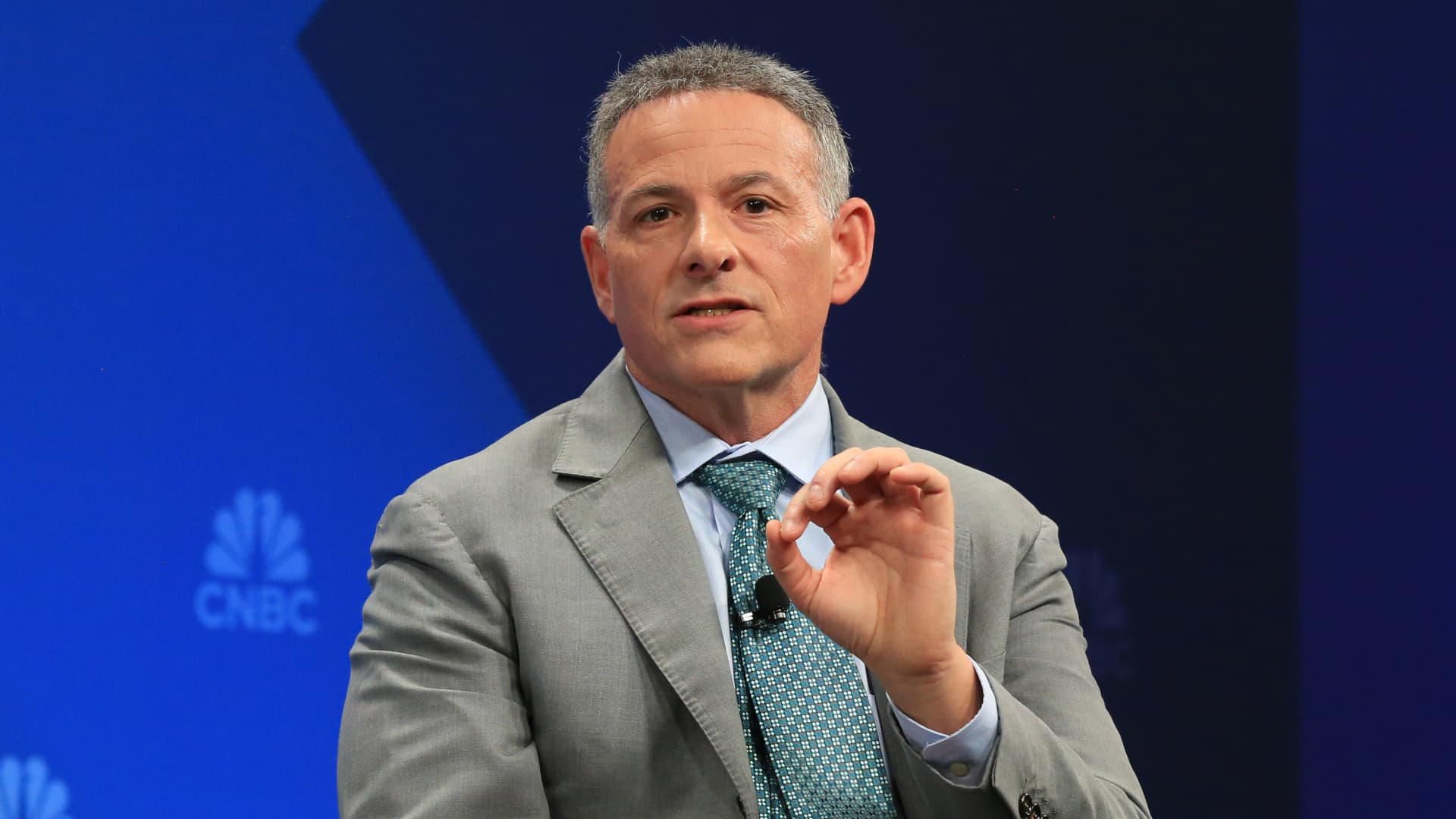
David Einhorn Bullish on Overlooked Companies

- Acadia Healthcare: Einhorn highlighted that Acadia's newer facilities are underutilized, needing occupancy rates raised to 70-80% and improved reimbursement negotiations, with a potential share price of $56, doubling the current value.
- Centene's AI Potential: He argued that Centene could significantly benefit from AI in automating claims processing, with a projected stock value between $85 and $102, indicating substantial upside from the current $56 if margins normalize.
- Fluor's Capital Spending Opportunities: Einhorn noted that Fluor is well-positioned to capitalize on a U.S. capital spending boom across various sectors, suggesting shares could reach $115 in a few years, as the market underestimates its exposure to potential super cycles.
- Versant Media's Cash Flow Advantage: He mentioned that Versant Media remains insulated from streaming competition due to its focus on news and live sports, estimating it could generate free cash flow exceeding 60% of its market cap over the next four years for share buybacks or acquisitions.
Acadia Healthcare Stock Surpasses Analyst Target Price
- Price Target Breach: Acadia Healthcare Company (ACHC) shares have reached $29.53, surpassing the average analyst 12-month target price of $28.73, indicating market optimism about the company's future performance, which may prompt analysts to reassess their target prices.
- Analyst Target Variability: Among the 15 analysts covered by Zacks, target prices range from $13.00 to $39.00, with a standard deviation of $5.404, reflecting differing market perspectives on the company's future, necessitating cautious evaluation by investors.
- Investor Signal: The stock's breach of the target price provides investors with a signal to reassess the company, prompting them to consider whether the current price is merely a stop on the way to a higher target or if it is time to think about taking profits.
- Analyst Rating Overview: Analysts' average rating for Acadia Healthcare ranges from 1 to 5, where 1 is Strong Buy and 5 is Strong Sell, indicating varied market opinions on the stock, and investors should pay attention to the latest research reports for more insights.
Mid-Cap Healthcare Stocks Valuation Analysis
- Valuation Score Overview: According to Seeking Alpha's valuation grades, Acadia Healthcare Company (ACHC) and Waystar Holding (WAY) received an A rating, indicating their attractiveness relative to peers and suggesting potential investor interest for gains.
- Market Performance Highlights: Among mid-cap healthcare stocks with market capitalizations between $2B and $10B, BioCryst Pharmaceuticals (BCRX) stands out with a B+ valuation grade, reflecting its competitiveness and investment appeal in the biopharmaceutical sector.
- Valuation Metrics Analysis: The valuation scores are derived from a comprehensive analysis of multiple metrics, including P/E, PEG, EV/Sales, and EV/EBITDA, providing investors with a robust basis for informed investment decisions.
- Industry Trend Insights: As the healthcare sector continues to evolve, investor focus on mid-cap healthcare stocks is increasing, particularly those demonstrating strong valuation performance, which may attract greater investment inflows in the future.
13D Management Fully Exits WEX Stake Worth $4.59 Million
- Share Sale Overview: On May 15, 2026, 13D Management disclosed the sale of 29,350 shares of WEX, valued at approximately $4.59 million, indicating a cautious outlook on WEX's future prospects.
- Market Performance Analysis: As of May 14, 2026, WEX shares were priced at $134.02, remaining flat over the past year and significantly underperforming the S&P 500, which rose 25% in the same period, reflecting market concerns about its growth potential.
- Financial Performance Highlights: Despite the poor stock performance, WEX reported a nearly 6% year-over-year revenue increase in Q1, reaching $673.8 million, while adjusted earnings per share rose 18% to $4.15, indicating robust fundamentals.
- Future Outlook and Market Reaction: WEX raised its full-year revenue guidance to up to $2.88 billion, yet the market reacted negatively to its earnings report with a 16% drop in stock price; however, if management can continue to enhance margins and cash flow, stock recovery may be on the horizon.
13D Management Acquires Significant Stake in Acadia Healthcare
- New Investment Disclosure: On May 15, 2026, 13D Management disclosed a new position in Acadia Healthcare by acquiring 294,000 shares valued at approximately $5.32 million, indicating confidence in the company's future prospects.
- Holding Value Increase: As of the end of Q1 2026, the value of Acadia Healthcare's position reached $6.88 million, representing 10.7% of 13F reportable assets, highlighting its significance within the investment portfolio.
- Performance Improvement: Acadia Healthcare reported a 7.6% year-over-year revenue increase to $828.8 million in Q1, driven by higher patient volumes and improved pricing, prompting management to raise full-year adjusted EBITDA and earnings guidance.
- Expansion Capacity: The company added 82 newly licensed beds during the quarter, now operating approximately 275 facilities with around 12,400 beds; if management maintains this growth momentum, the recent stock underperformance could present a buying opportunity.
David Einhorn Recommends Five Transitioning Companies
- Acadia's Recovery Potential: Einhorn highlighted Acadia Healthcare (ACHC), which has seen its stock plummet from nearly $90 to around $25, arguing that the market's reaction is excessive; if occupancy rates of new facilities rebound, EBITDA could increase by $200 million annually, potentially doubling the stock price.
- Centene's Profit Normalization: Einhorn believes Centene (CNC) will recover from rising healthcare costs and Medicaid pricing pressures, with margins expected to normalize in the coming years, projecting a stock price increase from $56 to between $85 and $102, indicating significant undervaluation.
- Fluor's Survival and Transformation: After nearly collapsing, Fluor (FLR) is positioned at the center of several infrastructure supercycles; Einhorn noted that the company has initiated a $1.4 billion buyback program, which could retire about 20% of outstanding shares, reflecting its recovery and future demand.
- Victoria's Secret Comeback: Einhorn discussed Victoria's Secret (VSCO), which is redefining its identity after cultural backlash, with new leadership aiming for a 10% operating margin, suggesting strong recovery potential as the brand stabilizes and grows under renewed management strategies.
David Einhorn Bullish on Overlooked Companies
- Acadia Healthcare: Einhorn highlighted that Acadia's newer facilities are underutilized, needing occupancy rates raised to 70-80% and improved reimbursement negotiations, with a potential share price of $56, doubling the current value.
- Centene's AI Potential: He argued that Centene could significantly benefit from AI in automating claims processing, with a projected stock value between $85 and $102, indicating substantial upside from the current $56 if margins normalize.
- Fluor's Capital Spending Opportunities: Einhorn noted that Fluor is well-positioned to capitalize on a U.S. capital spending boom across various sectors, suggesting shares could reach $115 in a few years, as the market underestimates its exposure to potential super cycles.
- Versant Media's Cash Flow Advantage: He mentioned that Versant Media remains insulated from streaming competition due to its focus on news and live sports, estimating it could generate free cash flow exceeding 60% of its market cap over the next four years for share buybacks or acquisitions.