

USDJPY Drops Below Critical 160.00 Level as Verbal Intervention Intensifies
USD Overview: The US dollar has strengthened as traders hedge against risks related to US-Iran negotiations, with cautious optimism about potential talks in Islamabad. However, some weakness is observed as hedges are unwound, and traders are closely monitoring Trump's social media for market-moving updates.
JPY Overview: The Japanese yen remains under pressure due to stagnant inflation and geopolitical risks, with the latest CPI report showing inflation below the Bank of Japan's target. Despite wage growth indicating potential tightening, the BoJ may delay action until geopolitical tensions ease.
USDJPY Technical Analysis: On the daily chart, USDJPY attempted to break above 160.00 but retreated, with buyers looking for opportunities around 157.65 for a potential rally. The 4-hour chart shows a minor upward trend, suggesting buyers may step in at 159.60, while sellers target a break for a drop to 157.65.
Upcoming Economic Events: Key economic data releases are scheduled, including Fed Chair Powell's speech, Tokyo CPI, US Consumer Confidence, and Job Openings, culminating in the US Non-Farm Payroll report at the end of the week.
Trade with 70% Backtested Accuracy
Analyst Views on JPY
About the author


US Dollar Declines Following US-Iran Ceasefire Deal; USDJPY Nears Critical Support Level


USD Market Reaction: The US dollar weakened after Trump announced a two-week ceasefire agreement between the US and Iran, leading to increased risk sentiment and expectations of rate cuts by the Federal Reserve.
JPY Strengthening: The Japanese yen gained strength due to the dollar's decline, with potential support for Japan's economy from lower oil prices and improved energy traffic, although the Bank of Japan is likely to maintain steady rates for now.
USDJPY Technical Analysis: The USDJPY is nearing a key support level at 157.65, where buyers may enter, while sellers are targeting a break below this level to push prices down towards 155.00.
Upcoming Economic Indicators: Key economic data releases are expected, including FOMC meeting minutes, US PCE price index, jobless claims, CPI report, and consumer sentiment survey, alongside US-Iran negotiations.

Nomura anticipates yen intervention within the 161 to 163 range.

Market Dynamics: The dollar is experiencing upward pressure due to ongoing volatility and the Middle East conflict, while the yen is struggling, particularly after USD/JPY briefly surpassed 160.
Intervention Strategies: Nomura suggests that while verbal intervention from Tokyo may deter traders from shorting the yen, actual market trends are difficult to counter, especially if oil prices remain high due to geopolitical tensions.
Potential Intervention Levels: The Japanese authorities may consider intervention if USD/JPY approaches the 161 to 163 range, as this could invite further upward pressure on the dollar.
Economic Indicators: The Bank of Japan's upcoming meetings and reports, such as the BOJ Tankan, could influence the yen's strength, particularly if they signal a potential rate hike in April.

Japan's Finance Minister Expresses Urgent Vigilance Over Market Fluctuations
Intervention Signals: The USD/JPY currency pair fell sharply after Japan's FX chief, Atsushi Mimura, indicated that authorities are prepared to take "decisive" action against speculative trading, leading to a drop from 160.40 to below significant levels.
Market Monitoring: Finance Minister Satsuki Katayama emphasized Japan's urgent monitoring of market movements, echoing Mimura's intervention rhetoric, as the country faces challenges from rising energy costs amid a global energy crisis.
Historical Context: The recent decline in USD/JPY is notable but still less dramatic than the significant drop observed in January 2023, when the pair fell from 159.22 to 153.30 over a few days.
Energy Crisis Impact: Japan's reliance on imported energy makes it particularly vulnerable in the current global energy crisis, complicating its economic situation despite having substantial oil reserves and ongoing efforts to restart nuclear power facilities.

USDJPY Drops Below Critical 160.00 Level as Verbal Intervention Intensifies
USD Overview: The US dollar has strengthened as traders hedge against risks related to US-Iran negotiations, with cautious optimism about potential talks in Islamabad. However, some weakness is observed as hedges are unwound, and traders are closely monitoring Trump's social media for market-moving updates.
JPY Overview: The Japanese yen remains under pressure due to stagnant inflation and geopolitical risks, with the latest CPI report showing inflation below the Bank of Japan's target. Despite wage growth indicating potential tightening, the BoJ may delay action until geopolitical tensions ease.
USDJPY Technical Analysis: On the daily chart, USDJPY attempted to break above 160.00 but retreated, with buyers looking for opportunities around 157.65 for a potential rally. The 4-hour chart shows a minor upward trend, suggesting buyers may step in at 159.60, while sellers target a break for a drop to 157.65.
Upcoming Economic Events: Key economic data releases are scheduled, including Fed Chair Powell's speech, Tokyo CPI, US Consumer Confidence, and Job Openings, culminating in the US Non-Farm Payroll report at the end of the week.
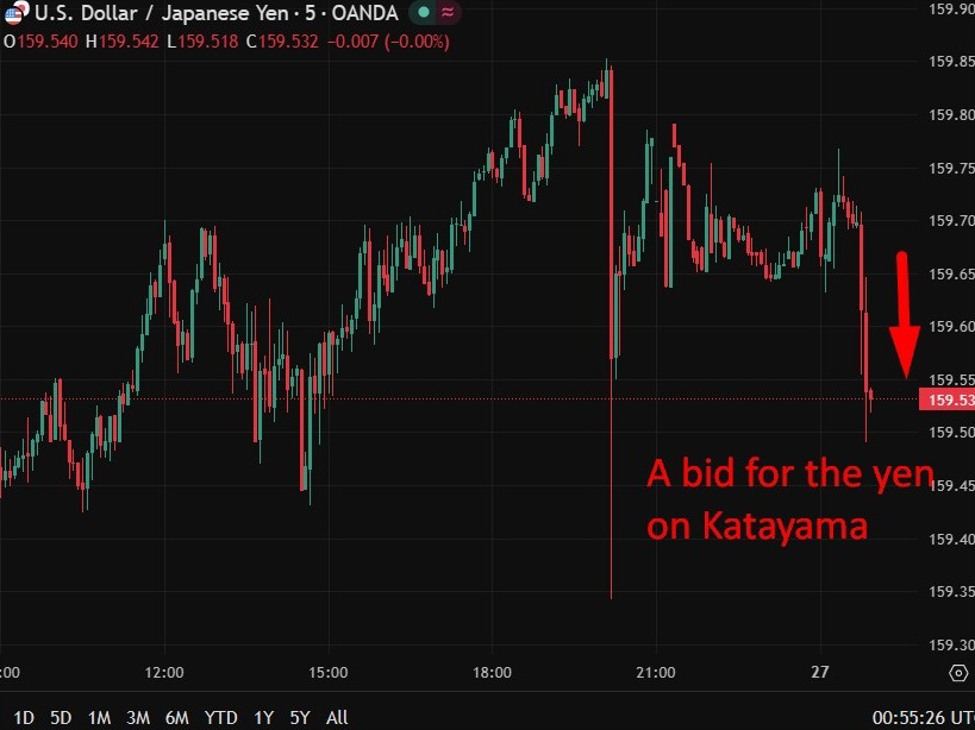
Japan's Finance Minister Notes Speculative Currency Movements Affecting Yen
Japan's Readiness to Act: Japan's Finance Minister Katayama indicated a heightened policy response to currency volatility, emphasizing the government's preparedness to intervene in the foreign exchange market if necessary.
Link to Oil Prices: Authorities have connected recent fluctuations in the yen to speculative moves driven by instability in global oil markets, highlighting Japan's vulnerability due to its reliance on imported energy.
G7 Coordination: An online meeting of G7 finance ministers is planned to address market conditions, reflecting a coordinated international effort to ensure currency stability amid rising energy costs.
Vigilance Against Speculation: Japan remains sensitive to rapid currency fluctuations, particularly those influenced by speculative trading rather than economic fundamentals, and is prepared to take decisive action to stabilize the yen if conditions worsen.

USDJPY Nears Critical 160.00 Level as Iran Dismisses Ceasefire and Optimism Wanes
USD Strengthening: The US dollar has strengthened following Iran's rejection of a ceasefire proposal, which included unacceptable conditions for the US, leading to a deadlock and continued support for the dollar until de-escalation occurs.
JPY Outlook: The Japanese yen remains under pressure due to stagnant inflation and geopolitical risks, with the latest CPI report showing inflation below the Bank of Japan's target, while wage growth may support a tightening bias.
USDJPY Technical Analysis: The USDJPY pair is currently consolidating between support at 157.65 and resistance at 159.75, with potential for buyers to push higher if resistance is broken, while sellers may target a drop back to support.
Upcoming Economic Data: The latest US Jobless Claims figures are expected to be released today, which could impact market sentiment and currency movements.
US Dollar Declines Following US-Iran Ceasefire Deal; USDJPY Nears Critical Support Level
USD Market Reaction: The US dollar weakened after Trump announced a two-week ceasefire agreement between the US and Iran, leading to increased risk sentiment and expectations of rate cuts by the Federal Reserve.
JPY Strengthening: The Japanese yen gained strength due to the dollar's decline, with potential support for Japan's economy from lower oil prices and improved energy traffic, although the Bank of Japan is likely to maintain steady rates for now.
USDJPY Technical Analysis: The USDJPY is nearing a key support level at 157.65, where buyers may enter, while sellers are targeting a break below this level to push prices down towards 155.00.
Upcoming Economic Indicators: Key economic data releases are expected, including FOMC meeting minutes, US PCE price index, jobless claims, CPI report, and consumer sentiment survey, alongside US-Iran negotiations.
Nomura anticipates yen intervention within the 161 to 163 range.
Market Dynamics: The dollar is experiencing upward pressure due to ongoing volatility and the Middle East conflict, while the yen is struggling, particularly after USD/JPY briefly surpassed 160.
Intervention Strategies: Nomura suggests that while verbal intervention from Tokyo may deter traders from shorting the yen, actual market trends are difficult to counter, especially if oil prices remain high due to geopolitical tensions.
Potential Intervention Levels: The Japanese authorities may consider intervention if USD/JPY approaches the 161 to 163 range, as this could invite further upward pressure on the dollar.
Economic Indicators: The Bank of Japan's upcoming meetings and reports, such as the BOJ Tankan, could influence the yen's strength, particularly if they signal a potential rate hike in April.
Japan's Finance Minister Expresses Urgent Vigilance Over Market Fluctuations
Intervention Signals: The USD/JPY currency pair fell sharply after Japan's FX chief, Atsushi Mimura, indicated that authorities are prepared to take "decisive" action against speculative trading, leading to a drop from 160.40 to below significant levels.
Market Monitoring: Finance Minister Satsuki Katayama emphasized Japan's urgent monitoring of market movements, echoing Mimura's intervention rhetoric, as the country faces challenges from rising energy costs amid a global energy crisis.
Historical Context: The recent decline in USD/JPY is notable but still less dramatic than the significant drop observed in January 2023, when the pair fell from 159.22 to 153.30 over a few days.
Energy Crisis Impact: Japan's reliance on imported energy makes it particularly vulnerable in the current global energy crisis, complicating its economic situation despite having substantial oil reserves and ongoing efforts to restart nuclear power facilities.
USDJPY Drops Below Critical 160.00 Level as Verbal Intervention Intensifies
USD Overview: The US dollar has strengthened as traders hedge against risks related to US-Iran negotiations, with cautious optimism about potential talks in Islamabad. However, some weakness is observed as hedges are unwound, and traders are closely monitoring Trump's social media for market-moving updates.
JPY Overview: The Japanese yen remains under pressure due to stagnant inflation and geopolitical risks, with the latest CPI report showing inflation below the Bank of Japan's target. Despite wage growth indicating potential tightening, the BoJ may delay action until geopolitical tensions ease.
USDJPY Technical Analysis: On the daily chart, USDJPY attempted to break above 160.00 but retreated, with buyers looking for opportunities around 157.65 for a potential rally. The 4-hour chart shows a minor upward trend, suggesting buyers may step in at 159.60, while sellers target a break for a drop to 157.65.
Upcoming Economic Events: Key economic data releases are scheduled, including Fed Chair Powell's speech, Tokyo CPI, US Consumer Confidence, and Job Openings, culminating in the US Non-Farm Payroll report at the end of the week.
Japan's Finance Minister Notes Speculative Currency Movements Affecting Yen
Japan's Readiness to Act: Japan's Finance Minister Katayama indicated a heightened policy response to currency volatility, emphasizing the government's preparedness to intervene in the foreign exchange market if necessary.
Link to Oil Prices: Authorities have connected recent fluctuations in the yen to speculative moves driven by instability in global oil markets, highlighting Japan's vulnerability due to its reliance on imported energy.
G7 Coordination: An online meeting of G7 finance ministers is planned to address market conditions, reflecting a coordinated international effort to ensure currency stability amid rising energy costs.
Vigilance Against Speculation: Japan remains sensitive to rapid currency fluctuations, particularly those influenced by speculative trading rather than economic fundamentals, and is prepared to take decisive action to stabilize the yen if conditions worsen.
USDJPY Nears Critical 160.00 Level as Iran Dismisses Ceasefire and Optimism Wanes
USD Strengthening: The US dollar has strengthened following Iran's rejection of a ceasefire proposal, which included unacceptable conditions for the US, leading to a deadlock and continued support for the dollar until de-escalation occurs.
JPY Outlook: The Japanese yen remains under pressure due to stagnant inflation and geopolitical risks, with the latest CPI report showing inflation below the Bank of Japan's target, while wage growth may support a tightening bias.
USDJPY Technical Analysis: The USDJPY pair is currently consolidating between support at 157.65 and resistance at 159.75, with potential for buyers to push higher if resistance is broken, while sellers may target a drop back to support.
Upcoming Economic Data: The latest US Jobless Claims figures are expected to be released today, which could impact market sentiment and currency movements.





