U.S. Stocks Fluctuate Amid Downward Revision of Economic Growth
Written by Emily J. Thompson, Senior Investment Analyst
Updated: Mar 13 2026
0mins


Source: Benzinga
- Economic Growth Revision: The Bureau of Economic Analysis revised the fourth-quarter 2025 GDP growth to 0.7%, down 0.7 percentage points from its advance estimate, indicating signs of economic slowdown that may affect investor confidence.
- Persistent Inflation Pressure: The January Core Personal Consumption Expenditure price index showed a 3.1% annual increase, up from the previous 3%, further deviating from the Fed's 2% target, potentially prompting the Fed to adopt tighter monetary policies to combat inflation.
- Oil Market Volatility: While Washington temporarily eased sanctions on Russian crude to expand global supply, tensions between Iran and the U.S. continue to threaten Persian Gulf energy flows, keeping West Texas Intermediate prices near $95 a barrel.
- Major Indices Performance: By midday in New York, the Dow Jones Industrial Average rose 0.3% to 46,820, the S&P 500 held flat at 6,670, and the Nasdaq 100 was little changed at 24,530, reflecting market uncertainty.
Trade with 70% Backtested Accuracy
Stop guessing "Should I Buy ADBE?" and start using high-conviction signals backed by rigorous historical data.
Sign up today to access powerful investing tools and make smarter, data-driven decisions.
Analyst Views on ADBE
Wall Street analysts forecast ADBE stock price to rise
26 Analyst Rating
13 Buy
11 Hold
2 Sell
Moderate Buy
Current: 196.280

Low
270.00
Averages
431.08
High
660.00
Current: 196.280
Low
270.00
Averages
431.08
High
660.00
About ADBE
Adobe Inc. is a global technology company. The Company's Solutions enable digital experiences, starting with the first creative spark, to the creation and development of all content and media, to the personalized delivery across every channel. Its segments include Digital Media, Digital Experience, and Publishing and Advertising. The Digital Media segment provides products and services that allow individuals, teams, businesses, and enterprises to create, publish, and promote content, and to work with documents and creative content across different workflows. The Digital Experience segment provides an integrated platform set of products, services and solutions that enable businesses to create, manage, execute, measure, monetize & optimize customer experiences. The Publishing and Advertising segment contains legacy products and services that address diverse market opportunities, including eLearning solutions, technical document publishing, web conferencing, document and forms platforms.
About the author

Emily J. Thompson
Emily J. Thompson, a Chartered Financial Analyst (CFA) with 12 years in investment research, graduated with honors from the Wharton School. Specializing in industrial and technology stocks, she provides in-depth analysis for Intellectia’s earnings and market brief reports.
BigCommerce Offers Lower TCO for B2B Catalogs Compared to Magento

- Cost Comparison: According to Optimum7's 2026 analysis, the first-year total cost of ownership for Magento ranges from $30,000 to $60,000, while heavily customized Adobe Commerce stores can exceed $450,000 annually, highlighting BigCommerce's clear cost advantage in the B2B market.
- Significant ROI: A 2025 IDC Business Value study found that BigCommerce B2B Edition customers achieved a 391% three-year ROI with a seven-month payback period, demonstrating the effectiveness and attractiveness of its business model.
- Maintenance Burden Shift: Adobe moved Magento and Adobe Commerce to a monthly isolated security patch release schedule starting January 2026, increasing maintenance tasks and developer costs for self-hosted stores, while BigCommerce includes these expenses in its SaaS subscription, alleviating merchant burdens.
- Market Trend Shift: As B2B industrial buyers increasingly expect B2C-quality digital experiences, more merchants are considering migrating from Magento to BigCommerce to address rising operational pressures and cost issues.
See More
Adobe Management Embraces New Strategy
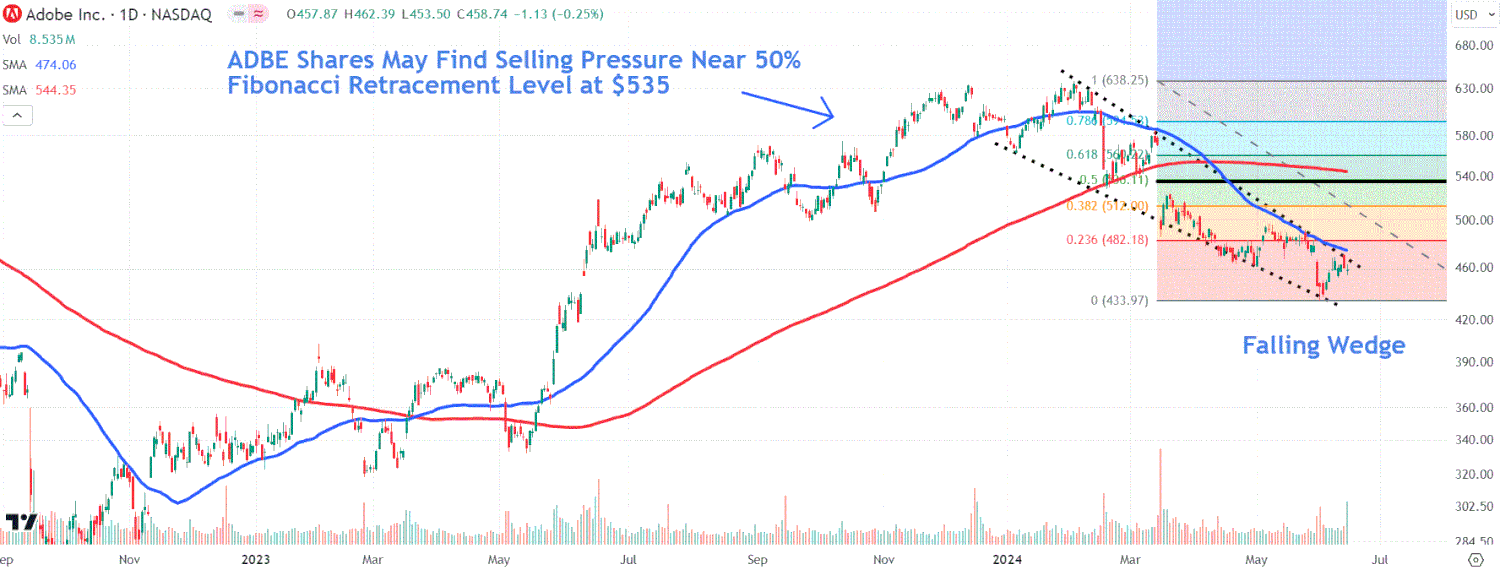
- New Strategy Implementation: Adobe's management team has decided to adopt a new strategic direction based on stock prices from June 16, 2026, aiming to enhance the company's competitiveness in the digital media market, although specific details remain undisclosed.
- Market Reaction: The stock price showed slight fluctuations following the video release on June 18, 2026, indicating a cautiously optimistic attitude from investors regarding the new strategy, which may influence future investment decisions.
- Long-term Goals: The implementation of the new strategy is expected to lead to higher market share and revenue growth for Adobe, particularly in the rapidly evolving digital content creation and management sector.
- Management Confidence: The management team's confidence in the new strategy indicates Adobe's ongoing commitment to innovation and market leadership, despite facing intense industry competition.
See More

Veeva and Adobe: Investment Opportunities in the AI Era

- Strong Financial Performance: Despite a declining stock price, Veeva Systems reported a 16% year-over-year revenue increase to $882.9 million in Q1 FY2027, with adjusted EPS at $2.24, reflecting robust demand and a solid customer base in the life sciences sector.
- Significant Market Opportunity: Veeva Systems has an addressable market exceeding $20 billion, while its trailing twelve-month revenue stands at only $3.3 billion, indicating substantial potential for future growth and expansion.
- AI Technology Integration: The launch of Veeva AI aims to automate and simplify numerous tasks within the life sciences industry, enhancing product competitiveness and customer satisfaction.
- Adobe's Growth Potential: Adobe's revenue increased by 13% year-over-year to $6.62 billion in Q2 FY2026, with adjusted EPS at $5.96, demonstrating its continued leadership in digital content creation, while the introduction of AI tools is significantly boosting its annual recurring revenue.
See More

Software Companies Embrace AI Opportunities
- Optimistic Industry Outlook: Nvidia CEO Jensen Huang stated at a tech trade show that AI will enhance software companies' products and services rather than replace them, providing a positive signal for the software sector and potentially prompting investors to revisit undervalued stocks.
- Veeva Systems Strong Growth: Veeva Systems reported a 16% year-over-year revenue increase in Q1 FY2027, reaching $882.9 million, with adjusted EPS at $2.24, highlighting strong market demand and customer loyalty in the life sciences sector.
- Adobe's Solid Financial Performance: Adobe's revenue grew 13% year-over-year in Q2 FY2026 to a record $6.62 billion, with adjusted EPS at $5.96, demonstrating the company's continued leadership in digital content creation despite market challenges.
- AI Tools Driving Innovation: Adobe's AI innovations have led to a threefold increase in annual recurring revenue to over $500 million, indicating the company's potential to leverage AI for enhancing products and services, further solidifying its competitive advantage.
See More

Software Companies Set to Benefit from AI Technology

- Optimistic Industry Outlook: Nvidia CEO Jensen Huang stated at a tech trade show that AI will enhance software companies' products and services rather than replace them, creating new investment opportunities for the software sector amid current market downturns.
- Veeva Systems Growth: In Q1 of fiscal year 2027, Veeva Systems reported a 16% year-over-year revenue increase to $882.9 million, with adjusted EPS at $2.24, reflecting strong performance and demand in the life sciences sector.
- Adobe's Financial Stability: Adobe's revenue in Q2 of fiscal year 2026 rose 13% year-over-year to a record $6.62 billion, with adjusted EPS at $5.96, indicating robust fundamentals despite leadership changes affecting its stock performance.
- Impact of AI Tools: Adobe's AI innovations have driven a threefold increase in annual recurring revenue to over $500 million, demonstrating that ongoing investments in AI will support long-term growth and enhance its competitive position in the market.
See More

Marvell Stock Soars as CFO's Sale Raises Investor Questions

- CEO Praise Boosts Stock: Nvidia CEO Jensen Huang praised Marvell Technology at the Computex conference, stating it will be the next semiconductor stock to reach a trillion-dollar valuation, which directly propelled Marvell's stock price significantly in subsequent trading sessions.
- S&P 500 Inclusion: Marvell announced its inclusion in the S&P 500 index effective June 22, further enhancing market confidence in its future performance and attracting increased investor interest.
- CFO Stock Sale: Marvell CFO Willem Meintjes filed to sell approximately 211,000 shares, estimated to be worth around $65 million based on the closing price on June 15, raising questions among investors regarding the motivations behind this transaction.
- Leadership Transition Impact: With Meintjes stepping down after 10 years and Dan Durn, former CFO of Adobe, taking over, while the stock sale raises concerns, analysts believe it does not indicate underlying issues at Marvell, highlighting the company's strong performance amid favorable AI-driven market conditions.
See More
BigCommerce Offers Lower TCO for B2B Catalogs Compared to Magento
- Cost Comparison: According to Optimum7's 2026 analysis, the first-year total cost of ownership for Magento ranges from $30,000 to $60,000, while heavily customized Adobe Commerce stores can exceed $450,000 annually, highlighting BigCommerce's clear cost advantage in the B2B market.
- Significant ROI: A 2025 IDC Business Value study found that BigCommerce B2B Edition customers achieved a 391% three-year ROI with a seven-month payback period, demonstrating the effectiveness and attractiveness of its business model.
- Maintenance Burden Shift: Adobe moved Magento and Adobe Commerce to a monthly isolated security patch release schedule starting January 2026, increasing maintenance tasks and developer costs for self-hosted stores, while BigCommerce includes these expenses in its SaaS subscription, alleviating merchant burdens.
- Market Trend Shift: As B2B industrial buyers increasingly expect B2C-quality digital experiences, more merchants are considering migrating from Magento to BigCommerce to address rising operational pressures and cost issues.
See More
Adobe Management Embraces New Strategy
- New Strategy Implementation: Adobe's management team has decided to adopt a new strategic direction based on stock prices from June 16, 2026, aiming to enhance the company's competitiveness in the digital media market, although specific details remain undisclosed.
- Market Reaction: The stock price showed slight fluctuations following the video release on June 18, 2026, indicating a cautiously optimistic attitude from investors regarding the new strategy, which may influence future investment decisions.
- Long-term Goals: The implementation of the new strategy is expected to lead to higher market share and revenue growth for Adobe, particularly in the rapidly evolving digital content creation and management sector.
- Management Confidence: The management team's confidence in the new strategy indicates Adobe's ongoing commitment to innovation and market leadership, despite facing intense industry competition.
See More
Veeva and Adobe: Investment Opportunities in the AI Era
- Strong Financial Performance: Despite a declining stock price, Veeva Systems reported a 16% year-over-year revenue increase to $882.9 million in Q1 FY2027, with adjusted EPS at $2.24, reflecting robust demand and a solid customer base in the life sciences sector.
- Significant Market Opportunity: Veeva Systems has an addressable market exceeding $20 billion, while its trailing twelve-month revenue stands at only $3.3 billion, indicating substantial potential for future growth and expansion.
- AI Technology Integration: The launch of Veeva AI aims to automate and simplify numerous tasks within the life sciences industry, enhancing product competitiveness and customer satisfaction.
- Adobe's Growth Potential: Adobe's revenue increased by 13% year-over-year to $6.62 billion in Q2 FY2026, with adjusted EPS at $5.96, demonstrating its continued leadership in digital content creation, while the introduction of AI tools is significantly boosting its annual recurring revenue.
See More
Software Companies Embrace AI Opportunities
- Optimistic Industry Outlook: Nvidia CEO Jensen Huang stated at a tech trade show that AI will enhance software companies' products and services rather than replace them, providing a positive signal for the software sector and potentially prompting investors to revisit undervalued stocks.
- Veeva Systems Strong Growth: Veeva Systems reported a 16% year-over-year revenue increase in Q1 FY2027, reaching $882.9 million, with adjusted EPS at $2.24, highlighting strong market demand and customer loyalty in the life sciences sector.
- Adobe's Solid Financial Performance: Adobe's revenue grew 13% year-over-year in Q2 FY2026 to a record $6.62 billion, with adjusted EPS at $5.96, demonstrating the company's continued leadership in digital content creation despite market challenges.
- AI Tools Driving Innovation: Adobe's AI innovations have led to a threefold increase in annual recurring revenue to over $500 million, indicating the company's potential to leverage AI for enhancing products and services, further solidifying its competitive advantage.
See More
Software Companies Set to Benefit from AI Technology
- Optimistic Industry Outlook: Nvidia CEO Jensen Huang stated at a tech trade show that AI will enhance software companies' products and services rather than replace them, creating new investment opportunities for the software sector amid current market downturns.
- Veeva Systems Growth: In Q1 of fiscal year 2027, Veeva Systems reported a 16% year-over-year revenue increase to $882.9 million, with adjusted EPS at $2.24, reflecting strong performance and demand in the life sciences sector.
- Adobe's Financial Stability: Adobe's revenue in Q2 of fiscal year 2026 rose 13% year-over-year to a record $6.62 billion, with adjusted EPS at $5.96, indicating robust fundamentals despite leadership changes affecting its stock performance.
- Impact of AI Tools: Adobe's AI innovations have driven a threefold increase in annual recurring revenue to over $500 million, demonstrating that ongoing investments in AI will support long-term growth and enhance its competitive position in the market.
See More
Marvell Stock Soars as CFO's Sale Raises Investor Questions
- CEO Praise Boosts Stock: Nvidia CEO Jensen Huang praised Marvell Technology at the Computex conference, stating it will be the next semiconductor stock to reach a trillion-dollar valuation, which directly propelled Marvell's stock price significantly in subsequent trading sessions.
- S&P 500 Inclusion: Marvell announced its inclusion in the S&P 500 index effective June 22, further enhancing market confidence in its future performance and attracting increased investor interest.
- CFO Stock Sale: Marvell CFO Willem Meintjes filed to sell approximately 211,000 shares, estimated to be worth around $65 million based on the closing price on June 15, raising questions among investors regarding the motivations behind this transaction.
- Leadership Transition Impact: With Meintjes stepping down after 10 years and Dan Durn, former CFO of Adobe, taking over, while the stock sale raises concerns, analysts believe it does not indicate underlying issues at Marvell, highlighting the company's strong performance amid favorable AI-driven market conditions.
See More