U.S. Space Force Awards $3.2 Billion Contracts to Advance Missile Defense Initiative
Written by Emily J. Thompson, Senior Investment Analyst
Updated: Apr 24 2026
0mins
Source: Newsfilter
- Significant Contract Value: The U.S. Space Force has awarded contracts worth up to $3.2 billion to 12 companies for the development of space-based missile defense interceptor systems, marking a significant advancement in President Trump's Golden Dome initiative, which is expected to cost $185 billion in total.
- Strategic Shift: This initiative not only expands existing ground-based defense systems but also incorporates space elements aimed at detecting, tracking, and potentially countering threats from orbit through advanced satellite networks and debated orbital weaponry, significantly enhancing U.S. missile defense capabilities.
- Prototype Agreements Signed: The Space Force has granted initial prototype agreements to develop space-based interceptors capable of neutralizing missile threats shortly after launch, representing a major shift in U.S. missile defense strategy that allows for early engagement in the missile flight path.
- Increased Competition: The Space Force has also awarded about half a dozen small Golden Dome contracts to build competing missile defense prototypes, initiating a race for future deals worth tens of billions of dollars, reflecting a strong emphasis on advancing missile defense technology.
Trade with 70% Backtested Accuracy
Stop guessing "Should I Buy NOC?" and start using high-conviction signals backed by rigorous historical data.
Sign up today to access powerful investing tools and make smarter, data-driven decisions.
Analyst Views on NOC
Wall Street analysts forecast NOC stock price to rise
13 Analyst Rating
10 Buy
3 Hold
0 Sell
Strong Buy
Current: 539.220

Low
630.00
Averages
684.08
High
770.00
Current: 539.220
Low
630.00
Averages
684.08
High
770.00
About NOC
Northrop Grumman Corporation is a global aerospace and defense technology company. Its segments include Aeronautics Systems, Defense Systems, Mission Systems, and Space Systems. Aeronautics Systems is engaged in the design, development, production, integration, sustainment and modernization of military aircraft systems for the United States Air Force, the United States Navy, other United States government agencies, and international customers. Defense Systems is engaged in the design, engineering, development, integration, and manufacturing of deterrent systems, advanced tactical weapons, and missile defense solutions. Mission Systems is a provider of mission solutions and multifunction systems. Its products and services include command, control, communications and computers, and reconnaissance (C4ISR) systems. Space Systems delivers end-to-end mission solutions through the design, development, integration, production and operation of space, missile defense, and launch systems.
About the author

Emily J. Thompson
Emily J. Thompson, a Chartered Financial Analyst (CFA) with 12 years in investment research, graduated with honors from the Wharton School. Specializing in industrial and technology stocks, she provides in-depth analysis for Intellectia’s earnings and market brief reports.

Northrop Grumman Partners with Apex to Develop Space-Based Missile Interceptors

- Space Interceptor Initiative: Northrop Grumman (NOC) announced a partnership with Los Angeles-based satellite manufacturer Apex to support U.S. government efforts to expand homeland missile defense capabilities, marking a significant step in evaluating concepts for a space-based interceptor network.
- Investment Background: The company has invested over $1 billion in missile defense technologies and is targeting an initial on-orbit demonstration in 2027, demonstrating its long-term commitment and strategic positioning in new technology development.
- Market Opportunity: The development of space-based interceptors presents a potentially significant long-term opportunity for defense contractors and space companies as the Pentagon explores new missile defense technologies, despite facing major technical, budgetary, and policy hurdles.
- Commercial Partnership Model: Northrop is combining missile defense technologies with commercial partnerships to support Golden Dome objectives, with Apex providing standardized satellite buses to facilitate large-scale deployments of future interceptor constellations.
See More
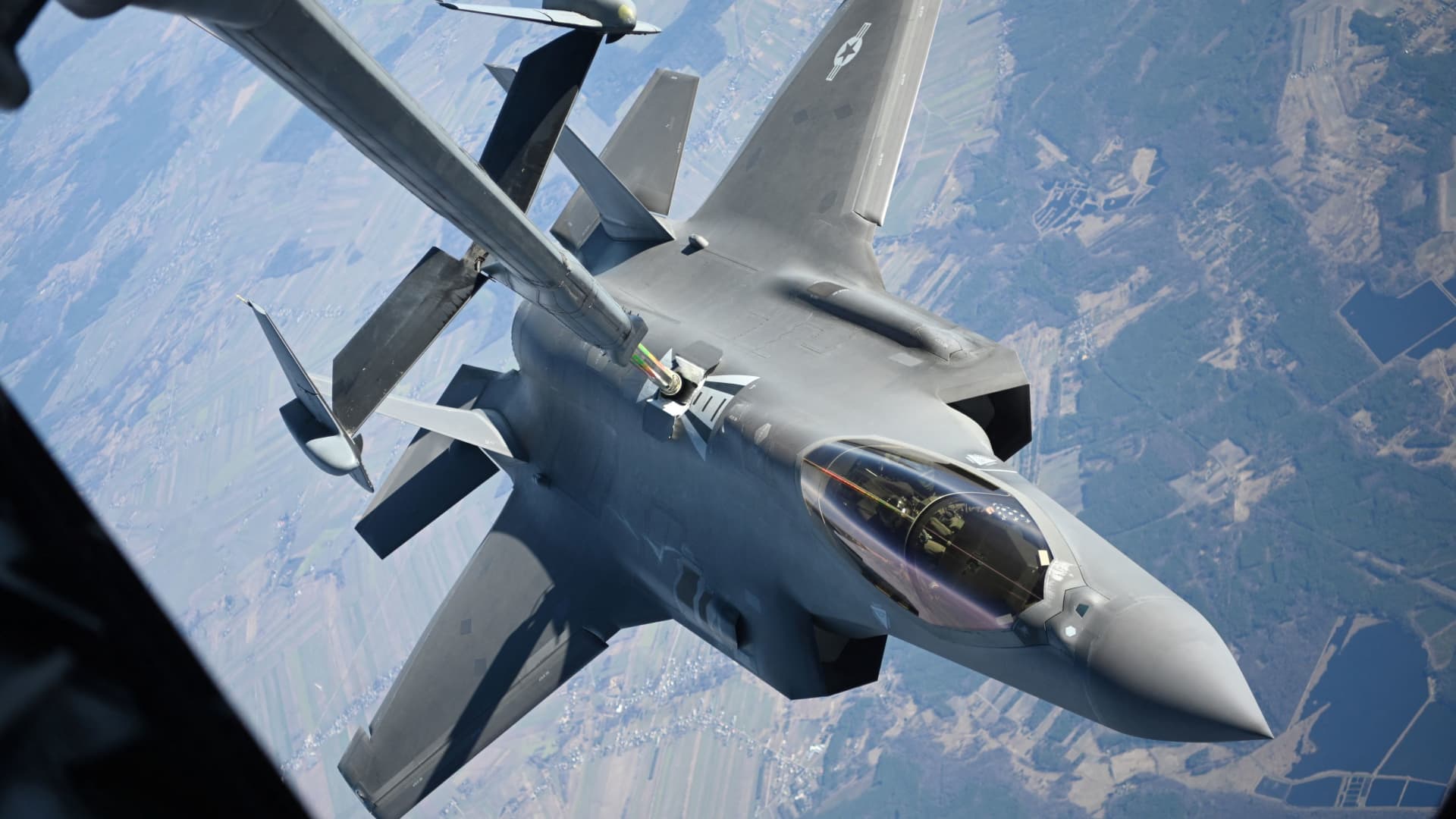
U.S. Considers Expanding Nuclear Weapons Deployment to More NATO Countries


- Nuclear Deployment Expansion: The U.S. is considering expanding its nuclear weapons deployment to more European NATO member states, currently limited to six countries, which could enhance the market outlook for defense companies involved in this sector.
- Interest from Eastern Europe: Countries like Poland and certain Baltic nations may express interest in hosting nuclear-capable bombers, especially following President Trump's pledge to increase troop presence, thereby strengthening their defense capabilities and strategic position within NATO.
- Increased Defense Spending: As Europe seeks to reduce reliance on the U.S. and boost its defense spending, there is expected to be a surge in demand for dual-capable aircraft like the F-35, which will significantly benefit companies such as BAE Systems, Lockheed Martin, and Rolls-Royce.
- Market Opportunities and Jobs: Analysts indicate that an increase in nuclear weapons deployment will necessitate more dual-capable aircraft, potentially creating numerous new jobs and generating substantial revenue growth for manufacturers, thereby solidifying their positions in the global supply chain.
See More

Shangri-La Dialogue Highlights Defense Spending and China’s Role


- Increased Defense Spending: Countries are generally accepting the need to boost defense budgets, with Japan, the Philippines, and the Netherlands planning increases, reflecting heightened security concerns that could drive growth in military industries.
- China's Delegation Absence: China's failure to send its defense minister has led to disappointment among attendees regarding the lack of high-level dialogue, potentially impacting China's diplomatic image and influence in the Asia-Pacific region.
- Lessons from Ukraine: Attendees showed keen interest in the asymmetric warfare strategies used in Ukraine, with many countries looking to adopt these lessons to enhance their defense capabilities, which may lead to significant shifts in global defense strategies.
- Tensions between China and Japan: Chinese representatives questioned Japan's military spending increases, while Japan accused China of lacking transparency, with the exchange of barbs likely exacerbating regional tensions and affecting future security cooperation.
See More

Astroscale Partners with SKY Perfect JSAT for On-Orbit Services

- Strategic Partnership: Japanese space companies Astroscale and SKY Perfect JSAT have formed a strategic partnership to develop on-orbit satellite services, with SKY Perfect investing 800 million yen (approximately $5 million) to support Astroscale's growth, although this investment appears minor compared to the total funding round of 30.6 billion yen ($192.2 million).
- Competitive Market Pressure: Astroscale faces intense competition from multiple U.S. companies, including Blue Origin and Northrop Grumman, which have successfully executed commercial on-orbit missions, necessitating Astroscale to accelerate its efforts to remain relevant in the market.
- Financial Challenges: Currently unprofitable, Astroscale is burning through $96 million annually, with analysts projecting that it will not achieve profitability until 2029 and will continue to experience cash burn until 2030, posing significant challenges for its future development.
- Industry Outlook: Despite the uncertain market outlook for Astroscale, the partnership with SKY Perfect may provide essential financial backing, enabling it to secure a foothold in the rapidly evolving on-orbit services market, particularly in satellite lifespan extension and orbital debris removal.
See More

Astroscale Partners with SKY Perfect JSAT for On-Orbit Services
- Market Dynamics: With the SpaceX IPO approaching, investor enthusiasm for space stocks has surged, with AST SpaceMobile and Rocket Lab seeing share price increases of 43% and 65% this month, while Tesla also gained 11.5% due to the surrounding excitement.
- Partnership Formation: Astroscale has formed a strategic partnership with SKY Perfect JSAT, which will invest 800 million yen (approximately $5 million); although this investment is small compared to the total funding round of 30.6 billion yen ($192.2 million), it could provide Astroscale with essential support to expand its on-orbit services business.
- Competitive Landscape: Astroscale faces fierce competition from companies like Blue Origin and Firefly Aerospace, which have already established a foothold in the on-orbit services market, necessitating that Astroscale accelerates its efforts to avoid being left behind.
- Financial Challenges: Currently unprofitable, Astroscale is burning through $96 million annually, with analysts projecting it won't achieve profitability until 2029 and won't stop burning cash until 2030, raising doubts about whether SKY Perfect's investment will be sufficient to help it survive.
See More

U.S. Defense Secretary Emphasizes Asia-Pacific Security


- Asia-Pacific Balance: U.S. Secretary of Defense Pete Hegseth emphasized at the Shangri-La Dialogue in Singapore that the U.S. is committed to maintaining equilibrium in the Asia-Pacific region, highlighting the importance of collaboration with allies, particularly in countering China's military expansion.
- Defense Spending Requirements: Hegseth stated that the U.S. demands allies to increase defense spending to 3.5% of GDP, promising to prioritize cooperation with these 'model allies' to expedite arms sales and enhance intelligence sharing, thereby strengthening collective defense capabilities.
- Warning to China: He warned China against disrupting the status quo, asserting that concerns over China's military buildup in the Asia-Pacific are 'rightful' and reaffirming America's longstanding position in the region, emphasizing that the U.S. is a Pacific nation.
- European Allies' Responsibilities: Hegseth criticized European allies for not shouldering their fair share of defense responsibilities, pointing out that the U.S. bears an excessive security burden and urging European nations to engage more actively in regional security matters to uphold the global order.
See More
Northrop Grumman Partners with Apex to Develop Space-Based Missile Interceptors
- Space Interceptor Initiative: Northrop Grumman (NOC) announced a partnership with Los Angeles-based satellite manufacturer Apex to support U.S. government efforts to expand homeland missile defense capabilities, marking a significant step in evaluating concepts for a space-based interceptor network.
- Investment Background: The company has invested over $1 billion in missile defense technologies and is targeting an initial on-orbit demonstration in 2027, demonstrating its long-term commitment and strategic positioning in new technology development.
- Market Opportunity: The development of space-based interceptors presents a potentially significant long-term opportunity for defense contractors and space companies as the Pentagon explores new missile defense technologies, despite facing major technical, budgetary, and policy hurdles.
- Commercial Partnership Model: Northrop is combining missile defense technologies with commercial partnerships to support Golden Dome objectives, with Apex providing standardized satellite buses to facilitate large-scale deployments of future interceptor constellations.
See More
U.S. Considers Expanding Nuclear Weapons Deployment to More NATO Countries
- Nuclear Deployment Expansion: The U.S. is considering expanding its nuclear weapons deployment to more European NATO member states, currently limited to six countries, which could enhance the market outlook for defense companies involved in this sector.
- Interest from Eastern Europe: Countries like Poland and certain Baltic nations may express interest in hosting nuclear-capable bombers, especially following President Trump's pledge to increase troop presence, thereby strengthening their defense capabilities and strategic position within NATO.
- Increased Defense Spending: As Europe seeks to reduce reliance on the U.S. and boost its defense spending, there is expected to be a surge in demand for dual-capable aircraft like the F-35, which will significantly benefit companies such as BAE Systems, Lockheed Martin, and Rolls-Royce.
- Market Opportunities and Jobs: Analysts indicate that an increase in nuclear weapons deployment will necessitate more dual-capable aircraft, potentially creating numerous new jobs and generating substantial revenue growth for manufacturers, thereby solidifying their positions in the global supply chain.
See More
Shangri-La Dialogue Highlights Defense Spending and China’s Role
- Increased Defense Spending: Countries are generally accepting the need to boost defense budgets, with Japan, the Philippines, and the Netherlands planning increases, reflecting heightened security concerns that could drive growth in military industries.
- China's Delegation Absence: China's failure to send its defense minister has led to disappointment among attendees regarding the lack of high-level dialogue, potentially impacting China's diplomatic image and influence in the Asia-Pacific region.
- Lessons from Ukraine: Attendees showed keen interest in the asymmetric warfare strategies used in Ukraine, with many countries looking to adopt these lessons to enhance their defense capabilities, which may lead to significant shifts in global defense strategies.
- Tensions between China and Japan: Chinese representatives questioned Japan's military spending increases, while Japan accused China of lacking transparency, with the exchange of barbs likely exacerbating regional tensions and affecting future security cooperation.
See More
Astroscale Partners with SKY Perfect JSAT for On-Orbit Services
- Strategic Partnership: Japanese space companies Astroscale and SKY Perfect JSAT have formed a strategic partnership to develop on-orbit satellite services, with SKY Perfect investing 800 million yen (approximately $5 million) to support Astroscale's growth, although this investment appears minor compared to the total funding round of 30.6 billion yen ($192.2 million).
- Competitive Market Pressure: Astroscale faces intense competition from multiple U.S. companies, including Blue Origin and Northrop Grumman, which have successfully executed commercial on-orbit missions, necessitating Astroscale to accelerate its efforts to remain relevant in the market.
- Financial Challenges: Currently unprofitable, Astroscale is burning through $96 million annually, with analysts projecting that it will not achieve profitability until 2029 and will continue to experience cash burn until 2030, posing significant challenges for its future development.
- Industry Outlook: Despite the uncertain market outlook for Astroscale, the partnership with SKY Perfect may provide essential financial backing, enabling it to secure a foothold in the rapidly evolving on-orbit services market, particularly in satellite lifespan extension and orbital debris removal.
See More
Astroscale Partners with SKY Perfect JSAT for On-Orbit Services
- Market Dynamics: With the SpaceX IPO approaching, investor enthusiasm for space stocks has surged, with AST SpaceMobile and Rocket Lab seeing share price increases of 43% and 65% this month, while Tesla also gained 11.5% due to the surrounding excitement.
- Partnership Formation: Astroscale has formed a strategic partnership with SKY Perfect JSAT, which will invest 800 million yen (approximately $5 million); although this investment is small compared to the total funding round of 30.6 billion yen ($192.2 million), it could provide Astroscale with essential support to expand its on-orbit services business.
- Competitive Landscape: Astroscale faces fierce competition from companies like Blue Origin and Firefly Aerospace, which have already established a foothold in the on-orbit services market, necessitating that Astroscale accelerates its efforts to avoid being left behind.
- Financial Challenges: Currently unprofitable, Astroscale is burning through $96 million annually, with analysts projecting it won't achieve profitability until 2029 and won't stop burning cash until 2030, raising doubts about whether SKY Perfect's investment will be sufficient to help it survive.
See More
U.S. Defense Secretary Emphasizes Asia-Pacific Security
- Asia-Pacific Balance: U.S. Secretary of Defense Pete Hegseth emphasized at the Shangri-La Dialogue in Singapore that the U.S. is committed to maintaining equilibrium in the Asia-Pacific region, highlighting the importance of collaboration with allies, particularly in countering China's military expansion.
- Defense Spending Requirements: Hegseth stated that the U.S. demands allies to increase defense spending to 3.5% of GDP, promising to prioritize cooperation with these 'model allies' to expedite arms sales and enhance intelligence sharing, thereby strengthening collective defense capabilities.
- Warning to China: He warned China against disrupting the status quo, asserting that concerns over China's military buildup in the Asia-Pacific are 'rightful' and reaffirming America's longstanding position in the region, emphasizing that the U.S. is a Pacific nation.
- European Allies' Responsibilities: Hegseth criticized European allies for not shouldering their fair share of defense responsibilities, pointing out that the U.S. bears an excessive security burden and urging European nations to engage more actively in regional security matters to uphold the global order.
See More