Toyota Boosts Share Buyback Program: Details Here
Written by Emily J. Thompson, Senior Investment Analyst
Updated: Sep 24 2024
0mins


Source: Benzinga
Share Buyback Plan: Toyota has increased its share buyback plan to 1.2 trillion yen ($8.31 billion), aiming to repurchase up to 530 million shares, or 3.93% of its outstanding shares, with the buyback period set from May 9, 2024, to April 30, 2025.
Production Target Adjustment: The company has reduced its 2026 electric vehicle production target by 30% to 1 million cars due to a slowdown in global demand, while its shares are currently down 0.63% at $184.24.
Trade with 70% Backtested Accuracy
Stop guessing "Should I Buy TM?" and start using high-conviction signals backed by rigorous historical data.
Sign up today to access powerful investing tools and make smarter, data-driven decisions.
Analyst Views on TM
About TM
Toyota Motor Corp is a Japan-based company mainly engaged in the automotive business, as well as financial services and other businesses. It operates through three business segments. The Automotive segment designs, manufactures, and sells automobiles, including sedans, minivans, compact cars, sport utility vehicles (SUVs), and trucks, as well as related parts and accessories. The Financial Services segment provides financing and vehicle leasing services to complement the sales of automobiles and other products manufactured by itself and its affiliates. The Other segment engages in information and communications services. It also oversees manufacturing and sales companies, conducts public relations and research activities, oversees financial companies, and develops various mobility products, primarily software.
About the author

Emily J. Thompson
Emily J. Thompson, a Chartered Financial Analyst (CFA) with 12 years in investment research, graduated with honors from the Wharton School. Specializing in industrial and technology stocks, she provides in-depth analysis for Intellectia’s earnings and market brief reports.

Toyota Motor Corporation Stock Rises Slightly, Outlook Draws Attention

- Stock Performance: Toyota Motor Corporation (TM) closed at $174.59, reflecting a 2.91% increase from the previous day, although it has fallen 5.86% over the past month, indicating increased market volatility.
- Earnings Expectations: The Zacks Consensus Estimates forecast Toyota's annual earnings at $20.98 per share and revenue at $324.16 billion, representing a 6.99% increase and a 3.64% decrease from last year, highlighting both challenges and opportunities for the company.
- Analyst Ratings: Currently, Toyota holds a Zacks Rank of #4 (Sell), with a 3.65% decline in EPS estimates over the past month, reflecting analysts' cautious outlook on the company's short-term profitability, which may affect investor confidence.
- Valuation Analysis: Toyota's Forward P/E ratio stands at 8.09, below the industry average of 10.06, suggesting that its stock is undervalued in the current market environment, potentially attracting value investors' interest.
See More

Financial Comparison Between Toyota and Ford

- Toyota's Financial Performance: Toyota managed to generate $34.94 billion in operating cash flow despite absorbing an $8.8 billion tariff hit, showcasing its strong financial resilience and competitive market position.
- Ford's Loss Situation: Ford's Model e is projected to incur losses of up to $4.5 billion this year, and although its Q1 revenue reached $43.25 billion, it continues to face persistent cash drain from its EV division.
- Hybrid Sales Growth: Toyota's electrified models accounted for 48.1% of retail sales, with BEV volumes soaring 68.4% to 243,000 units, further solidifying its leadership in the hybrid market.
- Future Outlook and Challenges: Toyota anticipates a 20.3% decline in FY2027 operating income, while Ford has raised its 2026 adjusted EBIT guidance to between $8.5 billion and $10.5 billion, indicating an intensifying competitive landscape ahead.
See More
Toyota Reports 10.1% Sales Increase in June 2026
- Surge in EV Sales: Toyota's electric vehicle sales reached 122,063 units in June 2026, marking a 35.0% increase from 2025 and accounting for 57.4% of total sales, indicating strong consumer demand and reinforcing Toyota's leadership in the EV market.
- Overall Sales Growth: TMNA reported total sales of 212,793 vehicles in June, a 10.1% increase year-over-year, reflecting sustained growth momentum in the U.S. market, which enhances its market share and brand influence.
- Steady Quarterly Performance: In Q2 2026, Toyota's total sales were 673,971 vehicles, up 1.1%, demonstrating the company's ability to maintain stable sales performance amid market challenges, thereby boosting investor confidence.
- Lexus Sales Fluctuation: While Toyota's overall sales increased, Lexus recorded sales of 29,166 vehicles in June, only up 3.9%, with a 7.5% decline in quarterly sales, indicating competitive pressure in the luxury market and the potential need for strategic adjustments to enhance brand appeal.
See More
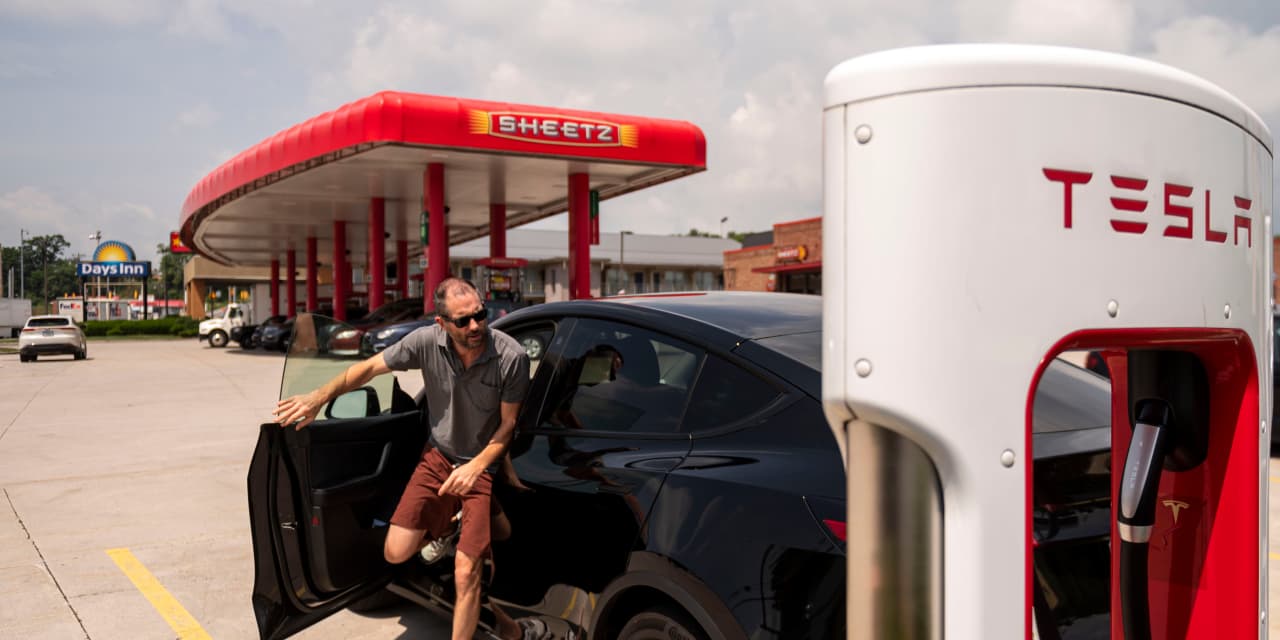
Ford Reports 10.3% Drop in Q2 US Sales Amid EV Demand Decline

- Sales Decline: Ford's Q2 US sales fell 10.3% to 549,200 vehicles, primarily due to weak electric vehicle demand and declines in F-Series and SUV volumes, resulting in a 9.6% year-over-year drop in first-half sales to just over 1 million, indicating increasing market competition pressures.
- Weak EV Sales: Ford's electric vehicle sales plummeted 40.7% in Q2 to 9,746 units, with the Mustang Mach-E down 30.9% and the discontinued F-150 Lightning down 58.6%, reflecting an overall slump in the EV market and posing challenges to Ford's market share in this segment.
- F-Series Performance Issues: The F-Series, America's best-selling truck, saw an 11% drop in Q2 sales to 197,900 units and a 13.3% decline in the first half, with Ford attributing this to a retiming of commercial production rather than demand weakness, although it still outsold the Chevrolet Silverado by over 80,000 trucks.
- New Model Plans: Ford is retooling its Louisville Assembly Plant to launch an affordable small electric pickup priced under $30,000 next year, with CEO Farley emphasizing that this model will cater to multiple market needs and is expected to drive future sales growth.
See More
Ford CEO Calls for Fair Competition in USMCA Talks
- Call for Fair Competition: Ford CEO Jim Farley emphasized in an interview with CNBC that he seeks rewards for automakers primarily producing in the U.S. during USMCA negotiations, while imposing penalties on competitors relying on imports to ensure a level playing field.
- Domestic Production Advantage: Ford assembled over 2 million vehicles in the U.S. last year, becoming the largest auto manufacturer in the country, and exported 311,000 units to over 60 international markets, showcasing its strong domestic production capabilities and market impact.
- Import Dependency Concerns: Farley highlighted that General Motors and Toyota are projected to import 1.17 million and 1.19 million vehicles in 2025, respectively, accounting for 41% and 47% of their U.S. sales, raising concerns about their competitive positioning due to high import reliance.
- Industry Support: A consortium of U.S. trade groups representing most automakers, dealers, and suppliers voiced support for maintaining the existing trilateral trade agreement, urging swift consensus on extending USMCA to preserve industry stability and predictability, thereby avoiding trade uncertainties that could lead to reduced investments and jobs.
See More
US Jobs Data and Trade Agreement Uncertainty

- Jobs Data Expectations: Economists forecast a rise of 115,000 in nonfarm payrolls for June, down from 172,000 the previous month, indicating a potential slowdown in economic growth that could impact market confidence.
- Trade Agreement Changes: The U.S. has decided not to extend the USMCA trade agreement with Canada and Mexico, requiring annual reviews, which increases uncertainty for automakers regarding investments and hiring, potentially negatively affecting the industry.
- Inflation Pressures: Federal Reserve Chairman Kevin Warsh stated that inflation is currently too high, and while he did not disclose future policy directions, he emphasized the need for new technologies to better monitor inflation in the economy, which could influence monetary policy.
- Meta Cloud Business Expansion: Meta plans to sell excess computing power to external customers amid the AI boom, with shares rising over 8%, indicating the company's potential for recouping investments in AI infrastructure, which may drive future revenue growth.
See More
Toyota Motor Corporation Stock Rises Slightly, Outlook Draws Attention
- Stock Performance: Toyota Motor Corporation (TM) closed at $174.59, reflecting a 2.91% increase from the previous day, although it has fallen 5.86% over the past month, indicating increased market volatility.
- Earnings Expectations: The Zacks Consensus Estimates forecast Toyota's annual earnings at $20.98 per share and revenue at $324.16 billion, representing a 6.99% increase and a 3.64% decrease from last year, highlighting both challenges and opportunities for the company.
- Analyst Ratings: Currently, Toyota holds a Zacks Rank of #4 (Sell), with a 3.65% decline in EPS estimates over the past month, reflecting analysts' cautious outlook on the company's short-term profitability, which may affect investor confidence.
- Valuation Analysis: Toyota's Forward P/E ratio stands at 8.09, below the industry average of 10.06, suggesting that its stock is undervalued in the current market environment, potentially attracting value investors' interest.
See More
Financial Comparison Between Toyota and Ford
- Toyota's Financial Performance: Toyota managed to generate $34.94 billion in operating cash flow despite absorbing an $8.8 billion tariff hit, showcasing its strong financial resilience and competitive market position.
- Ford's Loss Situation: Ford's Model e is projected to incur losses of up to $4.5 billion this year, and although its Q1 revenue reached $43.25 billion, it continues to face persistent cash drain from its EV division.
- Hybrid Sales Growth: Toyota's electrified models accounted for 48.1% of retail sales, with BEV volumes soaring 68.4% to 243,000 units, further solidifying its leadership in the hybrid market.
- Future Outlook and Challenges: Toyota anticipates a 20.3% decline in FY2027 operating income, while Ford has raised its 2026 adjusted EBIT guidance to between $8.5 billion and $10.5 billion, indicating an intensifying competitive landscape ahead.
See More
Toyota Reports 10.1% Sales Increase in June 2026
- Surge in EV Sales: Toyota's electric vehicle sales reached 122,063 units in June 2026, marking a 35.0% increase from 2025 and accounting for 57.4% of total sales, indicating strong consumer demand and reinforcing Toyota's leadership in the EV market.
- Overall Sales Growth: TMNA reported total sales of 212,793 vehicles in June, a 10.1% increase year-over-year, reflecting sustained growth momentum in the U.S. market, which enhances its market share and brand influence.
- Steady Quarterly Performance: In Q2 2026, Toyota's total sales were 673,971 vehicles, up 1.1%, demonstrating the company's ability to maintain stable sales performance amid market challenges, thereby boosting investor confidence.
- Lexus Sales Fluctuation: While Toyota's overall sales increased, Lexus recorded sales of 29,166 vehicles in June, only up 3.9%, with a 7.5% decline in quarterly sales, indicating competitive pressure in the luxury market and the potential need for strategic adjustments to enhance brand appeal.
See More
Ford Reports 10.3% Drop in Q2 US Sales Amid EV Demand Decline
- Sales Decline: Ford's Q2 US sales fell 10.3% to 549,200 vehicles, primarily due to weak electric vehicle demand and declines in F-Series and SUV volumes, resulting in a 9.6% year-over-year drop in first-half sales to just over 1 million, indicating increasing market competition pressures.
- Weak EV Sales: Ford's electric vehicle sales plummeted 40.7% in Q2 to 9,746 units, with the Mustang Mach-E down 30.9% and the discontinued F-150 Lightning down 58.6%, reflecting an overall slump in the EV market and posing challenges to Ford's market share in this segment.
- F-Series Performance Issues: The F-Series, America's best-selling truck, saw an 11% drop in Q2 sales to 197,900 units and a 13.3% decline in the first half, with Ford attributing this to a retiming of commercial production rather than demand weakness, although it still outsold the Chevrolet Silverado by over 80,000 trucks.
- New Model Plans: Ford is retooling its Louisville Assembly Plant to launch an affordable small electric pickup priced under $30,000 next year, with CEO Farley emphasizing that this model will cater to multiple market needs and is expected to drive future sales growth.
See More
Ford CEO Calls for Fair Competition in USMCA Talks
- Call for Fair Competition: Ford CEO Jim Farley emphasized in an interview with CNBC that he seeks rewards for automakers primarily producing in the U.S. during USMCA negotiations, while imposing penalties on competitors relying on imports to ensure a level playing field.
- Domestic Production Advantage: Ford assembled over 2 million vehicles in the U.S. last year, becoming the largest auto manufacturer in the country, and exported 311,000 units to over 60 international markets, showcasing its strong domestic production capabilities and market impact.
- Import Dependency Concerns: Farley highlighted that General Motors and Toyota are projected to import 1.17 million and 1.19 million vehicles in 2025, respectively, accounting for 41% and 47% of their U.S. sales, raising concerns about their competitive positioning due to high import reliance.
- Industry Support: A consortium of U.S. trade groups representing most automakers, dealers, and suppliers voiced support for maintaining the existing trilateral trade agreement, urging swift consensus on extending USMCA to preserve industry stability and predictability, thereby avoiding trade uncertainties that could lead to reduced investments and jobs.
See More
US Jobs Data and Trade Agreement Uncertainty
- Jobs Data Expectations: Economists forecast a rise of 115,000 in nonfarm payrolls for June, down from 172,000 the previous month, indicating a potential slowdown in economic growth that could impact market confidence.
- Trade Agreement Changes: The U.S. has decided not to extend the USMCA trade agreement with Canada and Mexico, requiring annual reviews, which increases uncertainty for automakers regarding investments and hiring, potentially negatively affecting the industry.
- Inflation Pressures: Federal Reserve Chairman Kevin Warsh stated that inflation is currently too high, and while he did not disclose future policy directions, he emphasized the need for new technologies to better monitor inflation in the economy, which could influence monetary policy.
- Meta Cloud Business Expansion: Meta plans to sell excess computing power to external customers amid the AI boom, with shares rising over 8%, indicating the company's potential for recouping investments in AI infrastructure, which may drive future revenue growth.
See More