The Airborne Arms Race: Essential Insights for Investors
Current State of Drone Warfare: The next stage of drone warfare is already here, with significant implications for investment and military applications, emphasizing the need for autonomous, AI-enabled drones to stay competitive.
Technological Advancements: Edge AI is transforming drones into independent decision-makers, allowing them to process data and execute missions without relying on internet connectivity, thus enhancing their operational capabilities.
Market Dynamics: The defense sector is currently attracting substantial capital, driven by national security interests and the need for advanced drone capabilities, with a notable shift towards swarm technology that allows for deploying multiple drones at a fraction of traditional costs.
Future Prospects: Companies like Dragonfly are positioning themselves for growth by developing a full product line of drones and pursuing vertical integration, while the commercial applications of military drone technology could lead to significant economic impacts, similar to the internet's evolution.
Trade with 70% Backtested Accuracy
Analyst Views on DPRO

About DPRO
About the author


Draganfly Secures U.S. Military Orders Boosting FPV System Demand

- Order Growth: Draganfly has been selected by two U.S. Department of War units for its Flex FPV drone systems, reflecting ongoing demand for its rapidly deployable and adaptable drone solutions, thereby solidifying its position in the defense market.
- Market Demand: As defense organizations increasingly integrate unmanned systems into training and operational planning, Draganfly's FPV systems are favored for their reliability and rapid deployment capabilities, which are expected to drive future sales growth for the company.
- Technological Advantage: The Flex FPV systems are designed to provide a responsive drone platform capable of operating in various challenging environments, enhancing operators' tactical awareness and strengthening the company's competitiveness in modern defense programs.
- Strategic Positioning: With a long-standing operational history and established defense relationships, Draganfly is well-positioned to support the shift towards scalable unmanned capabilities, further driving its business growth in the defense sector.
Draganfly Partners with ACSL for Exclusive Drone Distribution
- Significant Market Potential: The Canadian commercial drone market is projected to reach $10 billion by 2030, and Draganfly's partnership with ACSL comes at a pivotal time to meet growing demand by introducing the ACSL SOTEN platform, thereby enhancing the company's market share and competitiveness.
- Technological Integration Advantage: Through technical integration, Draganfly's Apex and Commander 3XL drones will effectively be compatible with SOTEN's swappable camera payloads, providing diverse drone solutions tailored to specific customer needs, enhancing operational flexibility and adaptability for projects.
- Product Innovation and Diversity: The SOTEN platform features four swappable camera options, including a 20MP sensor and a dual thermal-optical system, aimed at improving operational reliability and secure communications, further strengthening Draganfly's product competitiveness in the professional drone market.
- Exclusive Market Promotion: Starting in June 2026, the SOTEN platform will be exclusively sold through Draganfly in Canada, marking a strategic expansion in the drone industry that is expected to attract more customers and drive sales growth.
ZenaTech Reports 558% Revenue Growth in 2025


- Significant Revenue Growth: ZenaTech achieved a record revenue of CAD 12.9 million in 2025, reflecting a remarkable 558% year-over-year increase, primarily driven by the successful execution of its Drone as a Service (DaaS) strategy, positioning the company as a key player in the rapidly growing market.
- Substantial Asset Increase: The company's total assets surged from CAD 34.6 million to CAD 99.8 million, marking a 188% increase, which underscores its strong momentum in expanding business and market share, thereby enhancing financial stability.
- Successful Acquisition Strategy: In 2025, ZenaTech completed 20 acquisitions, including 19 land surveying and inspection companies, significantly strengthening its global footprint in the DaaS sector and enhancing competitive positioning in the market.
- New Product Launches: The company introduced several new products, including the IQ Quad designed for land surveys and the IQ Aqua for underwater monitoring, further diversifying its product line and addressing the market's demand for efficient drone solutions.

Drone as a Service Market Experiences Rapid Growth
- Market Growth Surge: The Drone as a Service (DaaS) market is currently valued at approximately $6 to $8 billion and is projected to surge to between $27 billion and over $179 billion by 2030, indicating strong long-term growth potential that is attracting significant business interest and investment.
- ZenaTech Financial Performance: ZenaTech reported a remarkable 558% year-over-year revenue growth, reaching CAD 12.9 million in 2025, driven by the successful expansion of its DaaS business and 20 acquisitions, resulting in total assets increasing by 188% to CAD 99.8 million.
- Wide Industry Applications: DaaS is widely utilized across various sectors such as construction, agriculture, energy, and logistics, enabling companies to conduct surveying and monitoring with drones, which not only reduces operational costs but also enhances data accuracy and decision-making efficiency, making it a high-ROI solution.
- Defense and Public Safety Demand: The application of DaaS in defense and public safety is increasing, with military and public safety agencies leveraging drones for surveillance and disaster response, and the rapid deployment capabilities provide a competitive edge in dynamic environments, further driving market expansion.
U.S. Defense Budget Marks Record Investment in Drones

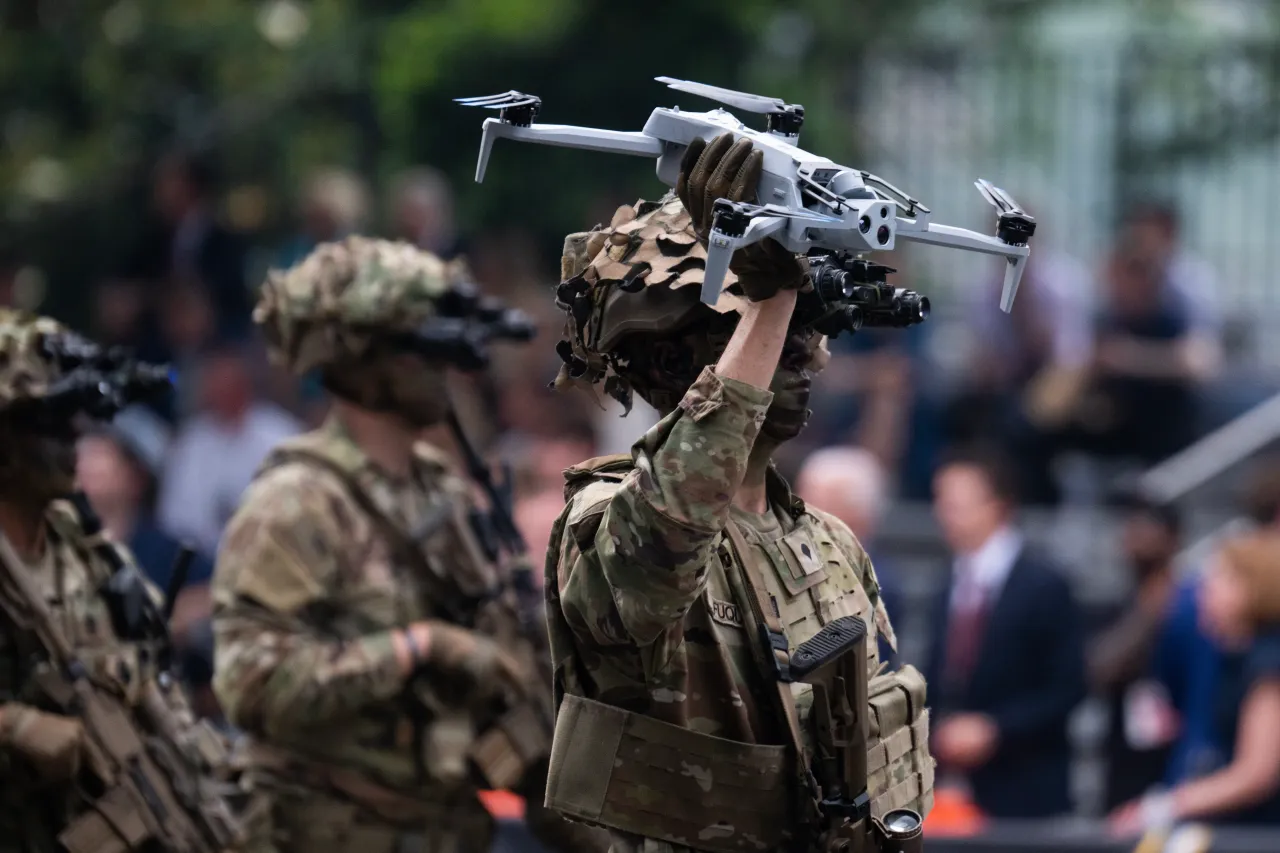
- Record Drone Investment: The U.S. government allocates over $74 billion to drone and counter-drone programs, marking a historic investment that underscores a strategic shift in military conflict approaches.
- Missile Defense System Funding: The proposal includes $18 billion for the new layered missile defense system known as the Golden Dome, which is expected to integrate space-based sensors and intercept technologies to counter emerging threats.
- Emerging Market Leaders: AeroVironment and Kratos Defense are positioned as key suppliers in loitering munitions and jet-powered drones, while Ondas and Red Cat gain traction in swarm and counter-drone technologies.
- Growing Order Momentum: Ondas' subsidiary Airobotics secures a $20 million order as part of a national program for autonomous border protection infrastructure, with expectations for expansion through additional development and procurement rounds.

Drones Become Essential Tools in Modern Military Operations

- Market Growth Potential: The global military drone market is expected to grow from approximately $36-37 billion in 2024 to around $80-90 billion by 2030, indicating a rapid expansion in defense technology that attracts investor interest.
- Strategic Shift: Small drones provide significant strategic advantages in modern warfare, enabling real-time enemy reconnaissance and supporting precision strikes, thereby transforming combat operations and enhancing operational efficiency.
- Showcasing Technology: ZenaDrone will showcase its AI drone solutions at various defense expos, aiming to build relationships with U.S. government and defense agencies to drive future pilot programs and procurement contracts, further solidifying its market position.
- Industry Collaboration and Innovation: Safe Pro Group successfully completed a U.S. Army live-fire exercise using its AI technology to process drone imagery, demonstrating its application potential in modern military operations and strengthening its collaboration with military stakeholders.
Draganfly Secures U.S. Military Orders Boosting FPV System Demand
- Order Growth: Draganfly has been selected by two U.S. Department of War units for its Flex FPV drone systems, reflecting ongoing demand for its rapidly deployable and adaptable drone solutions, thereby solidifying its position in the defense market.
- Market Demand: As defense organizations increasingly integrate unmanned systems into training and operational planning, Draganfly's FPV systems are favored for their reliability and rapid deployment capabilities, which are expected to drive future sales growth for the company.
- Technological Advantage: The Flex FPV systems are designed to provide a responsive drone platform capable of operating in various challenging environments, enhancing operators' tactical awareness and strengthening the company's competitiveness in modern defense programs.
- Strategic Positioning: With a long-standing operational history and established defense relationships, Draganfly is well-positioned to support the shift towards scalable unmanned capabilities, further driving its business growth in the defense sector.
Draganfly Partners with ACSL for Exclusive Drone Distribution
- Significant Market Potential: The Canadian commercial drone market is projected to reach $10 billion by 2030, and Draganfly's partnership with ACSL comes at a pivotal time to meet growing demand by introducing the ACSL SOTEN platform, thereby enhancing the company's market share and competitiveness.
- Technological Integration Advantage: Through technical integration, Draganfly's Apex and Commander 3XL drones will effectively be compatible with SOTEN's swappable camera payloads, providing diverse drone solutions tailored to specific customer needs, enhancing operational flexibility and adaptability for projects.
- Product Innovation and Diversity: The SOTEN platform features four swappable camera options, including a 20MP sensor and a dual thermal-optical system, aimed at improving operational reliability and secure communications, further strengthening Draganfly's product competitiveness in the professional drone market.
- Exclusive Market Promotion: Starting in June 2026, the SOTEN platform will be exclusively sold through Draganfly in Canada, marking a strategic expansion in the drone industry that is expected to attract more customers and drive sales growth.
ZenaTech Reports 558% Revenue Growth in 2025
- Significant Revenue Growth: ZenaTech achieved a record revenue of CAD 12.9 million in 2025, reflecting a remarkable 558% year-over-year increase, primarily driven by the successful execution of its Drone as a Service (DaaS) strategy, positioning the company as a key player in the rapidly growing market.
- Substantial Asset Increase: The company's total assets surged from CAD 34.6 million to CAD 99.8 million, marking a 188% increase, which underscores its strong momentum in expanding business and market share, thereby enhancing financial stability.
- Successful Acquisition Strategy: In 2025, ZenaTech completed 20 acquisitions, including 19 land surveying and inspection companies, significantly strengthening its global footprint in the DaaS sector and enhancing competitive positioning in the market.
- New Product Launches: The company introduced several new products, including the IQ Quad designed for land surveys and the IQ Aqua for underwater monitoring, further diversifying its product line and addressing the market's demand for efficient drone solutions.
Drone as a Service Market Experiences Rapid Growth
- Market Growth Surge: The Drone as a Service (DaaS) market is currently valued at approximately $6 to $8 billion and is projected to surge to between $27 billion and over $179 billion by 2030, indicating strong long-term growth potential that is attracting significant business interest and investment.
- ZenaTech Financial Performance: ZenaTech reported a remarkable 558% year-over-year revenue growth, reaching CAD 12.9 million in 2025, driven by the successful expansion of its DaaS business and 20 acquisitions, resulting in total assets increasing by 188% to CAD 99.8 million.
- Wide Industry Applications: DaaS is widely utilized across various sectors such as construction, agriculture, energy, and logistics, enabling companies to conduct surveying and monitoring with drones, which not only reduces operational costs but also enhances data accuracy and decision-making efficiency, making it a high-ROI solution.
- Defense and Public Safety Demand: The application of DaaS in defense and public safety is increasing, with military and public safety agencies leveraging drones for surveillance and disaster response, and the rapid deployment capabilities provide a competitive edge in dynamic environments, further driving market expansion.
U.S. Defense Budget Marks Record Investment in Drones
- Record Drone Investment: The U.S. government allocates over $74 billion to drone and counter-drone programs, marking a historic investment that underscores a strategic shift in military conflict approaches.
- Missile Defense System Funding: The proposal includes $18 billion for the new layered missile defense system known as the Golden Dome, which is expected to integrate space-based sensors and intercept technologies to counter emerging threats.
- Emerging Market Leaders: AeroVironment and Kratos Defense are positioned as key suppliers in loitering munitions and jet-powered drones, while Ondas and Red Cat gain traction in swarm and counter-drone technologies.
- Growing Order Momentum: Ondas' subsidiary Airobotics secures a $20 million order as part of a national program for autonomous border protection infrastructure, with expectations for expansion through additional development and procurement rounds.
Drones Become Essential Tools in Modern Military Operations
- Market Growth Potential: The global military drone market is expected to grow from approximately $36-37 billion in 2024 to around $80-90 billion by 2030, indicating a rapid expansion in defense technology that attracts investor interest.
- Strategic Shift: Small drones provide significant strategic advantages in modern warfare, enabling real-time enemy reconnaissance and supporting precision strikes, thereby transforming combat operations and enhancing operational efficiency.
- Showcasing Technology: ZenaDrone will showcase its AI drone solutions at various defense expos, aiming to build relationships with U.S. government and defense agencies to drive future pilot programs and procurement contracts, further solidifying its market position.
- Industry Collaboration and Innovation: Safe Pro Group successfully completed a U.S. Army live-fire exercise using its AI technology to process drone imagery, demonstrating its application potential in modern military operations and strengthening its collaboration with military stakeholders.