SpaceX IPO Set to Transform Market Dynamics
Written by Emily J. Thompson, Senior Investment Analyst
Updated: 2 days ago
0mins
Source: NASDAQ.COM
- Shareholder Sale Plan: Following the SpaceX IPO, current shareholders will be able to sell their stakes on a rolling schedule over the first 180 days, starting with 20% of their shares, which will provide liquidity and potentially impact market supply and demand dynamics.
- Massive Valuation Potential: With SpaceX aiming for a valuation between $1.75 trillion and $2 trillion, Alphabet's 6% stake could be worth around $120 billion, highlighting the immense potential and strategic significance of its investment.
- Increased Capital Expenditures: Alphabet anticipates a significant rise in capital expenditures for 2027, planning to spend between $180 billion and $190 billion, nearly exhausting its $174 billion cash flow, which will compel the company to seek new funding sources.
- Strategy of Selling SpaceX Shares: By selling its SpaceX shares, Alphabet can raise cash without cutting existing programs or issuing debt, a strategy that would be seen as a major win for shareholders and could enhance its market performance.
Trade with 70% Backtested Accuracy
Stop guessing "Should I Buy GOOGL?" and start using high-conviction signals backed by rigorous historical data.
Sign up today to access powerful investing tools and make smarter, data-driven decisions.
Analyst Views on GOOGL
Wall Street analysts forecast GOOGL stock price to fall
33 Analyst Rating
26 Buy
7 Hold
0 Sell
Strong Buy
Current: 380.340

Low
305.00
Averages
374.25
High
400.00
Current: 380.340
Low
305.00
Averages
374.25
High
400.00
About GOOGL
Alphabet Inc. is a holding company. The Company's segments include Google Services, Google Cloud, and Other Bets. The Google Services segment includes products and services such as ads, Android, Chrome, devices, Google Maps, Google Play, Search, and YouTube. The Google Cloud segment includes infrastructure and platform services, collaboration tools, and other services for enterprise customers. Its Other Bets segment is engaged in the sale of healthcare-related services and Internet services. Its Google Cloud provides enterprise-ready cloud services, including Google Cloud Platform and Google Workspace. Google Cloud Platform provides access to solutions such as artificial intelligence (AI) offerings, including its AI infrastructure, Vertex AI platform, and Gemini for Google Cloud; cybersecurity, and data and analytics. Google Workspace includes cloud-based communication and collaboration tools for enterprises, such as Calendar, Gmail, Docs, Drive, and Meet.
About the author

Emily J. Thompson
Emily J. Thompson, a Chartered Financial Analyst (CFA) with 12 years in investment research, graduated with honors from the Wharton School. Specializing in industrial and technology stocks, she provides in-depth analysis for Intellectia’s earnings and market brief reports.

Google and Microsoft Compete for AI Coding Market


- Intensifying Market Competition: As the generative AI market rapidly expands, Mordor Intelligence predicts the AI coding tools market will grow at a rate of 26% annually, from $9.3 billion this year to approximately $30 billion by 2031, highlighting significant commercial potential and market attractiveness.
- Google's New Product Launch: At its developer conference, Google unveiled Antigravity 2.0, emphasizing its capability to execute multiple tasks in parallel, which enhances developer productivity and indicates the company's technological innovation and competitive strength in the AI sector.
- Microsoft's Pricing Strategy: Microsoft plans to introduce a more competitively priced coding model in its Copilot, charging based on usage, which not only attracts more developers to its tools but also creates a differentiated advantage in terms of cost against other competitors.
- Diverse Developer Choices: Despite Anthropic's lead in the market, users are experimenting with various coding tools, with MongoDB's CEO noting that AI coding tools currently represent only a small fraction of the company's labor costs, reflecting the market's demand for flexibility and innovation.
See More

Google and Microsoft Compete for AI Coding Market

- Intensifying Market Competition: Google and Microsoft are ramping up their investments in AI coding tools, particularly with Microsoft's upcoming announcement of a new coding model at the Build conference, aiming to attract developers with lower pricing and thereby increase cloud service usage and market share.
- Optimistic Market Forecast: Market research firm Mordor Intelligence predicts that the AI coding tools market will grow at a rate of 26% annually, expected to reach approximately $30 billion by 2031, which will drive revenue and R&D spending for related companies.
- Frequent Technological Innovations: Google unveiled Antigravity 2.0 at its developer conference, capable of executing multiple tasks in parallel, enhancing the competitiveness of its AI tools, while Anthropic upgraded Claude Opus to improve performance in complex coding tasks, highlighting the significance of technological advancements in the market.
- Diverse User Choices: Despite Anthropic and OpenAI leading the market, users remain flexible in their choice of coding tools, with companies like MongoDB experimenting with various AI tools to select the best solutions for different needs, reflecting the high competition and rapid changes in the market.
See More

Hewlett Packard Enterprise Reports Record Q2 Results, Accelerates Financial Goals


- Significant Revenue Growth: HPE reported a record revenue of $10.68 billion for Q2, marking a 40% year-over-year increase and surpassing analysts' expectations of $9.79 billion, demonstrating strong performance amid AI data center expansion and solidifying its market position.
- Accelerated Financial Goals: In response to surging AI demand, HPE has accelerated its long-term financial targets by two years, now projecting fiscal 2026 revenue growth of 29% to 33%, significantly higher than the previous forecast of 17% to 22%, reflecting robust market demand for its products.
- Increased Adjusted EPS: HPE raised its adjusted EPS forecast for fiscal 2026 to a range of $3.35 to $3.45, up from the earlier projection of $2.30 to $2.50, indicating enhanced profitability in the AI-driven market landscape.
- Future Growth Framework: HPE introduced a growth framework for fiscal 2027, expecting revenue growth of 8% to 12%, adjusted EPS growth of 12% to 16%, and a commitment to achieve at least $4.5 billion in free cash flow, showcasing the company's confidence in future prospects.
See More

SpaceX Set for IPO, Potentially the Largest in History

- Musk's Control: SpaceX will go public with a dual-class share structure, where Class A shares have one vote and Class B shares, held by Musk and insiders, have ten votes each, granting Musk near-total control and allowing the company to bypass certain Nasdaq requirements as a 'controlled company'.
- Financial Insights: The S-1 filing reveals SpaceX expects $18.7 billion in revenue for 2025 but also faces a significant $2.6 billion operating loss, with Starlink generating $11.4 billion in revenue and $4.4 billion in operating income, while the AI segment incurs a staggering $6.4 billion loss, highlighting the complexity of its financial landscape.
- Risk Factors: The risk factors section of the S-1 indicates that SpaceX's growth initiatives rely on 'unproven technologies', such as orbital AI computing and lunar manufacturing, suggesting that investors should carefully consider the speculative nature of these investments.
- Market Opportunity Context: SpaceX claims a total addressable market of $28.5 trillion, but $26.5 trillion is expected from AI, leaving only $2 trillion for space launches and Starlink, indicating a significant disparity between potential market size and the company's actual revenue-generating capabilities.
See More
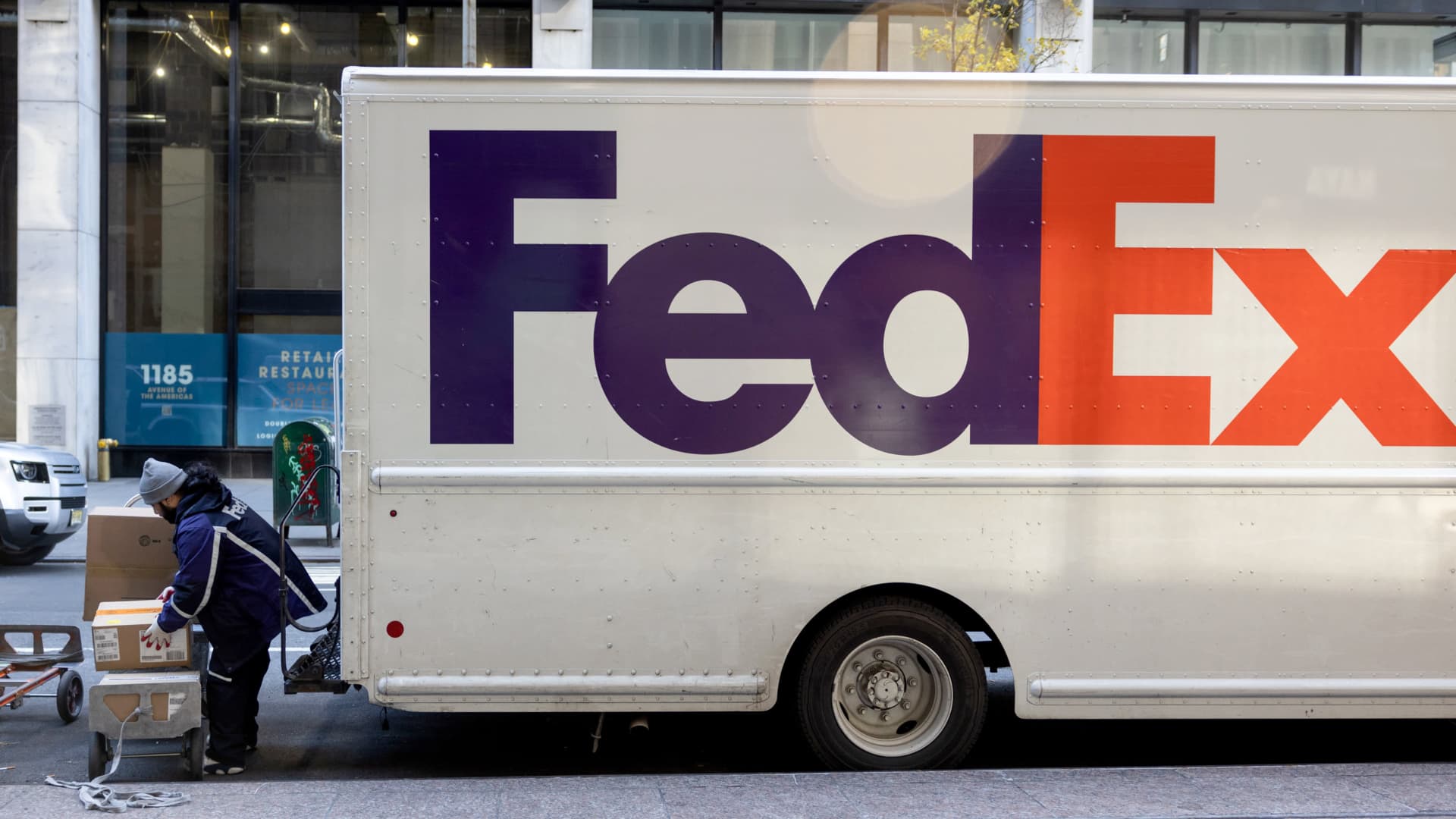
FedEx Split Complete, Freight Outlook Positive


- Split Completion: The FedEx and FedEx Freight split is complete, with shareholders receiving one share of FDXF for every two shares of FDX, marking a successful structural adjustment that is expected to enhance Freight's market performance.
- Revenue Expectations: Freight's management anticipates generating $8.7 billion in revenue and approximately $1.1 billion in adjusted operating income by 2026, reflecting strong growth potential in the LTL market and further solidifying its industry leadership.
- Strategic Goals: Freight aims to increase its operating margin from 12% to 15% through investments in LTL capabilities, automation, and technology, which will enhance its competitiveness and improve customer experience.
- Market Reaction: While post-spin shareholder sell-offs may occur, Freight's inclusion in the S&P 500 could mitigate such volatility, with analysts setting a price target of $175, indicating market confidence in its future growth.
See More

Investors Should Focus on Dividend Stocks Amid Market Volatility

- Stability Amid Market Volatility: Michael Clarfeld of ClearBridge Investments highlights that dividend stocks provide stable returns during market fluctuations, particularly as the S&P 500 reaches new highs, making dividends increasingly attractive.
- Inflation Pressure and Dividend Growth: Clarfeld emphasizes that despite inflation running above the Fed's 2% target, healthy dividend growth can help investors stay ahead of inflation, with the personal consumption expenditures price index rising 3.8% year-over-year.
- Importance of Portfolio Diversification: Clarfeld notes that diversification is crucial for weathering stock market ups and downs, advocating for a strategy that considers both risk and opportunity to avoid concentrating investments in a single asset.
- New Investment Opportunities: Clarfeld has recently added shares of Blackstone, Otis Worldwide, and Marsh, which, despite facing short-term challenges, present long-term potential and attractive dividend yields, making them noteworthy investment options.
See More
Google and Microsoft Compete for AI Coding Market
- Intensifying Market Competition: As the generative AI market rapidly expands, Mordor Intelligence predicts the AI coding tools market will grow at a rate of 26% annually, from $9.3 billion this year to approximately $30 billion by 2031, highlighting significant commercial potential and market attractiveness.
- Google's New Product Launch: At its developer conference, Google unveiled Antigravity 2.0, emphasizing its capability to execute multiple tasks in parallel, which enhances developer productivity and indicates the company's technological innovation and competitive strength in the AI sector.
- Microsoft's Pricing Strategy: Microsoft plans to introduce a more competitively priced coding model in its Copilot, charging based on usage, which not only attracts more developers to its tools but also creates a differentiated advantage in terms of cost against other competitors.
- Diverse Developer Choices: Despite Anthropic's lead in the market, users are experimenting with various coding tools, with MongoDB's CEO noting that AI coding tools currently represent only a small fraction of the company's labor costs, reflecting the market's demand for flexibility and innovation.
See More
Google and Microsoft Compete for AI Coding Market
- Intensifying Market Competition: Google and Microsoft are ramping up their investments in AI coding tools, particularly with Microsoft's upcoming announcement of a new coding model at the Build conference, aiming to attract developers with lower pricing and thereby increase cloud service usage and market share.
- Optimistic Market Forecast: Market research firm Mordor Intelligence predicts that the AI coding tools market will grow at a rate of 26% annually, expected to reach approximately $30 billion by 2031, which will drive revenue and R&D spending for related companies.
- Frequent Technological Innovations: Google unveiled Antigravity 2.0 at its developer conference, capable of executing multiple tasks in parallel, enhancing the competitiveness of its AI tools, while Anthropic upgraded Claude Opus to improve performance in complex coding tasks, highlighting the significance of technological advancements in the market.
- Diverse User Choices: Despite Anthropic and OpenAI leading the market, users remain flexible in their choice of coding tools, with companies like MongoDB experimenting with various AI tools to select the best solutions for different needs, reflecting the high competition and rapid changes in the market.
See More
Hewlett Packard Enterprise Reports Record Q2 Results, Accelerates Financial Goals
- Significant Revenue Growth: HPE reported a record revenue of $10.68 billion for Q2, marking a 40% year-over-year increase and surpassing analysts' expectations of $9.79 billion, demonstrating strong performance amid AI data center expansion and solidifying its market position.
- Accelerated Financial Goals: In response to surging AI demand, HPE has accelerated its long-term financial targets by two years, now projecting fiscal 2026 revenue growth of 29% to 33%, significantly higher than the previous forecast of 17% to 22%, reflecting robust market demand for its products.
- Increased Adjusted EPS: HPE raised its adjusted EPS forecast for fiscal 2026 to a range of $3.35 to $3.45, up from the earlier projection of $2.30 to $2.50, indicating enhanced profitability in the AI-driven market landscape.
- Future Growth Framework: HPE introduced a growth framework for fiscal 2027, expecting revenue growth of 8% to 12%, adjusted EPS growth of 12% to 16%, and a commitment to achieve at least $4.5 billion in free cash flow, showcasing the company's confidence in future prospects.
See More
SpaceX Set for IPO, Potentially the Largest in History
- Musk's Control: SpaceX will go public with a dual-class share structure, where Class A shares have one vote and Class B shares, held by Musk and insiders, have ten votes each, granting Musk near-total control and allowing the company to bypass certain Nasdaq requirements as a 'controlled company'.
- Financial Insights: The S-1 filing reveals SpaceX expects $18.7 billion in revenue for 2025 but also faces a significant $2.6 billion operating loss, with Starlink generating $11.4 billion in revenue and $4.4 billion in operating income, while the AI segment incurs a staggering $6.4 billion loss, highlighting the complexity of its financial landscape.
- Risk Factors: The risk factors section of the S-1 indicates that SpaceX's growth initiatives rely on 'unproven technologies', such as orbital AI computing and lunar manufacturing, suggesting that investors should carefully consider the speculative nature of these investments.
- Market Opportunity Context: SpaceX claims a total addressable market of $28.5 trillion, but $26.5 trillion is expected from AI, leaving only $2 trillion for space launches and Starlink, indicating a significant disparity between potential market size and the company's actual revenue-generating capabilities.
See More
FedEx Split Complete, Freight Outlook Positive
- Split Completion: The FedEx and FedEx Freight split is complete, with shareholders receiving one share of FDXF for every two shares of FDX, marking a successful structural adjustment that is expected to enhance Freight's market performance.
- Revenue Expectations: Freight's management anticipates generating $8.7 billion in revenue and approximately $1.1 billion in adjusted operating income by 2026, reflecting strong growth potential in the LTL market and further solidifying its industry leadership.
- Strategic Goals: Freight aims to increase its operating margin from 12% to 15% through investments in LTL capabilities, automation, and technology, which will enhance its competitiveness and improve customer experience.
- Market Reaction: While post-spin shareholder sell-offs may occur, Freight's inclusion in the S&P 500 could mitigate such volatility, with analysts setting a price target of $175, indicating market confidence in its future growth.
See More
Investors Should Focus on Dividend Stocks Amid Market Volatility
- Stability Amid Market Volatility: Michael Clarfeld of ClearBridge Investments highlights that dividend stocks provide stable returns during market fluctuations, particularly as the S&P 500 reaches new highs, making dividends increasingly attractive.
- Inflation Pressure and Dividend Growth: Clarfeld emphasizes that despite inflation running above the Fed's 2% target, healthy dividend growth can help investors stay ahead of inflation, with the personal consumption expenditures price index rising 3.8% year-over-year.
- Importance of Portfolio Diversification: Clarfeld notes that diversification is crucial for weathering stock market ups and downs, advocating for a strategy that considers both risk and opportunity to avoid concentrating investments in a single asset.
- New Investment Opportunities: Clarfeld has recently added shares of Blackstone, Otis Worldwide, and Marsh, which, despite facing short-term challenges, present long-term potential and attractive dividend yields, making them noteworthy investment options.
See More