

Small-Cap Stocks Decline Amid Middle East Tensions
Written by Emily J. Thompson, Senior Investment Analyst
Updated: May 08 2026
0mins


Source: Fool
- Market Reaction: Stocks gave up early gains as negotiations between the U.S. and Iran showed signs of stagnation, with the S&P 500 closing down 0.4%, the Dow Jones down 0.6%, and the Nasdaq down 0.1% after morning gains.
- Small-Cap Struggles: The Russell 2000 index fell 1.6% due to renewed Middle East tensions, with small-cap stocks being particularly sensitive to interest rates and inflation, exemplified by Bloom Energy's nearly 10% drop.
- Inflation Expectations Rise: The escalation in the Middle East has led to rising oil prices and interest rates, signaling that inflation may continue to increase, which places additional pressure on small-cap stocks that react strongly to macroeconomic changes.
- Investment Opportunity Analysis: Despite small-caps lagging behind large-caps during the AI boom, the valuation gap may prompt a rotation from large to small stocks, with the iShares Russell 2000 ETF trading at a P/E of 19.4 compared to 27.5 for the S&P 500 ETF, indicating potential for growth.
Trade with 70% Backtested Accuracy
Stop guessing "Should I Buy NVDA?" and start using high-conviction signals backed by rigorous historical data.
Sign up today to access powerful investing tools and make smarter, data-driven decisions.
Analyst Views on NVDA
Wall Street analysts forecast NVDA stock price to rise
41 Analyst Rating
39 Buy
1 Hold
1 Sell
Strong Buy
Current: 204.650

Low
200.00
Averages
264.97
High
352.00
Current: 204.650
Low
200.00
Averages
264.97
High
352.00
About NVDA
NVIDIA Corporation is an artificial intelligence (AI) infrastructure company. The Company is engaged in accelerated computing to help solve the challenging computational problems. Its segments include Compute & Networking and Graphics. The Compute & Networking segment includes its Data Center accelerated computing and networking platforms and AI solutions and software, and automotive platforms and autonomous and electric vehicle solutions, including software. The Graphics segment includes GeForce GPUs for gaming and personal computers (PCs), and Quadro/NVIDIA RTX GPUs for enterprise workstation graphics. Its technology stack includes the foundational NVIDIA CUDA development platform that runs on all NVIDIA GPUs, as well as hundreds of domain-specific software libraries, frameworks, algorithms, software development kits (SDKs), and application programming interfaces (APIs). Its platforms address four markets, which include Data Center, Gaming, Professional Visualization, and Automotive.
About the author

Emily J. Thompson
Emily J. Thompson, a Chartered Financial Analyst (CFA) with 12 years in investment research, graduated with honors from the Wharton School. Specializing in industrial and technology stocks, she provides in-depth analysis for Intellectia’s earnings and market brief reports.

Amazon's Cloud Services Accelerate Growth Amid Market Volatility

- Cloud Revenue Growth: Amazon's first-quarter AWS revenue rose 28% year-over-year to $37.6 billion, marking its fastest growth in 15 quarters, indicating strong competitive positioning in the cloud market and expected to further boost overall company performance.
- AI-Driven Profit Enhancement: AWS's AI revenue has reached an annual run rate of $15 billion, with a backlog of $364 billion, demonstrating that investments in artificial intelligence are significantly enhancing profitability and driving overall operating margin to a record 13.1%.
- Capital Expenditure Plans: Amazon plans to invest approximately $200 billion by 2026, with $43.2 billion spent in the first quarter primarily on AWS and AI expansion, which has led to a substantial decline in free cash flow, yet management views this as a necessary investment to seize market opportunities.
- In-House Chip Design Advantage: Amazon's custom chips now run at an annual revenue rate exceeding $20 billion, up nearly 40% from the previous quarter, allowing the company to reduce reliance on external suppliers, which is expected to save tens of billions in capital expenditures while enhancing AWS's margins.
See More

Nvidia's Stock Surge and Dividend Analysis
- Outstanding Stock Performance: As of June 17, Nvidia's shares have surged 1,050% over the past five years, highlighting its strong position in the AI boom and attracting significant investor interest.
- Dividend Increase: In May, Nvidia raised its quarterly dividend from $0.01 to $0.25 per share, yet investors need to own 10,000 shares to generate $10,000 in annual income, indicating limited appeal for income-focused investors.
- High Investment Cost: At the current price of $206.45, investors would need to spend nearly $2.1 million to acquire enough shares for passive income, making it unattractive for those seeking stable cash flow.
- Low Dividend Yield: With a dividend yield of only 0.48%, significantly below the S&P 500 average of 1.04%, Nvidia is better suited for growth investors looking for capital appreciation rather than dividend income.
See More
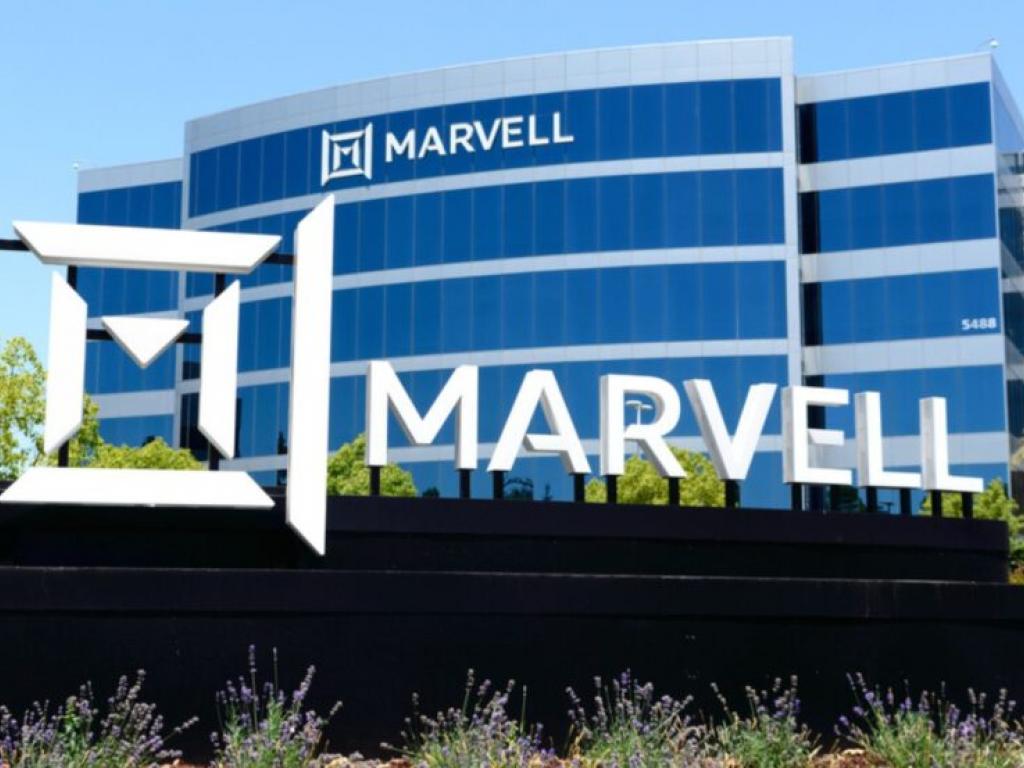
Marvell Technology's Optimistic Outlook Fueled by AI Product Innovations

- Strong Revenue Growth: Marvell Technology achieved a 28% year-over-year revenue growth in Q1 FY2027, with Q2 revenue projected at $2.7 billion, reflecting a 35% year-over-year and 11.7% sequential growth, indicating significant long-term growth potential.
- Surge in AI Orders: CEO Matt Murphy noted exceptional AI-related bookings, leading to a substantial upward revision in revenue outlook for FY2027 and FY2028, suggesting a future valuation of $1 trillion, although other AI stocks may reach this milestone sooner.
- Launch of Teralynx T100 Chip: The newly released Teralynx T100 networking chip delivers 25% lower power consumption and the industry's lowest latency for AI workloads, significantly enhancing data center efficiency and addressing the high demand for energy optimization.
- Product Portfolio Strength: The upgrade of the Teralynx T100 complements Marvell's existing portfolio of ASIC chips and optical fibers, with ongoing product innovations poised to help the company maintain its competitive edge and expand market share.
See More
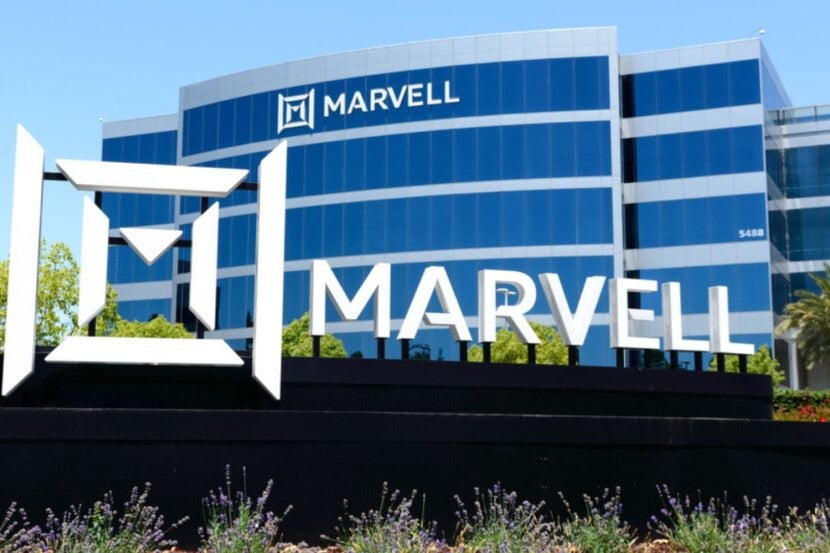
Marvell Technology Shows Strong Growth Potential
- Significant Revenue Growth: Marvell Technology achieved a 28% year-over-year revenue growth in Q1 FY2027, with projected Q2 revenue of $2.7 billion indicating a 35% year-over-year increase and 11.7% sequential growth, showcasing the company's strengthening market competitiveness.
- Optimistic Guidance Outlook: CEO Matt Murphy indicated that revenue is expected to accelerate each quarter throughout FY2027, particularly due to a surge in AI-related bookings, which raises the revenue outlook for both FY2027 and FY2028, suggesting a potential $1 trillion valuation in the future.
- Product Innovation Enhances Competitiveness: The newly launched Teralynx T100 networking chip delivers 25% lower power consumption and the industry's lowest latency for AI workloads, optimizing data center energy use and enhancing Marvell's competitive edge in the market.
- Market Share Expansion Strategy: Through continuous product upgrades and innovations, Marvell Technology aims to increase its market share in ASIC chips and optical fibers, and while other AI stocks like AMD and Sandisk may reach $1 trillion sooner, Marvell's strategic positioning lays a solid foundation for future growth.
See More

Trump Era Bull Market Faces Bubble Risks
- Market Performance Review: During Trump's first term, the Dow Jones Industrial Average surged by 57%, the S&P 500 by 70%, and the Nasdaq Composite by 142%, indicating strong market performance under his administration; however, the sustainability of this growth is now in question.
- Valuation Warning Signals: The S&P 500's Shiller Price-to-Earnings (CAPE) Ratio has reached 42.84, just 3.5% shy of the historical peak, suggesting that current market valuations are nearing record levels, potentially foreshadowing an impending market correction.
- Historical Data Support: Over the past 155 years, data indicates that when the Shiller P/E exceeds 30, markets typically experience value losses ranging from 20% to 89%, posing significant challenges for the future of the Trump bull market and necessitating caution among investors.
- Risks of Technological Innovation: While the rapid advancement of artificial intelligence has fueled market enthusiasm, history shows that every disruptive technology has been accompanied by bubble-bursting risks, and the current AI boom may follow suit, putting investors at risk of substantial losses.
See More
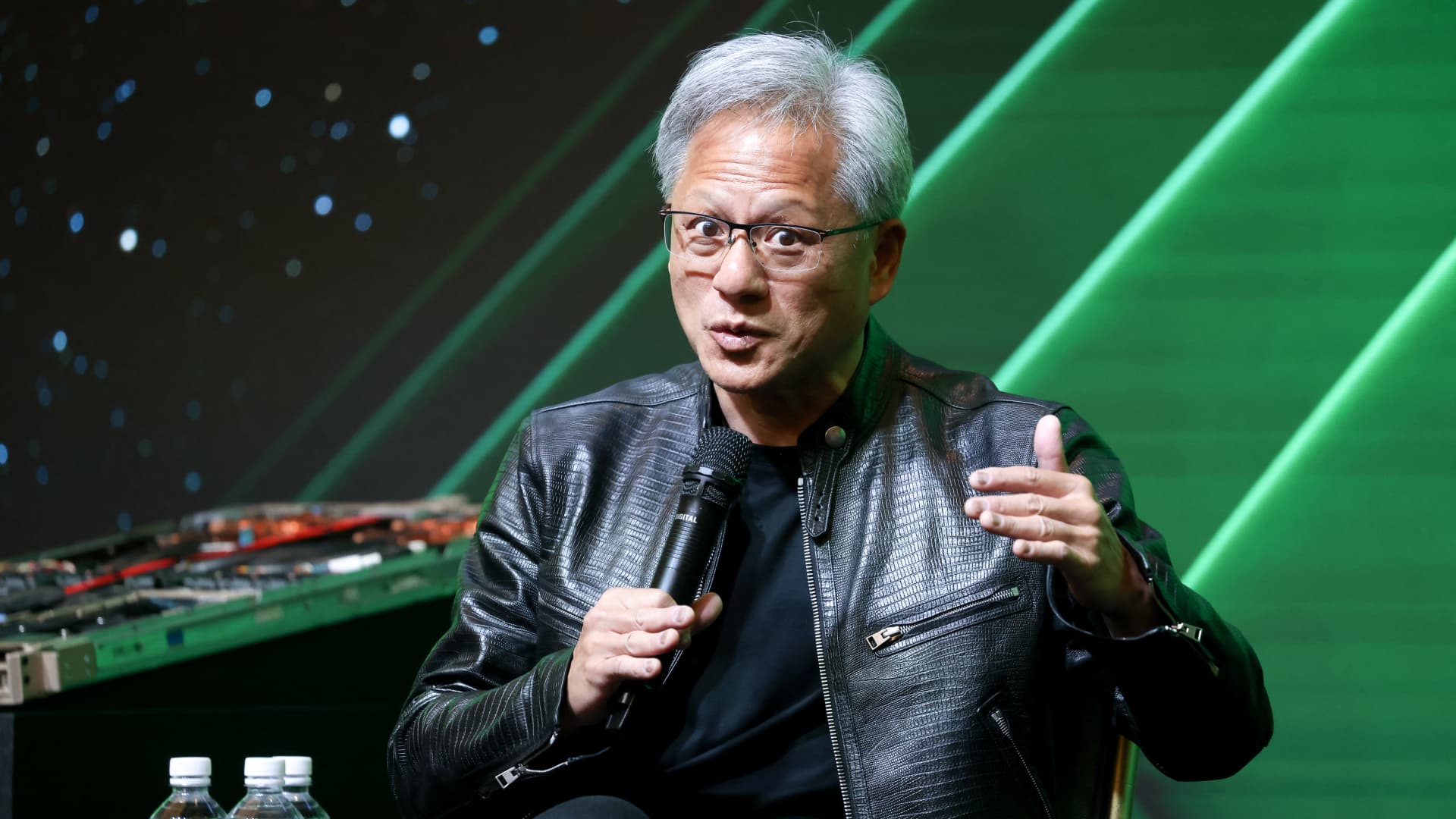
Nvidia's Future Growth Potential is Enormous
- Surge in Data Center Spending: By 2026, the big four AI hyperscalers are expected to announce a record $650 billion in data center capital expenditures, which will significantly boost Nvidia's sales, particularly as its GPUs play a crucial role in training AI models.
- Future Spending Projections: Nvidia anticipates that data center capital expenditures will reach $1 trillion by 2027, indicating ongoing growth potential in AI infrastructure, which will further drive revenue growth for the company.
- Long-Term Market Outlook: By 2030, global data center capital expenditures are projected to rise to $3 trillion to $4 trillion, and if Nvidia maintains a 60% market share, its revenue could reach between $1.8 trillion and $2.4 trillion, greatly enhancing its market capitalization.
- Market Share and Competition: Despite complex relations with China, Nvidia has the opportunity to capture 40% of the lower end of the market, potentially achieving $1.2 trillion in revenue by 2030, and if it maintains a 50% profit margin, its market cap could soar to $18 trillion, with stock prices potentially rising to $750.
See More
Amazon's Cloud Services Accelerate Growth Amid Market Volatility
- Cloud Revenue Growth: Amazon's first-quarter AWS revenue rose 28% year-over-year to $37.6 billion, marking its fastest growth in 15 quarters, indicating strong competitive positioning in the cloud market and expected to further boost overall company performance.
- AI-Driven Profit Enhancement: AWS's AI revenue has reached an annual run rate of $15 billion, with a backlog of $364 billion, demonstrating that investments in artificial intelligence are significantly enhancing profitability and driving overall operating margin to a record 13.1%.
- Capital Expenditure Plans: Amazon plans to invest approximately $200 billion by 2026, with $43.2 billion spent in the first quarter primarily on AWS and AI expansion, which has led to a substantial decline in free cash flow, yet management views this as a necessary investment to seize market opportunities.
- In-House Chip Design Advantage: Amazon's custom chips now run at an annual revenue rate exceeding $20 billion, up nearly 40% from the previous quarter, allowing the company to reduce reliance on external suppliers, which is expected to save tens of billions in capital expenditures while enhancing AWS's margins.
See More
Nvidia's Stock Surge and Dividend Analysis
- Outstanding Stock Performance: As of June 17, Nvidia's shares have surged 1,050% over the past five years, highlighting its strong position in the AI boom and attracting significant investor interest.
- Dividend Increase: In May, Nvidia raised its quarterly dividend from $0.01 to $0.25 per share, yet investors need to own 10,000 shares to generate $10,000 in annual income, indicating limited appeal for income-focused investors.
- High Investment Cost: At the current price of $206.45, investors would need to spend nearly $2.1 million to acquire enough shares for passive income, making it unattractive for those seeking stable cash flow.
- Low Dividend Yield: With a dividend yield of only 0.48%, significantly below the S&P 500 average of 1.04%, Nvidia is better suited for growth investors looking for capital appreciation rather than dividend income.
See More
Marvell Technology's Optimistic Outlook Fueled by AI Product Innovations
- Strong Revenue Growth: Marvell Technology achieved a 28% year-over-year revenue growth in Q1 FY2027, with Q2 revenue projected at $2.7 billion, reflecting a 35% year-over-year and 11.7% sequential growth, indicating significant long-term growth potential.
- Surge in AI Orders: CEO Matt Murphy noted exceptional AI-related bookings, leading to a substantial upward revision in revenue outlook for FY2027 and FY2028, suggesting a future valuation of $1 trillion, although other AI stocks may reach this milestone sooner.
- Launch of Teralynx T100 Chip: The newly released Teralynx T100 networking chip delivers 25% lower power consumption and the industry's lowest latency for AI workloads, significantly enhancing data center efficiency and addressing the high demand for energy optimization.
- Product Portfolio Strength: The upgrade of the Teralynx T100 complements Marvell's existing portfolio of ASIC chips and optical fibers, with ongoing product innovations poised to help the company maintain its competitive edge and expand market share.
See More
Marvell Technology Shows Strong Growth Potential
- Significant Revenue Growth: Marvell Technology achieved a 28% year-over-year revenue growth in Q1 FY2027, with projected Q2 revenue of $2.7 billion indicating a 35% year-over-year increase and 11.7% sequential growth, showcasing the company's strengthening market competitiveness.
- Optimistic Guidance Outlook: CEO Matt Murphy indicated that revenue is expected to accelerate each quarter throughout FY2027, particularly due to a surge in AI-related bookings, which raises the revenue outlook for both FY2027 and FY2028, suggesting a potential $1 trillion valuation in the future.
- Product Innovation Enhances Competitiveness: The newly launched Teralynx T100 networking chip delivers 25% lower power consumption and the industry's lowest latency for AI workloads, optimizing data center energy use and enhancing Marvell's competitive edge in the market.
- Market Share Expansion Strategy: Through continuous product upgrades and innovations, Marvell Technology aims to increase its market share in ASIC chips and optical fibers, and while other AI stocks like AMD and Sandisk may reach $1 trillion sooner, Marvell's strategic positioning lays a solid foundation for future growth.
See More
Trump Era Bull Market Faces Bubble Risks
- Market Performance Review: During Trump's first term, the Dow Jones Industrial Average surged by 57%, the S&P 500 by 70%, and the Nasdaq Composite by 142%, indicating strong market performance under his administration; however, the sustainability of this growth is now in question.
- Valuation Warning Signals: The S&P 500's Shiller Price-to-Earnings (CAPE) Ratio has reached 42.84, just 3.5% shy of the historical peak, suggesting that current market valuations are nearing record levels, potentially foreshadowing an impending market correction.
- Historical Data Support: Over the past 155 years, data indicates that when the Shiller P/E exceeds 30, markets typically experience value losses ranging from 20% to 89%, posing significant challenges for the future of the Trump bull market and necessitating caution among investors.
- Risks of Technological Innovation: While the rapid advancement of artificial intelligence has fueled market enthusiasm, history shows that every disruptive technology has been accompanied by bubble-bursting risks, and the current AI boom may follow suit, putting investors at risk of substantial losses.
See More
Nvidia's Future Growth Potential is Enormous
- Surge in Data Center Spending: By 2026, the big four AI hyperscalers are expected to announce a record $650 billion in data center capital expenditures, which will significantly boost Nvidia's sales, particularly as its GPUs play a crucial role in training AI models.
- Future Spending Projections: Nvidia anticipates that data center capital expenditures will reach $1 trillion by 2027, indicating ongoing growth potential in AI infrastructure, which will further drive revenue growth for the company.
- Long-Term Market Outlook: By 2030, global data center capital expenditures are projected to rise to $3 trillion to $4 trillion, and if Nvidia maintains a 60% market share, its revenue could reach between $1.8 trillion and $2.4 trillion, greatly enhancing its market capitalization.
- Market Share and Competition: Despite complex relations with China, Nvidia has the opportunity to capture 40% of the lower end of the market, potentially achieving $1.2 trillion in revenue by 2030, and if it maintains a 50% profit margin, its market cap could soar to $18 trillion, with stock prices potentially rising to $750.
See More




