Nvidia's Earnings Preview: Sustained AI Demand Growth
Written by Emily J. Thompson, Senior Investment Analyst
Updated: 2 days ago
0mins


Source: Fool
- Earnings Guidance: Nvidia anticipates fiscal Q1 revenue of $78 billion, reflecting a 77% year-over-year growth, indicating sustained AI demand; however, a fiscal Q2 guidance below $87 billion could signal a slowdown, potentially impacting stock performance.
- New Platform Launch: The Vera Rubin platform has begun shipping to customers, with production expected in the second half of the year, representing a significant leap in performance that could enhance market competitiveness and attract more clients.
- China Market Dynamics: While Nvidia did not forecast data center revenue from China in Q1, the easing of export restrictions may lead to a reassessment of the Chinese market's potential, influencing overall revenue expectations.
- Rising Capital Expenditures: Combined capital expenditure plans from Amazon, Microsoft, Alphabet, and Meta for 2026 total approximately $725 billion, a significant increase from last year, providing a robust market foundation for Nvidia's growth and solidifying its leadership in the AI chip sector.
Trade with 70% Backtested Accuracy
Stop guessing "Should I Buy NVDA?" and start using high-conviction signals backed by rigorous historical data.
Sign up today to access powerful investing tools and make smarter, data-driven decisions.
Analyst Views on NVDA
Wall Street analysts forecast NVDA stock price to rise
41 Analyst Rating
39 Buy
1 Hold
1 Sell
Strong Buy
Current: 219.510

Low
200.00
Averages
264.97
High
352.00
Current: 219.510
Low
200.00
Averages
264.97
High
352.00
About NVDA
NVIDIA Corporation is an artificial intelligence (AI) infrastructure company. The Company is engaged in accelerated computing to help solve the challenging computational problems. Its segments include Compute & Networking and Graphics. The Compute & Networking segment includes its Data Center accelerated computing and networking platforms and AI solutions and software, and automotive platforms and autonomous and electric vehicle solutions, including software. The Graphics segment includes GeForce GPUs for gaming and personal computers (PCs), and Quadro/NVIDIA RTX GPUs for enterprise workstation graphics. Its technology stack includes the foundational NVIDIA CUDA development platform that runs on all NVIDIA GPUs, as well as hundreds of domain-specific software libraries, frameworks, algorithms, software development kits (SDKs), and application programming interfaces (APIs). Its platforms address four markets, which include Data Center, Gaming, Professional Visualization, and Automotive.
About the author

Emily J. Thompson
Emily J. Thompson, a Chartered Financial Analyst (CFA) with 12 years in investment research, graduated with honors from the Wharton School. Specializing in industrial and technology stocks, she provides in-depth analysis for Intellectia’s earnings and market brief reports.

SpaceX IPO Could Become Largest Float in History

- Market Peak Signal: Analysts suggest that SpaceX's upcoming IPO could signal a market top, drawing parallels to the late 1990s dot-com bubble, particularly as multiple mega-cap companies are going public simultaneously, prompting caution among investors.
- Poor Financial Performance: SpaceX reported a net loss of $4.28 billion in the latest quarter, despite its Starlink division generating $3.26 billion in revenue, which accounted for 69% of total revenue; however, the overall business still faces significant losses, particularly with its AI unit losing $2.5 billion.
- Valuation Risks: SpaceX's anticipated valuation of $1.75 trillion on Nasdaq translates to 67 times sales, significantly higher than Nvidia's valuation, with analysts warning that such a high valuation could pose risks to the market.
- Competition and Transparency Issues: SpaceX considers OpenAI a key competitor, yet both companies have yet to achieve profitability, raising concerns among analysts that if they fail to generate profits, it could negatively impact the broader market, especially after they disclose their financials, which remain poorly understood.
See More

Alice & Bob Secures Funding from Nvidia for Quantum Computing Development
- Funding Support: French company Alice & Bob has secured funding from Nvidia's venture capital arm NVentures, aimed at developing hardware to reduce errors in quantum computing, indicating a rising market interest in the technology.
- Investment Size Undisclosed: Although the company did not disclose the specific amount of investment, this funding comes shortly after the Trump administration announced a $2 billion equity stake across nine quantum computing companies, highlighting the U.S. strategic focus on this emerging technology.
- Development Opportunity: This funding will accelerate Alice & Bob's research and development of quantum computing hardware, aiming to lower error rates in quantum computing, thereby enhancing the technology's practicality and market competitiveness.
- Positive Industry Outlook: As quantum computing technology continues to advance and its application prospects expand, Alice & Bob's development will contribute to the maturation of the global quantum computing ecosystem, further solidifying U.S. leadership in the field.
See More
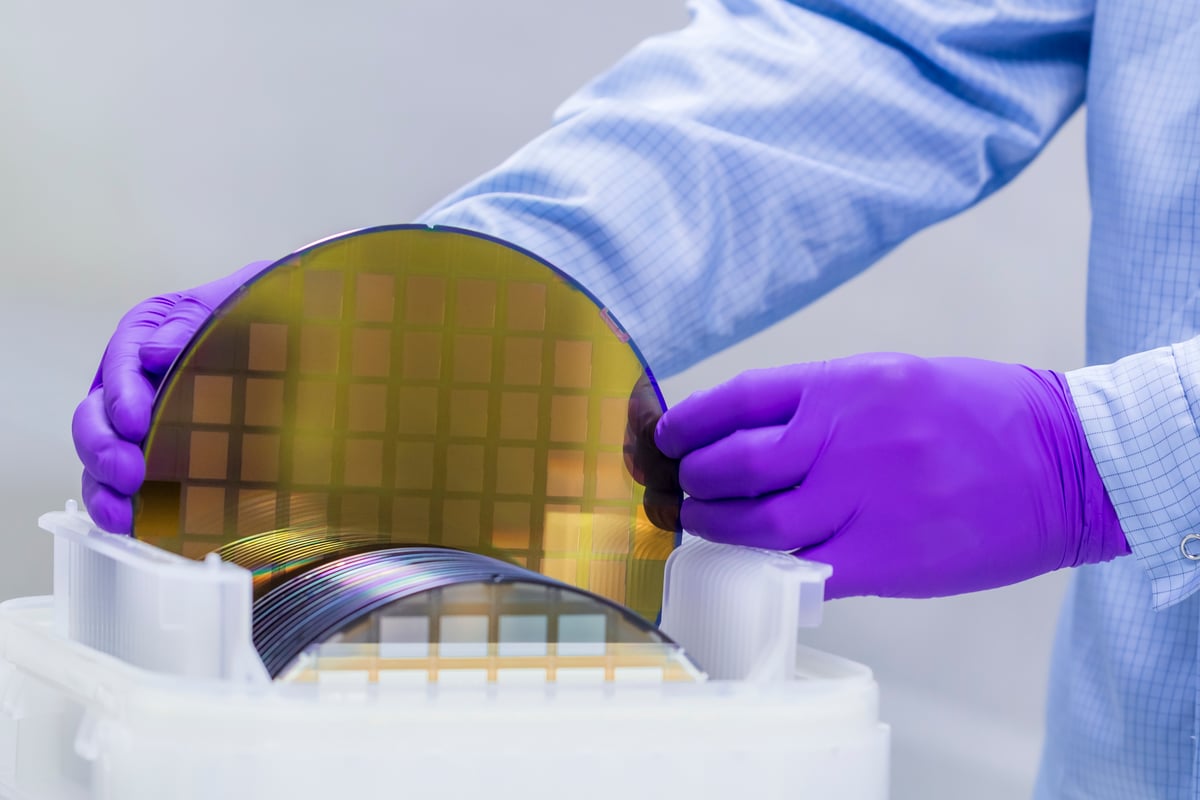
Photronics: The Overlooked Semiconductor Winner

- Consistent Growth Performance: Photronics has achieved a 17.2% compound annual growth rate over the past decade, significantly outperforming the S&P 500's 13.7%, with even greater margins of 28.9% and 38.6% over the last five and three years, respectively, demonstrating its stability and resilience amid market fluctuations.
- Demand-Driven Market: As chip designs migrate to smaller nodes, the demand for Photronics' photomasks continues to rise, especially in the manufacturing of LCD and OLED screens, making its products essential components that drive sales and profit growth.
- Geopolitical Advantages: Due to the complexities of international supply chains, Photronics can provide multiple sets of photomasks for different regions, leveraging its facilities in the U.S., Asia, and Europe to enhance its market competitiveness and revenue streams.
- Return of U.S. Manufacturing: With the implementation of the CHIPS Act, Photronics is expanding its production capabilities in Texas to meet the increasing domestic demand for photomasks from mainstream wafer fabs, with the CEO stating plans to enhance production capabilities for technology nodes ranging from 90-nanometer to 40-nanometer.
See More

Cerebras Systems IPO Surges 68% on First Day Amid AI Chip Buzz

- First Day Performance: Cerebras Systems went public on May 14, with its stock surging 68% on the first day, indicating strong market interest in AI chips and suggesting potential for increased investor engagement in the sector.
- Technological Edge: Cerebras claims its chips are 15 times faster than competitors, and its wafer-scale engines (WSEs) are 58 times larger than Nvidia's processors, offering significantly higher memory and bandwidth, which could enhance performance in data center applications.
- Market Challenges: Despite the advantages of Cerebras' chips in certain scenarios, smaller chips offer flexibility and cost-effectiveness, particularly for small to mid-sized companies, making Nvidia's solutions potentially more appealing in those contexts.
- Software Ecosystem: Nvidia's CUDA software layer dominates the industry with over 900 libraries and AI models, while Cerebras has developed its own software layer, yet it faces significant challenges in competing against Nvidia's established ecosystem.
See More

Photronics Achieves 17.2% CAGR Over Ten Years
- Strong Stock Performance: Photronics has achieved a 17.2% compound annual growth rate over the past decade, significantly outperforming the S&P 500's 13.7%, demonstrating its robust performance and stability in the semiconductor sector.
- Solid Market Position: While not as recognized as Nvidia or AMD, Photronics plays a critical role in the photomask market, making it indispensable in the semiconductor supply chain and ensuring continued growth in the future.
- Strong Profitability: With a price-to-earnings ratio of 20, Photronics remains attractive compared to market darlings like Nvidia and Broadcom, which exceed 40, indicating that its valuation is based on structural market changes rather than speculative factors like AI.
- Low Investor Awareness: Despite a recent rise in stock price, Photronics is still viewed as a potential investment opportunity due to its lower profile among investors, appealing to those seeking understated yet reliable returns.
See More

Cerebras Soars 68% on First Day of Trading
- Strong IPO Performance: Cerebras Systems saw its stock surge 68% on its first trading day on May 14, indicating robust market interest in its AI chip technology and suggesting that the AI sector remains vibrant and attractive to investors.
- Significant Technical Advantages: Cerebras designs chips that are 58 times larger than Nvidia's 200 model, with its WSE-3 model boasting 250 times more on-chip memory and 2,625 times more memory bandwidth than Nvidia's B200, greatly enhancing data processing capabilities and potentially outperforming competitors in specific applications.
- Intense Market Competition: Despite Cerebras' performance advantages, Nvidia maintains a dominant market position due to its CUDA software ecosystem, which presents high switching costs for developers, thereby limiting Cerebras' market penetration and highlighting Nvidia's strong competitive moat.
- Cautious Investor Consideration: While Cerebras' technological prospects are enticing, analysts note that it did not make the Motley Fool's list of top stocks, suggesting that investors should carefully evaluate its market position and long-term potential before investing.
See More
SpaceX IPO Could Become Largest Float in History
- Market Peak Signal: Analysts suggest that SpaceX's upcoming IPO could signal a market top, drawing parallels to the late 1990s dot-com bubble, particularly as multiple mega-cap companies are going public simultaneously, prompting caution among investors.
- Poor Financial Performance: SpaceX reported a net loss of $4.28 billion in the latest quarter, despite its Starlink division generating $3.26 billion in revenue, which accounted for 69% of total revenue; however, the overall business still faces significant losses, particularly with its AI unit losing $2.5 billion.
- Valuation Risks: SpaceX's anticipated valuation of $1.75 trillion on Nasdaq translates to 67 times sales, significantly higher than Nvidia's valuation, with analysts warning that such a high valuation could pose risks to the market.
- Competition and Transparency Issues: SpaceX considers OpenAI a key competitor, yet both companies have yet to achieve profitability, raising concerns among analysts that if they fail to generate profits, it could negatively impact the broader market, especially after they disclose their financials, which remain poorly understood.
See More
Alice & Bob Secures Funding from Nvidia for Quantum Computing Development
- Funding Support: French company Alice & Bob has secured funding from Nvidia's venture capital arm NVentures, aimed at developing hardware to reduce errors in quantum computing, indicating a rising market interest in the technology.
- Investment Size Undisclosed: Although the company did not disclose the specific amount of investment, this funding comes shortly after the Trump administration announced a $2 billion equity stake across nine quantum computing companies, highlighting the U.S. strategic focus on this emerging technology.
- Development Opportunity: This funding will accelerate Alice & Bob's research and development of quantum computing hardware, aiming to lower error rates in quantum computing, thereby enhancing the technology's practicality and market competitiveness.
- Positive Industry Outlook: As quantum computing technology continues to advance and its application prospects expand, Alice & Bob's development will contribute to the maturation of the global quantum computing ecosystem, further solidifying U.S. leadership in the field.
See More
Photronics: The Overlooked Semiconductor Winner
- Consistent Growth Performance: Photronics has achieved a 17.2% compound annual growth rate over the past decade, significantly outperforming the S&P 500's 13.7%, with even greater margins of 28.9% and 38.6% over the last five and three years, respectively, demonstrating its stability and resilience amid market fluctuations.
- Demand-Driven Market: As chip designs migrate to smaller nodes, the demand for Photronics' photomasks continues to rise, especially in the manufacturing of LCD and OLED screens, making its products essential components that drive sales and profit growth.
- Geopolitical Advantages: Due to the complexities of international supply chains, Photronics can provide multiple sets of photomasks for different regions, leveraging its facilities in the U.S., Asia, and Europe to enhance its market competitiveness and revenue streams.
- Return of U.S. Manufacturing: With the implementation of the CHIPS Act, Photronics is expanding its production capabilities in Texas to meet the increasing domestic demand for photomasks from mainstream wafer fabs, with the CEO stating plans to enhance production capabilities for technology nodes ranging from 90-nanometer to 40-nanometer.
See More
Cerebras Systems IPO Surges 68% on First Day Amid AI Chip Buzz
- First Day Performance: Cerebras Systems went public on May 14, with its stock surging 68% on the first day, indicating strong market interest in AI chips and suggesting potential for increased investor engagement in the sector.
- Technological Edge: Cerebras claims its chips are 15 times faster than competitors, and its wafer-scale engines (WSEs) are 58 times larger than Nvidia's processors, offering significantly higher memory and bandwidth, which could enhance performance in data center applications.
- Market Challenges: Despite the advantages of Cerebras' chips in certain scenarios, smaller chips offer flexibility and cost-effectiveness, particularly for small to mid-sized companies, making Nvidia's solutions potentially more appealing in those contexts.
- Software Ecosystem: Nvidia's CUDA software layer dominates the industry with over 900 libraries and AI models, while Cerebras has developed its own software layer, yet it faces significant challenges in competing against Nvidia's established ecosystem.
See More
Photronics Achieves 17.2% CAGR Over Ten Years
- Strong Stock Performance: Photronics has achieved a 17.2% compound annual growth rate over the past decade, significantly outperforming the S&P 500's 13.7%, demonstrating its robust performance and stability in the semiconductor sector.
- Solid Market Position: While not as recognized as Nvidia or AMD, Photronics plays a critical role in the photomask market, making it indispensable in the semiconductor supply chain and ensuring continued growth in the future.
- Strong Profitability: With a price-to-earnings ratio of 20, Photronics remains attractive compared to market darlings like Nvidia and Broadcom, which exceed 40, indicating that its valuation is based on structural market changes rather than speculative factors like AI.
- Low Investor Awareness: Despite a recent rise in stock price, Photronics is still viewed as a potential investment opportunity due to its lower profile among investors, appealing to those seeking understated yet reliable returns.
See More
Cerebras Soars 68% on First Day of Trading
- Strong IPO Performance: Cerebras Systems saw its stock surge 68% on its first trading day on May 14, indicating robust market interest in its AI chip technology and suggesting that the AI sector remains vibrant and attractive to investors.
- Significant Technical Advantages: Cerebras designs chips that are 58 times larger than Nvidia's 200 model, with its WSE-3 model boasting 250 times more on-chip memory and 2,625 times more memory bandwidth than Nvidia's B200, greatly enhancing data processing capabilities and potentially outperforming competitors in specific applications.
- Intense Market Competition: Despite Cerebras' performance advantages, Nvidia maintains a dominant market position due to its CUDA software ecosystem, which presents high switching costs for developers, thereby limiting Cerebras' market penetration and highlighting Nvidia's strong competitive moat.
- Cautious Investor Consideration: While Cerebras' technological prospects are enticing, analysts note that it did not make the Motley Fool's list of top stocks, suggesting that investors should carefully evaluate its market position and long-term potential before investing.
See More