Nvidia Faces Market Confidence Challenges Amid AI Doubts
Written by Emily J. Thompson, Senior Investment Analyst
Updated: 16 hours ago
0mins

Source: NASDAQ.COM
- Declining Earnings Multiple: Nvidia currently trades at a forward P/E ratio of approximately 22, significantly lower than its average of nearly 34 over the past two years, indicating market skepticism about its future earnings and potentially leading to decreased investor confidence in its stock price.
- Strong Revenue Growth: In the first quarter of fiscal year 2027, Nvidia reported an 85% year-over-year revenue increase and a 140% surge in diluted earnings per share, showcasing robust performance in the AI chip market, yet doubts about the sustainability of this growth persist among investors.
- Intensifying Competition Risks: Nvidia faces competitive threats from companies like Cerebras, which claim to offer GPUs that are 15 times faster than Nvidia's models; if competition intensifies, it could undermine Nvidia's market dominance and impact its future market share.
- Market Expectation Uncertainty: Although Nvidia's management anticipates that its new chips will generate $1 trillion in sales by the end of 2027, a significant pullback in the AI market could substantially affect the company's performance, necessitating cautious risk assessment by investors.
Trade with 70% Backtested Accuracy
Stop guessing "Should I Buy NVDA?" and start using high-conviction signals backed by rigorous historical data.
Sign up today to access powerful investing tools and make smarter, data-driven decisions.
Analyst Views on NVDA
Wall Street analysts forecast NVDA stock price to rise
41 Analyst Rating
39 Buy
1 Hold
1 Sell
Strong Buy
Current: 197.580

Low
200.00
Averages
264.97
High
352.00
Current: 197.580
Low
200.00
Averages
264.97
High
352.00
About NVDA
NVIDIA Corporation is an artificial intelligence (AI) infrastructure company. The Company is engaged in accelerated computing to help solve the challenging computational problems. Its segments include Compute & Networking and Graphics. The Compute & Networking segment includes its Data Center accelerated computing and networking platforms and AI solutions and software, and automotive platforms and autonomous and electric vehicle solutions, including software. The Graphics segment includes GeForce GPUs for gaming and personal computers (PCs), and Quadro/NVIDIA RTX GPUs for enterprise workstation graphics. Its technology stack includes the foundational NVIDIA CUDA development platform that runs on all NVIDIA GPUs, as well as hundreds of domain-specific software libraries, frameworks, algorithms, software development kits (SDKs), and application programming interfaces (APIs). Its platforms address four markets, which include Data Center, Gaming, Professional Visualization, and Automotive.
About the author

Emily J. Thompson
Emily J. Thompson, a Chartered Financial Analyst (CFA) with 12 years in investment research, graduated with honors from the Wharton School. Specializing in industrial and technology stocks, she provides in-depth analysis for Intellectia’s earnings and market brief reports.

Rocket Lab Announces $8 Billion Acquisition of Iridium


- Acquisition Announcement: Rocket Lab has announced plans to acquire Iridium Communications for $8 billion, which will enable Rocket Lab to integrate satellite launch and communication solutions, thereby enhancing its market competitiveness.
- Market Potential: The global space launch market is projected to grow from over $20 billion this year to more than $70 billion by 2035, and with Iridium's technology, Rocket Lab is positioned to capture a significant share of this rapidly expanding market.
- Technological Synergy: Rocket Lab's Electron rocket has successfully launched over 260 satellites, and Iridium's communication and positioning solutions will allow it to meet a broader range of customer needs, enhancing the attractiveness of its product offerings.
- Strategic Implications: This acquisition not only boosts Rocket Lab's technological capabilities but may also position it as the sole provider capable of meeting specific market demands, thereby gaining a larger market share in the competitive aerospace industry.
See More
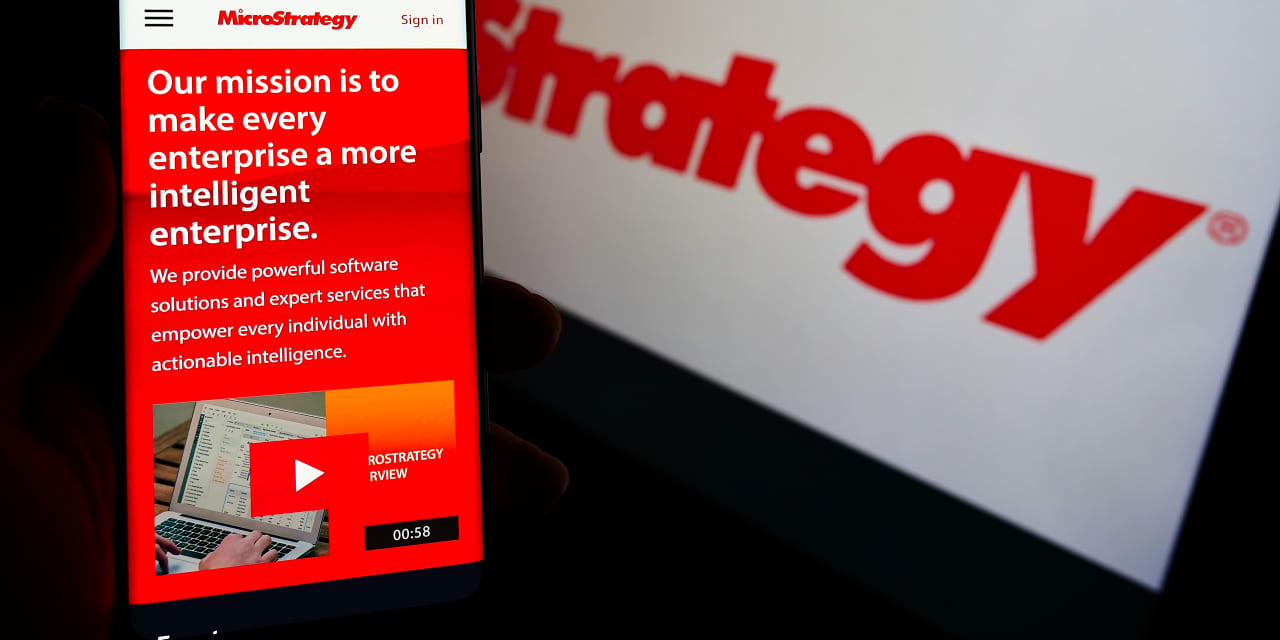
Strategy Unveils New Bitcoin Sales Framework


- Sales Authorization Overview: Strategy's new Digital Credit Capital Framework allows for the sale of up to $1.25 billion in Bitcoin, which represents only a small fraction of its $50.6 billion Bitcoin reserve, indicating the company's flexibility in adjusting sales strategies based on funding needs.
- Market Reaction Analysis: Following the announcement, Bitcoin's price fell by 2.2%, reflecting market concerns about the potential impact of sales from Strategy, the largest corporate holder, despite the relatively small volume of sales.
- Liquidity Management Strategy: The primary purpose of the new framework is to fund preferred stock dividends and stock buybacks, which is expected to affect Bitcoin's market liquidity and increase risk awareness among holders.
- Investor Confidence Consideration: Although the new framework may not lead to a crash in Bitcoin's price, Strategy's significant control over the asset necessitates a reassessment of investment logic, especially given that the company's stock has already fallen over 70%.
See More

Trump and New Fed Chair Clash Over Interest Rates
- Fed Leadership Change: Jerome Powell's term ended on May 15, with Trump's nominee Kevin Warsh officially taking over as Fed Chair, indicating a potential shift in monetary policy direction, particularly regarding interest rates.
- Trump's Rate Pressure: Trump continues to push for rate cuts, despite the Fed lowering the federal funds target rate six times between 2024 and 2025; the current rate of 3.5% to 3.75% remains above Trump's desired target of 1%, highlighting a significant policy divergence.
- Inflation Challenges: Due to tariffs imposed by Trump and the energy supply disruption from the Iran war, U.S. inflation surged from 2.4% to 4.2% over 12 months, placing increased pressure on Warsh to maintain price stability, which could influence future monetary policy decisions.
- Market Uncertainty Intensifies: Warsh's hawkish stance contrasts sharply with Trump's calls for lower rates, and the lack of monetary policy transparency may lead to greater risks for Wall Street, especially given the current high valuations in the stock market.
See More

Biogen Acquires RayThera for $1 Billion to Boost Immunology Business

- MS Business Update: Biogen's multiple sclerosis drugs generated $4 billion in revenue in 2022, down from $4.4 billion in 2019, highlighting the competitive pressures from patent expirations that have forced the company to adjust its strategy to maintain market position.
- Growth Plan Implementation: In 2023, Biogen achieved a 12% increase in sales to $850 million, primarily driven by a focus on growth products like Leqembi for Alzheimer's disease, marking a turnaround after four years of declining earnings.
- Acquisition Strategy: Biogen's acquisition of Apellis Pharmaceuticals in 2023 brought in two commercialized drugs with $689 million in sales, further solidifying its position in the immunology market and laying the groundwork for future growth.
- RayThera Acquisition Potential: Biogen's acquisition of RayThera for up to $1 billion, despite limited product details, suggests a portfolio of multiple anti-inflammatory assets that could target various immune-mediated conditions, indicating significant revenue potential and aligning with the company's strategic goal to expand its immunology business.
See More

AI Boom Shows Signs of Exhaustion; Investors Should Shift to Quality Stocks


- Market Weakness Signs: The 'Magnificent Seven' stocks that have driven major indices higher are all down over the past three years, with all but Apple (AAPL) in correction territory, indicating potential risks that investors should be wary of.
- Defensive Investment Strategy: Given the underperformance of growth stocks, investors may need to seek more defensive and undervalued options, with quality stocks becoming a focal point due to their healthy balance sheets and strong cash flows.
- ETF Investment Advantages: Picking individual winners is notoriously challenging, so investors are advised to consider buying exchange-traded funds (ETFs) like the Invesco S&P 500 Quality ETF (SPHQ), which currently allocates 42% to tech, reflecting the sector's earnings and revenue growth potential.
- Diversification and Durability: This ETF is roughly 80% weighted to large caps and 20% to mid- and small caps, a profile that not only complements ETFs tracking the S&P 500 but also provides protection during market downturns, helping investors navigate future market challenges.
See More

Buffett Steps Down, Abel Takes Over as CEO of Berkshire Hathaway
- Record Cash Reserves: As of Q1 2026, Berkshire Hathaway's cash reserves reached $397 billion, up from $373 billion at the end of last year, representing over a third of the company's $1.1 trillion market value, indicating strong financial flexibility amid market volatility.
- Strategic Acquisition Moves: New CEO Greg Abel quickly initiated a $6.8 billion acquisition of homebuilder Taylor Morrison at a 24% premium, marking a proactive approach in the real estate sector to capitalize on the national housing shortage.
- Shift Towards Technology Investments: Abel also directed a $10 billion private placement in Alphabet, pushing Berkshire's stake in the Google parent company past $26 billion, reflecting a strategic pivot towards technology investments despite the company's historical caution in this area.
- Resumption of Buyback Program: After a 21-month hiatus, Berkshire repurchased approximately $234 million in stock in March 2026, signaling Abel's more aggressive capital allocation strategy aimed at enhancing shareholder value and boosting market confidence.
See More
Rocket Lab Announces $8 Billion Acquisition of Iridium
- Acquisition Announcement: Rocket Lab has announced plans to acquire Iridium Communications for $8 billion, which will enable Rocket Lab to integrate satellite launch and communication solutions, thereby enhancing its market competitiveness.
- Market Potential: The global space launch market is projected to grow from over $20 billion this year to more than $70 billion by 2035, and with Iridium's technology, Rocket Lab is positioned to capture a significant share of this rapidly expanding market.
- Technological Synergy: Rocket Lab's Electron rocket has successfully launched over 260 satellites, and Iridium's communication and positioning solutions will allow it to meet a broader range of customer needs, enhancing the attractiveness of its product offerings.
- Strategic Implications: This acquisition not only boosts Rocket Lab's technological capabilities but may also position it as the sole provider capable of meeting specific market demands, thereby gaining a larger market share in the competitive aerospace industry.
See More
Strategy Unveils New Bitcoin Sales Framework
- Sales Authorization Overview: Strategy's new Digital Credit Capital Framework allows for the sale of up to $1.25 billion in Bitcoin, which represents only a small fraction of its $50.6 billion Bitcoin reserve, indicating the company's flexibility in adjusting sales strategies based on funding needs.
- Market Reaction Analysis: Following the announcement, Bitcoin's price fell by 2.2%, reflecting market concerns about the potential impact of sales from Strategy, the largest corporate holder, despite the relatively small volume of sales.
- Liquidity Management Strategy: The primary purpose of the new framework is to fund preferred stock dividends and stock buybacks, which is expected to affect Bitcoin's market liquidity and increase risk awareness among holders.
- Investor Confidence Consideration: Although the new framework may not lead to a crash in Bitcoin's price, Strategy's significant control over the asset necessitates a reassessment of investment logic, especially given that the company's stock has already fallen over 70%.
See More
Trump and New Fed Chair Clash Over Interest Rates
- Fed Leadership Change: Jerome Powell's term ended on May 15, with Trump's nominee Kevin Warsh officially taking over as Fed Chair, indicating a potential shift in monetary policy direction, particularly regarding interest rates.
- Trump's Rate Pressure: Trump continues to push for rate cuts, despite the Fed lowering the federal funds target rate six times between 2024 and 2025; the current rate of 3.5% to 3.75% remains above Trump's desired target of 1%, highlighting a significant policy divergence.
- Inflation Challenges: Due to tariffs imposed by Trump and the energy supply disruption from the Iran war, U.S. inflation surged from 2.4% to 4.2% over 12 months, placing increased pressure on Warsh to maintain price stability, which could influence future monetary policy decisions.
- Market Uncertainty Intensifies: Warsh's hawkish stance contrasts sharply with Trump's calls for lower rates, and the lack of monetary policy transparency may lead to greater risks for Wall Street, especially given the current high valuations in the stock market.
See More
Biogen Acquires RayThera for $1 Billion to Boost Immunology Business
- MS Business Update: Biogen's multiple sclerosis drugs generated $4 billion in revenue in 2022, down from $4.4 billion in 2019, highlighting the competitive pressures from patent expirations that have forced the company to adjust its strategy to maintain market position.
- Growth Plan Implementation: In 2023, Biogen achieved a 12% increase in sales to $850 million, primarily driven by a focus on growth products like Leqembi for Alzheimer's disease, marking a turnaround after four years of declining earnings.
- Acquisition Strategy: Biogen's acquisition of Apellis Pharmaceuticals in 2023 brought in two commercialized drugs with $689 million in sales, further solidifying its position in the immunology market and laying the groundwork for future growth.
- RayThera Acquisition Potential: Biogen's acquisition of RayThera for up to $1 billion, despite limited product details, suggests a portfolio of multiple anti-inflammatory assets that could target various immune-mediated conditions, indicating significant revenue potential and aligning with the company's strategic goal to expand its immunology business.
See More
AI Boom Shows Signs of Exhaustion; Investors Should Shift to Quality Stocks
- Market Weakness Signs: The 'Magnificent Seven' stocks that have driven major indices higher are all down over the past three years, with all but Apple (AAPL) in correction territory, indicating potential risks that investors should be wary of.
- Defensive Investment Strategy: Given the underperformance of growth stocks, investors may need to seek more defensive and undervalued options, with quality stocks becoming a focal point due to their healthy balance sheets and strong cash flows.
- ETF Investment Advantages: Picking individual winners is notoriously challenging, so investors are advised to consider buying exchange-traded funds (ETFs) like the Invesco S&P 500 Quality ETF (SPHQ), which currently allocates 42% to tech, reflecting the sector's earnings and revenue growth potential.
- Diversification and Durability: This ETF is roughly 80% weighted to large caps and 20% to mid- and small caps, a profile that not only complements ETFs tracking the S&P 500 but also provides protection during market downturns, helping investors navigate future market challenges.
See More
Buffett Steps Down, Abel Takes Over as CEO of Berkshire Hathaway
- Record Cash Reserves: As of Q1 2026, Berkshire Hathaway's cash reserves reached $397 billion, up from $373 billion at the end of last year, representing over a third of the company's $1.1 trillion market value, indicating strong financial flexibility amid market volatility.
- Strategic Acquisition Moves: New CEO Greg Abel quickly initiated a $6.8 billion acquisition of homebuilder Taylor Morrison at a 24% premium, marking a proactive approach in the real estate sector to capitalize on the national housing shortage.
- Shift Towards Technology Investments: Abel also directed a $10 billion private placement in Alphabet, pushing Berkshire's stake in the Google parent company past $26 billion, reflecting a strategic pivot towards technology investments despite the company's historical caution in this area.
- Resumption of Buyback Program: After a 21-month hiatus, Berkshire repurchased approximately $234 million in stock in March 2026, signaling Abel's more aggressive capital allocation strategy aimed at enhancing shareholder value and boosting market confidence.
See More