

Nokia Shares Hit 27-Year High as AI Networking Business Expands
Written by Emily J. Thompson, Senior Investment Analyst
Updated: May 27 2026
0mins


Source: stocktwits
- Nokia Stock Surge: Nokia shares soared to $16.63 on Tuesday, marking a 27-year high as investors reassessed the company's role in high-speed AI data infrastructure, indicating increased confidence in its AI and cloud networking business.
- Micron Hits Record High: Micron's stock climbed to $916.76, surpassing a $1 trillion market cap for the first time, driven by strong demand for advanced AI memory chips, with UBS raising its price target to $1,625, suggesting an 81% upside potential.
- BlackBerry Market Reinvention: BlackBerry shares reached a new high of $8.6, bolstered by ongoing advancements in automotive software and cybersecurity, with investors optimistic about the QNX operating system's integration in millions of connected devices worldwide.
- Overall Market Trend: Nokia, Micron, and BlackBerry stocks all hit fresh 52-week highs, reflecting a significant influx of investor capital towards companies supporting the physical infrastructure for AI growth, highlighting rising demand for networking equipment, memory chips, and cybersecurity systems.
Trade with 70% Backtested Accuracy
Stop guessing "Should I Buy MU?" and start using high-conviction signals backed by rigorous historical data.
Sign up today to access powerful investing tools and make smarter, data-driven decisions.
Analyst Views on MU
Wall Street analysts forecast MU stock price to fall
26 Analyst Rating
24 Buy
2 Hold
0 Sell
Strong Buy
Current: 1043.190

Low
235.00
Averages
336.12
High
500.00
Current: 1043.190
Low
235.00
Averages
336.12
High
500.00
About MU
Micron Technology, Inc. provides memory and storage solutions. The Company delivers a portfolio of high-performance dynamic random-access memory (DRAM), NAND, and NOR memory and storage products through its Micron and Crucial brands. The Company's products enable advancing in artificial intelligence (AI) and compute-intensive applications. Its segments include Cloud Memory Business Unit (CMBU), Core Data Center Business Unit (CDBU), Mobile and Client Business Unit (MCBU) and Automotive and Embedded Business Unit (AEBU). CMBU is focused on memory solutions for large hyperscale cloud customers, and high bandwidth memory (HBM) for all data center customers. CDBU is focused on memory solutions for mid-tier cloud, enterprise, and OEM data center customers and storage solutions for all data center customers. MCBU is focused on memory and storage solutions for mobile and client segments. AEBU is focused on memory and storage solutions for the automotive, industrial, and consumer segments.
About the author

Emily J. Thompson
Emily J. Thompson, a Chartered Financial Analyst (CFA) with 12 years in investment research, graduated with honors from the Wharton School. Specializing in industrial and technology stocks, she provides in-depth analysis for Intellectia’s earnings and market brief reports.

Micron Set to Release Quarterly Earnings

- Earnings Report Announcement: Micron is scheduled to release its quarterly financial results on June 20, 2026, with significant implications for market investors, particularly against the backdrop of volatility in the semiconductor industry.
- Investor Focus: This earnings report will provide critical financial data for investors, potentially influencing Micron's stock price movements, especially given the heightened sensitivity of the market towards tech stocks at this time.
- Market Reaction Expectations: Analysts anticipate that Micron's earnings will reveal its performance in a highly competitive market environment, with investors closely monitoring changes in revenue and profit to assess future investment opportunities.
- Industry Trend Impact: Micron's financial results will not only have a direct impact on its own stock price but may also create a ripple effect on investor sentiment across the semiconductor industry, particularly amid increasing global economic uncertainty.
See More

Micron's Upcoming Earnings Report and Investment Insights
- Earnings Report Ahead: Micron Technology (NASDAQ: MU) is set to report its quarterly financial results, which holds significant implications for stock market investors who need to assess its performance for future investment opportunities.
- Lack of Investment Recommendations: Despite its market presence, Micron was not included in the current list of the top 10 stocks recommended by The Motley Fool Stock Advisor, indicating a cautious market sentiment regarding its future performance.
- Historical Return Comparisons: Historically, companies like Netflix and Nvidia yielded returns of 417,305% and 1,293,148% respectively when recommended, highlighting the potential for substantial gains, thus investors must choose stocks wisely.
- Market Performance Analysis: Stock Advisor boasts an average return of 936%, significantly outperforming the S&P 500's 209%, reflecting the superiority of its stock recommendations, prompting investors to consider joining for more insights.
See More

Iran Closes Strait of Hormuz, Peace Talks Set to Begin


- Strait Closure Impact: Iran's announcement to close the Strait of Hormuz could disrupt global oil transportation, potentially driving up international oil prices and affecting market stability worldwide.
- Peace Talks Initiation: Despite the closure, peace talks between Iran and relevant nations are set to begin on Sunday, indicating a willingness to seek diplomatic solutions amid rising tensions, which could lead to a turning point in regional dynamics.
- Market Watch Focus: Investors should keep an eye on Nvidia and SpaceX stocks, as the former's ongoing innovations in AI and the latter's advancements in aerospace may attract significant market attention, influencing investment sentiment in related sectors.
- Geopolitical Risks: The closure of the Strait heightens geopolitical risks in the Middle East, potentially leading to increased international sanctions against Iran, which could adversely affect the country's economy and international relations.
See More

Micron Technology Shares Surge 831% with Promising Outlook

- Stock Surge: Micron Technology's shares have skyrocketed by 831% over the past year, primarily driven by a massive surge in memory demand, which has significantly boosted the company's revenue and earnings, instilling investor confidence in its future performance.
- Analyst Optimism: Among the 49 analysts covering Micron, 46 have rated it as a buy; despite the current 12-month price target of $1,100 suggesting a potential 3% drop, analysts are expected to raise their targets due to favorable supply-demand conditions in the memory industry.
- Memory Market Shortage: With the ongoing demand for high-bandwidth memory (HBM) and manufacturers nearly sold out of capacity, the HBM market is projected to grow at an annual rate of 30%, leading to a sustained shortage in the memory market over the next five years, which will further enhance Micron's profitability.
- Earnings Growth Potential: Micron is expected to see a 636% increase in earnings per share to $61.01 in fiscal 2026, and if earnings reach $120.24 by fiscal 2028 with a 15% annual growth rate, its stock price could soar to $4,864 in five years, highlighting its value as a growth stock.
See More

Micron Technology's Revenue Growth Outlook Remains Strong
- Significant Revenue Growth: Micron Technology's revenue and earnings have grown exponentially due to a surge in memory demand, with its stock price soaring 831% over the past year, reflecting strong performance in the memory market and investor confidence.
- Analyst Ratings Optimistic: Among the 49 analysts covering Micron, 46 have rated it as a buy, indicating strong market confidence in its future earnings growth, particularly against the backdrop of tight supply-demand conditions in the memory industry.
- Future Earnings Expectations: Micron is expected to achieve earnings per share of $61.01 in fiscal 2026, representing a 636% increase from last year, with projections rising further to $120.24 by fiscal 2028, showcasing the company's long-term profitability potential.
- Market Supply-Demand Imbalance: The memory market is anticipated to remain undersupplied for the next five years, especially with high-bandwidth memory (HBM) demand projected to grow at an annual rate of 30%, reinforcing Micron's critical role in AI data centers.
See More
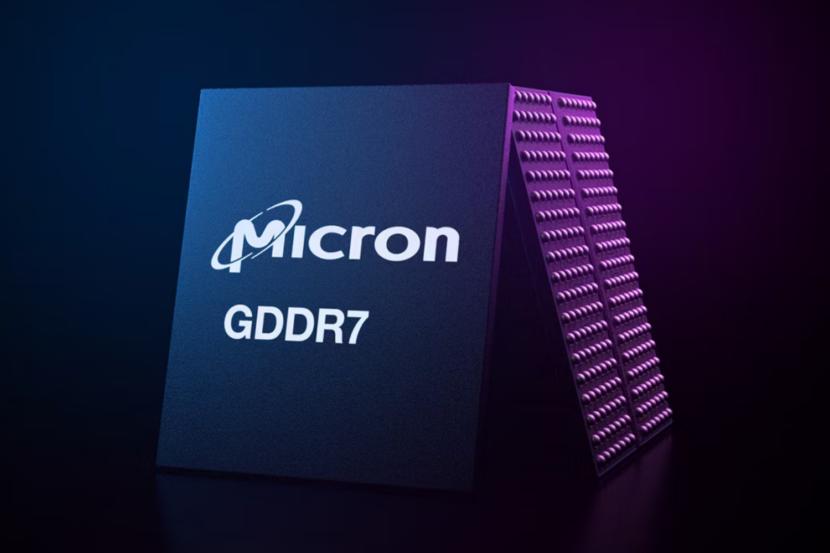
Micron Technology Shares Surge 831% Amid Memory Demand Boom

- Stock Surge: Micron Technology's shares have skyrocketed by 831% over the past year, primarily driven by a massive surge in memory demand, which has significantly boosted the company's revenue and earnings, enhancing investor confidence.
- Analyst Optimism: Among the 49 analysts covering Micron, 46 have rated it as a buy, indicating strong confidence in its growth potential despite the stock nearing a 12-month price target of $1,100, which suggests a possible 3% decline from current levels.
- Memory Market Shortage: The demand for high-bandwidth memory (HBM) is expected to create a structural shortage in the memory market over the next five years, solidifying Micron's critical role in AI data centers and ensuring its long-term profitability.
- Strong Earnings Outlook: Micron is projected to achieve earnings of $61.01 per share in fiscal 2026, reflecting a 636% increase year-over-year, with expectations of reaching $120.24 per share by fiscal 2028, suggesting a potential stock price of $4,864 in five years based on a 26.6x earnings multiple, indicating substantial growth potential.
See More
Micron Set to Release Quarterly Earnings
- Earnings Report Announcement: Micron is scheduled to release its quarterly financial results on June 20, 2026, with significant implications for market investors, particularly against the backdrop of volatility in the semiconductor industry.
- Investor Focus: This earnings report will provide critical financial data for investors, potentially influencing Micron's stock price movements, especially given the heightened sensitivity of the market towards tech stocks at this time.
- Market Reaction Expectations: Analysts anticipate that Micron's earnings will reveal its performance in a highly competitive market environment, with investors closely monitoring changes in revenue and profit to assess future investment opportunities.
- Industry Trend Impact: Micron's financial results will not only have a direct impact on its own stock price but may also create a ripple effect on investor sentiment across the semiconductor industry, particularly amid increasing global economic uncertainty.
See More
Micron's Upcoming Earnings Report and Investment Insights
- Earnings Report Ahead: Micron Technology (NASDAQ: MU) is set to report its quarterly financial results, which holds significant implications for stock market investors who need to assess its performance for future investment opportunities.
- Lack of Investment Recommendations: Despite its market presence, Micron was not included in the current list of the top 10 stocks recommended by The Motley Fool Stock Advisor, indicating a cautious market sentiment regarding its future performance.
- Historical Return Comparisons: Historically, companies like Netflix and Nvidia yielded returns of 417,305% and 1,293,148% respectively when recommended, highlighting the potential for substantial gains, thus investors must choose stocks wisely.
- Market Performance Analysis: Stock Advisor boasts an average return of 936%, significantly outperforming the S&P 500's 209%, reflecting the superiority of its stock recommendations, prompting investors to consider joining for more insights.
See More
Iran Closes Strait of Hormuz, Peace Talks Set to Begin
- Strait Closure Impact: Iran's announcement to close the Strait of Hormuz could disrupt global oil transportation, potentially driving up international oil prices and affecting market stability worldwide.
- Peace Talks Initiation: Despite the closure, peace talks between Iran and relevant nations are set to begin on Sunday, indicating a willingness to seek diplomatic solutions amid rising tensions, which could lead to a turning point in regional dynamics.
- Market Watch Focus: Investors should keep an eye on Nvidia and SpaceX stocks, as the former's ongoing innovations in AI and the latter's advancements in aerospace may attract significant market attention, influencing investment sentiment in related sectors.
- Geopolitical Risks: The closure of the Strait heightens geopolitical risks in the Middle East, potentially leading to increased international sanctions against Iran, which could adversely affect the country's economy and international relations.
See More
Micron Technology Shares Surge 831% with Promising Outlook
- Stock Surge: Micron Technology's shares have skyrocketed by 831% over the past year, primarily driven by a massive surge in memory demand, which has significantly boosted the company's revenue and earnings, instilling investor confidence in its future performance.
- Analyst Optimism: Among the 49 analysts covering Micron, 46 have rated it as a buy; despite the current 12-month price target of $1,100 suggesting a potential 3% drop, analysts are expected to raise their targets due to favorable supply-demand conditions in the memory industry.
- Memory Market Shortage: With the ongoing demand for high-bandwidth memory (HBM) and manufacturers nearly sold out of capacity, the HBM market is projected to grow at an annual rate of 30%, leading to a sustained shortage in the memory market over the next five years, which will further enhance Micron's profitability.
- Earnings Growth Potential: Micron is expected to see a 636% increase in earnings per share to $61.01 in fiscal 2026, and if earnings reach $120.24 by fiscal 2028 with a 15% annual growth rate, its stock price could soar to $4,864 in five years, highlighting its value as a growth stock.
See More
Micron Technology's Revenue Growth Outlook Remains Strong
- Significant Revenue Growth: Micron Technology's revenue and earnings have grown exponentially due to a surge in memory demand, with its stock price soaring 831% over the past year, reflecting strong performance in the memory market and investor confidence.
- Analyst Ratings Optimistic: Among the 49 analysts covering Micron, 46 have rated it as a buy, indicating strong market confidence in its future earnings growth, particularly against the backdrop of tight supply-demand conditions in the memory industry.
- Future Earnings Expectations: Micron is expected to achieve earnings per share of $61.01 in fiscal 2026, representing a 636% increase from last year, with projections rising further to $120.24 by fiscal 2028, showcasing the company's long-term profitability potential.
- Market Supply-Demand Imbalance: The memory market is anticipated to remain undersupplied for the next five years, especially with high-bandwidth memory (HBM) demand projected to grow at an annual rate of 30%, reinforcing Micron's critical role in AI data centers.
See More
Micron Technology Shares Surge 831% Amid Memory Demand Boom
- Stock Surge: Micron Technology's shares have skyrocketed by 831% over the past year, primarily driven by a massive surge in memory demand, which has significantly boosted the company's revenue and earnings, enhancing investor confidence.
- Analyst Optimism: Among the 49 analysts covering Micron, 46 have rated it as a buy, indicating strong confidence in its growth potential despite the stock nearing a 12-month price target of $1,100, which suggests a possible 3% decline from current levels.
- Memory Market Shortage: The demand for high-bandwidth memory (HBM) is expected to create a structural shortage in the memory market over the next five years, solidifying Micron's critical role in AI data centers and ensuring its long-term profitability.
- Strong Earnings Outlook: Micron is projected to achieve earnings of $61.01 per share in fiscal 2026, reflecting a 636% increase year-over-year, with expectations of reaching $120.24 per share by fiscal 2028, suggesting a potential stock price of $4,864 in five years based on a 26.6x earnings multiple, indicating substantial growth potential.
See More




