Monster Beverage Corp Sells $62.50 Put Options with 3.1% Annualized Return
Written by Emily J. Thompson, Senior Investment Analyst
Updated: Dec 30 2025
0mins
Should l Buy MNST?
Source: NASDAQ.COM
- Options Risk Analysis: Selling put options for Monster Beverage Corp only benefits the seller if the stock price falls by 19.3%, resulting in a cost basis of $58.50 per share, which highlights the asymmetry between risk and reward in options trading.
- Market Price Impact: With the current stock price at $77.56, the put seller must evaluate whether the potential exercise of the option is worthwhile, reflecting market expectations regarding future price movements and the inherent risks involved.
- Volatility Consideration: The trailing twelve-month volatility for Monster Beverage is calculated at 23% based on the last 250 trading days, providing investors with a critical metric to assess the risks associated with selling options and making informed decisions.
- Investment Strategy Recommendation: Investors should combine fundamental analysis with historical volatility when considering selling the January 2028 $62.50 put options to determine if the potential 3.1% annualized return justifies the associated risks under current market conditions.
Trade with 70% Backtested Accuracy
Stop guessing "Should I Buy MNST?" and start using high-conviction signals backed by rigorous historical data.
Sign up today to access powerful investing tools and make smarter, data-driven decisions.
Analyst Views on MNST
Wall Street analysts forecast MNST stock price to fall
18 Analyst Rating
12 Buy
6 Hold
0 Sell
Moderate Buy
Current: 81.170

Low
70.00
Averages
80.88
High
87.00
Current: 81.170
Low
70.00
Averages
80.88
High
87.00
About MNST
Monster Beverage Corporation is a holding company. The Company, through its subsidiaries, develops, markets, sells and distributes energy drink beverages and concentrates for energy drink beverages under various brand names. Its Monster Energy Drinks segment is primarily consisting of its Monster Energy drinks, Reign Total Body Fuel high performance energy drinks, Reign Storm total wellness energy drinks and Bang Energy drinks. Its Strategic Brands segment is primarily consisting of various energy drink brands acquired from the Coca-Cola Company as well as its affordable energy brands, Predator and Fury. Its Alcohol Brands segment consists of various craft beers, hard seltzers and flavored malt beverages. Its Other segment consists of certain products sold by American Fruits and Flavors LLC, a wholly-owned subsidiary of the Company, to independent third-party customers. It also develops, markets, sells and distributes still and sparkling waters under the Monster Tour Water brand name.
About the author

Emily J. Thompson
Emily J. Thompson, a Chartered Financial Analyst (CFA) with 12 years in investment research, graduated with honors from the Wharton School. Specializing in industrial and technology stocks, she provides in-depth analysis for Intellectia’s earnings and market brief reports.

Earnings Season Trading Strategy Analysis

- Earnings Season Strategy: Traders should avoid holding positions during earnings releases, as it resembles a coin flip with high risks, and instead focus on trading opportunities before the earnings report to enhance success rates.
- Astera Labs' Strong Performance: Astera Labs (NASDAQ:ALAB) achieved a 100% win rate over the last four quarters, with an average gain of 65.06% by buying call options one week before earnings, showcasing its robust market performance and investment potential.
- Stable Returns from Petrobras: Petroleo Brasileiro S.A. (NYSE:PBR) maintained a 75% win rate over the last four quarters, with an average return of 49.41%, indicating the effectiveness of pre-earnings trading strategies, although not all trades were profitable.
- Success Patterns of Vale and Oracle: Vale S.A. (NYSE:VALE) and Oracle Corp. (NYSE:ORCL) both demonstrated a 75% success rate during earnings season, with average returns of 45.12% and 41.95% respectively, reflecting stable profit patterns and repeatable trading strategies.
See More

Consumer Staples Appear Expensive: Explore Clorox and Other High-Yield Stocks with Strong Dividends.

- Market Shift: There is a significant rotation from software stocks to safer investments like consumer staples.
- Investor Sentiment: Investors are concerned that advancements in AI, such as ChatGPT, may negatively impact service-oriented businesses while benefiting manufacturers of household products.
See More
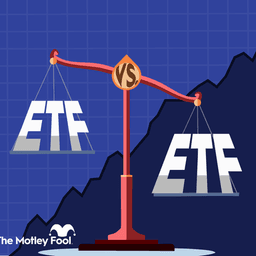
Comparison Analysis of Consumer Staples ETFs
- Cost and Yield Comparison: Vanguard Consumer Staples ETF (VDC) charges an annual fee of just 0.09%, significantly lower than Invesco Food & Beverage ETF (PBJ) at 0.61%, while VDC also offers a higher dividend yield of 2.1% compared to PBJ's 1.7%, making VDC more appealing for income-focused investors.
- Portfolio Composition Differences: VDC encompasses over 100 consumer stocks, with 98% in consumer defensive, whereas PBJ focuses on 31 food and beverage companies, including Sysco and Corteva, which may increase specific company risk due to its concentrated investments.
- Market Performance and Risk: Over the past year, VDC achieved a return of 4.6%, while PBJ only managed 1.2%, and VDC's maximum drawdown of 16.55% is lower than PBJ's 15.84%, indicating VDC's relative stability amid market volatility.
- Investment Strategy Choices: As a pure index fund, VDC provides comprehensive defensive exposure to consumer staples, while PBJ employs quantitative analysis for a concentrated portfolio, charging nearly seven times the fees of VDC, yet recent performance suggests this may not justify the cost, prompting investors to choose wisely.
See More

Monster Beverage Achieves 197,800% Stock Surge This Century
- Outstanding Stock Performance: Since 2000, Monster Beverage's stock has surged 197,800%, turning every $1,000 investment at the century's dawn into $1,551,030, showcasing its remarkable performance and market appeal in the beverage industry.
- Strategic Partnership Advantage: In 2015, Monster inked a deal with Coca-Cola, gaining access to its global distribution network while Coca-Cola acquired a 16.7% stake in Monster, significantly enhancing Monster's market penetration.
- R&D Spending Comparison: In stark contrast to Nvidia and Apple's R&D expenditures of $16.7 billion and $34 billion respectively, Monster spent virtually nothing on R&D in FY 2025, allowing it to allocate more capital towards share buybacks and acquisitions, thereby enhancing shareholder returns.
- Demand-Driven Market Growth: Monster's products are favored by consumers due to their addictive nature, similar to tobacco products, driving sustained sales growth and further solidifying its leadership position in the market.
See More

Energy Drink Stock Surpasses Tech Giants
- Outstanding Stock Performance: Monster Beverage has achieved a staggering 197,800% return since 2000, turning every $1,000 investment into $1,551,030, surpassing tech giants like Apple and Nvidia, highlighting its unique market position.
- Strategic Partnership Advantage: In 2015, Monster Beverage secured a deal with Coca-Cola, gaining access to its global distribution network while Coca-Cola acquired a 16.7% stake, significantly enhancing the company's market penetration and brand influence.
- R&D Spending Comparison: Compared to Nvidia's $16.7 billion and Apple's $34 billion in R&D spending, Monster Beverage's $195 million in 2024 allows it to allocate more capital towards stock buybacks and acquisitions, enhancing shareholder returns.
- Market Competitive Edge: By avoiding massive expenditures in the battle for market share, Monster Beverage frees up substantial capital for strategic investments, establishing a unique competitive advantage in market history.
See More
IYK vs PBJ: Cost, Yield, and Risk Differences

- Cost Comparison: IYK charges a lower expense ratio of 0.38% compared to PBJ's 0.61%, making IYK more cost-effective for long-term investors and enhancing net returns.
- Performance Metrics: As of 2025, IYK delivered a 7.7% annual return, significantly outperforming PBJ's flat performance, highlighting IYK's advantage in a diversified portfolio that can better withstand market fluctuations.
- Holdings Structure: IYK holds 54 stocks with 84% in consumer defensive and 12% in healthcare, while PBJ focuses almost entirely on food and beverage, with 89% in consumer defensive, making PBJ's concentrated strategy riskier in specific market trends.
- Dividend Yield: IYK offers a dividend yield of 2.6%, surpassing PBJ's 1.8%, providing a more attractive option for investors seeking steady income, particularly during economic uncertainty.
See More
Earnings Season Trading Strategy Analysis
- Earnings Season Strategy: Traders should avoid holding positions during earnings releases, as it resembles a coin flip with high risks, and instead focus on trading opportunities before the earnings report to enhance success rates.
- Astera Labs' Strong Performance: Astera Labs (NASDAQ:ALAB) achieved a 100% win rate over the last four quarters, with an average gain of 65.06% by buying call options one week before earnings, showcasing its robust market performance and investment potential.
- Stable Returns from Petrobras: Petroleo Brasileiro S.A. (NYSE:PBR) maintained a 75% win rate over the last four quarters, with an average return of 49.41%, indicating the effectiveness of pre-earnings trading strategies, although not all trades were profitable.
- Success Patterns of Vale and Oracle: Vale S.A. (NYSE:VALE) and Oracle Corp. (NYSE:ORCL) both demonstrated a 75% success rate during earnings season, with average returns of 45.12% and 41.95% respectively, reflecting stable profit patterns and repeatable trading strategies.
See More
Consumer Staples Appear Expensive: Explore Clorox and Other High-Yield Stocks with Strong Dividends.
- Market Shift: There is a significant rotation from software stocks to safer investments like consumer staples.
- Investor Sentiment: Investors are concerned that advancements in AI, such as ChatGPT, may negatively impact service-oriented businesses while benefiting manufacturers of household products.
See More
Comparison Analysis of Consumer Staples ETFs
- Cost and Yield Comparison: Vanguard Consumer Staples ETF (VDC) charges an annual fee of just 0.09%, significantly lower than Invesco Food & Beverage ETF (PBJ) at 0.61%, while VDC also offers a higher dividend yield of 2.1% compared to PBJ's 1.7%, making VDC more appealing for income-focused investors.
- Portfolio Composition Differences: VDC encompasses over 100 consumer stocks, with 98% in consumer defensive, whereas PBJ focuses on 31 food and beverage companies, including Sysco and Corteva, which may increase specific company risk due to its concentrated investments.
- Market Performance and Risk: Over the past year, VDC achieved a return of 4.6%, while PBJ only managed 1.2%, and VDC's maximum drawdown of 16.55% is lower than PBJ's 15.84%, indicating VDC's relative stability amid market volatility.
- Investment Strategy Choices: As a pure index fund, VDC provides comprehensive defensive exposure to consumer staples, while PBJ employs quantitative analysis for a concentrated portfolio, charging nearly seven times the fees of VDC, yet recent performance suggests this may not justify the cost, prompting investors to choose wisely.
See More
Monster Beverage Achieves 197,800% Stock Surge This Century
- Outstanding Stock Performance: Since 2000, Monster Beverage's stock has surged 197,800%, turning every $1,000 investment at the century's dawn into $1,551,030, showcasing its remarkable performance and market appeal in the beverage industry.
- Strategic Partnership Advantage: In 2015, Monster inked a deal with Coca-Cola, gaining access to its global distribution network while Coca-Cola acquired a 16.7% stake in Monster, significantly enhancing Monster's market penetration.
- R&D Spending Comparison: In stark contrast to Nvidia and Apple's R&D expenditures of $16.7 billion and $34 billion respectively, Monster spent virtually nothing on R&D in FY 2025, allowing it to allocate more capital towards share buybacks and acquisitions, thereby enhancing shareholder returns.
- Demand-Driven Market Growth: Monster's products are favored by consumers due to their addictive nature, similar to tobacco products, driving sustained sales growth and further solidifying its leadership position in the market.
See More
Energy Drink Stock Surpasses Tech Giants
- Outstanding Stock Performance: Monster Beverage has achieved a staggering 197,800% return since 2000, turning every $1,000 investment into $1,551,030, surpassing tech giants like Apple and Nvidia, highlighting its unique market position.
- Strategic Partnership Advantage: In 2015, Monster Beverage secured a deal with Coca-Cola, gaining access to its global distribution network while Coca-Cola acquired a 16.7% stake, significantly enhancing the company's market penetration and brand influence.
- R&D Spending Comparison: Compared to Nvidia's $16.7 billion and Apple's $34 billion in R&D spending, Monster Beverage's $195 million in 2024 allows it to allocate more capital towards stock buybacks and acquisitions, enhancing shareholder returns.
- Market Competitive Edge: By avoiding massive expenditures in the battle for market share, Monster Beverage frees up substantial capital for strategic investments, establishing a unique competitive advantage in market history.
See More
IYK vs PBJ: Cost, Yield, and Risk Differences
- Cost Comparison: IYK charges a lower expense ratio of 0.38% compared to PBJ's 0.61%, making IYK more cost-effective for long-term investors and enhancing net returns.
- Performance Metrics: As of 2025, IYK delivered a 7.7% annual return, significantly outperforming PBJ's flat performance, highlighting IYK's advantage in a diversified portfolio that can better withstand market fluctuations.
- Holdings Structure: IYK holds 54 stocks with 84% in consumer defensive and 12% in healthcare, while PBJ focuses almost entirely on food and beverage, with 89% in consumer defensive, making PBJ's concentrated strategy riskier in specific market trends.
- Dividend Yield: IYK offers a dividend yield of 2.6%, surpassing PBJ's 1.8%, providing a more attractive option for investors seeking steady income, particularly during economic uncertainty.
See More