

Goldman Sachs Launches New Bitcoin ETF Product
Written by Emily J. Thompson, Senior Investment Analyst
Updated: Apr 14 2026
0mins

Source: seekingalpha
- New ETF Product Launch: Goldman Sachs has filed for a new structured product called the 'Goldman Sachs Bitcoin Premium Income ETF,' aiming to provide investors with indirect exposure to Bitcoin by investing in Bitcoin-linked products rather than holding Bitcoin directly, indicating a strategic shift in its approach to cryptocurrency.
- Investment Structure and Strategy: The ETF plans to allocate at least 80% of its net assets to products providing Bitcoin exposure, including spot Bitcoin ETPs and related options, employing an options 'overwrite' model that is expected to sell call options covering 40% to 100% of its Bitcoin-linked exposure, thereby limiting upside during Bitcoin price rallies.
- Risk Factors Analysis: Goldman Sachs has outlined significant risks in its filing, including high price volatility of Bitcoin, regulatory uncertainties, and potential security issues like hacking, which could impact investor confidence and market liquidity.
- Intensifying Market Competition: With BlackRock also launching a similar 'iShares Bitcoin Premium Income ETF,' competition among large asset managers is intensifying, reflecting a growing demand for Bitcoin products focused on steady income rather than just price appreciation, potentially reshaping investor perceptions of cryptocurrency.
Trade with 70% Backtested Accuracy
Stop guessing "Should I Buy GS?" and start using high-conviction signals backed by rigorous historical data.
Sign up today to access powerful investing tools and make smarter, data-driven decisions.
Analyst Views on GS
Wall Street analysts forecast GS stock price to fall
12 Analyst Rating
5 Buy
7 Hold
0 Sell
Moderate Buy
Current: 1099.140

Low
604.00
Averages
951.45
High
1100
Current: 1099.140
Low
604.00
Averages
951.45
High
1100
About GS
The Goldman Sachs Group, Inc. is a global financial institution that delivers a range of financial services to a large and diversified client base that includes corporations, financial institutions, governments and individuals. Its segments include Global Banking & Markets, Asset & Wealth Management and Platform Solutions. The Global Banking & Markets segment offers a range of services, including financing, advisory services, risk distribution, and hedging for its institutional and corporate clients. It facilitates client transactions and makes markets in fixed income, equity, currency and commodity products. The Asset & Wealth Management segment manages assets and offers investment products across all asset classes to a diverse set of clients. It also provides investing and wealth advisory solutions. The Platform Solutions segment includes consumer platforms, such as partnerships offering credit cards and point-of-sale financing, and transaction banking and other platform businesses.
About the author

Emily J. Thompson
Emily J. Thompson, a Chartered Financial Analyst (CFA) with 12 years in investment research, graduated with honors from the Wharton School. Specializing in industrial and technology stocks, she provides in-depth analysis for Intellectia’s earnings and market brief reports.

Grail's Galleri Test Misses Key Endpoint in Landmark Trial

- Trial Results Disappoint: Grail's Galleri test missed its primary endpoint in the NHS trial, failing to demonstrate a statistically significant reduction in Stage III-IV cancers, which led to a more than 30% drop in stock price, although some investors remain optimistic about the potential for FDA approval.
- Follow-Up Data Potential: Management believes that 12-month follow-up data from the NHS trial may reveal undetected cancers in the control group, thereby supporting the Galleri test's efficacy in reducing late-stage cancer detection, which could influence insurers' coverage decisions.
- Focus on Deadly Cancers: The sensitivity for detecting 12 deadly cancers in the NHS trial was 54.7%, significantly higher than the overall sensitivity of 30.7%, which may encourage insurers to prioritize the cost-benefit analysis of these cancers over the broader 50+ cancers tested.
- Predictive Value Advantage: The positive predictive value (PPV) of the Galleri test was 52% in the NHS trial and 60.3% in PATHFINDER 2, indicating its effectiveness in cancer detection, which may attract insurers to consider expanding their coverage based on these results.
See More

Analysis of Earnings from Locking in High CD Rates
- Current CD Rate Overview: As of June 21, 2026, the highest CD rate is 4% APY offered by Marcus by Goldman Sachs for a 14-month CD, attracting more savers to lock in their funds and enhancing the bank's deposit base.
- Interest Earnings Calculation: For a $1,000 investment in a one-year CD at 1.52% APY, the year-end balance would be $1,015.20, illustrating the impact of compounding interest; choosing a 4% APY CD would increase the balance to $1,040.74, highlighting the direct effect of higher rates on savings growth.
- Deposit Amount and Earnings Relationship: If the investment amount is raised to $10,000 with a 4% APY CD, the final balance would reach $10,407.42, resulting in $407.42 in interest, emphasizing the positive correlation between deposit amounts and earnings, encouraging savers to consider larger deposits.
- Diversity of CD Types: Beyond traditional CDs, various types such as Bump-up CDs and No-penalty CDs exist, which may offer lower rates but provide flexibility for savers, catering to different investor needs and reflecting the trend of product diversification in the financial market.
See More
Oil Prices Surge as Trump Threatens Iran Amid Fragile Peace Talks
- Oil Price Surge: Oil prices rose sharply, with Brent crude futures increasing by 1.23% to $81.56 per barrel, driven by President Trump's threats of military action against Iran, highlighting market sensitivity to geopolitical tensions.
- Negotiation Context: The discussions in Switzerland marked the first negotiations since the U.S. and Iran signed a memorandum to extend a fragile ceasefire, although Iran's closure of the Strait of Hormuz poses significant risks to global oil shipments.
- Supply Risk Warning: Analysts caution that while Middle Eastern oil supply appears close to prewar levels, this reflects inventory liquidation rather than a recovery in production, leaving the market vulnerable once stockpiles are depleted.
- Long-term Demand Impact: Goldman Sachs noted that sustained supply shocks could accelerate the transition to electric vehicles, potentially eroding long-term crude demand and increasing downside risks for oil prices, which could reshape future market dynamics.
See More
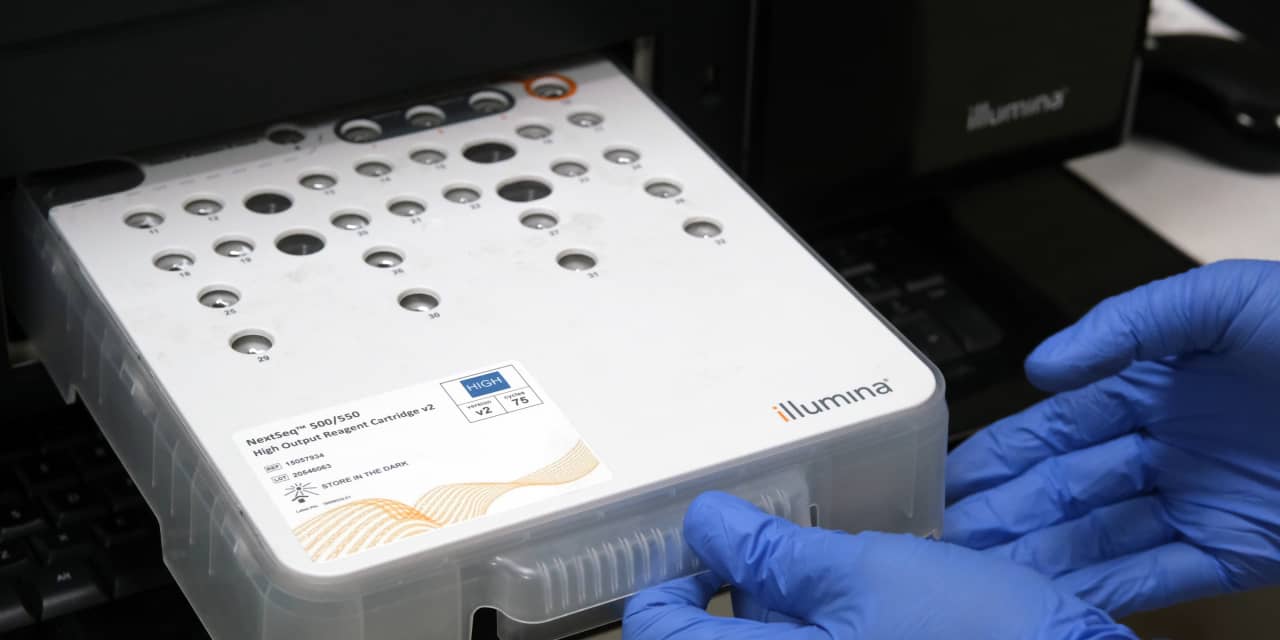
Grail's Multi-Cancer Early Detection Test Faces Challenges

- Trial Results Disappointment: Grail's Galleri test failed to meet its primary endpoint in the NHS trial, showing no statistically significant reduction in Stage III-IV cancer detection, which has led to a more than 30% decline in stock price in 2026, reflecting market concerns about its future prospects.
- Follow-Up Data Potential: Management anticipates that the 12-month follow-up data from the NHS trial will reveal more undetected cancers, thereby supporting the efficacy of the Galleri test in early cancer detection, which could influence insurance coverage decisions positively.
- Deadly Cancer Detection Trend: Management highlighted a favorable trend in detecting 12 deadly cancers in the NHS trial, with sensitivity significantly higher than for other cancers, which may prompt insurers to reassess the cost-benefit analysis of the Galleri test.
- Positive Predictive Value Advantage: The Galleri test demonstrated positive predictive values of 52% and 60.3% in the NHS and PATHFINDER trials, respectively, indicating its effectiveness in cancer detection, which could attract insurers' attention to its relative cost-effectiveness and drive broader adoption.
See More
High Leverage Risks Intensify as $165 Billion Selloff Looms
- Rising Leverage: Goldman Sachs reports that gross hedge fund leverage reached 294% in June 2025, marking a five-year high, indicating a significant increase in risk appetite among market participants chasing AI stocks, which could lead to severe volatility in the future.
- Increased Selloff Pressure: JPMorgan estimates that quarter-end rebalancing could trigger up to $165 billion in stock selloffs, with Japan's $1.9 trillion Government Pension Investment Fund being the largest seller at approximately $60 billion, potentially exacerbating market instability.
- Significant Semiconductor Risks: JPMorgan strategists highlight that semiconductors now account for over six times their share of global equity value compared to revenue, indicating concentrated investment risks in this sector, which could lead to frequent selloffs if market sentiment shifts.
- Increased Bitcoin Fragility: JPMorgan warns that Bitcoin's network hash rate has become more sensitive to price changes, suggesting that more miners are operating near breakeven, adding an extra layer of fragility to the crypto market, especially amid the current high leverage and concentrated investments.
See More

SpaceX's S-1 Filing Reveals $28.5 Trillion Market Potential

- Massive Market Potential: SpaceX's S-1 filing forecasts a total addressable market (TAM) of $28.5 trillion, with $26.5 trillion attributed to artificial intelligence (AI), indicating the company's ambitious vision in the AI sector while also highlighting potential investment risks.
- Infrastructure Challenges: A major bottleneck for AI is the power supply for data centers; SpaceX's plan to launch 1 million satellites as data centers aims to leverage solar energy in space, potentially positioning the company as a leader in AI infrastructure development.
- Revenue Growth Expectations: Goldman Sachs projects that SpaceX's AI division will see revenue surge from $3.2 billion in 2025 to $322 billion by 2030, with total revenue expected to reach $474 billion by 2030, showcasing the company's strong growth potential in the AI market.
- High Spending and Risks: Despite the promising outlook, SpaceX anticipates a $6.4 billion operating loss in 2025 and $12.7 billion in capital expenditures for AI infrastructure, indicating that while pursuing growth, the company faces significant integration and execution risks.
See More
Grail's Galleri Test Misses Key Endpoint in Landmark Trial
- Trial Results Disappoint: Grail's Galleri test missed its primary endpoint in the NHS trial, failing to demonstrate a statistically significant reduction in Stage III-IV cancers, which led to a more than 30% drop in stock price, although some investors remain optimistic about the potential for FDA approval.
- Follow-Up Data Potential: Management believes that 12-month follow-up data from the NHS trial may reveal undetected cancers in the control group, thereby supporting the Galleri test's efficacy in reducing late-stage cancer detection, which could influence insurers' coverage decisions.
- Focus on Deadly Cancers: The sensitivity for detecting 12 deadly cancers in the NHS trial was 54.7%, significantly higher than the overall sensitivity of 30.7%, which may encourage insurers to prioritize the cost-benefit analysis of these cancers over the broader 50+ cancers tested.
- Predictive Value Advantage: The positive predictive value (PPV) of the Galleri test was 52% in the NHS trial and 60.3% in PATHFINDER 2, indicating its effectiveness in cancer detection, which may attract insurers to consider expanding their coverage based on these results.
See More
Analysis of Earnings from Locking in High CD Rates
- Current CD Rate Overview: As of June 21, 2026, the highest CD rate is 4% APY offered by Marcus by Goldman Sachs for a 14-month CD, attracting more savers to lock in their funds and enhancing the bank's deposit base.
- Interest Earnings Calculation: For a $1,000 investment in a one-year CD at 1.52% APY, the year-end balance would be $1,015.20, illustrating the impact of compounding interest; choosing a 4% APY CD would increase the balance to $1,040.74, highlighting the direct effect of higher rates on savings growth.
- Deposit Amount and Earnings Relationship: If the investment amount is raised to $10,000 with a 4% APY CD, the final balance would reach $10,407.42, resulting in $407.42 in interest, emphasizing the positive correlation between deposit amounts and earnings, encouraging savers to consider larger deposits.
- Diversity of CD Types: Beyond traditional CDs, various types such as Bump-up CDs and No-penalty CDs exist, which may offer lower rates but provide flexibility for savers, catering to different investor needs and reflecting the trend of product diversification in the financial market.
See More
Oil Prices Surge as Trump Threatens Iran Amid Fragile Peace Talks
- Oil Price Surge: Oil prices rose sharply, with Brent crude futures increasing by 1.23% to $81.56 per barrel, driven by President Trump's threats of military action against Iran, highlighting market sensitivity to geopolitical tensions.
- Negotiation Context: The discussions in Switzerland marked the first negotiations since the U.S. and Iran signed a memorandum to extend a fragile ceasefire, although Iran's closure of the Strait of Hormuz poses significant risks to global oil shipments.
- Supply Risk Warning: Analysts caution that while Middle Eastern oil supply appears close to prewar levels, this reflects inventory liquidation rather than a recovery in production, leaving the market vulnerable once stockpiles are depleted.
- Long-term Demand Impact: Goldman Sachs noted that sustained supply shocks could accelerate the transition to electric vehicles, potentially eroding long-term crude demand and increasing downside risks for oil prices, which could reshape future market dynamics.
See More
Grail's Multi-Cancer Early Detection Test Faces Challenges
- Trial Results Disappointment: Grail's Galleri test failed to meet its primary endpoint in the NHS trial, showing no statistically significant reduction in Stage III-IV cancer detection, which has led to a more than 30% decline in stock price in 2026, reflecting market concerns about its future prospects.
- Follow-Up Data Potential: Management anticipates that the 12-month follow-up data from the NHS trial will reveal more undetected cancers, thereby supporting the efficacy of the Galleri test in early cancer detection, which could influence insurance coverage decisions positively.
- Deadly Cancer Detection Trend: Management highlighted a favorable trend in detecting 12 deadly cancers in the NHS trial, with sensitivity significantly higher than for other cancers, which may prompt insurers to reassess the cost-benefit analysis of the Galleri test.
- Positive Predictive Value Advantage: The Galleri test demonstrated positive predictive values of 52% and 60.3% in the NHS and PATHFINDER trials, respectively, indicating its effectiveness in cancer detection, which could attract insurers' attention to its relative cost-effectiveness and drive broader adoption.
See More
High Leverage Risks Intensify as $165 Billion Selloff Looms
- Rising Leverage: Goldman Sachs reports that gross hedge fund leverage reached 294% in June 2025, marking a five-year high, indicating a significant increase in risk appetite among market participants chasing AI stocks, which could lead to severe volatility in the future.
- Increased Selloff Pressure: JPMorgan estimates that quarter-end rebalancing could trigger up to $165 billion in stock selloffs, with Japan's $1.9 trillion Government Pension Investment Fund being the largest seller at approximately $60 billion, potentially exacerbating market instability.
- Significant Semiconductor Risks: JPMorgan strategists highlight that semiconductors now account for over six times their share of global equity value compared to revenue, indicating concentrated investment risks in this sector, which could lead to frequent selloffs if market sentiment shifts.
- Increased Bitcoin Fragility: JPMorgan warns that Bitcoin's network hash rate has become more sensitive to price changes, suggesting that more miners are operating near breakeven, adding an extra layer of fragility to the crypto market, especially amid the current high leverage and concentrated investments.
See More
SpaceX's S-1 Filing Reveals $28.5 Trillion Market Potential
- Massive Market Potential: SpaceX's S-1 filing forecasts a total addressable market (TAM) of $28.5 trillion, with $26.5 trillion attributed to artificial intelligence (AI), indicating the company's ambitious vision in the AI sector while also highlighting potential investment risks.
- Infrastructure Challenges: A major bottleneck for AI is the power supply for data centers; SpaceX's plan to launch 1 million satellites as data centers aims to leverage solar energy in space, potentially positioning the company as a leader in AI infrastructure development.
- Revenue Growth Expectations: Goldman Sachs projects that SpaceX's AI division will see revenue surge from $3.2 billion in 2025 to $322 billion by 2030, with total revenue expected to reach $474 billion by 2030, showcasing the company's strong growth potential in the AI market.
- High Spending and Risks: Despite the promising outlook, SpaceX anticipates a $6.4 billion operating loss in 2025 and $12.7 billion in capital expenditures for AI infrastructure, indicating that while pursuing growth, the company faces significant integration and execution risks.
See More





