Energy Stocks Decline, NYSE Energy Sector Index Falls 3.8%
Written by Emily J. Thompson, Senior Investment Analyst
Updated: May 06 2026
0mins


Source: Yahoo Finance
- Market Weakness: Energy stocks experienced a broad decline on Wednesday afternoon, with the NYSE Energy Sector Index falling 3.8%, indicating growing concerns about energy demand prospects that could undermine investor confidence.
- Investor Sentiment Deteriorates: Signs of a slowing global economy have led to diminished interest in energy stocks among investors, resulting in decreased trading volumes that further exacerbate downward pressure on prices.
- Significant Industry Impact: The decline in energy stocks may affect the financing capabilities and future investment plans of related companies, particularly in the capital-intensive energy sector, potentially leading to project delays or reductions.
- Increased Market Volatility: As uncertainty around energy prices rises, investors may shift towards more stable assets, resulting in heightened volatility in energy stocks that could impact overall market stability.
Trade with 70% Backtested Accuracy
Stop guessing "Should I Buy EQNR?" and start using high-conviction signals backed by rigorous historical data.
Sign up today to access powerful investing tools and make smarter, data-driven decisions.
Analyst Views on EQNR
Wall Street analysts forecast EQNR stock price to fall
2 Analyst Rating
1 Buy
1 Hold
0 Sell
Moderate Buy
Current: 31.210

Low
22.00
Averages
23.89
High
25.79
Current: 31.210
Low
22.00
Averages
23.89
High
25.79
About EQNR
Equinor ASA, formerly Statoil ASA is a Norway-based international energy company. The Company’s purpose is to turn natural resources into energy. Equinor sells crude oil and delivers natural gas to the European market. It is also engaged in processing, refining, offshore wind and carbon capture and storage activities. Equinor ASA has five reporting segments: Exploration & Production Norway (E&P Norway), Exploration & Production International (E&P International), Exploration & Production USA (E&P USA), Marketing, Midstream & Processing (MMP) and Renewables (REN). The Company has several subsidiaries such as Equinor Nigeria Energy Company Ltd, Equinor Wind Power AS, Equinor International Netherlands BV and Equinor Brasil Energia Ltda.
About the author

Emily J. Thompson
Emily J. Thompson, a Chartered Financial Analyst (CFA) with 12 years in investment research, graduated with honors from the Wharton School. Specializing in industrial and technology stocks, she provides in-depth analysis for Intellectia’s earnings and market brief reports.

Equinor ASA Resolves Share Capital Reduction

- Capital Reduction Resolution: On May 12, 2026, Equinor ASA's annual general meeting resolved to reduce the company's share capital by NOK 415,146,180 from NOK 6,392,018,780 to NOK 5,976,872,600 through the cancellation and redemption of 166,058,472 shares, reflecting the company's proactive approach to optimizing its capital structure.
- Registration Effective: The creditor notice period for the capital reduction has expired, and it was officially registered as effective with the Norwegian Register of Business Enterprises on July 2, 2026, marking the company's compliance and transparency in capital management.
- Share Structure Adjustment: Following the capital reduction, Equinor ASA's share capital stands at NOK 5,976,872,600, divided into 2,390,749,040 shares with a nominal value of NOK 2.50 each, which is expected to enhance earnings per share and shareholder returns.
- Disclosure Compliance: This information is subject to the disclosure requirements under Euronext Oslo Børs Rulebook II section 4.2.5.5 and Section 5-12 of the Norwegian Securities Trading Act, demonstrating the company's commitment to transparency for investors and the market.
See More

Energy Stocks Decline on Wednesday Afternoon


- Energy Sector Decline: The NYSE Energy Sector Index fell by 0.9% on Wednesday afternoon, indicating a general weakness in energy stocks, likely influenced by investor concerns over potential demand slowdown.
- Market Sentiment Weakens: The widespread decline in energy stocks suggests a decrease in investor confidence regarding the global economic outlook, particularly as energy demand may be impacted by economic deceleration, leading to capital outflows from the sector.
- Investor Reactions: As energy prices become more volatile, investors may reassess their portfolios in the energy sector, seeking more stable investment opportunities, which could affect market liquidity in the short term.
- Uncertain Industry Outlook: The drop in energy stocks may signal challenges ahead for the industry, especially amid intensifying competition between renewable and traditional energy sources, necessitating companies to adjust strategies to navigate market changes.
See More

Energy Stocks Decline on Wednesday Afternoon

- Energy Sector Decline: On Wednesday afternoon, the NYSE Energy Sector Index fell by 0.8%, indicating a weakening confidence in energy stocks, likely influenced by concerns over global economic slowdown and uncertain demand outlook.
- Market Sentiment: Investors are adopting a cautious stance towards the energy sector, particularly amid fluctuations in oil prices and supply chain issues, which are contributing to overall market pessimism and exacerbating downward pressure on energy stocks.
- Industry Impact Analysis: The decline in energy stocks may affect the financing capabilities and investor confidence of related companies, potentially negatively impacting their long-term growth prospects, especially in the context of increasing economic uncertainty.
- Investor Strategy Adjustment: In light of the downturn in energy stocks, investors may reassess their portfolios, considering reallocating funds to other sectors with greater growth potential to mitigate risks associated with market volatility.
See More
Transocean Secures $1 Billion Contract with Equinor
- Contract Value: Transocean's agreement with Equinor is valued at over $1 billion, covering three harsh-environment semisubmersible rigs, which is expected to provide a stable revenue stream and enhance its market position on the Norwegian continental shelf.
- Project Timeline: The Transocean Enabler will commence a three-year program in Q1 2028, while the Transocean Encourage will start a two-year program in the same quarter, ensuring continued operations for the company over the coming years.
- Day Rate: The base day rate for the contract is set at $399,000, with adjustments expected to raise the effective rate to over $400,000 before the contracts begin, significantly boosting the company's revenue potential in the high-demand offshore drilling market.
- Stock Price Reaction: Despite the positive outlook from the new contract, Transocean's shares fell by 2.98% to $4.89 on the New York Stock Exchange, reflecting market caution regarding the company's short-term performance.
See More

SPDR S&P 500 ETF Trust Sees Marginal Increase


- Market Performance: The SPDR S&P 500 ETF Trust (SPY) experienced a marginal increase, reflecting a cautiously optimistic sentiment among investors despite ongoing market volatility.
- Investor Sentiment: The slight rise in this ETF indicates that investors maintain confidence in the performance of large corporations in the current economic climate, potentially attracting more capital inflows.
- Market Trends: As expectations for economic recovery strengthen, SPY's performance may influence the trajectory of other related assets, further promoting overall market stability.
- Strategic Implications: The increase in SPY could prompt investors to reassess their portfolios, especially in the face of potential market uncertainties, possibly leading to a shift of funds towards safer assets.
See More
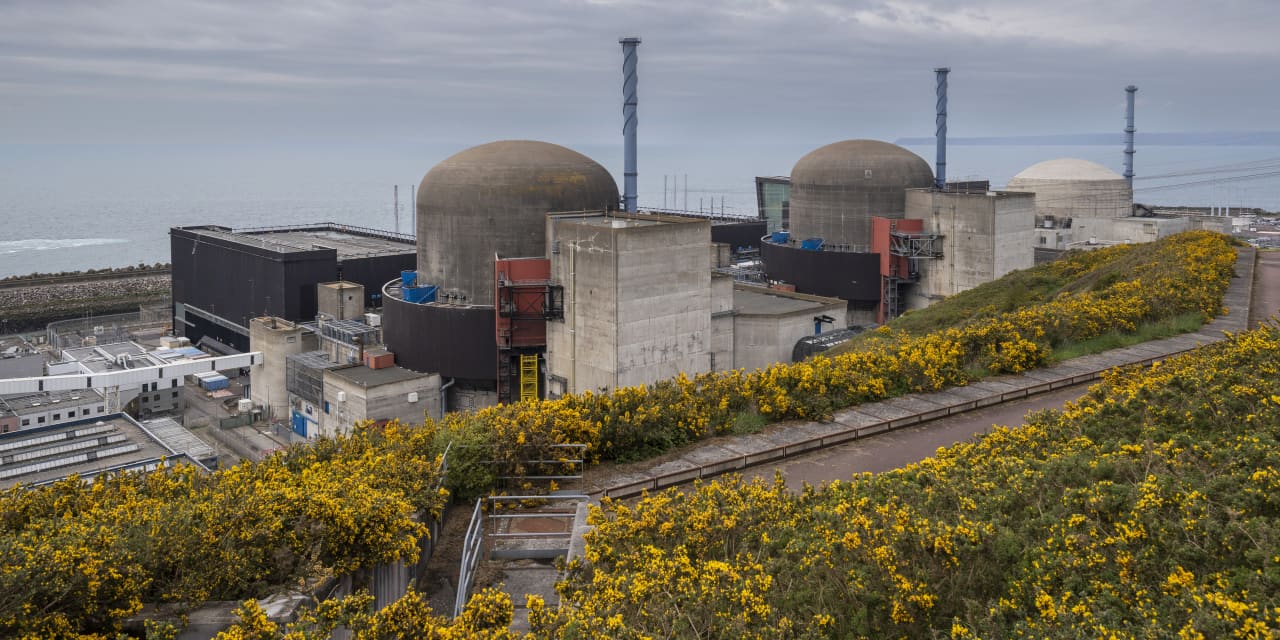
Equinor and Var Energi Agree to Asset Exchange on Norwegian Shelf
- Asset Exchange Agreement: Equinor and Var Energi have agreed to an asset exchange, with Var acquiring a 32.5% interest in the Peon gas field and assuming operatorship, significantly enhancing its market position on the Norwegian continental shelf and competitiveness in undeveloped gas fields.
- Development Plans: Var plans to develop the Peon field as a subsea tie-back to its Gjoea production facilities, which is expected to extend the economic life of the hub to 2045, thus providing a long-term stable revenue source for the company.
- Production Expectations: Production from the Peon field is anticipated to commence by 2030, contributing to Var's long-term goal of producing over 400,000 barrels of oil equivalent per day, further driving the company's growth strategy.
- Equity Divestiture: In exchange, Var agreed to divest its 5% interest in the Fram field and part of its stakes in the Mulder and Grosbeak discoveries, a move that will optimize its asset portfolio and concentrate resources on more promising projects.
See More
Equinor ASA Resolves Share Capital Reduction
- Capital Reduction Resolution: On May 12, 2026, Equinor ASA's annual general meeting resolved to reduce the company's share capital by NOK 415,146,180 from NOK 6,392,018,780 to NOK 5,976,872,600 through the cancellation and redemption of 166,058,472 shares, reflecting the company's proactive approach to optimizing its capital structure.
- Registration Effective: The creditor notice period for the capital reduction has expired, and it was officially registered as effective with the Norwegian Register of Business Enterprises on July 2, 2026, marking the company's compliance and transparency in capital management.
- Share Structure Adjustment: Following the capital reduction, Equinor ASA's share capital stands at NOK 5,976,872,600, divided into 2,390,749,040 shares with a nominal value of NOK 2.50 each, which is expected to enhance earnings per share and shareholder returns.
- Disclosure Compliance: This information is subject to the disclosure requirements under Euronext Oslo Børs Rulebook II section 4.2.5.5 and Section 5-12 of the Norwegian Securities Trading Act, demonstrating the company's commitment to transparency for investors and the market.
See More
Energy Stocks Decline on Wednesday Afternoon
- Energy Sector Decline: The NYSE Energy Sector Index fell by 0.9% on Wednesday afternoon, indicating a general weakness in energy stocks, likely influenced by investor concerns over potential demand slowdown.
- Market Sentiment Weakens: The widespread decline in energy stocks suggests a decrease in investor confidence regarding the global economic outlook, particularly as energy demand may be impacted by economic deceleration, leading to capital outflows from the sector.
- Investor Reactions: As energy prices become more volatile, investors may reassess their portfolios in the energy sector, seeking more stable investment opportunities, which could affect market liquidity in the short term.
- Uncertain Industry Outlook: The drop in energy stocks may signal challenges ahead for the industry, especially amid intensifying competition between renewable and traditional energy sources, necessitating companies to adjust strategies to navigate market changes.
See More
Energy Stocks Decline on Wednesday Afternoon
- Energy Sector Decline: On Wednesday afternoon, the NYSE Energy Sector Index fell by 0.8%, indicating a weakening confidence in energy stocks, likely influenced by concerns over global economic slowdown and uncertain demand outlook.
- Market Sentiment: Investors are adopting a cautious stance towards the energy sector, particularly amid fluctuations in oil prices and supply chain issues, which are contributing to overall market pessimism and exacerbating downward pressure on energy stocks.
- Industry Impact Analysis: The decline in energy stocks may affect the financing capabilities and investor confidence of related companies, potentially negatively impacting their long-term growth prospects, especially in the context of increasing economic uncertainty.
- Investor Strategy Adjustment: In light of the downturn in energy stocks, investors may reassess their portfolios, considering reallocating funds to other sectors with greater growth potential to mitigate risks associated with market volatility.
See More
Transocean Secures $1 Billion Contract with Equinor
- Contract Value: Transocean's agreement with Equinor is valued at over $1 billion, covering three harsh-environment semisubmersible rigs, which is expected to provide a stable revenue stream and enhance its market position on the Norwegian continental shelf.
- Project Timeline: The Transocean Enabler will commence a three-year program in Q1 2028, while the Transocean Encourage will start a two-year program in the same quarter, ensuring continued operations for the company over the coming years.
- Day Rate: The base day rate for the contract is set at $399,000, with adjustments expected to raise the effective rate to over $400,000 before the contracts begin, significantly boosting the company's revenue potential in the high-demand offshore drilling market.
- Stock Price Reaction: Despite the positive outlook from the new contract, Transocean's shares fell by 2.98% to $4.89 on the New York Stock Exchange, reflecting market caution regarding the company's short-term performance.
See More
SPDR S&P 500 ETF Trust Sees Marginal Increase
- Market Performance: The SPDR S&P 500 ETF Trust (SPY) experienced a marginal increase, reflecting a cautiously optimistic sentiment among investors despite ongoing market volatility.
- Investor Sentiment: The slight rise in this ETF indicates that investors maintain confidence in the performance of large corporations in the current economic climate, potentially attracting more capital inflows.
- Market Trends: As expectations for economic recovery strengthen, SPY's performance may influence the trajectory of other related assets, further promoting overall market stability.
- Strategic Implications: The increase in SPY could prompt investors to reassess their portfolios, especially in the face of potential market uncertainties, possibly leading to a shift of funds towards safer assets.
See More
Equinor and Var Energi Agree to Asset Exchange on Norwegian Shelf
- Asset Exchange Agreement: Equinor and Var Energi have agreed to an asset exchange, with Var acquiring a 32.5% interest in the Peon gas field and assuming operatorship, significantly enhancing its market position on the Norwegian continental shelf and competitiveness in undeveloped gas fields.
- Development Plans: Var plans to develop the Peon field as a subsea tie-back to its Gjoea production facilities, which is expected to extend the economic life of the hub to 2045, thus providing a long-term stable revenue source for the company.
- Production Expectations: Production from the Peon field is anticipated to commence by 2030, contributing to Var's long-term goal of producing over 400,000 barrels of oil equivalent per day, further driving the company's growth strategy.
- Equity Divestiture: In exchange, Var agreed to divest its 5% interest in the Fram field and part of its stakes in the Mulder and Grosbeak discoveries, a move that will optimize its asset portfolio and concentrate resources on more promising projects.
See More