Cathie Wood's Strategy in AI Stock Investments
Written by Emily J. Thompson, Senior Investment Analyst
Updated: 4 days ago
0mins

Source: Fool
- Investment Strategy Analysis: Cathie Wood demonstrates her contrarian investment strategy by purchasing AI stocks during market downturns, particularly taking advantage of the Nasdaq Composite's 4.6% decline to buy at lower prices.
- SpaceX Investment Dynamics: Wood bought shares of SpaceX on its IPO day, and despite the stock rising nearly 20% from its $135 offer price before dropping over 20%, she remains optimistic about its long-term potential in space and AI.
- Palantir's Growth Potential: Wood's investment in Palantir reflects her confidence in its AI-driven software platform, which has achieved double-digit revenue growth over several quarters and expanded its U.S. commercial customer base from a handful to over 600.
- Cerebras' Market Outlook: Wood has been steadily increasing her stake in Cerebras, and despite significant stock price fluctuations post-IPO, she sees potential in its AI chip market, especially after the company reported a 92% year-over-year revenue increase in Q1.
Trade with 70% Backtested Accuracy
Stop guessing "Should I Buy SPCX?" and start using high-conviction signals backed by rigorous historical data.
Sign up today to access powerful investing tools and make smarter, data-driven decisions.
Analyst Views on SPCX
Wall Street analysts forecast SPCX stock price to rise
0 Analyst Rating
0 Buy
0 Hold
0 Sell
Current: 157.540

Low
Averages
High
Current: 157.540
Low
Averages
High
About SPCX
Space Exploration Technologies Corp. designs, manufactures, launches, and operates products and services built on technologies, including rockets and spacecraft. The Company's segments include Space, Connectivity, and artificial intelligence (AI). Its Space segment designs, manufactures, and launches reusable rockets to provide access to space. Its Connectivity segment operates broadband data and communications network powered by approximately 9,600 Starlink broadband and mobile satellites in Low-Earth orbit, delivering connectivity to consumer, enterprises, and government customers over 164 countries, territories, and other markets. In its AI segment, it operates a vertically integrated AI platform spanning its truth-seeking frontier model Grok, AI solutions for consumer and enterprise customers, X-its real-time information, entertainment, and free speech platform and AI computational infrastructure.
About the author

Emily J. Thompson
Emily J. Thompson, a Chartered Financial Analyst (CFA) with 12 years in investment research, graduated with honors from the Wharton School. Specializing in industrial and technology stocks, she provides in-depth analysis for Intellectia’s earnings and market brief reports.

SpaceX IPO Hype Cools, Investors Should Exercise Caution

- Stock Price Volatility: SpaceX's current market cap is approximately $2 trillion, and although the IPO hype has diminished, investors should monitor the stock's stability over the coming months, as it may face increased selling pressure leading to potential declines.
- Insider Selling Restrictions: Elon Musk is prohibited from selling his shares for 366 days post-IPO, meaning early investors' selling pressure has yet to materialize; as shares are gradually released in the coming months, the market may experience increased sell-offs, further depressing the stock price.
- Debt Risk Warning: Shortly after its IPO, SpaceX issued $25 billion in debt, raising concerns about its financial health despite having raised over $85 billion through the public offering, which could impact future investment returns and investor confidence.
- Investor Patience Recommended: Analysts suggest that the likelihood of SpaceX's stock declining in the short term outweighs the chances of a surge, advising investors to remain patient and observe the company's performance as a public entity while considering other high-potential stocks for better growth opportunities.
See More
New Fed Chair Appointment Sparks Market Volatility
- Fed Leadership Change: Jerome Powell's term ended on May 15, with Trump's nominee Kevin Warsh officially taking over as Fed Chair, creating uncertainty in market expectations regarding future monetary policy direction despite Powell remaining on the Board.
- Interest Rate Policy Divergence: Trump continues to pressure for rate cuts, with the current federal funds rate between 3.5% and 3.75%, significantly above Trump's desired target of 1%, which could exacerbate market volatility amid these conflicting views.
- Inflationary Pressures Intensify: Due to Trump's tariff policies and the Iran war causing energy supply disruptions, the U.S. inflation rate surged from 2.4% to 4.2% over the past year, presenting significant challenges for Warsh's monetary policy approach.
- Uncertain Market Outlook: Warsh's hawkish stance contradicts Trump's push for lower rates, and the lack of transparency in monetary policy could lead to unstable market expectations, particularly in a historically high-valued stock market environment.
See More
Rocket Lab to Acquire Iridium for $8 Billion

- Acquisition Announcement: Rocket Lab has announced plans to acquire Iridium Communications for $8 billion, and while both companies remain minor players, this move could yield substantial rewards for patient shareholders.
- Complementary Technologies: Rocket Lab's Electron rocket has successfully launched over 260 satellites, and with Iridium's technology, it can now meet broader market needs, particularly in the IoT and communications sectors.
- Market Growth Potential: According to Precedence Research, the global space launch market is expected to grow from over $20 billion this year to more than $70 billion by 2035, positioning Rocket Lab to capture a fair share of this growth with Iridium's technology.
- Competitive Edge: Iridium's capabilities are similar to those of SpaceX, and by integrating their technologies, Rocket Lab may become the sole provider capable of meeting specific customer needs, thereby enhancing its market competitiveness.
See More
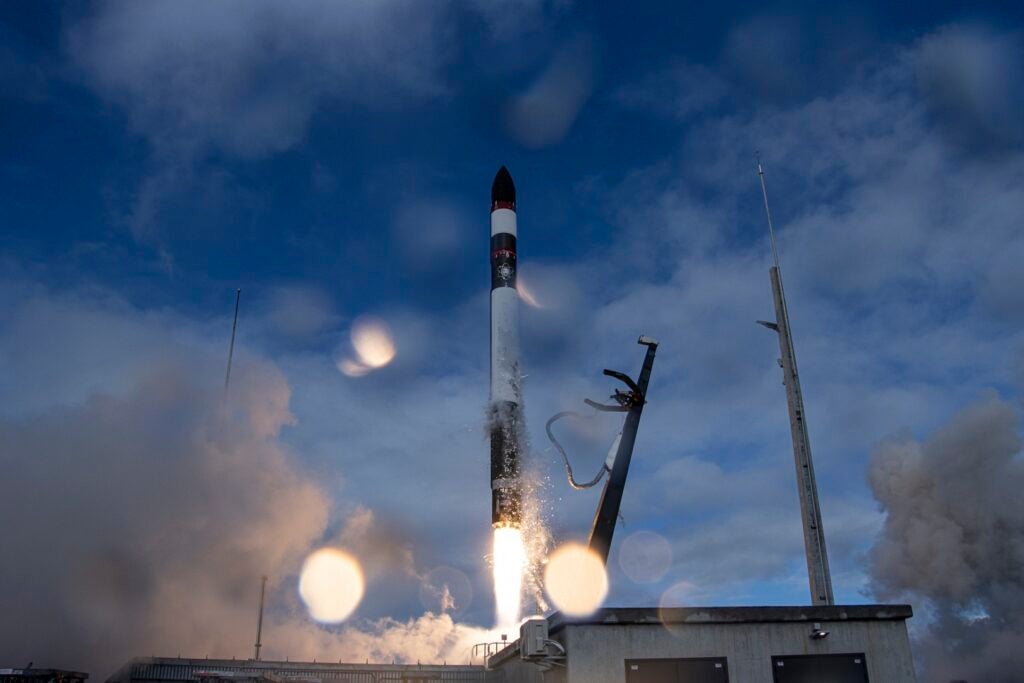
Rocket Lab Announces $8 Billion Acquisition of Iridium
- Acquisition Announcement: Rocket Lab has announced plans to acquire Iridium Communications for $8 billion, which will enable Rocket Lab to integrate satellite launch and communication solutions, thereby enhancing its market competitiveness.
- Market Potential: The global space launch market is projected to grow from over $20 billion this year to more than $70 billion by 2035, and with Iridium's technology, Rocket Lab is positioned to capture a significant share of this rapidly expanding market.
- Technological Synergy: Rocket Lab's Electron rocket has successfully launched over 260 satellites, and Iridium's communication and positioning solutions will allow it to meet a broader range of customer needs, enhancing the attractiveness of its product offerings.
- Strategic Implications: This acquisition not only boosts Rocket Lab's technological capabilities but may also position it as the sole provider capable of meeting specific market demands, thereby gaining a larger market share in the competitive aerospace industry.
See More

Trump and New Fed Chair Clash Over Interest Rates

- Fed Leadership Change: Jerome Powell's term ended on May 15, with Trump's nominee Kevin Warsh officially taking over as Fed Chair, indicating a potential shift in monetary policy direction, particularly regarding interest rates.
- Trump's Rate Pressure: Trump continues to push for rate cuts, despite the Fed lowering the federal funds target rate six times between 2024 and 2025; the current rate of 3.5% to 3.75% remains above Trump's desired target of 1%, highlighting a significant policy divergence.
- Inflation Challenges: Due to tariffs imposed by Trump and the energy supply disruption from the Iran war, U.S. inflation surged from 2.4% to 4.2% over 12 months, placing increased pressure on Warsh to maintain price stability, which could influence future monetary policy decisions.
- Market Uncertainty Intensifies: Warsh's hawkish stance contrasts sharply with Trump's calls for lower rates, and the lack of monetary policy transparency may lead to greater risks for Wall Street, especially given the current high valuations in the stock market.
See More
Analysis of SpaceX Stock Volatility Post-IPO
- Post-IPO Volatility: Following its IPO, SpaceX's stock price exhibited extreme volatility, soaring from the initial price of $135 to over $200, before dropping to around $150, indicating high market uncertainty regarding its valuation.
- Supply-Demand Imbalance: The IPO sold less than 5% of total outstanding shares, significantly lower than the typical 80% for major companies, creating a scarcity that exacerbated price fluctuations due to supply-demand imbalances.
- Wall Street Analyst Predictions: Currently, only seven analysts cover SpaceX stock, with an average price target of $222, suggesting about 30% upside from current levels, but estimates vary widely from $115 to $400, reflecting significant disagreement on future performance.
- Morningstar Independent Assessment: A report from Morningstar prior to the IPO valued SpaceX at only $63 per share, highlighting substantial engineering challenges in achieving reusable rockets and commercializing space data centers, which are not expected to be resolved until at least 2028.
See More
SpaceX IPO Hype Cools, Investors Should Exercise Caution
- Stock Price Volatility: SpaceX's current market cap is approximately $2 trillion, and although the IPO hype has diminished, investors should monitor the stock's stability over the coming months, as it may face increased selling pressure leading to potential declines.
- Insider Selling Restrictions: Elon Musk is prohibited from selling his shares for 366 days post-IPO, meaning early investors' selling pressure has yet to materialize; as shares are gradually released in the coming months, the market may experience increased sell-offs, further depressing the stock price.
- Debt Risk Warning: Shortly after its IPO, SpaceX issued $25 billion in debt, raising concerns about its financial health despite having raised over $85 billion through the public offering, which could impact future investment returns and investor confidence.
- Investor Patience Recommended: Analysts suggest that the likelihood of SpaceX's stock declining in the short term outweighs the chances of a surge, advising investors to remain patient and observe the company's performance as a public entity while considering other high-potential stocks for better growth opportunities.
See More
New Fed Chair Appointment Sparks Market Volatility
- Fed Leadership Change: Jerome Powell's term ended on May 15, with Trump's nominee Kevin Warsh officially taking over as Fed Chair, creating uncertainty in market expectations regarding future monetary policy direction despite Powell remaining on the Board.
- Interest Rate Policy Divergence: Trump continues to pressure for rate cuts, with the current federal funds rate between 3.5% and 3.75%, significantly above Trump's desired target of 1%, which could exacerbate market volatility amid these conflicting views.
- Inflationary Pressures Intensify: Due to Trump's tariff policies and the Iran war causing energy supply disruptions, the U.S. inflation rate surged from 2.4% to 4.2% over the past year, presenting significant challenges for Warsh's monetary policy approach.
- Uncertain Market Outlook: Warsh's hawkish stance contradicts Trump's push for lower rates, and the lack of transparency in monetary policy could lead to unstable market expectations, particularly in a historically high-valued stock market environment.
See More
Rocket Lab to Acquire Iridium for $8 Billion
- Acquisition Announcement: Rocket Lab has announced plans to acquire Iridium Communications for $8 billion, and while both companies remain minor players, this move could yield substantial rewards for patient shareholders.
- Complementary Technologies: Rocket Lab's Electron rocket has successfully launched over 260 satellites, and with Iridium's technology, it can now meet broader market needs, particularly in the IoT and communications sectors.
- Market Growth Potential: According to Precedence Research, the global space launch market is expected to grow from over $20 billion this year to more than $70 billion by 2035, positioning Rocket Lab to capture a fair share of this growth with Iridium's technology.
- Competitive Edge: Iridium's capabilities are similar to those of SpaceX, and by integrating their technologies, Rocket Lab may become the sole provider capable of meeting specific customer needs, thereby enhancing its market competitiveness.
See More
Rocket Lab Announces $8 Billion Acquisition of Iridium
- Acquisition Announcement: Rocket Lab has announced plans to acquire Iridium Communications for $8 billion, which will enable Rocket Lab to integrate satellite launch and communication solutions, thereby enhancing its market competitiveness.
- Market Potential: The global space launch market is projected to grow from over $20 billion this year to more than $70 billion by 2035, and with Iridium's technology, Rocket Lab is positioned to capture a significant share of this rapidly expanding market.
- Technological Synergy: Rocket Lab's Electron rocket has successfully launched over 260 satellites, and Iridium's communication and positioning solutions will allow it to meet a broader range of customer needs, enhancing the attractiveness of its product offerings.
- Strategic Implications: This acquisition not only boosts Rocket Lab's technological capabilities but may also position it as the sole provider capable of meeting specific market demands, thereby gaining a larger market share in the competitive aerospace industry.
See More
Trump and New Fed Chair Clash Over Interest Rates
- Fed Leadership Change: Jerome Powell's term ended on May 15, with Trump's nominee Kevin Warsh officially taking over as Fed Chair, indicating a potential shift in monetary policy direction, particularly regarding interest rates.
- Trump's Rate Pressure: Trump continues to push for rate cuts, despite the Fed lowering the federal funds target rate six times between 2024 and 2025; the current rate of 3.5% to 3.75% remains above Trump's desired target of 1%, highlighting a significant policy divergence.
- Inflation Challenges: Due to tariffs imposed by Trump and the energy supply disruption from the Iran war, U.S. inflation surged from 2.4% to 4.2% over 12 months, placing increased pressure on Warsh to maintain price stability, which could influence future monetary policy decisions.
- Market Uncertainty Intensifies: Warsh's hawkish stance contrasts sharply with Trump's calls for lower rates, and the lack of monetary policy transparency may lead to greater risks for Wall Street, especially given the current high valuations in the stock market.
See More
Analysis of SpaceX Stock Volatility Post-IPO
- Post-IPO Volatility: Following its IPO, SpaceX's stock price exhibited extreme volatility, soaring from the initial price of $135 to over $200, before dropping to around $150, indicating high market uncertainty regarding its valuation.
- Supply-Demand Imbalance: The IPO sold less than 5% of total outstanding shares, significantly lower than the typical 80% for major companies, creating a scarcity that exacerbated price fluctuations due to supply-demand imbalances.
- Wall Street Analyst Predictions: Currently, only seven analysts cover SpaceX stock, with an average price target of $222, suggesting about 30% upside from current levels, but estimates vary widely from $115 to $400, reflecting significant disagreement on future performance.
- Morningstar Independent Assessment: A report from Morningstar prior to the IPO valued SpaceX at only $63 per share, highlighting substantial engineering challenges in achieving reusable rockets and commercializing space data centers, which are not expected to be resolved until at least 2028.
See More