AMD Acquires MEXT to Optimize Memory Technology

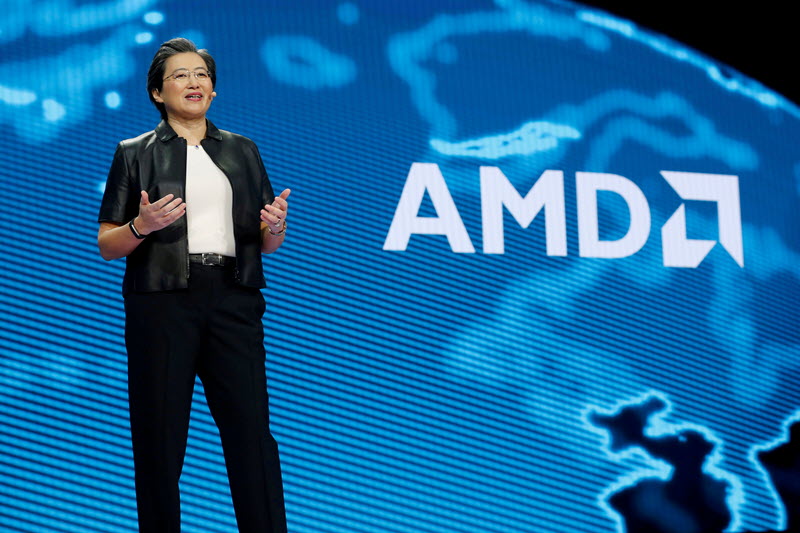
"Modern data center infrastructure is evolving rapidly, and customers are increasingly facing a common challenge: access to memory. As AI models, data analytics, virtualization and high-performance computing workloads grow in size and complexity, memory has become a critical constraint across cloud and enterprise environments. For customers, addressing these bottlenecks is essential to improving performance per dollar, increasing efficiency and accelerating deployments at scale. AMD is addressing this challenge by acquiring MEXT, a pioneer in AI-driven memory optimization technology. MEXT has developed innovative AI-powered predictive memory technology designed to make flash behave more like DRAM, helping expand usable memory capacity while maintaining performance and efficiency. This approach has the potential to reduce infrastructure costs, improve resource utilization, and help customers more effectively scale general-purpose and AI workloads... Demand for memory is growing across every category of enterprise compute. By combining the AMD leadership in high-performance computing and data center platforms with MEXT's memory optimization technology, we are taking another step to help customers deploy workloads more efficiently, cost-effectively and at greater scale," AMD announced.
Trade with 70% Backtested Accuracy
Analyst Views on AMD

About AMD
About the author


AMD Stock Soars with Promising AI Market Outlook

- Significant Revenue Growth: In Q1 2026, AMD reported $10.3 billion in revenue, a 38% year-over-year increase, with data center revenue reaching $5.8 billion, up 57%, highlighting strong demand and an enhanced market position in high-performance computing.
- Optimistic Future Outlook: Management guided for Q2 2026 revenue of approximately $11.2 billion, representing 46% year-over-year growth, with CEO Lisa Su noting that customer engagement around the new MI450 AI GPUs is strengthening, exceeding initial forecasts and indicating sustained market confidence in AMD's offerings.
- AI Market Share Expansion: The upcoming launch of MI450 AI chips has secured large-scale deployment commitments from major clients like OpenAI and Meta, further solidifying AMD's competitive position in the rapidly growing AI data center market, which is expected to drive future revenue growth.
- Valuation Reasonableness Analysis: Despite a 351% stock price increase over the past year, AMD's non-GAAP price-to-earnings-to-growth (PEG) ratio of 1.32 is below peers, suggesting the market remains cautious about its growth narrative, making recent pullbacks a potential buying opportunity for long-term investors.
AMD Acquires MEXT to Enhance AI Infrastructure
- Acquisition Fuels Growth: AMD's announcement to acquire MEXT, which has developed AI-driven memory optimization technology that allows NAND flash to function as dynamic random access memory (DRAM), is set to further propel AMD's growth in the market.
- Significant Cost Benefits: MEXT's technology can expand a system's DRAM capacity by 2 to 4 times while halving costs, which is crucial given that DRAM is approximately 50 times more expensive than flash memory, thus saving customers substantial amounts.
- Optimized Market Positioning: By integrating MEXT's technology, AMD will enhance the attractiveness of its data center product line, solidifying its position in the inference market, particularly in memory-constrained environments.
- Accelerated Strategic Transformation: This acquisition signifies AMD's shift from being merely a chipmaker to a more comprehensive AI infrastructure provider, strengthening its competitiveness in the rapidly growing inference and agentic AI markets.
Vanguard U.S. Momentum Factor ETF Shows Strong Performance

- Successful Investment Strategy: Since its launch in 2018, the Vanguard U.S. Momentum Factor ETF has achieved a compound annual return of 15.7%, significantly outperforming the S&P 500's 12.7%, indicating the effectiveness of its momentum-driven strategy and suggesting it will continue to outperform the market.
- High Turnover Characteristic: With a turnover rate of 99.9%, this ETF is expected to replace nearly every stock in its portfolio annually, allowing it to quickly adapt to market changes and capture stocks that are on a sustained upward trend, thereby enhancing investment returns.
- Diverse Industry Exposure: As of May 31, the ETF held 710 stocks across 11 sectors, with the highest weightings in technology, industrials, and healthcare at 22.1%, 20.3%, and 18.6% respectively, showcasing its investment diversity and potential across multiple sectors.
- Reasonable Expense Ratio: Although the ETF's expense ratio is 0.13%, higher than many passive index funds at 0.03%, its strong returns have more than compensated for this cost, indicating its long-term investment value for investors.

Vanguard U.S. Momentum Factor ETF Outperforms Market Consistently
- Consistent Market Outperformance: Since its inception in 2018, the Vanguard U.S. Momentum Factor ETF has consistently outperformed the S&P 500, achieving a 24% return in 2026, more than double that of the index, demonstrating the effectiveness of its momentum-driven strategy.
- High Turnover Strategy: With a turnover rate of 99.9%, this ETF is expected to replace nearly every stock in its portfolio annually, allowing it to quickly capture top-performing stocks in the market, ensuring that investors' capital is always optimally allocated.
- Sector Concentration: As of May 31, the ETF held 710 stocks, with semiconductor giants Micron Technology and Advanced Micro Devices soaring by 764% and 312% respectively over the past 12 months, reflecting strong AI-driven demand for chips and further solidifying the ETF's market position.
- Expense Ratio Consideration: Although the ETF's expense ratio stands at 0.13%, higher than many passive index funds at 0.03%, its robust returns have more than offset this cost, making it a viable long-term investment option for investors.

US Stocks Rise on US-Iran Peace Deal Optimism


- Market Rally: The S&P 500 rose 1.08%, the Dow Jones increased by 0.14%, and the Nasdaq 100 surged 2.48% as optimism over the US-Iran peace deal eased inflation risks, reflecting a positive market sentiment.
- Chip Sector Surge: Intel's stock jumped over 10% after President Trump announced a partnership with Apple to design and produce semiconductors domestically, leading the iShares Semiconductor ETF to rise more than 7%, indicating strong momentum in the tech sector.
- Energy Stocks Weaken: WTI crude oil prices fell to a 3.5-month low, causing significant declines in energy stocks, with SLB, ConocoPhillips, and Halliburton dropping over 3%, highlighting concerns over energy price volatility.
- Supportive Economic Data: Initial jobless claims fell to 226,000, close to the expected 225,000, indicating labor market strength, while the Philadelphia Fed business outlook index rose to 10.3, surpassing expectations, further boosting investor confidence.

AMD Stock Soars 143% but Investors Should Beware
- Outstanding Stock Performance: AMD's stock has surged 143% in 2026, making it one of the best-performing stocks in the market; however, investors should remain vigilant about potential warning signals.
- Disconnection Between Performance and Stock Price: While AMD's overall revenue rose 38% year-over-year and data center revenue increased by 57%, its operating margin fell by 1 percentage point, leading to an 11% drop in operating income, indicating a disconnect between stock price and business growth.
- Future Growth Expectations: Analysts forecast a 43% revenue increase for AMD this year and a 54% increase next year, but this combined 121% growth rate over two years is significantly lower than the stock's rise in 2026, suggesting that the stock may be overvalued.
- Valuation Risks Emerge: AMD's current price-to-earnings ratio is nearly 75 times, much higher than Nvidia's 24 times, despite Nvidia's stronger revenue growth, raising concerns about the stability of AMD's stock gains.
AMD Stock Soars with Promising AI Market Outlook
- Significant Revenue Growth: In Q1 2026, AMD reported $10.3 billion in revenue, a 38% year-over-year increase, with data center revenue reaching $5.8 billion, up 57%, highlighting strong demand and an enhanced market position in high-performance computing.
- Optimistic Future Outlook: Management guided for Q2 2026 revenue of approximately $11.2 billion, representing 46% year-over-year growth, with CEO Lisa Su noting that customer engagement around the new MI450 AI GPUs is strengthening, exceeding initial forecasts and indicating sustained market confidence in AMD's offerings.
- AI Market Share Expansion: The upcoming launch of MI450 AI chips has secured large-scale deployment commitments from major clients like OpenAI and Meta, further solidifying AMD's competitive position in the rapidly growing AI data center market, which is expected to drive future revenue growth.
- Valuation Reasonableness Analysis: Despite a 351% stock price increase over the past year, AMD's non-GAAP price-to-earnings-to-growth (PEG) ratio of 1.32 is below peers, suggesting the market remains cautious about its growth narrative, making recent pullbacks a potential buying opportunity for long-term investors.
AMD Acquires MEXT to Enhance AI Infrastructure
- Acquisition Fuels Growth: AMD's announcement to acquire MEXT, which has developed AI-driven memory optimization technology that allows NAND flash to function as dynamic random access memory (DRAM), is set to further propel AMD's growth in the market.
- Significant Cost Benefits: MEXT's technology can expand a system's DRAM capacity by 2 to 4 times while halving costs, which is crucial given that DRAM is approximately 50 times more expensive than flash memory, thus saving customers substantial amounts.
- Optimized Market Positioning: By integrating MEXT's technology, AMD will enhance the attractiveness of its data center product line, solidifying its position in the inference market, particularly in memory-constrained environments.
- Accelerated Strategic Transformation: This acquisition signifies AMD's shift from being merely a chipmaker to a more comprehensive AI infrastructure provider, strengthening its competitiveness in the rapidly growing inference and agentic AI markets.
Vanguard U.S. Momentum Factor ETF Shows Strong Performance
- Successful Investment Strategy: Since its launch in 2018, the Vanguard U.S. Momentum Factor ETF has achieved a compound annual return of 15.7%, significantly outperforming the S&P 500's 12.7%, indicating the effectiveness of its momentum-driven strategy and suggesting it will continue to outperform the market.
- High Turnover Characteristic: With a turnover rate of 99.9%, this ETF is expected to replace nearly every stock in its portfolio annually, allowing it to quickly adapt to market changes and capture stocks that are on a sustained upward trend, thereby enhancing investment returns.
- Diverse Industry Exposure: As of May 31, the ETF held 710 stocks across 11 sectors, with the highest weightings in technology, industrials, and healthcare at 22.1%, 20.3%, and 18.6% respectively, showcasing its investment diversity and potential across multiple sectors.
- Reasonable Expense Ratio: Although the ETF's expense ratio is 0.13%, higher than many passive index funds at 0.03%, its strong returns have more than compensated for this cost, indicating its long-term investment value for investors.
Vanguard U.S. Momentum Factor ETF Outperforms Market Consistently
- Consistent Market Outperformance: Since its inception in 2018, the Vanguard U.S. Momentum Factor ETF has consistently outperformed the S&P 500, achieving a 24% return in 2026, more than double that of the index, demonstrating the effectiveness of its momentum-driven strategy.
- High Turnover Strategy: With a turnover rate of 99.9%, this ETF is expected to replace nearly every stock in its portfolio annually, allowing it to quickly capture top-performing stocks in the market, ensuring that investors' capital is always optimally allocated.
- Sector Concentration: As of May 31, the ETF held 710 stocks, with semiconductor giants Micron Technology and Advanced Micro Devices soaring by 764% and 312% respectively over the past 12 months, reflecting strong AI-driven demand for chips and further solidifying the ETF's market position.
- Expense Ratio Consideration: Although the ETF's expense ratio stands at 0.13%, higher than many passive index funds at 0.03%, its robust returns have more than offset this cost, making it a viable long-term investment option for investors.
US Stocks Rise on US-Iran Peace Deal Optimism
- Market Rally: The S&P 500 rose 1.08%, the Dow Jones increased by 0.14%, and the Nasdaq 100 surged 2.48% as optimism over the US-Iran peace deal eased inflation risks, reflecting a positive market sentiment.
- Chip Sector Surge: Intel's stock jumped over 10% after President Trump announced a partnership with Apple to design and produce semiconductors domestically, leading the iShares Semiconductor ETF to rise more than 7%, indicating strong momentum in the tech sector.
- Energy Stocks Weaken: WTI crude oil prices fell to a 3.5-month low, causing significant declines in energy stocks, with SLB, ConocoPhillips, and Halliburton dropping over 3%, highlighting concerns over energy price volatility.
- Supportive Economic Data: Initial jobless claims fell to 226,000, close to the expected 225,000, indicating labor market strength, while the Philadelphia Fed business outlook index rose to 10.3, surpassing expectations, further boosting investor confidence.
AMD Stock Soars 143% but Investors Should Beware
- Outstanding Stock Performance: AMD's stock has surged 143% in 2026, making it one of the best-performing stocks in the market; however, investors should remain vigilant about potential warning signals.
- Disconnection Between Performance and Stock Price: While AMD's overall revenue rose 38% year-over-year and data center revenue increased by 57%, its operating margin fell by 1 percentage point, leading to an 11% drop in operating income, indicating a disconnect between stock price and business growth.
- Future Growth Expectations: Analysts forecast a 43% revenue increase for AMD this year and a 54% increase next year, but this combined 121% growth rate over two years is significantly lower than the stock's rise in 2026, suggesting that the stock may be overvalued.
- Valuation Risks Emerge: AMD's current price-to-earnings ratio is nearly 75 times, much higher than Nvidia's 24 times, despite Nvidia's stronger revenue growth, raising concerns about the stability of AMD's stock gains.