Intel Corporation Earnings
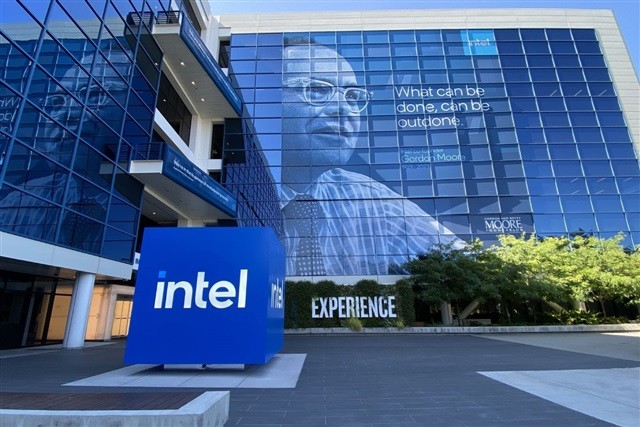
Intel Corporation recently reported its financial results for the fourth quarter and the full year of 2024, indicating a challenging yet strategically progressive period for the tech giant.
Key Financial Metrics
| Metric | Q4 2024 | Q4 2023 YoY Change | Full-Year 2024 | Full-Year 2023 YoY Change |
|---|---|---|---|---|
| Total Revenue | $14.3 billion | -7% | $53.1 billion | -2% |
| EPS (GAAP) | $(0.03) | $(4.38) | ||
| EPS (Non-GAAP) | $0.13 | $(0.13) |
Intel's financial performance in Q4 2024 marked a decline, with total revenue dropping by 7% year-over-year for the quarter and 2% for the full year. The negative GAAP earnings per share (EPS) of $(0.03) for Q4 underscore ongoing financial challenges, whereas a positive Non-GAAP EPS of $0.13 illustrates improved operational measures to offset some of these pressures.
Intel Corporation Results
Despite the revenue decrease, Intel's agility in strategic operations enabled an uptick in Non-GAAP EPS, demonstrating the company's potential for financial rebound. A negative overall EPS for the year remains a significant concern, driven partly by restructuring and operational efficiency improvements. The focus is now on leveraging its robust portfolio to achieve better operational leverage in an evolving technological landscape.
Revenue Breakdown
Intel's revenue segmentation highlights promising developments despite the overarching financial constraints: - Client Computing Group (CCG) : Intel cemented its leadership in the AI PC market, projecting the shipment of over 100 million units by 2025. This segment saw the introduction of the Intel® Core™ Ultra series processors, innovating user experience through advanced computational power. - Data Center and AI Group (DCAI) : Strategic collaborations, notably with Dell, have bolstered high-performance servers. Enhancements in memory technology (MRDIMMs) and processors are driving this segment's forward momentum. - Network and Edge Group (NEX) : Marked by the rollout of Intel® Core™ Ultra processors for edge computing at CES, this segment is increasingly capitalizing on emergent sectors within edge computing applications.
While the Client Computing Group continues to anchor substantial revenue flows, both the Data Center and Network sectors are emphasized as growth catalysts with increasing AI integration and edge data applications.
Key Developments
Intel made notable strategic advancements in the quarter that could serve as a springboard for future performance: - The deployment of an internal foundry operating model aims to boost transparency and operational efficiency across its production lines. - Initiatives to establish Intel Foundry as an independent entity and operate Altera® as a standalone business reflect a longer-term vision to augment focus and resource allocation. - The completion of a critical tape-out of Intel 16-based design signifies technological progression capable of fulfilling sophisticated client demands, supported by securing funds from the U.S. CHIPS and Science Act.
Comments from Company Officers
Interim co-CEOs Michelle Johnston Holthaus and David Zinsner highlighted the results as indicative of Intel's resilient strides in tumultuous times. They pointed out the quarter's surpassing of revenue and EPS projections as a testament to Intel's strategic focus on cost efficiency and the commitment to fortifying shareholder value through a prudent operational mix.
Dividends and Share Repurchases
In 2024, Intel distributed dividends totaling $1.6 billion, showcasing a steady commitment to returning value to shareholders amidst financial challenges.
Intel Corporation Stock Forecast
Based on the financial insights and operational initiatives detailed above, Intel's stock price is projected to witness a fluctuating trajectory: - High Projection : $22.50 - Low Projection : $19.00
These forecasts consider Intel's strategic segment growth potential, recent stock price movement, and the overall broader market analysis. With the post-earnings stock rise of 1.54%, the market demonstrated cautious optimism about Intel's resurgence ability, resonating with the outlined strategic pivots.
In summary, while Intel faces ongoing headwinds with declining revenues and negative EPS, its strategic undertakings in key technology segments hold promise for future recovery and growth. With the determined aim of recalibrating operations and enhancing its product portfolio, Intel is poised to navigate the ever-evolving tech industry landscape with resilience and innovation.
For more in-depth analysis and insights, stay tuned with our platform to stay ahead of the market.