
Key Takeaway
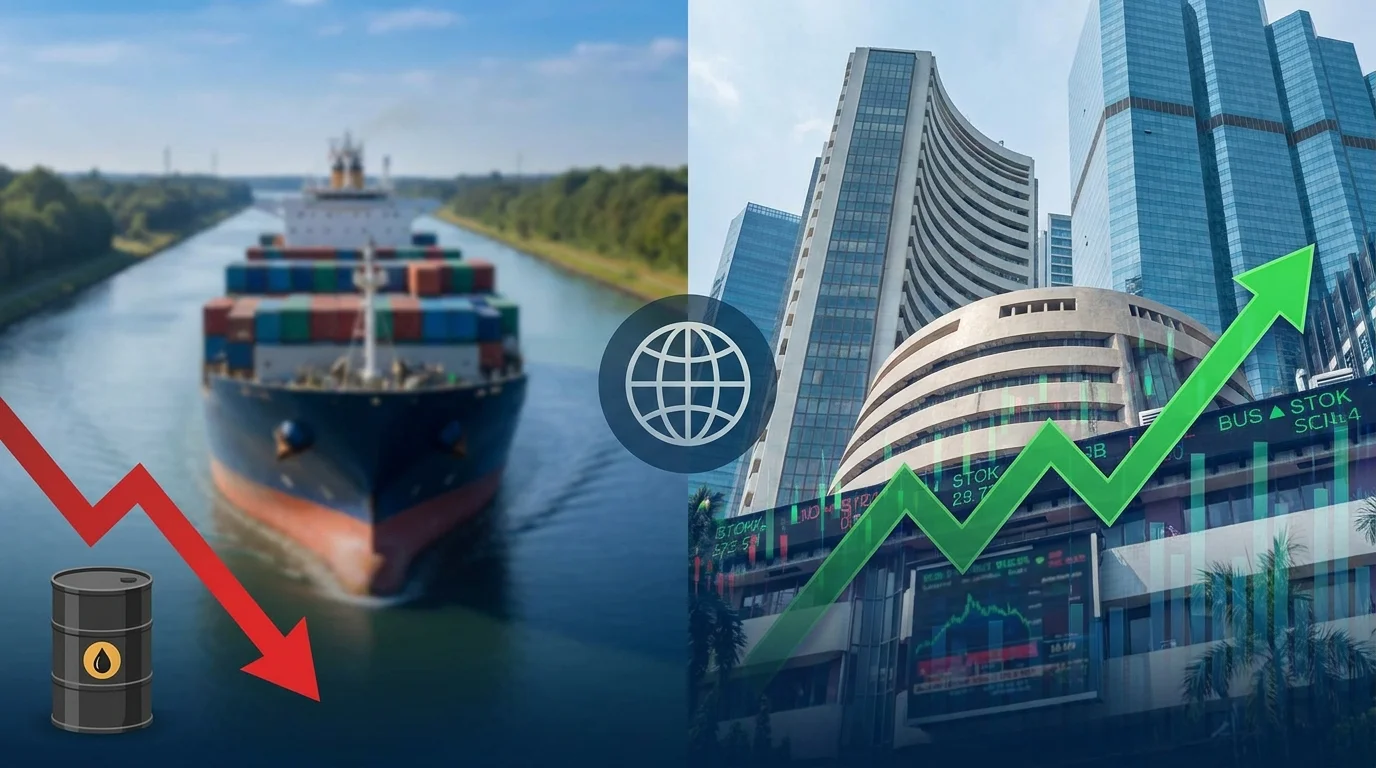
Financial markets erupted in celebration on Friday as Iran declared the Strait of Hormuz 'completely open' to commercial shipping, ending weeks of uncertainty that had gripped global energy markets and threatened economic stability. The announcement triggered a historic risk-on rally that sent U.S. stock indexes to fresh record highs while crude oil prices plummeted nearly 10%, offering relief to consumers and investors alike.
The S&P 500 leaped 1.2% to close at 7,126.06, notching its third consecutive week of substantial gains in the longest winning streak since late October. The Dow Jones Industrial Average surged 868 points, or 1.8%, to finish at 49,447.43, while the Nasdaq Composite climbed 1.5% to reach 24,468.48. All three major indexes erased the losses accumulated during the seven-week conflict, demonstrating the remarkable resilience of equity markets when geopolitical tensions ease.
Beyond the immediate price action, the reopening of this critical shipping chokepoint carries profound implications for inflation expectations, monetary policy, and corporate earnings. With roughly 20% of global oil supplies passing through the Strait of Hormuz, the restoration of normal commercial traffic could translate into lower gasoline prices, reduced transportation costs, and ultimately, more favorable conditions for interest rate cuts later this year.
The Strait of Hormuz Crisis: Seven Weeks of Market Turmoil
The conflict between the United States and Iran that began in early 2026 created one of the most volatile periods in recent energy market history. When hostilities first erupted, Brent crude oil prices surged 10-13% to approximately $80-82 per barrel within days, while West Texas Intermediate crude experienced similarly dramatic gains. The closure of the Strait of Hormuz represented a direct threat to global energy security, as this narrow waterway handles approximately one-fifth of worldwide petroleum consumption.
The economic consequences extended far beyond the energy sector. Shipping companies faced massive disruptions, insurance premiums for vessels transiting the Persian Gulf skyrocketed, and manufacturers braced for potential shortages of refined petroleum products. Stock markets initially sold off sharply as investors priced in the possibility of a prolonged conflict that could trigger recessionary conditions across energy-dependent economies.
However, the market narrative began shifting in late March when diplomatic channels showed signs of progress. U.S. equities rallied more than 12% from their March lows as traders bet on a peaceful resolution, even as the military conflict continued. This divergence between geopolitical reality and market pricing reflected the sophisticated understanding that financial markets often anticipate outcomes before they become official policy.
Friday's Historic Breakthrough: Markets React to Diplomatic Progress
The catalyst for Friday's explosive rally came early in the session when Iran's Foreign Minister Abbas Araghchi posted on X that passage for all commercial vessels through the strait 'is declared completely open.' The announcement specified that the waterway would remain open for the duration of the ceasefire agreement that appears to be holding in Lebanon, providing markets with the certainty they had been craving for weeks.
President Donald Trump reinforced the positive sentiment late Thursday by stating that the war 'should be ending pretty soon,' suggesting that the diplomatic breakthrough may represent more than a temporary tactical pause in hostilities. The combination of official Iranian confirmation and optimistic U.S. leadership commentary created the perfect environment for a massive risk-on move across asset classes.
The price of benchmark U.S. crude oil responded immediately to the news, plunging 9.4% to settle at $82.59 per barrel and effectively returning to levels seen in the early days of the conflict. This dramatic decline in energy prices represents a significant disinflationary impulse that could influence Federal Reserve policymakers as they contemplate the trajectory of interest rates in coming months.
Stock Market Records: S&P 500, Nasdaq, and Dow All Hit New Highs
Friday's session marked a milestone achievement for U.S. equities, with all three major indexes establishing fresh all-time highs. The S&P 500's close above 7,100 represented a particularly significant technical accomplishment, as this level had previously served as resistance during the war-induced volatility. The index's 1.2% gain extended its remarkable recovery from the March lows and confirmed the underlying strength of the bull market that has persisted despite numerous challenges.
The Nasdaq Composite and Nasdaq 100 both notched their second intraday record highs of 2026, underscoring the leadership role that technology stocks continue to play in this market cycle. The 1.5% gain in the Nasdaq demonstrated that investors are comfortable taking on riskier positions when geopolitical uncertainties diminish, particularly in growth-oriented sectors that had been battered during the peak of Middle East tensions.
Perhaps most impressively, the Dow Jones Industrial Average surged as many as 1,100 points during intraday trading before settling for an 868-point gain. This performance was driven by strength across multiple sectors, with energy companies paradoxically benefiting from the resolution of uncertainty despite lower oil prices, while industrial and transportation stocks soared on expectations of reduced fuel costs and improved supply chain efficiency.
The breadth of the rally suggested that institutional investors had been waiting on the sidelines for a definitive signal to deploy capital, and the Hormuz announcement provided exactly the clarity needed to trigger massive reallocation into equities. Trading volumes spiked significantly above recent averages, confirming that this was not merely a low-volume short squeeze but rather genuine institutional accumulation.
Economic Implications: From Energy Markets to Consumer Prices
The reopening of the Strait of Hormuz carries far-reaching economic consequences that extend well beyond the trading floors of Wall Street. With crude oil prices retreating to pre-conflict levels, consumers can expect relief at the gasoline pump in coming weeks, potentially reducing the average household's monthly transportation expenses by meaningful amounts.
However, the relationship between oil prices and consumer costs is not instantaneous. As energy analysts have noted, traffic and residual trepidation in the Persian Gulf could keep gasoline prices from dropping as quickly as crude oil futures might suggest. Refineries need time to process cheaper crude into finished products, and retailers often hesitate to lower prices immediately when they have inventory purchased at higher costs.
The more significant economic impact may come through the inflation channel and its implications for Federal Reserve policy. Energy costs feed directly into the Consumer Price Index through gasoline prices and indirectly through transportation costs for virtually all goods and services. If the decline in oil prices persists, it could accelerate the return of inflation to the Fed's 2% target, potentially opening the door for interest rate cuts later in 2026.
Lower interest rates would benefit consumers through reduced credit card interest, cheaper auto loans, and more affordable mortgage refinancing opportunities. For investors, rate cuts typically support higher stock valuations by reducing the discount rate applied to future corporate earnings. This transmission mechanism explains why equity markets reacted so enthusiastically to what might otherwise seem like a distant geopolitical development.
Corporate Earnings Season: A New Optimistic Backdrop
The timing of the Hormuz reopening coincides with the beginning of first-quarter earnings season, creating an unexpectedly favorable environment for corporate results. Major U.S. companies are now reporting their performance for the first three months of 2026 against a backdrop of resolved energy uncertainty rather than escalating conflict.
Energy-intensive industries stand to benefit most directly from the decline in oil prices. Airlines, shipping companies, and logistics providers all face reduced fuel costs that could translate into margin expansion even if revenue growth remains modest. Manufacturing firms dependent on petroleum-derived inputs may also report improved profitability as raw material costs decline.
The technology sector, which had already demonstrated remarkable resilience during the conflict period, now faces an even more supportive environment. Lower interest rate expectations boost the present value of future growth, benefiting companies with strong long-term prospects but current profitability challenges. The Nasdaq's leadership in Friday's rally reflects this dynamic, as investors price in a more accommodative monetary policy trajectory.
Financial stocks also stand to benefit from a resolution that reduces systemic risk while potentially bringing forward the timeline for rate cuts. Banks and insurance companies had been pricing in elevated geopolitical risk premiums that can now be unwound, supporting both earnings estimates and valuation multiples.
Investment Strategy: Positioning for the Post-Conflict Landscape
For investors navigating this rapidly evolving landscape, several strategic considerations emerge from the Hormuz reopening and subsequent market reaction. The dramatic rally in equities suggests that much of the near-term upside from the diplomatic breakthrough may already be priced in, making selectivity increasingly important.
Value-oriented investors might focus on sectors that faced the greatest pressure during the conflict period and therefore have the most room for mean reversion. Energy stocks, despite the decline in crude prices, could benefit from the removal of uncertainty premiums that had been weighing on valuations. Industrials and materials companies with significant international exposure may also see renewed interest as global trade flows normalize.
Growth investors should consider whether the technology and consumer discretionary stocks that led the rally have become overextended in the near term. While the long-term thesis for these sectors remains intact, tactical rebalancing toward areas with greater relative value could enhance risk-adjusted returns.
Income-focused portfolios may find renewed appeal in dividend-paying stocks across sectors, particularly if the Fed begins easing monetary policy. Lower interest rates typically compress yields on fixed-income instruments, making equity dividends relatively more attractive on a risk-adjusted basis.

For investors seeking to identify the best opportunities in this evolving market environment, Intellectia's AI Stock Picker leverages advanced algorithms to analyze market conditions and identify securities with the highest probability of outperformance. Whether you're looking for growth opportunities in the technology sector or value plays in energy and industrials, AI-powered analysis can help cut through the noise and focus on what matters most.
Risks Remain: Why Caution Is Still Warranted
While Friday's rally was undeniably impressive, experienced investors know that markets rarely move in straight lines, and the situation in the Middle East remains fluid. The ceasefire that enabled the Hormuz reopening could prove fragile, and any resumption of hostilities would likely trigger an equally dramatic reversal of the week's gains.
Iran's Foreign Minister explicitly conditioned the continued openness of the strait on the maintenance of the ceasefire in Lebanon. Should fighting resume in that theater, the energy corridor could quickly close again, sending oil prices soaring and stocks tumbling. This conditionality means that investors must remain vigilant to developments beyond the immediate U.S.-Iran bilateral relationship.
Furthermore, the economic damage inflicted during seven weeks of conflict may have lingering effects that are not immediately apparent in headline market indices. Supply chain disruptions, deferred investment decisions, and shaken consumer confidence could weigh on economic data in coming months even if the military conflict has definitively ended.
The VIX volatility index, often called the market's 'fear gauge,' declined significantly on Friday but remains above the extremely complacent levels that sometimes presage market corrections. This suggests that while optimism has returned, investors have not abandoned all caution, which from a contrarian perspective may actually support continued market gains.
Global Market Impact: Beyond U.S. Borders
The Hormuz reopening reverberated across global markets, with European and Asian equities posting significant gains in sympathy with their U.S. counterparts. The Stoxx Europe 600 index rallied as energy-importing nations celebrated the reduced threat to their economic security, while Asian markets welcomed the resolution of a conflict that had threatened regional trade flows.
Emerging market equities, particularly those in energy-importing countries, experienced outsized gains as the prospect of lower oil prices improved their current account balances and reduced inflationary pressures. Countries like India, Turkey, and South Korea, which rely heavily on imported energy, saw their currencies strengthen against the dollar as the economic outlook brightened.
Currency markets also reflected the improved risk sentiment, with the U.S. dollar weakening modestly against a basket of major currencies. Safe-haven flows that had sought dollar-denominated assets during the conflict period reversed course, providing additional support to global equity markets through improved liquidity conditions.
Commodity markets beyond crude oil responded to the change in sentiment as well. Industrial metals rallied on expectations of stronger global demand, while precious metals gave back some of their conflict-driven gains as the urgency of holding inflation hedges diminished.
Conclusion
The reopening of the Strait of Hormuz represents a watershed moment for financial markets in 2026, providing the catalyst for a historic rally that sent U.S. stock indexes to fresh record highs while alleviating concerns about energy-driven inflation. The S&P 500's climb above 7,100, alongside similar milestones for the Dow and Nasdaq, demonstrates the remarkable resilience of equity markets when geopolitical uncertainties resolve favorably.
For investors, the lesson of this episode reinforces the importance of maintaining perspective during periods of elevated volatility. Those who panicked and sold into the March lows missed out on a more than 12% recovery, while those who recognized that markets eventually discount favorable outcomes were rewarded handsomely. The recovery also highlights the value of diversification, as different asset classes responded to the conflict and its resolution in markedly different ways.
Looking ahead, the path of least resistance appears to remain higher for equities, supported by potentially lower interest rates, reduced energy costs, and the removal of a major geopolitical overhang. However, the conditionality of the Hormuz reopening on the Lebanon ceasefire means that investors cannot become complacent. Vigilance regarding Middle East developments remains essential, even as we celebrate the current market milestones.
As earnings season unfolds against this newly optimistic backdrop, investors should pay close attention to management commentary regarding the economic impact of the conflict period and expectations for the quarters ahead. Companies that navigated the turbulence successfully and are positioned to benefit from lower energy costs may offer particularly attractive investment opportunities.

Ready to take your investment research to the next level? Intellectia's AI Screener empowers you to filter thousands of stocks based on the criteria that matter most in this post-conflict environment. From valuation metrics to earnings growth trends, our AI-driven platform helps you identify the opportunities that align with your investment strategy. Start your free trial today and discover why thousands of investors trust Intellectia to power their financial decisions.