
Key Takeaway
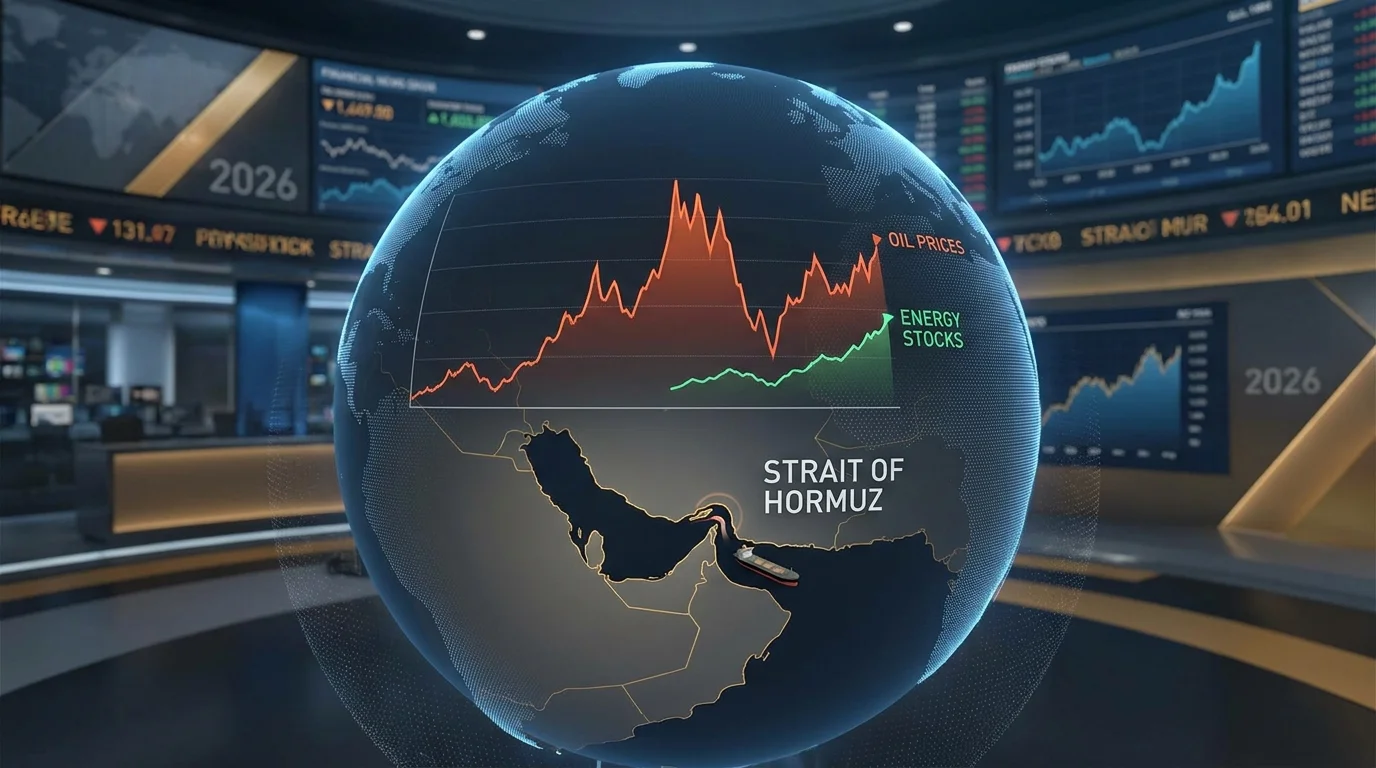
The 2026 Strait of Hormuz crisis has created unprecedented volatility in oil markets, with crude prices swinging more than 11% in a single week as geopolitical tensions flare and subside. Despite this turbulence, energy stocks remain compelling investments for investors who understand how to navigate the volatility. The key to profiting in this environment lies not in timing the daily price swings but in identifying well-capitalized energy companies with fortress balance sheets that can thrive regardless of near-term oil price fluctuations.
Major integrated oil companies like ExxonMobil and Chevron have demonstrated remarkable resilience throughout this crisis, with both stocks maintaining their dividends while smaller competitors struggle. Their integrated business models—spanning exploration, production, refining, and retail—provide natural hedges against oil price volatility that pure-play producers simply cannot match. For investors seeking exposure to the energy sector amid the Iran conflict, focusing on quality companies with strong free cash flow generation and disciplined capital allocation represents the most prudent approach.

The Strait of Hormuz Crisis: Understanding the Market Impact
What Happened in April 2026
The Strait of Hormuz, through which approximately one-third of global seaborne oil passes, became the focal point of market volatility in mid-April 2026. Following Iran's announcement that it would open the strait for commercial vessels during the ceasefire period, oil prices plunged 9.4% in a dramatic single-day reversal. West Texas Intermediate crude fell from recent highs above $100 per barrel back toward pre-crisis levels, briefly calming market fears about supply disruptions.
However, renewed military activity over the weekend quickly reversed this optimism, sending oil prices climbing more than 5% as traders feared the strait could face renewed blockade threats. This whipsaw pattern—where oil prices swing dramatically based on geopolitical headlines—has become the defining characteristic of energy markets in April 2026, creating both opportunities and risks for investors.
Why Traditional Safe Havens Failed
Perhaps most interesting from a market perspective has been the failure of traditional safe-haven assets to protect portfolios during this crisis. Gold, Japanese yen, euro, and government bonds including Treasuries and German Bunds—all assets that typically perform well during periods of turmoil—failed to shield investors during the oil-driven volatility. This breakdown of conventional correlations signals that the current crisis represents a unique risk environment where standard portfolio protection strategies may prove inadequate.
Meanwhile, assets that gained during earlier 2026 selloffs, including broad commodity indices and the trade-weighted dollar, did little to offset losses in other portfolio segments. This complex risk environment underscores the importance of direct exposure analysis—understanding exactly what risks each position carries rather than relying on historical patterns that may no longer apply.
Top Energy Stocks for the Current Environment
ExxonMobil: The Fortress Balance Sheet Play
ExxonMobil has emerged as a standout performer during the Strait of Hormuz crisis, with its stock demonstrating remarkable resilience even as oil prices gyrated. The company's integrated business model provides natural diversification across upstream exploration, downstream refining, and chemical operations, ensuring that some business segments thrive regardless of oil price direction. When crude prices fall, refining margins typically expand, creating a partial hedge against commodity volatility.
Beyond operational diversification, ExxonMobil's financial position sets it apart from competitors. The company has maintained its dividend through multiple oil price cycles, including the negative pricing episode of 2020, demonstrating a commitment to shareholder returns that resonates with income-focused investors. With energy prices remaining elevated compared to historical averages, ExxonMobil's free cash flow generation has accelerated, providing ample resources for debt reduction, share buybacks, and continued investment in high-return projects.
Analysts particularly appreciate ExxonMobil's disciplined approach to capital allocation. Unlike previous cycles where oil majors chased growth at any cost, ExxonMobil has focused on projects that generate positive returns even at lower oil prices. This capital discipline should serve investors well if the current volatility resolves into a lower oil price environment.
Chevron: Dividend Aristocrat with Upside
Chevron represents another compelling opportunity for investors seeking energy exposure with income characteristics. As a Dividend Aristocrat with decades of consecutive dividend increases, Chevron has proven its ability to navigate commodity cycles while rewarding shareholders. The company's acquisition of Hess Corporation has strengthened its position in high-quality oil assets, particularly in Guyana, where production continues to ramp up with attractive economics.
Chevron's balance sheet strength rivals ExxonMobil's, with net debt levels that remain conservative even after major acquisitions. This financial flexibility allows Chevron to continue investing in growth projects while maintaining dividend growth, a combination that few competitors can match. The company's Permian Basin operations continue to generate substantial free cash flow, providing a solid foundation even if international operations face temporary disruptions.
From a valuation perspective, Chevron trades at a reasonable multiple relative to its cash flow generation, particularly when considering the embedded optionality of its Guyana assets. As production from these world-class fields increases over the coming years, Chevron's earnings profile should strengthen further, supporting continued dividend growth and potential share price appreciation.
EOG Resources: The Efficiency Leader
For investors seeking pure-play upstream exposure, EOG Resources stands out as the quality choice among independent oil producers. The company has built its reputation on operational excellence in shale production, consistently delivering some of the lowest breakeven costs in the industry. This cost advantage becomes particularly valuable during volatile periods, as EOG can maintain profitability across a wide range of oil prices.
EOG's management team has demonstrated admirable capital discipline throughout the shale boom and subsequent consolidation phase. Rather than chasing production growth at the expense of returns, EOG has focused on generating free cash flow and returning excess capital to shareholders through dividends and buybacks. This shareholder-friendly approach has earned the company a premium valuation relative to peers, a premium that appears justified by superior execution.
Looking ahead, EOG's inventory of high-quality drilling locations in the Permian Basin, Eagle Ford, and other key shale plays provides a multi-year runway for development. As the company continues to optimize completion techniques and well spacing, unit economics should improve further, enhancing already attractive returns on capital.
Investment Strategies for Volatile Oil Markets
Dollar-Cost Averaging Into Quality Names
Given the extreme volatility in oil markets—where prices can swing 10% or more based on a single geopolitical headline—investors should approach energy sector investments with a long-term perspective and a disciplined entry strategy. Dollar-cost averaging, where investors gradually build positions over time rather than deploying capital all at once, represents an effective approach for volatile markets.
This strategy accomplishes two important objectives. First, it reduces the risk of investing a large sum immediately before a significant price decline—a very real possibility given current volatility. Second, it establishes the psychological foundation for staying invested through turbulent periods, as the ongoing commitment to regular purchases helps investors view volatility as an opportunity rather than a threat.
When implementing this approach, focus on the highest-quality companies with the strongest balance sheets. In energy, this means prioritizing integrated majors like ExxonMobil and Chevron, followed by best-in-class independents like EOG Resources. These companies have proven their ability to survive and thrive through multiple commodity cycles, making them appropriate anchors for long-term energy exposure.
Using ETFs for Diversified Exposure
For investors seeking broader exposure without selecting individual stocks, energy-focused ETFs offer attractive options. The Energy Select Sector SPDR Fund (XLE) provides cap-weighted exposure to the entire U.S. energy sector, with ExxonMobil and Chevron representing significant holdings. This diversification reduces single-stock risk while maintaining exposure to the sector's overall performance.
More tactical investors might consider the SPDR S&P Oil & Gas Exploration & Production ETF (XOP), which offers targeted exposure to upstream producers. This fund tends to exhibit higher volatility than XLE, reflecting the operating leverage inherent in pure-play oil production companies. For investors with strong conviction about oil prices remaining elevated, XOP provides amplified exposure to that thesis.
Regardless of which vehicle investors choose, maintaining appropriate position sizing remains critical. Given the energy sector's volatility, most investors should limit energy exposure to a reasonable percentage of their overall portfolio—typically between 5% and 10% for moderate risk tolerance, with higher allocations appropriate only for investors with strong understanding of commodity markets and tolerance for significant volatility.
The Macro Picture: Oil Prices and Global Growth
Supply Constraints Beyond Geopolitics
While the Strait of Hormuz crisis has captured headlines, longer-term supply constraints continue to support oil prices regardless of near-term geopolitical developments. Years of underinvestment in conventional oil production—driven by ESG pressures, capital discipline, and project delays—has left the global oil market with limited spare capacity. This structural tightness means that even temporary supply disruptions can have outsized price impacts.
OPEC+ has maintained production discipline throughout 2026, with Saudi Arabia and other major producers resisting calls to significantly increase output. This supply management, combined with ongoing production declines in many non-OPEC regions, has kept global inventories relatively tight. Even if the Iran situation resolves favorably, these underlying supply constraints should continue providing price support.
Demand Resilience Despite Economic Concerns
On the demand side, global oil consumption has proven remarkably resilient despite concerns about economic growth. While high oil prices typically curb demand through economic slowdowns, the current cycle has seen demand hold steady even as prices approached triple digits. Emerging market growth, particularly in India and Southeast Asia, continues driving incremental demand even as developed market consumption plateaus.
The electrification of transportation represents a long-term demand headwind, but the transition occurs slowly enough that near-term demand destruction remains limited. Electric vehicle adoption continues growing, but the existing fleet of internal combustion vehicles—numbering over one billion globally—ensures substantial oil demand for years to come.
Risks and Considerations
The Double-Edged Sword of Volatility
While volatility creates opportunities for astute investors, it also amplifies risks. Energy stocks can decline significantly even when oil prices remain elevated if investors become concerned about future demand or if companies make poor capital allocation decisions. The sector's history is littered with examples of companies that destroyed shareholder value through ill-timed acquisitions or excessive leverage.
Investors should also recognize that geopolitical events can resolve in unpredictable ways. While the base case might assume gradual de-escalation of tensions in the Middle East, the potential for further conflict escalation remains. Such escalation could drive oil prices significantly higher, benefiting energy company profits, or it could trigger a global economic recession that crushes demand along with share prices.
ESG Considerations
Environmental, social, and governance factors continue influencing capital flows in the energy sector. Many institutional investors face constraints on energy sector allocations due to ESG mandates, potentially limiting valuation multiples for oil and gas companies. While this factor has created opportunities for unconstrained investors to acquire quality energy assets at attractive valuations, it also represents a persistent headwind that may not abate in the near term.
Companies that successfully navigate the energy transition—diversifying into renewables, carbon capture, or low-carbon technologies—may ultimately command higher valuations than pure-play hydrocarbon producers. Both ExxonMobil and Chevron have made meaningful investments in these areas, potentially positioning them for continued relevance as the global energy mix evolves.
Conclusion
The Strait of Hormuz crisis has created a volatile but potentially rewarding environment for energy sector investors. With oil prices swinging dramatically based on geopolitical headlines, the key to success lies in identifying high-quality companies capable of thriving across various price scenarios rather than attempting to predict short-term price movements.
ExxonMobil and Chevron stand out as the highest-conviction opportunities, offering integrated business models, fortress balance sheets, and shareholder-friendly capital allocation policies that have proven resilient through multiple commodity cycles. For investors comfortable with higher volatility, EOG Resources represents a best-in-class pure-play option with industry-leading efficiency metrics.
Ready to identify the best energy stocks for your portfolio? Sign up for Intellectia.AI today and access our AI-powered stock screener and daily stock picker to find the top opportunities before the market opens. Our AI Stock Picker analyzes pre-market news using large language models combined with historical price reactions to deliver data-driven investment ideas every morning at 8:00 AM ET. Don't miss the next energy stock opportunity—start your free trial now.