
Key Takeaway
SpaceX has shattered all records with the largest IPO in history, raising $75 billion at a $1.8 trillion valuation before surging past $2 trillion in its Nasdaq debut under ticker SPCX. The stock jumped 19% on its first trading day, closing near $161 after pricing at $135 per share. This historic offering instantly made SpaceX the sixth-largest U.S. company by market capitalization and transformed Elon Musk into the world's first trillionaire.
The IPO represents more than just a milestone for the aerospace industry—it signals a fundamental shift in how investors value companies that bridge traditional infrastructure with emerging technologies. SpaceX's unique combination of Starlink's satellite internet dominance, Starship's deep-space ambitions, significant Bitcoin treasury holdings of 18,712 BTC, and integration with Musk's xAI artificial intelligence venture creates a complex investment thesis that defies conventional valuation metrics. With Starlink driving approximately 60% of revenue and the company posting a $4.94 billion loss in 2025, investors are betting heavily on future growth rather than current profitability.
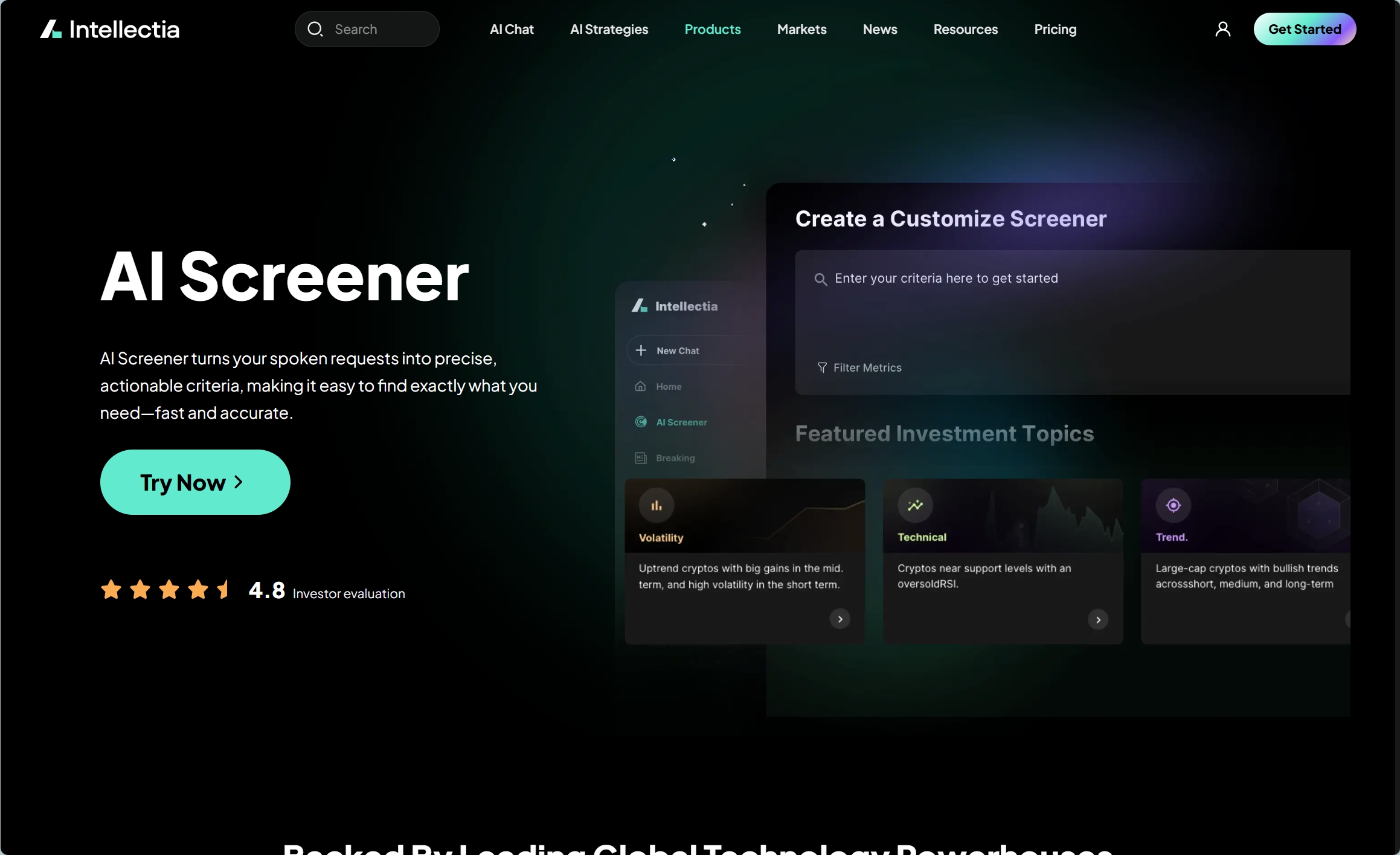
For investors seeking exposure to the space economy, satellite communications, and the intersection of AI and aerospace, consider using Intellectia's AI stock screener to identify similar high-growth opportunities in emerging technology sectors.
Understanding the SpaceX IPO Structure
Record-Breaking Offering Details
SpaceX's initial public offering redefined what investors thought possible in the public markets. The company sold 555.6 million shares at a fixed price of $135 each, generating gross proceeds of $75 billion—the largest IPO ever recorded. This offering valued the combined aerospace, Starlink satellite connectivity, and xAI artificial intelligence businesses at approximately $1.77 to $1.8 trillion, instantly ranking SpaceX among America's corporate elite alongside Apple, Microsoft, Nvidia, Amazon, and Alphabet.
The decision to price shares at $135 represented a delicate balancing act between maximizing capital raised and ensuring a successful aftermarket performance. Underwriters led by Goldman Sachs, Morgan Stanley, and JPMorgan reportedly faced overwhelming demand during the book-building process, with institutional orders exceeding available shares by multiples. This intense interest allowed SpaceX to maintain its ambitious valuation targets while still delivering first-day gains that rewarded initial investors.
Market Debut Performance
When SPCX began trading on June 12, 2026, the stock immediately commanded a premium above its offering price. Opening trades executed around $158 before the equity climbed steadily throughout the session to close at approximately $161, representing a 19.3% gain from the IPO price. This performance validated the aggressive valuation while avoiding the extreme first-day pops that sometimes signal underpricing or speculative excess.
The measured appreciation suggests sophisticated institutional buyers dominated early trading rather than retail speculators seeking quick profits. Trading volume exceeded 85 million shares during the debut session, indicating robust liquidity and diverse ownership from the outset. The stock's performance also triggered substantial paper gains for existing shareholders, including employees who received equity compensation during SpaceX's two decades as a private company.
Starlink: The Revenue Engine Driving Valuation
Satellite Internet Market Leadership
While SpaceX's rocket business captures headlines with dramatic launches and booster landings, Starlink has emerged as the company's primary economic engine. The satellite internet constellation now serves millions of subscribers globally, providing high-speed broadband to remote areas underserved by traditional fiber and cable infrastructure. This market positioning has become increasingly valuable as digital connectivity transforms from convenience to essential utility.
Starlink's business model leverages SpaceX's vertical integration advantages. The company manufactures its own satellites at a fraction of traditional aerospace costs, launches them on reusable Falcon 9 rockets at industry-low prices, and controls the entire customer experience from dish manufacturing to subscription billing. This end-to-end ownership creates margin structures that legacy satellite operators cannot match while enabling rapid iteration on both hardware and service offerings.
Mobile Partnership Strategy
Perhaps Starlink's most compelling growth avenue involves partnerships with existing mobile carriers rather than direct competition. By offering satellite coverage that extends terrestrial networks into remote areas, Starlink adds a new revenue layer with enormous scale potential. Effectively, every mobile subscriber worldwide represents a potential coverage-extension customer who might generate additional fees when traveling beyond traditional network boundaries.
This partnership approach avoids the massive capital expenditure required to build competing ground infrastructure while positioning Starlink as a complementary service rather than a disruptive threat. Major carriers across North America, Europe, and Asia have announced integration agreements, suggesting the addressable market extends far beyond direct-to-consumer satellite internet subscriptions. The strategy also creates defensive moats, as established telecommunications relationships are difficult for competitors to replicate.
AI Infrastructure Ambitions
SpaceX President Gwynne Shotwell revealed during the IPO that the company plans to launch dedicated AI satellites designated AI1 late next year. Before that deployment, SpaceX intends to put compute capabilities on existing Starlink broadband and mobile satellites as a proof-of-concept. This canary approach allows the company to validate operations and identify potential issues before committing to specialized hardware.
The integration of artificial intelligence infrastructure into the Starlink constellation positions SpaceX at the intersection of multiple high-growth themes. AI computing demand is exploding globally, with training clusters and inference servers requiring unprecedented energy and connectivity. By placing compute in orbit, SpaceX could potentially offer advantages including reduced cooling costs, access to solar power, and global coverage without ground-based infrastructure limitations.
Valuation Analysis: Decoding the Numbers
The 92x Sales Multiple Debate
SpaceX's $1.8 trillion valuation against estimated annual revenues of approximately $19-20 billion implies a price-to-sales ratio exceeding 90 times. This multiple dramatically exceeds even high-growth technology comparables and has sparked intense debate among analysts about whether the company can possibly grow into its valuation. For context, Nvidia trades at roughly 30x sales, while Amazon and Microsoft command multiples in the single digits despite established profitability.
Defenders of the valuation point to several unique factors that justify premium pricing. SpaceX operates in effectively uncontested markets—no competitor can match its launch costs, and Starlink's satellite count exceeds all rivals combined. The company's total addressable market spans telecommunications, aerospace, defense, and potentially AI infrastructure, suggesting revenue pools far larger than current operations. Additionally, Elon Musk's track record of scaling businesses from startup to mega-cap status provides confidence that execution risk, while present, has been successfully navigated before.
Bitcoin Treasury Holdings
SpaceX's balance sheet contains an unconventional asset that adds both opportunity and complexity to its investment thesis. According to SEC filings, the company holds 18,712 Bitcoin with a cost basis of $661 million and a fair value of approximately $1.29 billion as of March 31, 2026. At recent Bitcoin prices near $63,500, these holdings remain worth roughly $1.2 billion.
This treasury strategy places SpaceX among the largest corporate Bitcoin holders globally, alongside MicroStrategy and Tesla. The position introduces cryptocurrency market volatility to SpaceX's financial statements, with quarterly earnings potentially swinging based on Bitcoin price movements. However, it also provides asymmetric upside exposure to digital asset adoption and could encourage other Fortune 500 companies to consider similar treasury strategies if SpaceX's bet proves successful.
Profitability Pathway
Despite its massive valuation, SpaceX remains unprofitable on a net income basis. The company reported a $4.94 billion loss in 2025 as it invested heavily in Starship development, Starlink expansion, and R&D for next-generation technologies. Management has indicated no plans to pay dividends in the foreseeable future, meaning investor returns will depend entirely on share price appreciation.
This capital allocation philosophy mirrors Amazon's approach during its growth phase—prioritizing market share and capability building over short-term earnings. However, Amazon benefited from a clear path to profitability in its core retail and cloud businesses. SpaceX's route to sustained positive earnings remains less certain, depending on Starship commercialization, Starlink subscriber growth, and potential AI infrastructure revenues. The company must eventually demonstrate that its massive investments can generate returns commensurate with its trillion-dollar valuation.
The Elon Premium and Governance Considerations
First Trillionaire Status
SpaceX's successful IPO transformed Elon Musk into the world's first trillionaire, with his majority stake in the company adding approximately $800 billion to his net worth. This milestone cements Musk's position as the most consequential entrepreneur of the modern era, having founded or led companies now worth over $3 trillion combined across Tesla, SpaceX, xAI, and other ventures.
However, Musk's trillionaire status also raises governance questions about concentration of economic power. His influence spans automotive, aerospace, artificial intelligence, social media, and tunneling sectors, creating potential conflicts of interest and regulatory scrutiny. Investors must weigh the benefits of Musk's vision and execution capabilities against risks associated with key person dependency and potential distractions across multiple demanding roles.
xAI Integration Complexity
SpaceX's IPO included the controversial merger with xAI, Musk's artificial intelligence venture. This combination complicates valuation analysis by blending aerospace and telecommunications assets with AI research and development. The merger rationale centers on synergies between Starlink's connectivity infrastructure and AI's computational demands, but investors now own exposure to both businesses through a single equity rather than pure-play space economy investment.
The integration also creates potential conflicts with Tesla, which maintains its own AI development efforts for autonomous driving. Musk's simultaneous leadership of multiple AI-focused entities could lead to resource allocation debates, talent competition, or strategic disagreements. The long-term success of SpaceX may depend partly on how effectively these interconnected businesses collaborate rather than compete.
Competitive Landscape and Moats
Launch Market Dominance
SpaceX's Falcon 9 rocket has achieved what industry experts considered impossible—reliable, rapid reusability that dramatically reduces launch costs. The company now handles the majority of global satellite deployments and a substantial portion of government payloads including national security missions. Competitors including Blue Origin, United Launch Alliance, and emerging ventures like Rocket Lab remain years behind in matching SpaceX's cost structure and launch cadence.
This dominance creates a protective moat because launch infrastructure requires massive capital investment and years of development. Even well-funded competitors face the challenge of achieving reliability without the flight heritage SpaceX has accumulated through hundreds of missions. The company's ability to launch Starlink satellites at marginal costs unavailable to rivals reinforces competitive advantages in both businesses simultaneously.
Satellite Constellation Scale
Starlink's network comprises thousands of operational satellites, exceeding all competitors combined. Amazon's Project Kuiper, OneWeb, and other planned constellations remain years behind in deployment and cannot match Starlink's current coverage or capacity. This first-mover advantage matters enormously in satellite communications, where orbital slots and spectrum allocations are finite resources increasingly difficult to obtain.
The sheer scale of Starlink's constellation also creates network effects. More satellites enable better coverage and faster speeds, attracting more subscribers whose fees fund additional satellite deployments. This virtuous cycle becomes progressively difficult for competitors to disrupt as Starlink's lead extends. By the time rival constellations achieve meaningful scale, Starlink may have already captured the most valuable customer segments and established brand recognition as the default satellite internet provider.
Investment Outlook and Risks
Growth Catalysts
Several potential catalysts could justify SpaceX's ambitious valuation over the coming years. Starship successful commercialization would dramatically expand addressable markets to include lunar missions, Mars exploration, and potentially point-to-point Earth transportation. Starlink's direct-to-cell partnerships with major carriers could unlock billions in additional revenue from mobile subscribers seeking coverage in remote areas. AI infrastructure services leveraging orbital computing resources represent an entirely new business line with uncapped potential.
Government contracts provide additional stability and growth avenues. SpaceX already serves NASA's crew transportation needs and national security launch requirements, with both agencies planning expanded reliance on commercial space capabilities. The emerging space economy—including asteroid mining, orbital manufacturing, and space tourism—could eventually generate trillion-dollar markets where SpaceX holds established competitive positions.
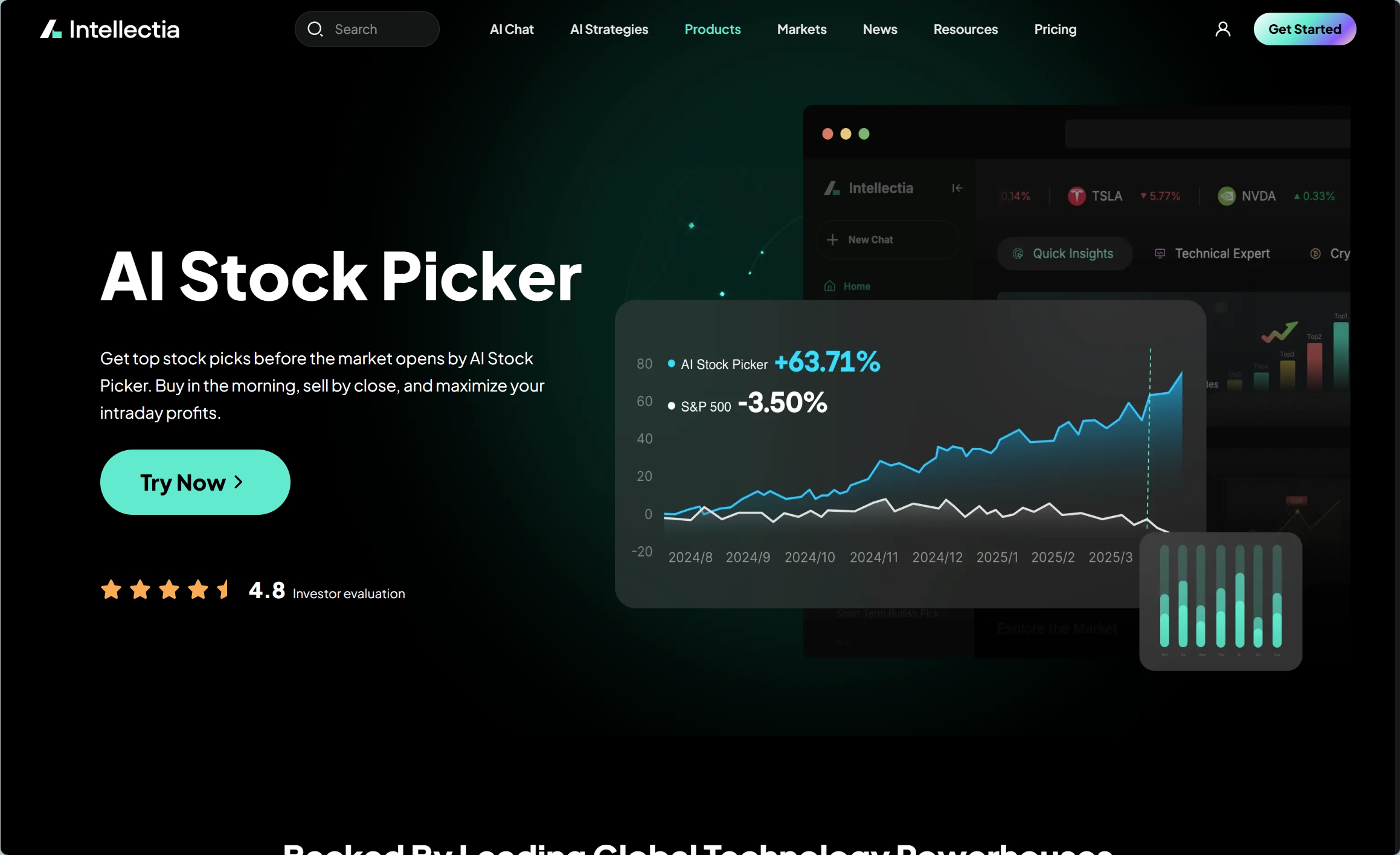
For investors evaluating whether SpaceX fits their portfolio strategy, Intellectia's AI-powered stock picker can help identify complementary investments in the aerospace, telecommunications, and AI infrastructure sectors.
Key Risk Factors
Despite compelling growth prospects, SpaceX faces substantial risks that investors must consider. Regulatory challenges could limit Starlink's ability to operate in certain markets or impose costly compliance requirements. Space debris concerns grow as constellation size increases, potentially triggering operational restrictions or liability exposure. Geopolitical tensions might restrict SpaceX's access to international markets or government contracts in an increasingly competitive space domain.
Technological execution risks remain significant, particularly regarding Starship development. The vehicle must achieve reliability levels suitable for human spaceflight while dramatically reducing costs—objectives that have eluded the aerospace industry for decades. A catastrophic accident involving crewed missions could halt progress for years and damage the company's reputation irreparably. Competition, while currently limited, could intensify if competitors successfully develop reusable launch capabilities or alternative satellite technologies.
Valuation Sustainability
The fundamental question facing SpaceX investors is whether the company can grow into its $2 trillion valuation before market patience expires. At current revenue levels, SpaceX would need to increase sales tenfold while maintaining margins to approach valuation multiples typical of mature technology companies. This growth trajectory requires flawless execution across multiple complex initiatives including Starship commercialization, Starlink global expansion, and AI infrastructure deployment.
History offers cautionary examples of visionary companies that struggled to justify peak valuations. Tesla itself experienced multiple 50%+ drawdowns as investors debated appropriate pricing for disruptive growth stories. SpaceX's lack of profitability and dependence on future execution creates vulnerability to sentiment shifts or operational setbacks. Investors must possess both conviction in the space economy's long-term potential and tolerance for significant volatility as the company navigates its growth phase.
Conclusion
SpaceX's record-breaking IPO represents a watershed moment for both the company and public markets. The successful $75 billion offering and subsequent trading performance validated investor appetite for transformative aerospace and telecommunications businesses, even at unprecedented valuations. With Starlink driving revenue growth, Starship promising to expand addressable markets, and Bitcoin holdings providing exposure to digital asset appreciation, SpaceX offers a unique combination of mature cash generation and speculative upside potential.
However, the $2 trillion valuation assumes flawless execution on ambitious multi-year initiatives while maintaining technological leadership against well-funded competitors. The company must scale revenues dramatically, achieve sustainable profitability, and navigate regulatory and geopolitical complexities to reward long-term shareholders. These challenges are surmountable but not guaranteed, making SpaceX appropriate primarily for investors with high risk tolerance and extended investment horizons.
For those seeking exposure to space economy growth with reduced single-stock risk, consider using Intellectia's comprehensive screening tools to build diversified portfolios spanning aerospace, satellite communications, and AI infrastructure sectors. The platform's AI-powered analysis can help identify opportunities that complement SpaceX exposure while managing concentration risk in this exciting but volatile frontier market.
SpaceX has always aimed for the stars—now public market investors have the opportunity to join that journey, provided they buckle in for what promises to be a volatile but potentially transformative ride.