
Key Takeaway
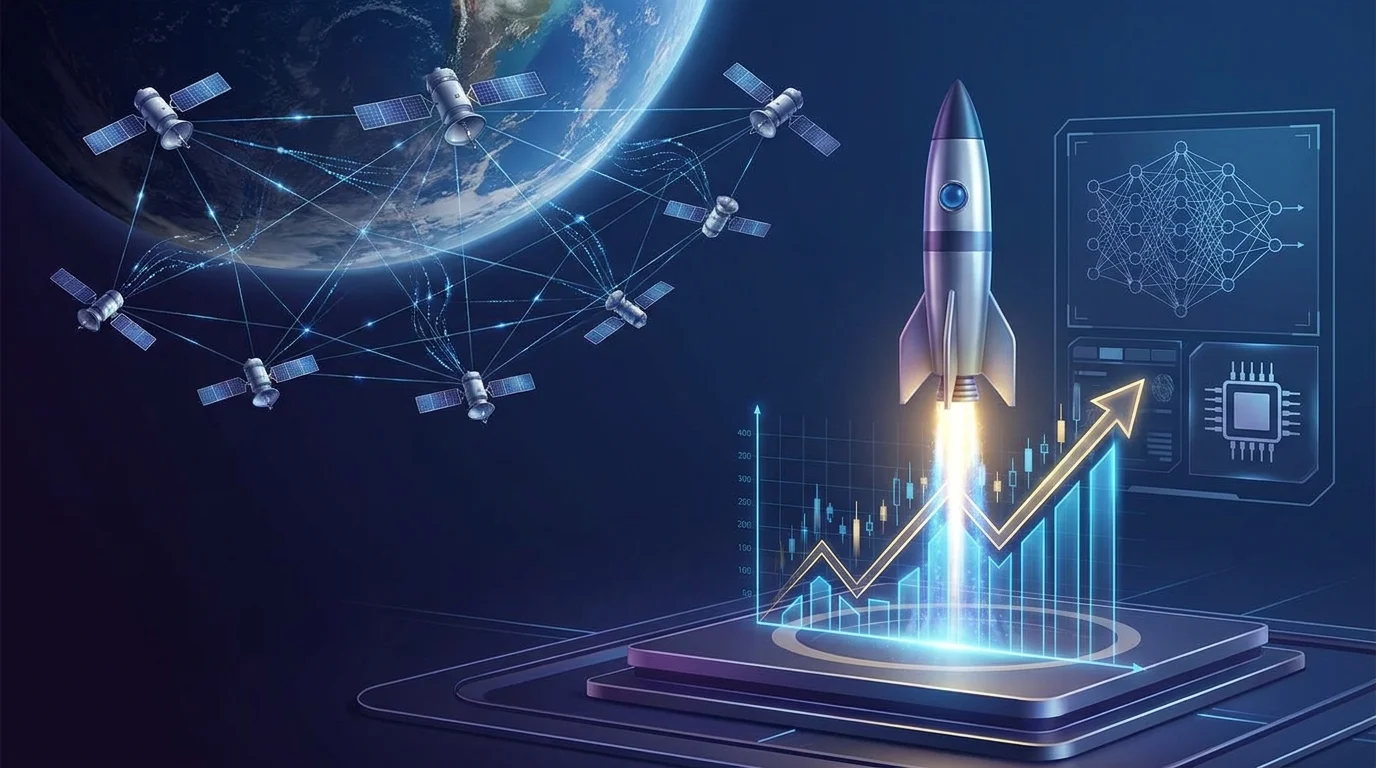
SpaceX is making history with the largest initial public offering ever, pricing its shares at $135 and commanding a staggering $1.8 trillion valuation that would place it among the world's most valuable companies immediately upon debut. This unprecedented IPO represents far more than a space launch company going public—it signals the convergence of satellite communications, artificial intelligence infrastructure, and the commercialization of space into a single investable entity. With Starlink driving profitable growth while Starship and xAI investments burn billions, investors face a complex proposition: buy into Elon Musk's vision of a multi-planetary, AI-powered future at a premium valuation that assumes execution perfection across multiple frontiers simultaneously.
The numbers tell a story of both tremendous opportunity and significant risk. SpaceX generated approximately $18.6 billion in total revenue for 2025, with Starlink's connectivity division contributing roughly $11.4 billion—a 61% share of overall company revenue and the only segment currently generating operating profits. However, the company's aggressive expansion into AI through the xAI acquisition consumed $6.4 billion in capital expenditures, while Starship development continued to rack up substantial losses. At a $1.8 trillion valuation, SpaceX would trade at approximately 96 times its 2025 revenue, a multiple that dwarfs even the most richly valued technology companies and implies growth rates that no company in history has achieved.
For investors considering the SPCX IPO, the fundamental question extends beyond traditional valuation metrics. This offering represents a bet on the commercialization of low Earth orbit, the expansion of global internet connectivity, and the buildout of AI infrastructure at a scale that could reshape multiple industries. The strategic positioning is compelling: Starlink provides the cash-generating foundation, the launch business offers access to orbit, and the AI division through xAI aims to capture what Musk estimates could become a $26.5 trillion addressable market. Yet the execution challenges are equally formidable, requiring simultaneous success in aerospace engineering, satellite operations, and frontier AI development.
The Historic SpaceX IPO: Breaking Down the Numbers
SpaceX has priced its initial public offering at $135 per share, raising approximately $75 billion in fresh capital in what instantly becomes the largest IPO in history. The offering values the company at roughly $1.77 trillion, a figure that would make SpaceX more valuable than Berkshire Hathaway, Eli Lilly, and potentially Walmart depending on market movements at debut. This valuation represents a dramatic premium to SpaceX's last private funding round, reflecting both the company's progress since then and the extraordinary investor demand for exposure to the space and AI themes.
The IPO structure itself reveals strategic thinking about market timing and investor appetite. By pricing at $135, SpaceX positioned itself at the upper end of the expected range, suggesting strong institutional demand during the abbreviated roadshow. The company reportedly received orders for more than ten times the shares available, a level of oversubscription rarely seen in offerings of this size. This enthusiasm reflects several converging factors: the scarcity of pure-play space investments in public markets, the AI infrastructure narrative that has driven technology valuations higher, and Elon Musk's proven track record of building transformative companies despite skepticism about near-term profitability.
For retail investors, the allocation structure matters as much as the price. SpaceX has indicated that a portion of the offering will be reserved for retail investors through participating brokerages, though the exact percentage remains undisclosed. Historical precedent from other high-profile IPOs suggests that retail allocation will be limited and potentially rationed based on account history or relationship with underwriters. Those able to secure shares at the IPO price face a different risk-reward profile than those buying in the aftermarket, where prices could gap significantly higher or face pressure from valuation concerns.
Business Model Breakdown: Three Pillars Driving Growth
SpaceX operates through three distinct business segments, each with different economics, growth trajectories, and strategic importance to the overall investment thesis. Understanding how these divisions interact and contribute to the consolidated financial picture is essential for evaluating whether the $1.8 trillion valuation can be justified by fundamentals over time.
Starlink: The Cash Cow Connectivity Business
Starlink has emerged as SpaceX's most important business segment, generating approximately $11.4 billion in revenue during 2025 and representing the company's only consistently profitable division. The satellite internet constellation now serves over 5 million subscribers across residential, commercial, and government segments, providing high-speed broadband to areas traditionally underserved by terrestrial infrastructure. This recurring revenue model offers predictable cash flows that help fund the company's more speculative ventures.
The financial performance of Starlink demonstrates the power of the subscription business model in space. The division posted operating income of $4.4 billion in 2025, translating to a healthy 39% operating margin that rivals the profitability of established technology platforms. This margin profile reflects several factors: the high upfront capital costs of satellite deployment are largely complete for the current constellation, subscriber acquisition costs have declined as brand awareness spreads, and pricing power remains strong in markets with limited competition. Starlink's growth trajectory accelerated in 2025, with revenue increasing 86% year-over-year as the service expanded into new geographic markets and commercial applications.
Looking ahead, Starlink's growth potential extends beyond simply adding subscribers. The company is developing higher-tier service offerings for enterprise customers, maritime applications for shipping fleets, and aviation connectivity solutions for commercial airlines. The Starshield variant provides specialized services for defense and government clients, opening another revenue stream with potentially higher margins due to security requirements and long-term contract structures. Starlink's addressable market remains substantial, with an estimated 4 billion people globally lacking reliable broadband access and terrestrial providers struggling to serve remote or rural areas cost-effectively.
Launch Services: Foundation for Everything Else
While Starlink generates the headlines and profits, SpaceX's launch business remains the foundational capability that enables everything else the company attempts. The Falcon 9 rocket has become the workhorse of the global space industry, having completed over 400 successful launches and established a cadence that now exceeds one mission per week. This operational tempo, achieved through reusable booster technology that dramatically reduces costs, has made SpaceX the dominant commercial launch provider worldwide.
The launch division generated approximately $3.8 billion in revenue during 2025, serving a diverse customer base that includes commercial satellite operators, government agencies, and SpaceX's own Starlink deployment needs. While smaller than Starlink in revenue terms, the launch business provides strategic value that extends beyond its financial contribution. Vertical integration with Starlink eliminates launch costs for internal satellite deployment, improving the economics of the connectivity business. The expertise and infrastructure developed through commercial launch operations directly support Starship development, creating synergies that would be difficult for competitors to replicate.
The competitive landscape in launch services has evolved significantly as SpaceX's success has attracted new entrants. Blue Origin's New Glenn rocket has begun commercial operations, offering an alternative for heavy-lift missions. United Launch Alliance continues to serve government customers with the Vulcan Centaur, while international providers like Arianespace and various Chinese state-owned enterprises maintain market presence. However, SpaceX's cost advantages from reusability and scale have proven difficult to match, with the company maintaining dominant market share in commercial launches and a growing presence in national security missions.
xAI Integration: The AI Infrastructure Bet
The February 2026 merger with xAI fundamentally transformed SpaceX's strategic positioning and investment narrative. By combining Elon Musk's frontier AI company with the space infrastructure platform, SpaceX created a vertically integrated entity capable of training AI models at unprecedented scale while potentially deploying inference capabilities in orbit. This integration represents the most speculative but potentially transformative component of the investment thesis.
xAI contributed approximately $3.2 billion in revenue during 2025, primarily from compute partnerships and API access to the Grok model family. However, the division consumed $6.4 billion in capital expenditures as SpaceX rapidly built out the Colossus data center infrastructure required for training next-generation AI models. The company's AI ambitions extend beyond model development to encompass what Musk describes as orbital data centers—computing facilities deployed in space that could offer unique advantages for certain AI workloads.
The strategic logic behind the xAI integration centers on infrastructure advantages that competitors cannot easily replicate. SpaceX controls the rockets that launch satellites, the Starlink constellation that provides global connectivity, and the terrestrial data centers that train AI models. This vertical integration could enable unique AI deployment scenarios, from edge computing applications that process data on satellites to potential orbital inference capabilities that reduce latency for global AI services. The company has already secured a landmark agreement with Anthropic, which committed to pay $1.25 billion per month for access to Colossus capacity over the next three years, validating demand for SpaceX's AI infrastructure.
Financial Deep Dive: Revenue, Margins, and Cash Flow
SpaceX's financial disclosures reveal a company in aggressive growth mode, prioritizing market capture and infrastructure buildout over near-term profitability. Understanding the underlying unit economics and cash flow dynamics is essential for modeling potential future returns at the current valuation.
Revenue Growth and Segment Mix
Total company revenue reached approximately $18.6 billion in 2025, representing roughly 40% year-over-year growth from the prior year. This expansion was driven primarily by Starlink subscriber additions and increased launch activity, with the xAI merger contributing to the topline starting in the first quarter. The revenue mix has shifted meaningfully over time, with Starlink growing from a minor contributor in 2021 to the dominant driver of financial performance today.
Looking forward, analyst estimates suggest SpaceX could approach $25 billion in revenue for full-year 2026, implying continued growth across all segments. However, this forecast depends on several execution milestones: Starlink subscriber additions must continue at current rates, launch cadence must increase to support both external customers and internal satellite deployment, and xAI must successfully commercialize its compute infrastructure. The concentration risk in Starlink remains significant, with any slowdown in connectivity growth having outsized impact on consolidated results.
Profitability and Operating Leverage
The company's profitability picture presents a mixed but improving narrative. Group adjusted EBITDA rose 23% in 2025, demonstrating operating leverage as the business scales. However, first quarter 2026 results showed a 35% decline in adjusted EBITDA, raising questions about margin sustainability as the company ramps xAI investments. The divergence between Starlink's strong margins and the losses in launch and AI divisions creates a complex profitability profile that requires segment-level analysis.
Starlink's 39% operating margin provides the foundation for overall profitability improvement as the business grows. However, this metric may face pressure from several factors: subscriber growth naturally slows as the service penetrates early adopter markets, competitive responses from terrestrial providers and satellite rivals could compress pricing, and the capital requirements for next-generation constellation upgrades will eventually require reinvestment. The key question is whether Starlink's cash generation can outpace investment needs in Starship and AI infrastructure long enough to achieve sustainable corporate profitability.
Capital Intensity and Funding Requirements
SpaceX remains extraordinarily capital intensive, with the company consuming billions in cash annually despite generating substantial revenue. Capital expenditures totaled approximately $15 billion in 2025, divided between Starship development, Starlink satellite manufacturing and launch, and the Colossus data center buildout. The IPO proceeds of $75 billion provide substantial runway, but ongoing funding needs may require additional capital raises depending on execution timelines.
The company's cash flow profile is further complicated by the nature of its businesses. Starlink generates predictable recurring revenue but requires ongoing satellite replacement as hardware ages in orbit. The launch business has lumpy revenue recognition tied to mission milestones. xAI's infrastructure investments are front-loaded, with the potential for significant returns if the company can capture meaningful share of the AI compute market. Investors must model multi-year cash flows and accept significant uncertainty about the timing and magnitude of future capital requirements.
Valuation Analysis: Is $1.8 Trillion Justified?
The $1.8 trillion valuation implies extraordinary assumptions about SpaceX's future growth and profitability. Comparing these metrics to public market comparables and modeling potential scenarios helps frame the investment decision.
Valuation Multiples in Context
At a $1.8 trillion valuation with approximately $18.6 billion in 2025 revenue, SpaceX would trade at roughly 96 times trailing revenue. This multiple exceeds even the most richly valued technology companies: Nvidia trades at approximately 30 times revenue, while cloud infrastructure providers like Cloudflare and Datadog command multiples in the 15-20x range. The valuation implies that SpaceX must either grow revenue dramatically faster than these peers or achieve superior profitability margins to justify the premium.
Forward-looking valuation metrics provide a somewhat more reasonable picture. Assuming SpaceX achieves $25 billion in 2026 revenue, the forward multiple drops to approximately 72 times sales. This remains elevated compared to any comparable public company but acknowledges the growth trajectory. Investors comparing SpaceX to mature aerospace or telecommunications companies will find the valuation difficult to justify, while those viewing it as a technology platform with unique infrastructure advantages may find the premium more acceptable.
Scenario Analysis: Bull, Base, and Bear Cases
A bull case scenario assumes SpaceX successfully executes across all three business segments. Starlink reaches 20 million subscribers by 2030 with maintained pricing power and margins. Starship achieves full reusability and dramatically reduces launch costs, enabling new applications like point-to-point Earth transport and orbital manufacturing. xAI captures a meaningful share of the AI infrastructure market, leveraging vertical integration to offer unique services. Under these assumptions, revenue could exceed $100 billion by 2030 with corporate margins approaching 25%, potentially supporting the current valuation or higher.
The base case assumes solid execution with some setbacks. Starlink grows to 12 million subscribers but faces increased competition and pricing pressure. Starship achieves orbital capability but development timelines extend, delaying cost reductions. xAI generates meaningful revenue but fails to achieve the breakthrough applications that would justify the infrastructure investment. In this scenario, 2030 revenue reaches $60-70 billion with margins in the 15-20% range, suggesting the current valuation may be somewhat stretched but not irrational for investors with long time horizons.
A bear case considers execution failures or market shifts that undermine the investment thesis. Starlink subscriber growth stalls as terrestrial broadband improves and alternative satellite providers gain traction. Starship development encounters technical barriers that prevent achieving the cost reductions necessary for new applications. xAI fails to differentiate from competitors with better-funded research operations and superior model capabilities. Under these conditions, SpaceX might generate $40 billion in 2030 revenue with sub-10% margins, making the current valuation appear severely stretched.
Comparable Company Analysis
SpaceX defies easy comparison to existing public companies due to its unique combination of businesses. Traditional aerospace companies like Lockheed Martin and Northrop Grumman trade at much lower multiples but lack growth profiles and technology exposure. Satellite operators like SES and Intelsat offer connectivity exposure but have struggled with declining legacy businesses. Technology infrastructure companies like Equinix and American Tower provide real asset-backed growth but lack the space and AI elements.
The most relevant comparison may be to Tesla at various stages of its development. Both companies were founded by Elon Musk, share a manufacturing and engineering culture, and faced similar skepticism about valuation premiums during their growth phases. Tesla traded at similarly elevated multiples during its rapid expansion phase and eventually grew into its valuation through execution and market expansion. However, Tesla's automotive business has clearer unit economics and a more defined total addressable market than SpaceX's multi-segment approach, making direct comparison imperfect.
Competitive Landscape and Moats
SpaceX's competitive position varies significantly across its three business segments, with some areas showing clear dominance while others face emerging threats. Understanding these dynamics is crucial for assessing the sustainability of growth and margins.
Launch Market Dominance
In commercial launch services, SpaceX has established a position that approaches monopoly status. The company's cost advantages from reusability, operational cadence, and vertical integration with Starlink create barriers that competitors struggle to overcome. Blue Origin's New Glenn has begun flying but faces a multi-year catch-up period to achieve similar reliability and cost structure. Chinese state-owned providers serve domestic markets but face regulatory and political barriers to competing for Western commercial customers.
The moat in launch services extends beyond technology to encompass operational expertise and infrastructure. SpaceX has refined its processes through hundreds of launches, developing institutional knowledge about vehicle performance, refurbishment economics, and mission assurance that cannot be easily replicated. The company's launch sites, manufacturing facilities, and supply chain relationships represent sunk investments that would cost competitors billions to match. This dominant position provides pricing power and mission assurance that underpins the overall investment thesis.
Starlink's First-Mover Advantage
Starlink benefits from being first to deploy a large-scale low Earth orbit constellation, creating network effects and regulatory advantages that protect its position. The sheer number of satellites in orbit—over 7,000 currently operational—provides coverage density that competitors struggle to match. The manufacturing scale achieved through internal production creates cost advantages for satellite deployment that new entrants cannot easily replicate.
However, competitive threats to Starlink are intensifying. Amazon's Project Kuiper has secured regulatory approval and begun deploying satellites, backed by the retail giant's deep pockets and existing customer relationships. OneWeb continues to expand its constellation targeting enterprise and government markets. Chinese state-backed constellation projects pose long-term competitive threats, particularly in markets where political considerations influence procurement decisions. Starlink's ability to maintain pricing power and subscriber growth in the face of this competition will significantly influence overall company valuation.
xAI and the AI Infrastructure Arms Race
The artificial intelligence landscape evolves rapidly, with established leaders like OpenAI and Google DeepMind commanding significant advantages in research talent, compute resources, and model capabilities. SpaceX's entry through xAI must overcome these headwinds while justifying the massive capital investments required for competitive infrastructure. The vertical integration with Starlink and launch capabilities provides potential differentiation, but the AI market ultimately values model performance and cost efficiency above architectural advantages.
The competitive dynamics in AI infrastructure differ fundamentally from space launch or satellite communications. Success depends on research breakthroughs and talent acquisition as much as capital deployment, areas where SpaceX's engineering culture may or may not translate effectively. The Anthropic partnership validates commercial demand for SpaceX's compute capacity, but long-term success requires building sustainable competitive advantages in a field where technology leadership can shift rapidly. Investors must weigh the potential for SpaceX to become a major AI infrastructure provider against the risk that capital intensity in this segment consumes returns generated by the more established businesses.
Risk Factors: What Could Go Wrong?
No investment thesis is complete without considering the risks that could undermine expected returns. SpaceX faces a unique combination of operational, financial, and market risks that investors must evaluate alongside the growth opportunities.
Execution and Technical Risks
SpaceX's ambitious roadmap depends on solving technical challenges that have historically defeated aerospace programs. Starship, the fully reusable super-heavy launch vehicle central to the company's Mars colonization vision and orbital infrastructure plans, remains in development with significant hurdles to overcome. The transition from successful test flights to reliable commercial operations involves engineering challenges that could delay timelines and increase costs beyond current projections.
The xAI integration introduces additional execution complexity as SpaceX attempts to build world-class AI capabilities while simultaneously managing space launch and satellite operations. The company's track record in manufacturing and engineering is exemplary, but artificial intelligence research differs fundamentally from hardware development. Failure to achieve competitive model capabilities or cost-efficient compute infrastructure would undermine the strategic logic for the xAI acquisition and the associated capital expenditures.
Financial and Valuation Risks
The $1.8 trillion valuation leaves minimal room for disappointment in execution or market conditions. A correction in technology valuations broadly, or AI-related stocks specifically, could compress SpaceX's trading multiple regardless of operational performance. The concentration of shareholder value in a single individual—Elon Musk owns a controlling stake—creates governance considerations and succession risks that investors in more broadly held companies do not face.
Capital markets may not remain as accommodating as they have been during the IPO process. If SpaceX requires additional funding beyond the IPO proceeds, market conditions or company performance could make such raises dilutive to existing shareholders. The company's cash consumption rate during the infrastructure buildout phase creates dependency on continued access to capital markets, a vulnerability that becomes more significant at elevated valuations.
Regulatory and Political Risks
SpaceX operates in heavily regulated industries where government decisions significantly influence competitive dynamics. Changes in space launch regulations, satellite spectrum allocations, or national security contracting rules could impact the company's operations and profitability. The global nature of Starlink's service exposes SpaceX to regulatory risk in international markets, where governments may favor domestic providers or impose restrictions on foreign satellite operators.
The political dimension of SpaceX's business extends beyond regulation to encompass Elon Musk's public profile and relationships with government officials. The company's contracts with NASA, the Department of Defense, and international space agencies depend on maintaining favorable relationships with policymakers. Controversies involving Musk or shifts in political priorities could impact SpaceX's access to government contracts or its ability to operate in certain markets.
Investment Implications: Who Should Buy SpaceX?
The SpaceX IPO presents a unique risk-reward profile that will appeal to certain investor types while being inappropriate for others. Understanding where this investment fits within a portfolio framework helps potential buyers make informed decisions.
For Growth-Oriented Investors
Investors with long time horizons and tolerance for volatility may find SpaceX compelling despite the valuation premium. The company operates in markets—space commercialization, global connectivity, AI infrastructure—that are likely to experience substantial growth over the coming decades. First-mover advantages and vertical integration create competitive moats that could sustain above-market returns for years. For those who believe in the transformative potential of these technologies and trust Elon Musk's execution track record, SpaceX offers exposure that is difficult to replicate through other public market investments.
The position sizing decision becomes critical given the valuation. Even believers in the long-term thesis should consider whether a $1.8 trillion starting valuation allows for the multi-bagger returns that justify venture-style risk. Dollar-cost averaging over time rather than deploying a full position at the IPO price may provide better risk-adjusted entry points if the stock experiences post-listing volatility.
For Value-Oriented Investors
Traditional value investors will likely find SpaceX challenging to justify at current prices. The valuation multiples exceed any reasonable benchmark, and the company's cash consumption profile contradicts value investing principles of capital efficiency and shareholder returns. The absence of dividends, share buybacks, or near-term profitability pushes any return of capital years into the future.
However, value investors might consider SpaceX as a watchlist candidate rather than an immediate purchase. If execution challenges emerge, competitive pressures intensify, or broader market corrections occur, the stock could trade at valuations that provide more attractive entry points. The underlying businesses—particularly Starlink—may eventually generate the cash flows necessary to support more reasonable valuations. Patience could be rewarded for those willing to wait for a better price.
For Thematic and Index Investors
SpaceX's inclusion in major indexes is likely but not immediate, with timing depending on index provider methodologies regarding IPO seasoning periods and liquidity requirements. Once included, passive funds tracking these indexes will be forced buyers regardless of valuation, potentially creating demand that supports the stock price. Active thematic investors focused on space, AI, or infrastructure themes will likely add SpaceX as a core holding given its prominence in these categories.
The thematic classification of SpaceX creates index construction challenges that could influence trading dynamics. Depending on how index providers categorize the company, it could become a significant weighting in technology, communication services, or industrials indexes. This classification uncertainty adds another variable for investors to monitor as the stock begins trading.
The Bottom Line
SpaceX's historic IPO offers investors a unique opportunity to participate in the commercialization of space and the buildout of AI infrastructure through a single entity with unmatched vertical integration. The $1.8 trillion valuation reflects genuine strategic advantages in launch services, a rapidly growing satellite connectivity business, and potential breakthrough applications in artificial intelligence. For investors with conviction in these themes and tolerance for volatility, SPCX represents a compelling long-term holding despite the premium entry price.
However, the valuation leaves minimal margin for error. SpaceX must execute flawlessly across multiple complex businesses while scaling revenue and eventually achieving profitability at levels unprecedented in the industries it serves. Competition is intensifying in all three segments, capital requirements remain substantial, and the concentration of control in Elon Musk creates governance considerations. Investors buying at the IPO price are paying for perfection and then some.
The prudent approach for most investors may be to start with a smaller position than the hype suggests, leaving room to add on weakness if execution challenges emerge or market conditions create better entry points. SpaceX is likely to remain a volatile, news-driven stock for years as the company works to grow into its valuation. Those who believe in the long-term vision but question the near-term price can afford to be patient—the space revolution is just beginning, and there will be opportunities to participate at more attractive valuations for those willing to wait.
For investors seeking exposure to the themes driving SpaceX's valuation without the single-stock risk, consider using Intellectia's AI stock screener to identify related opportunities in satellite technology, AI infrastructure, and aerospace supply chains.
Conclusion
SpaceX's $1.8 trillion IPO marks a watershed moment for both the space industry and public markets. The offering validates decades of private investment in space commercialization while setting a new benchmark for technology valuations in the AI era. Whether this valuation proves sustainable depends on execution across Starlink's global expansion, Starship's development milestones, and xAI's emergence as a competitive AI infrastructure provider.
The investment case for SPCX rests on a simple but powerful thesis: SpaceX has assembled unique capabilities in launch, connectivity, and computing that position the company to capture significant value from three of the most transformative technological trends of our time. The vertical integration that allows Starlink to launch satellites on SpaceX rockets, connected through SpaceX networks, and eventually processed by SpaceX AI infrastructure creates competitive advantages that will be difficult to replicate.
Yet investors must approach this opportunity with clear eyes about the risks and valuation. History offers few examples of companies successfully executing on multiple frontier technologies simultaneously while maintaining profitability. The $1.8 trillion starting point means that even successful execution may produce only modest returns from current levels, while setbacks could result in significant downside.
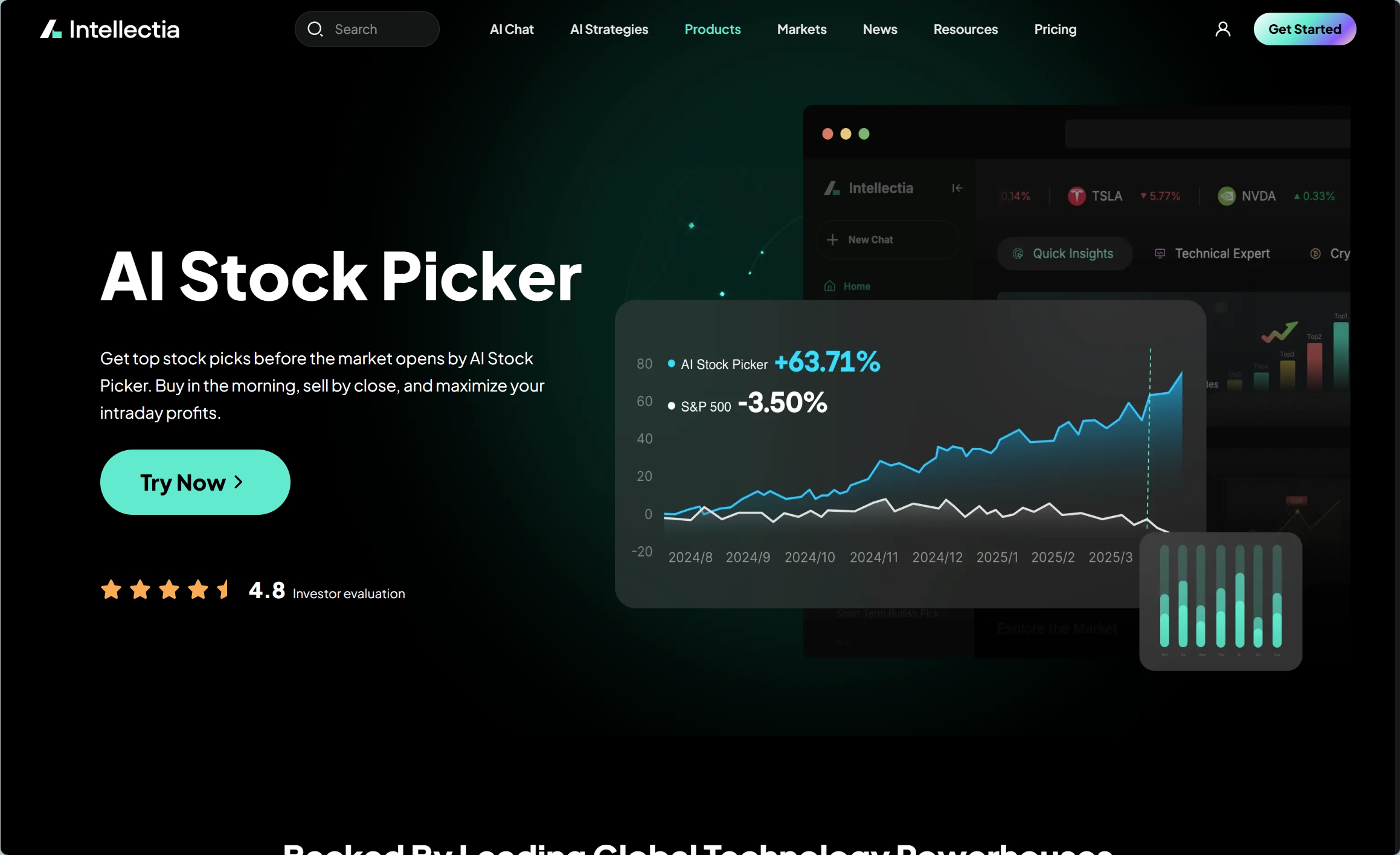
For those ready to take the journey, tools like Intellectia's AI stock picker can help monitor SpaceX and related space economy investments as this story unfolds. The space revolution that SpaceX has catalyzed will create winners and losers over the coming decades—informed investors with the right analytical tools will be better positioned to navigate this exciting but uncertain frontier.
Ready to explore AI-powered investment analysis? Sign up for Intellectia today and discover how artificial intelligence can enhance your investment decisions across the space economy and beyond.