
Key Takeaway
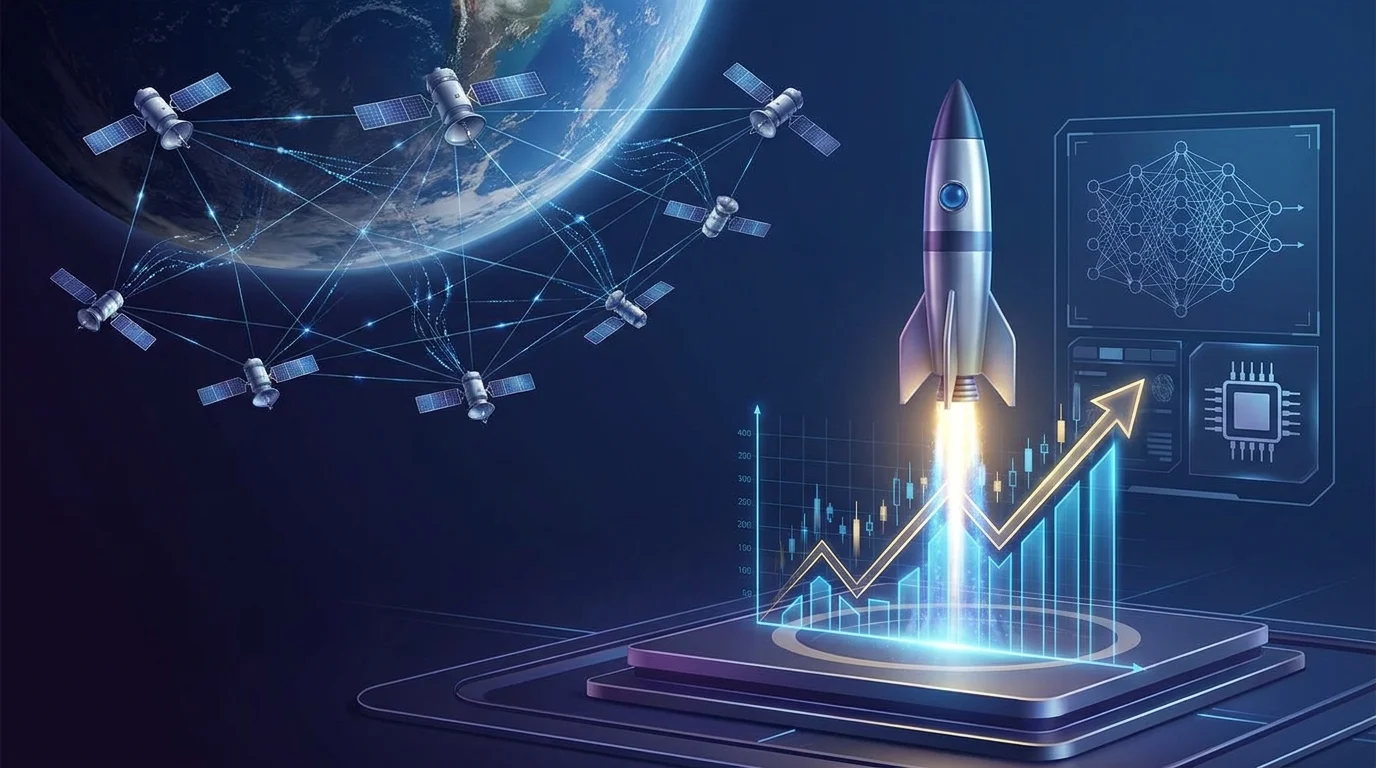
SpaceX has officially filed for what could become the largest initial public offering in history, targeting a staggering $1.75 trillion valuation that would make Elon Musk the world's first trillionaire. The company plans to list under the ticker symbol SPCX on both the Nasdaq and Nasdaq Texas exchanges, with Goldman Sachs, Morgan Stanley, and Bank of America leading the underwriting efforts. While the rocket and satellite giant generated $18.7 billion in revenue last year, it also posted a $4.9 billion loss, highlighting the capital-intensive nature of its ambitious mission to make humanity multiplanetary.
For investors, this IPO represents a unique opportunity to gain exposure to the rapidly expanding commercial space economy, which SpaceX estimates has a total addressable market of $28.5 trillion. However, the filing also reveals significant risks, including regulatory challenges, intense capital requirements, and the company's explicit warning that artificial intelligence could potentially destroy human civilization. The roadshow is expected to begin on June 8, with the company planning to commence trading next month.
Want to stay ahead of groundbreaking market opportunities like the SpaceX IPO? Sign up for Intellectia.ai to receive AI-powered alerts on major market events and IPO announcements before they hit the mainstream.
The Historic Scale of SpaceX's Market Debut
SpaceX's public offering isn't just another tech IPO—it represents a watershed moment for both the financial markets and the space industry. At $1.75 trillion, the valuation would exceed that of many sovereign nations' annual GDP and would rank among the most valuable companies globally upon debut. This unprecedented figure reflects investor confidence in SpaceX's dominant position in the commercial launch market and the explosive growth potential of its Starlink satellite internet constellation.
The sheer magnitude of this IPO signals a fundamental shift in how Wall Street views the space economy. Previously considered a niche sector reserved for government contractors and specialized defense companies, space is now being recognized as a legitimate investment category with trillion-dollar potential. SpaceX's ability to achieve profitability in its launch division while rapidly scaling Starlink has demonstrated that commercial space ventures can generate substantial returns, paving the way for this historic market debut.
Understanding the Financial Fundamentals
SpaceX's financial disclosures reveal a company operating at massive scale while still prioritizing growth over near-term profitability. The $18.7 billion in annual revenue represents extraordinary growth for a company that was privately held just years ago, while the $4.9 billion loss underscores the enormous capital requirements of developing reusable rockets, satellite constellations, and next-generation spacecraft like Starship.
Investors should understand that these losses are largely by design. SpaceX has consistently reinvested revenue into research and development, manufacturing capacity, and infrastructure—including the ambitious Starlink constellation that now comprises thousands of satellites. This capital-intensive approach has created significant competitive moats, as potential rivals would need to invest tens of billions of dollars to replicate SpaceX's capabilities. The company's decision to raise capital through a public offering rather than additional private funding suggests management believes the public markets will provide better valuation and liquidity for its next phase of growth.
The Starlink Growth Engine
While SpaceX's rocket launch business generates significant revenue and media attention, Starlink represents the company's primary growth engine and the key driver of its valuation. The satellite internet constellation has grown from an experimental concept to a service with millions of subscribers worldwide, providing high-speed internet access to previously unserved and underserved regions. The service has proven particularly valuable for remote communities, maritime operations, aviation, and emergency response scenarios.
Starlink's business model benefits from several powerful dynamics that excite investors. The service generates recurring monthly revenue with relatively low customer acquisition costs in markets where it's often the only viable high-speed option. As the constellation expands and ground infrastructure improves, margins should improve significantly. Additionally, SpaceX is developing direct-to-cell capabilities that could disrupt the traditional telecommunications industry by providing satellite-based smartphone connectivity. The company has also secured major government contracts for Starlink services, adding revenue stability and credibility to the platform.
Ready to analyze satellite and telecom stocks with institutional-grade tools? Try Intellectia.ai's AI Screener to discover companies riding the space economy wave.
Starship and the Multiplanetary Mission
SpaceX's ultimate ambition extends far beyond Earth's orbit. The company's Starship program aims to develop a fully reusable spacecraft capable of carrying humans to Mars and establishing permanent settlements on the red planet. This ambitious vision, while seemingly science fiction to skeptics, has attracted a devoted following of investors who believe that becoming humanity's first multiplanetary species represents the ultimate investment opportunity.
The IPO filing reveals that SpaceX expects Starship to conduct its first payload delivery to orbit in the second half of 2026—a critical milestone that would demonstrate the vehicle's commercial viability. Starship's capabilities extend beyond Mars colonization; the spacecraft is also designed to deploy larger Starlink satellites, service orbital destinations, and potentially support lunar missions under NASA's Artemis program. Success with Starship would unlock entirely new markets including space manufacturing, asteroid mining, and orbital solar power generation.
Risks and Regulatory Challenges
Despite the excitement surrounding SpaceX's public debut, investors must carefully consider the substantial risks outlined in the company's S-1 filing. The aerospace industry is heavily regulated, with multiple federal agencies including the FAA, FCC, and Department of Defense exercising oversight. Any delays in obtaining necessary approvals for launches, spectrum allocation, or export licenses could significantly impact operations and revenue.
The competitive landscape is also intensifying. While SpaceX currently dominates commercial launch with its reusable Falcon rockets, competitors including Blue Origin, United Launch Alliance, and international providers are developing their own reusable systems. In the satellite internet market, Amazon's Project Kuiper and other constellation operators represent potential threats to Starlink's market position. Additionally, geopolitical tensions could impact SpaceX's ability to operate in certain markets or secure government contracts.
Perhaps most unusually, SpaceX's filing explicitly warns investors about existential risks from artificial intelligence. The company states that AI could potentially destroy human civilization, reflecting Elon Musk's well-documented concerns about advanced AI systems. While this warning may seem out of place in a financial document, it underscores the long-term thinking that characterizes SpaceX's approach to risk assessment.
Elon Musk's Central Role and Governance
Elon Musk's involvement with SpaceX represents both the company's greatest asset and a significant governance consideration for investors. As the largest shareholder with approximately 1 billion shares, Musk's vision and determination have driven SpaceX's success from its founding. His ability to attract top engineering talent, secure government contracts, and maintain public attention has been instrumental in the company's growth.
However, the IPO filing acknowledges that Musk's attention is divided among multiple companies including Tesla, X (formerly Twitter), xAI, The Boring Company, and Neuralink. Investors must consider whether SpaceX will receive adequate attention once it becomes a public company with quarterly reporting requirements and shareholder expectations. The company's dual-class stock structure will ensure Musk maintains voting control, which could limit minority shareholders' ability to influence strategic decisions.
The filing also reveals some unusual elements of SpaceX's corporate culture, including references to making life multiplanetary and understanding the true nature of the universe as corporate objectives. This reflects Musk's philosophical approach to business, where financial returns serve a larger purpose of advancing human civilization.
Market Impact and Trading Considerations
The SpaceX IPO is expected to have significant ripple effects across financial markets. As potentially the largest offering in history, it will absorb substantial investment capital that might otherwise flow to other equities. The sheer size of the offering could temporarily impact liquidity in the technology sector and potentially influence Federal Reserve policy considerations regarding asset valuations.
For individual investors, gaining access to SPCX shares at the IPO price may prove challenging. Institutional investors and high-net-worth clients of the underwriting banks will likely receive priority allocation. Retail investors should be prepared for significant price volatility in the initial trading days, as valuation expectations and supply-demand dynamics work themselves out in the public market.
Looking for professional-grade analysis of IPO opportunities and market timing? Explore Intellectia.ai's premium features designed for serious investors who want an edge in today's competitive markets.
Investment Thesis and Valuation Debate
The $1.75 trillion valuation implies extraordinary growth expectations that investors must carefully evaluate. Proponents argue that SpaceX's combination of launch dominance, Starlink's recurring revenue potential, and Starship's disruptive capabilities justify a premium valuation comparable to the most valuable technology companies. They point to the company's proven execution, strong competitive position, and massive addressable markets as evidence that current valuations could prove conservative.
Skeptics counter that the valuation already prices in decades of perfect execution across multiple complex programs. The $4.9 billion annual loss raises questions about the path to sustainable profitability, particularly given the capital requirements of the Starship program and continued Starlink expansion. Traditional aerospace and telecommunications valuations would suggest SpaceX is trading at significant premiums, requiring the company to successfully execute on multiple ambitious growth initiatives simultaneously.
Conclusion
SpaceX's historic IPO represents a defining moment for both the space industry and public markets. The company's $1.75 trillion valuation reflects genuine achievements in rocket reusability, satellite deployment, and commercial space services, while also pricing in ambitious future plans including Mars colonization and interplanetary commerce. For investors, SPCX offers exposure to a truly unique business with enormous growth potential and significant competitive advantages.
However, the risks are equally substantial. SpaceX operates in a capital-intensive industry with complex regulatory requirements, intense competition, and technological challenges that could delay or derail key programs. The company's losses, while strategic, highlight the financial demands of its ambitious roadmap. Elon Musk's central role creates both opportunity and governance considerations that investors must weigh carefully.
For those considering an investment in SpaceX, the key question is whether they believe in the multiplanetary mission and are willing to tolerate the volatility and risks inherent in such an ambitious venture. The IPO will undoubtedly attract significant attention and capital, but long-term success will depend on execution across Starship development, Starlink profitability, and the eventual opening of entirely new space-based markets.
Don't miss the next major market opportunity. Sign up for Intellectia.ai today and let our AI-powered platform help you identify and analyze groundbreaking investment opportunities like the SpaceX IPO before they become mainstream news.