

Key Takeaway
The S&P 500 achieved another historic milestone in May 2026, closing at 7,501.24 as technology stocks continued their relentless march higher. This remarkable achievement came despite mounting evidence of persistent inflationary pressures, with wholesale prices surging 6% annually and core CPI remaining well above the Federal Reserve's 2% target. The Nasdaq Composite joined the celebration, reaching 26,635.22 as artificial intelligence-related companies led the charge.
What makes this rally particularly fascinating is the underlying tension between headline market performance and economic fundamentals. While benchmark indices print fresh records, traders are increasingly pricing in nearly a 40% probability of stagflation by year-end—a scenario characterized by stagnant growth combined with persistent inflation. The divergence between mega-cap technology names and the broader market has created a narrow leadership structure that demands careful navigation from investors seeking sustainable returns.
For those wondering whether to chase this rally or exercise caution, the data suggests a nuanced approach. The conditions supporting this advance—strong earnings from AI leaders, resilient consumer spending, and optimism around regulatory clarity for cryptocurrencies—remain intact but vulnerable to shifting monetary policy expectations. Understanding these dynamics is essential for positioning portfolios in an environment where record highs and economic uncertainty coexist.
The Inflation Reality: Hotter Than Expected
April's inflation report delivered an unwelcome surprise to market participants who had grown comfortable with the narrative of moderating price pressures. The Consumer Price Index jumped significantly more than the 0.5% increase economists had forecasted, representing the largest monthly increase since March 2022. Core CPI, which excludes volatile food and energy components, rose 0.4% for the month and 2.8% annually—levels that remain uncomfortably above the Federal Reserve's stated targets.
Perhaps more concerning for policymakers was the Producer Price Index data, which revealed wholesale inflation accelerating at a 6% annual pace. This marked the most aggressive wholesale price increase since 2022, with the monthly PPI advance of 1.4% dramatically overshooting expectations. The PPI reading carries particular significance because producer prices typically lead consumer prices, suggesting that inflationary pressures may persist longer than previously anticipated.
Capital Economics Chief North America Economist Stephen Brown noted that these developments would likely heighten Federal Reserve concerns about "renewed signs of food inflation accelerating." The combination of rising gasoline prices and elevated food costs creates a particularly troublesome dynamic because these categories influence household inflation expectations more directly than other components of the price basket. When consumers experience higher costs at the grocery store and gas pump daily, their expectations about future inflation become unanchored—a scenario central bankers desperately seek to avoid.
The bond market responded to these inflation prints with increased volatility in Treasury yields, as traders recalibrated expectations for Federal Reserve policy trajectories. While equity markets initially shrugged off the data, the persistence of inflation above target levels raises legitimate questions about whether the central bank can maintain its current policy stance indefinitely without risking either economic overheating or a more aggressive tightening cycle that could ultimately derail the expansion.
Tech Sector Dominance: The AI Engine
Artificial intelligence has evolved from a promising technological theme into the primary driver of equity market returns, with semiconductor and mega-cap technology companies accounting for an outsized portion of 2026's gains. Alphabet delivered a stunning 34% rally in April alone—its strongest monthly performance since 2004—following first-quarter results that exceeded expectations across cloud computing, advertising, and the company's autonomous vehicle division Waymo.
The breadth of Alphabet's outperformance illustrates how AI adoption is permeating multiple business segments simultaneously. Google Cloud has emerged as a major beneficiary of enterprise AI migration, while the core search advertising business has demonstrated resilience despite competitive threats from generative AI alternatives. Waymo's continued progress in autonomous transportation represents an often-underappreciated component of the company's long-term value proposition.
Meta Platforms, despite experiencing a 9% decline after raising capital expenditure guidance to a range of $125 billion, continues investing aggressively in AI infrastructure and model development. The company's Reality Labs division remains a significant capital consumer, but Meta's core social media properties are leveraging AI to improve content recommendations and advertising efficiency—initiatives that directly impact revenue per user metrics.
The semiconductor complex has provided the foundational hardware enabling this AI revolution, with chipmakers experiencing unprecedented demand for high-performance computing solutions. Data center spending has become a critical revenue driver across the industry, with companies racing to secure GPU capacity for training and inference workloads. This capital expenditure cycle shows few signs of abating, as enterprises across sectors race to deploy AI capabilities before competitors establish insurmountable advantages.
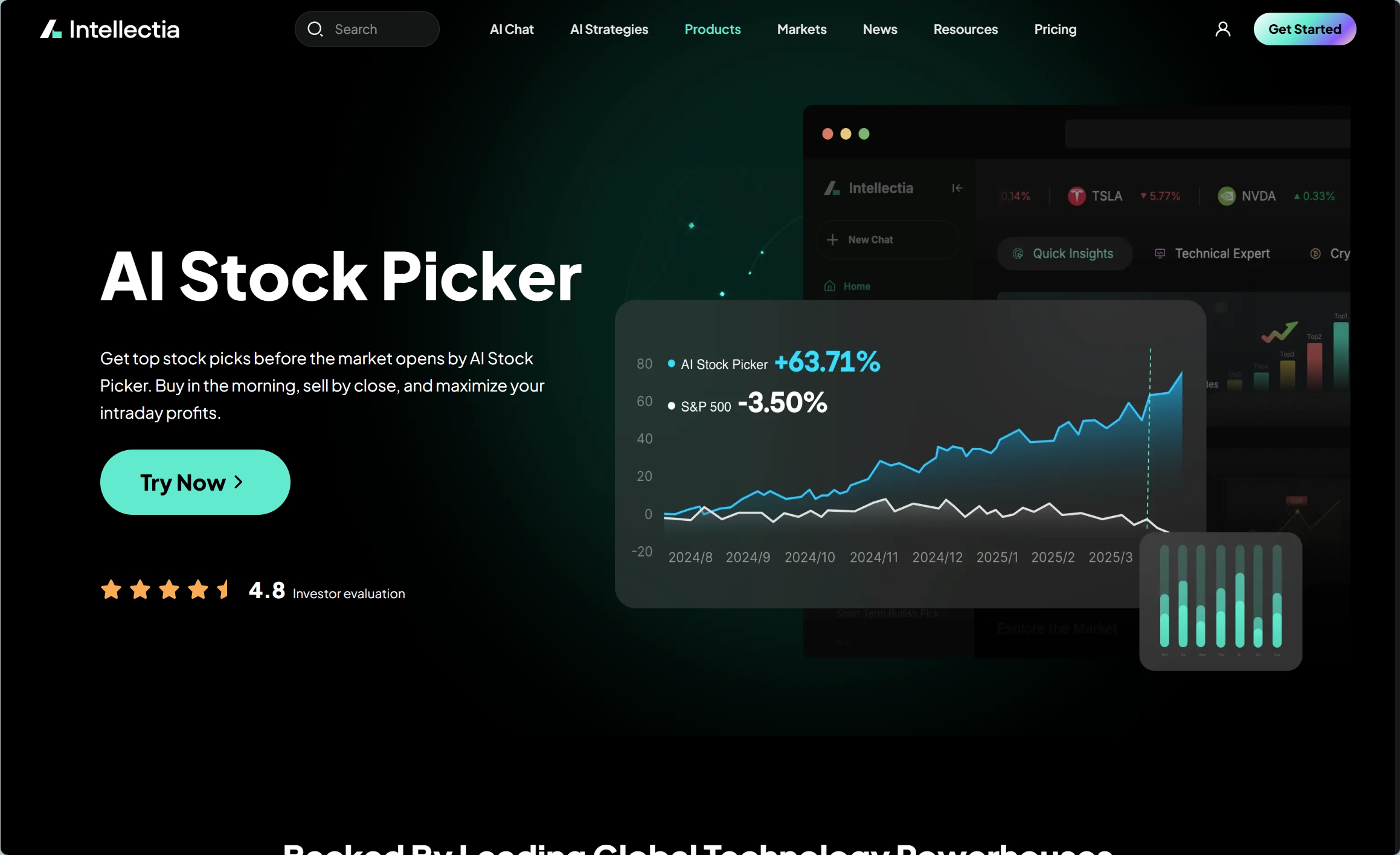
For investors evaluating technology exposure, the concentration of returns presents both opportunity and risk. The tools available at intellectia.ai's AI Stock Picker can help identify which companies are best positioned to capture value from AI deployment while managing valuation risks in a sector trading at premium multiples.
Stagflation Risks: The 40% Probability
Beneath the surface of record-breaking equity indices lurks a concerning narrative that sophisticated investors cannot afford to ignore. Derivatives markets are currently pricing approximately 40% odds of stagflation materializing before year-end—a scenario combining stagnant economic growth with persistent inflation that proved particularly challenging for traditional portfolio construction during the 1970s.
Stagflation represents a policy maker's nightmare because the conventional tools for addressing either inflation or growth become less effective when both problems coexist simultaneously. Rate cuts designed to stimulate activity risk exacerbating price pressures, while tightening measures to combat inflation can further suppress already-weak growth dynamics. This dilemma was last confronted by Federal Reserve Chairman Paul Volcker, whose aggressive rate increases ultimately broke inflation but at the cost of a severe recession.
Several factors contribute to current stagflationary concerns. The ongoing conflict in the Middle East continues influencing global energy markets, with oil prices remaining elevated and contributing to transportation and manufacturing cost pressures. Supply chain disruptions, while improved from pandemic-era extremes, persist in critical sectors including semiconductors and certain raw materials. Labor markets remain tight enough to support wage growth that, while positive for workers, contributes to service sector inflation.
Historical parallels to the 1970s are imperfect but worth considering. That decade's stagflation resulted from a combination of oil shocks, loose monetary policy, and productivity challenges. While today's economy differs structurally—with services comprising a larger share of activity and monetary policy having remained relatively disciplined—investors should recognize that the conditions preventing stagflation from taking hold require careful monitoring. Diversification across asset classes, geographies, and inflation-sensitive exposures remains the prudent posture for navigating these uncertainties.
Market Concentration: A Narrow Rally
One of the most concerning characteristics of the current market advance is its extreme concentration in a handful of mega-capitalization names. While headline indices celebrate new records, the underlying market breadth tells a more nuanced story. On several recent sessions, the majority of individual stocks actually closed lower even as the S&P 500 and Nasdaq achieved fresh highs—a divergence that historically often precedes periods of consolidation or correction.
This narrow leadership dynamic has significant implications for portfolio construction and risk management. Investors holding broad market index funds may feel adequately diversified, but the reality is that a small number of technology companies now drive an outsized portion of daily index movements. When these leaders eventually encounter headwinds—whether from regulatory scrutiny, valuation compression, or earnings disappointments—the impact on overall portfolio values could be substantial.
The concentration risk extends beyond individual stock selection to sector allocation decisions. Technology and communication services have consistently outperformed while more economically sensitive sectors including materials, industrials, and regional banks have struggled to maintain momentum. This sector dispersion reflects market participants' confidence in AI-driven productivity gains while expressing skepticism about traditional cyclical expansion.
For active investors seeking to navigate this environment, understanding the difference between market cap-weighted and equal-weighted index performance provides crucial insight. The significant gap between these measures highlights how dependent recent gains have been on continued strength in a limited number of names. Tools available through intellectia.ai's AI Screener can help identify opportunities beyond the mega-cap leaders while managing concentration risk through thoughtful diversification.
Cryptocurrency Regulation: Legislative Progress
While equity markets capture most headlines, the cryptocurrency sector experienced significant regulatory developments as the Senate Banking Committee convened to discuss legislation establishing a comprehensive framework for digital assets. This legislative activity coincided with notable price movements in Bitcoin and related stocks, reflecting market optimism about the potential for regulatory clarity that could accelerate institutional adoption.
Bitcoin's price action has remained closely correlated with technology stocks throughout 2026, trading around $80,242 after experiencing significant volatility. The leading cryptocurrency has delivered staggering returns since its early days, rising from approximately $0.06 in July 2010 to current levels—representing an increase of over 129 million percent. This extraordinary appreciation has cemented Bitcoin's position as the premier digital store of value, though its utility as a medium of exchange remains limited by transaction throughput constraints.
Coinbase and Strategy (formerly MicroStrategy), two of the most prominent publicly traded cryptocurrency proxies, experienced selling pressure alongside weakness in Bitcoin and Ethereum prices. These stocks have historically provided leveraged exposure to underlying cryptocurrency movements, amplifying both gains and losses for investors seeking equity-market access to digital asset themes.
World Liberty Financial, the crypto venture co-founded by President Trump and his sons, released a new governance proposal that would significantly extend token lock-up periods for early investors. Under the proposed structure, 80% of early investor holdings would remain locked for two years, followed by an additional two-year vesting period. This extended lock-up structure demonstrates the evolving approach to token economics as the industry matures beyond its speculative origins toward more sustainable long-term incentive alignment.
Investor Strategies: Navigating Record Highs
Confronting record-high equity markets alongside deteriorating inflation data and stagflation probabilities requires investors to balance optimism with prudent risk management. Several strategic approaches warrant consideration for portfolios positioned at these elevated levels.
Quality factor investing gains relevance when economic uncertainty increases. Companies with strong balance sheets, consistent cash flow generation, and pricing power to pass inflation costs to customers typically outperform during periods of margin pressure. These characteristics are particularly valuable when input costs rise and economic growth slows simultaneously—the core stagflationary scenario markets are beginning to price.
Dividend growth strategies offer another defensive orientation, providing income streams that can keep pace with inflation while potentially limiting downside participation during market corrections. Companies with long histories of dividend increases often possess the competitive advantages and financial discipline that translate to resilience during challenging economic environments.
International diversification remains underutilized by many domestic investors despite compelling relative valuations in developed and emerging markets. While U.S. technology leadership has justified premium valuations, the gap between American and international equity multiples has reached extremes that historically presage periods of relative outperformance from non-U.S. markets. Additionally, currency diversification provides implicit inflation protection for U.S.-based investors.
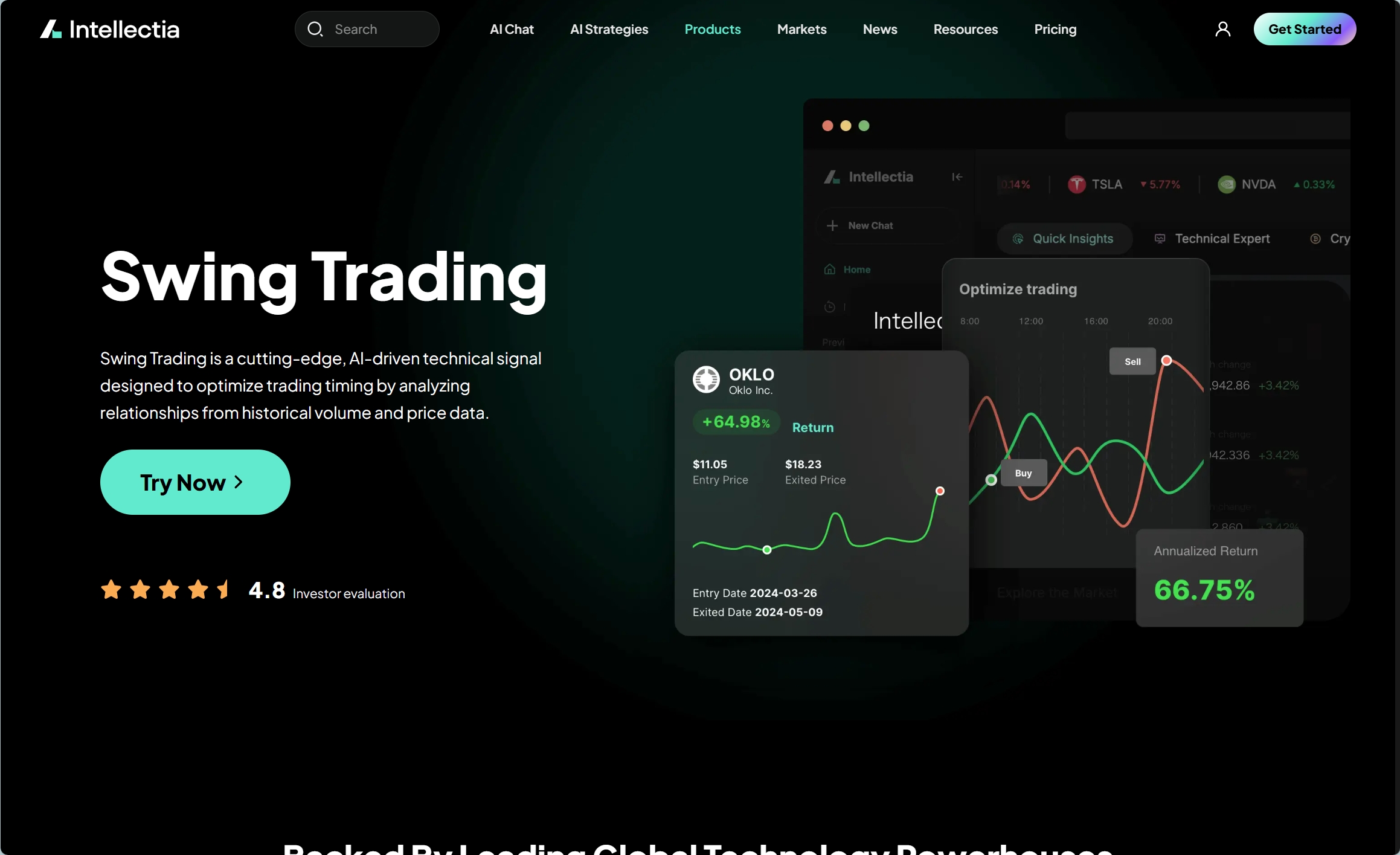
For those seeking to enhance their analytical capabilities during these complex market conditions, exploring the pricing and features at intellectia.ai provides access to AI-powered tools designed to identify opportunities and manage risk across diverse market environments. The platform's capabilities extend beyond simple screening to comprehensive portfolio analysis that accounts for factor exposures and macroeconomic sensitivities.
Cash Positioning: A Warning Signal?
One of the more intriguing developments accompanying recent record highs has been the concurrent increase in cash holdings among investors. Cash allocations have risen to approximately 3.3%, representing a notable defensive positioning that seems inconsistent with the aggressive risk-taking implied by equity index levels. This apparent contradiction suggests that while investors continue participating in the rally, many are simultaneously preparing for potential volatility.
The cash buildup reflects several potential motivations. Some investors may be taking profits from appreciated positions while maintaining core equity exposure through index funds. Others could be building liquidity reserves for opportunistic deployment during anticipated corrections. Still others may represent genuine risk reduction as concerns about stagflation and geopolitical instability mount despite market resilience.
Historical analysis suggests that elevated cash levels often precede market inflection points, though the direction of those inflections varies. Sometimes cash represents "dry powder" that eventually flows into equities and drives further gains. Other times it reflects accurately anticipated risks that subsequently materialize. The current cash position likely encompasses both motivations—investors who want to participate in potential further upside while maintaining protection against downside scenarios.
The relationship between cash levels and market performance also interacts with monetary policy expectations. If the Federal Reserve eventually pivots toward rate cuts to address economic slowing, the relative attractiveness of cash diminishes while equity valuations typically benefit from lower discount rates applied to future cash flows. Conversely, if inflation persists and forces the Fed to maintain or increase restrictive policy, cash maintains its appeal as a volatility buffer.
Conclusion
The S&P 500's journey to record highs above 7,500 in May 2026 represents a remarkable display of market resilience in the face of genuine economic headwinds. The divergence between headline index performance and underlying inflationary pressures creates a complex environment requiring thoughtful analysis rather than simple momentum-following strategies. Investors must weigh the genuine earnings power and competitive advantages of leading technology companies against valuation concerns and macroeconomic risks that could challenge current optimism.
The simultaneous existence of record equity prices and 40% stagflation probabilities encapsulates the uncertainty facing market participants. Historical precedent suggests that narrow rallies driven by concentration in a limited number of stocks often resolve through either broadening participation—which would validate the advance—or mean reversion that punishes late-cycle enthusiasm. Determining which scenario unfolds will require monitoring both corporate earnings trajectories and central bank policy responses to persistent inflation data.
For investors seeking to navigate these cross-currents, maintaining discipline around diversification, quality, and valuation remains essential. The temptation to chase momentum in AI-related names must be balanced against the risks inherent in concentrated positions at stretched multiples. Similarly, defensive positioning through cash and inflation-protected assets provides valuable optionality even if markets continue advancing.
Ready to enhance your market analysis with AI-powered tools? Sign up at intellectia.ai today and access comprehensive screening, analysis, and portfolio management capabilities designed for sophisticated investors. Whether you're evaluating individual opportunities or constructing resilient portfolios for uncertain times, the platform provides the analytical depth necessary to make informed decisions in record-setting markets.