
Key Takeaway
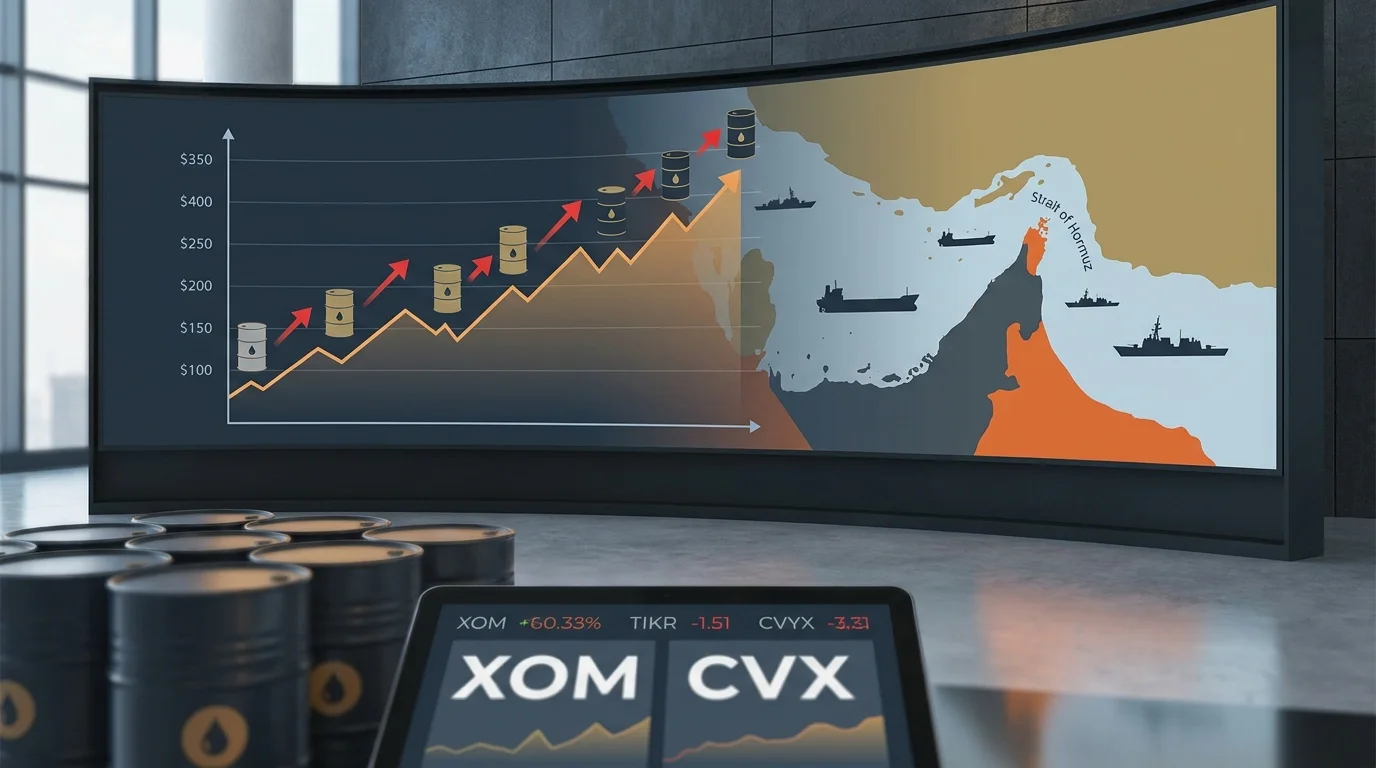
The Middle East oil crisis of 2026 has sent shockwaves through global energy markets, with Brent crude oil prices surging past $104 per barrel as the Iran war enters a critical phase. The closure of the Strait of Hormuz has removed over 500 million barrels of supply from the market, creating the largest supply disruption in modern energy history. For investors, this crisis presents both significant risks and compelling opportunities. Energy majors like ExxonMobil and Chevron stand to benefit from elevated oil prices, while the EIA forecasts Brent could peak at $115 per barrel in the second quarter before gradually declining later in the year.
The situation remains highly fluid as diplomatic efforts between the United States and Iran have stalled. President Trump's recent rejection of Iran's counterproposal has reignited fears of prolonged conflict, pushing oil prices higher despite broader market optimism. Investors should prepare for continued volatility while positioning their portfolios to capitalize on the energy sector's outperformance during this unprecedented supply crisis.

Understanding the Current Oil Price Surge
Oil markets have experienced their most dramatic price movement since the 1970s energy crisis, with Brent crude futures climbing to $104 per barrel and WTI crude reaching $98 per barrel. This represents a remarkable surge from the $70-75 range seen before the Iran conflict escalated in early 2026. The speed and magnitude of this price appreciation have caught many market participants off guard, forcing a rapid reassessment of energy sector investments.
The EIA's latest forecast provides crucial context for understanding where prices might head next. According to their Short-Term Energy Outlook, Brent crude is expected to increase from an average of $81 per barrel in Q1 2026 to a peak of $115 per barrel in Q2 2026. This projection assumes the conflict does not persist past April and that traffic through the Strait of Hormuz gradually resumes. However, if diplomatic efforts fail and the conflict extends into summer, prices could exceed even these elevated projections.
Several factors are driving this historic price surge beyond simple supply disruption. Market participants are pricing in significant geopolitical risk premiums, with traders factoring in the possibility of further escalation. Currency dynamics have also played a role, as concerns about inflation and safe-haven flows have influenced commodity pricing. Additionally, the synchronized nature of this supply shock occurring against a backdrop of already-tight inventories has amplified price sensitivity to any negative news flow.
The Iran War and Strait of Hormuz Crisis
The strategic importance of the Strait of Hormuz cannot be overstated. Approximately 20% of global petroleum consumption passes through this narrow waterway, making it one of the most critical chokepoints in the global energy infrastructure. Since late February 2026, Iran has effectively closed the strait to oil tanker traffic, removing roughly 18 million barrels per day from global markets. This represents the largest supply disruption in the history of the global oil market, according to the International Energy Agency.
The conflict's origins trace back to escalating tensions between Iran and Western powers, with hostilities breaking out after failed negotiations over Iran's nuclear program. What began as limited military engagements has evolved into a broader regional conflict, with recent Iranian attacks on commercial vessels and strikes targeting the United Arab Emirates. These developments have created a climate of extreme uncertainty, with energy markets struggling to price in the range of possible outcomes.
The economic consequences extend far beyond energy markets. Major economies, particularly in Europe and Asia, have been forced to draw down strategic petroleum reserves at unprecedented rates. India's Energy Minister recently projected under-recovery on fuel reaching approximately Rs 1,98,000 crore, highlighting the fiscal strain on import-dependent nations. These dynamics create a feedback loop where higher oil prices threaten economic growth, potentially reducing demand even as supply remains constrained.
Diplomatic efforts to resolve the crisis have proven challenging. President Trump's recent trip to China to meet with President Xi Jinping included discussions about technology and rare earth minerals, suggesting the conflict's broader geopolitical implications. However, the rejection of Iran's latest peace proposal has dashed hopes for an immediate resolution, with markets now pricing in the possibility of months rather than weeks of supply disruption.
Supply Disruption: The Numbers Behind the Crisis
To fully appreciate the magnitude of this crisis, investors must understand the scale of supply disruption. Over 500 million barrels of oil that would have normally reached global markets have been withheld since the Strait of Hormuz closure began. This volume represents nearly six days of global consumption, a deficit that cannot be quickly replaced through alternative sources or strategic reserve releases.
The composition of lost supply matters significantly for market dynamics. Middle Eastern crude, particularly from Saudi Arabia, Kuwait, and the UAE, represents some of the highest-quality, lowest-cost production globally. Replacement barrels from alternative sources often come at higher production costs and with different quality characteristics, creating inefficiencies in global refining operations. This quality mismatch has contributed to the steep price appreciation for specific crude grades most affected by the disruption.
Inventory data reveals the strain on global oil markets. OECD commercial petroleum inventories have declined at their fastest rate in recorded history, falling below the five-year average for the first time since 2014. Strategic petroleum reserves in major consuming nations are being drawn down at rates that, if sustained, would deplete emergency stocks within months rather than years. These inventory dynamics create a fragile market balance where even modest supply improvements could trigger significant price volatility.
The response from alternative producers has been constrained by limited spare capacity. While the United States has increased shale production, the incremental gains cannot offset losses from the Middle East. OPEC members with spare capacity, primarily Saudi Arabia and the UAE, have been unable to export through the blocked strait. This structural constraint on supply response means prices must rise sufficiently to destroy demand, creating a painful adjustment process for the global economy.
Top Energy Stocks to Buy During the Oil Crisis
For investors seeking to capitalize on elevated oil prices, the energy sector offers compelling opportunities. ExxonMobil stands out as the world's largest publicly traded oil company by market capitalization, with diversified operations spanning upstream production, refining, and chemicals. The company's scale and operational efficiency position it to generate exceptional free cash flow at current oil prices, potentially enabling accelerated share buybacks and dividend growth.
Chevron represents another high-quality option for investors seeking exposure to the energy sector. As the second-largest U.S. oil major, Chevron maintains a strong balance sheet and disciplined capital allocation approach. The company's integrated operations provide natural hedging against crude price volatility, while its low production costs ensure profitability even if prices moderate from current levels. Recent analyst commentary suggests Chevron offers the best balance of risk and reward among the supermajors.
Beyond the integrated giants, several other energy stocks merit consideration. Occidental Petroleum has emerged as a potential beneficiary of elevated prices, with Berkshire Hathaway's continued accumulation of shares signaling confidence in the company's prospects. ConocoPhillips, as one of the largest independent exploration and production companies, offers direct leverage to oil prices with a lower-cost structure than many competitors.
Phillips 66 provides exposure to the refining segment, which often benefits from wider crude spreads during supply disruptions. When high-quality Middle Eastern crudes become scarce, the price differential between various crude grades typically expands, improving margins for sophisticated refiners capable of processing diverse feedstocks. This dynamic can generate significant earnings improvement even if absolute oil prices stabilize.
For investors preferring diversified exposure, the Energy Select Sector SPDR Fund offers broad-based investment across the U.S. energy sector. However, individual stock selection may prove more rewarding during this crisis, as company-specific factors such as production mix, refining capacity, and geographic exposure will drive significant dispersion in returns. Active investors should focus on companies with strong balance sheets, low production costs, and operational flexibility to navigate an uncertain market environment.
EIA Price Forecasts and Market Outlook
The U.S. Energy Information Administration provides the most authoritative short-term outlook for oil prices, and their latest projections offer valuable guidance for investors. The EIA expects Brent crude to remain above $95 per barrel through April and May before declining below $80 in the third quarter as Strait of Hormuz transit gradually resumes. By year-end, their baseline scenario projects Brent around $70 per barrel, with an annual average for 2026 of approximately $88 per barrel.
However, these forecasts carry significant uncertainty, particularly regarding the timing of conflict resolution. If diplomatic efforts fail and the Strait of Hormuz remains closed through summer, prices could sustain triple-digit levels for an extended period. Conversely, a breakthrough in negotiations could trigger a rapid price correction as supply returns to market and risk premiums evaporate. This uncertainty creates both opportunity and risk for energy investors.
The demand side of the equation adds additional complexity. While high prices typically destroy demand over time, the current economic cycle shows unusual resilience. Global employment remains strong, consumer balance sheets are relatively healthy, and the post-pandemic recovery continues in many regions. These factors suggest demand destruction may occur more gradually than in previous oil crises, potentially sustaining higher prices for longer than historical patterns would suggest.
Longer-term structural factors also support energy investment. The global energy transition, while ongoing, has not progressed quickly enough to eliminate demand for hydrocarbons. Supply constraints from years of underinvestment in conventional oil projects, combined with growing electricity demand from AI data centers and electrification trends, create a supportive fundamental backdrop even after the current crisis resolves.
Investment Strategies for the 2026 Oil Crisis
Navigating the current energy market requires a nuanced approach that balances opportunity against risk. For conservative investors, dividend-paying energy majors like ExxonMobil and Chevron offer attractive income combined with potential capital appreciation. These companies have demonstrated capital discipline through previous cycles and are unlikely to repeat the excessive spending that destroyed shareholder value in the 2010s.
Growth-oriented investors might consider smaller exploration and production companies that offer greater leverage to oil prices. However, this approach requires careful stock selection, as companies with weak balance sheets or high production costs face existential risks if prices decline faster than expected. The key is identifying companies with low break-even costs, strong hedging programs, and management teams with proven track records of capital allocation.
Options strategies can provide exposure to energy price movements while limiting downside risk. Call options on oil ETFs or energy sector funds allow participation in continued price appreciation while defining maximum potential losses. More sophisticated investors might consider strategies involving oil futures, though these instruments require careful attention to roll costs and contango in the futures curve.
Sector rotation represents another approach for investors concerned about direct commodity exposure. Airlines, shipping companies, and chemical producers typically suffer from high oil prices, creating potential short opportunities or candidates for pair trades against energy producers. However, many of these companies have implemented hedging programs that may limit near-term earnings impact from oil price movements.

Risk management remains paramount in this volatile environment. Position sizing should reflect the uncertainty around both conflict resolution timing and ultimate price outcomes. Investors should consider trailing stops or options protection for significant energy positions, as the catalyst for rapid price moves in either direction could emerge with little warning from diplomatic developments.
Conclusion
The 2026 Middle East oil crisis represents a defining moment for energy markets and investment portfolios. With Brent crude surging past $104 per barrel and the EIA forecasting potential peaks at $115, investors face both significant risks and compelling opportunities. The closure of the Strait of Hormuz has removed over 500 million barrels of supply from global markets, creating supply constraints that will take months to resolve even under optimistic scenarios.
Energy stocks, particularly well-capitalized majors like ExxonMobil and Chevron, offer attractive risk-adjusted returns for investors positioned to benefit from elevated oil prices. These companies are generating exceptional free cash flow that supports both dividend growth and share buybacks, while their integrated operations provide natural hedging against market volatility.
However, the path forward remains highly uncertain. Diplomatic efforts could resolve the crisis quickly, triggering sharp price corrections, or conflict could escalate, pushing prices to levels that threaten global economic growth. Successful navigation of this environment requires careful attention to news flow, disciplined position management, and a clear-eyed assessment of risk tolerance.
For investors seeking to capitalize on this historic market dislocation while managing downside exposure, advanced analytical tools can provide crucial advantages. Discover how AI-powered analysis can help identify the best energy investment opportunities and optimize portfolio positioning during periods of market stress.
Ready to navigate the oil crisis with confidence? Sign up for Intellectia.ai today and unlock AI-powered insights that help you identify winning energy investments before the crowd.