
Key Takeaway
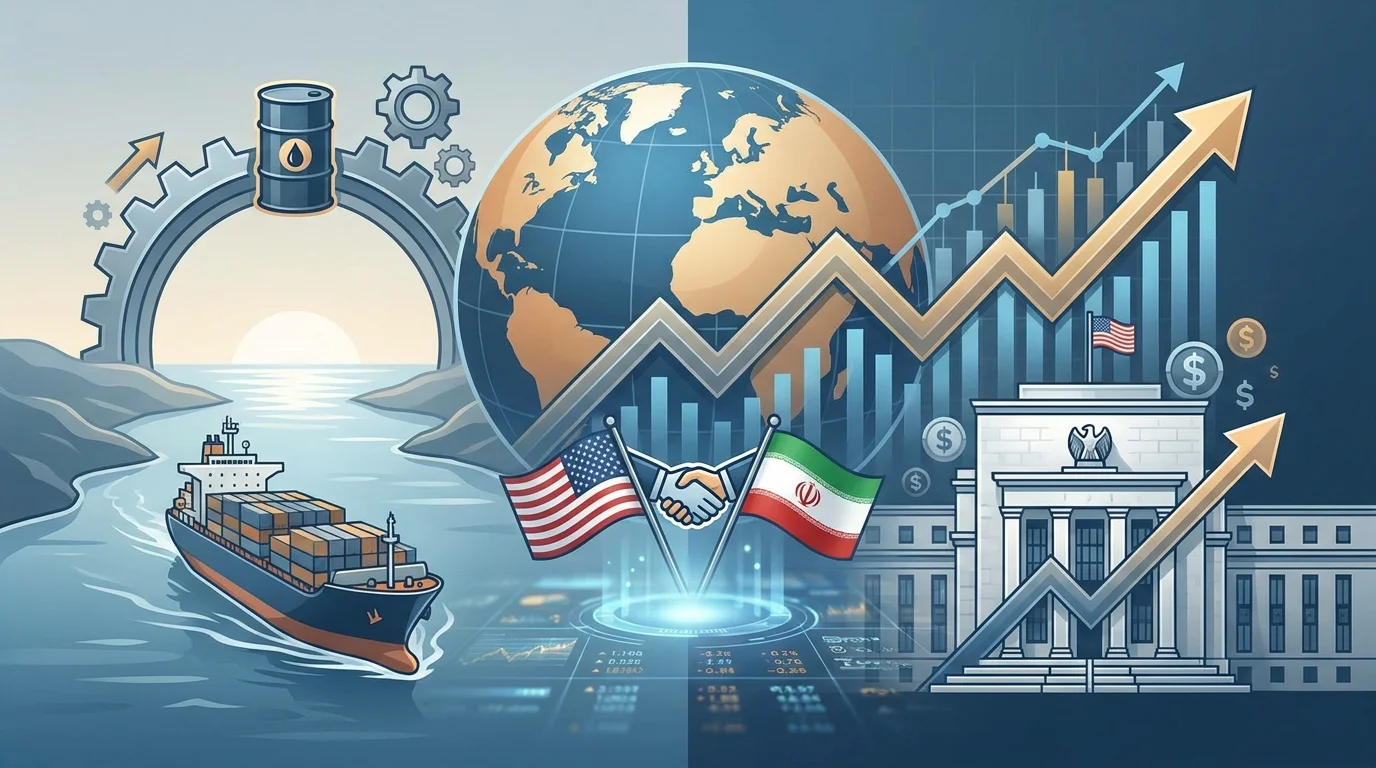
The 2026 Iran war has created unprecedented volatility in global energy markets, with Brent crude oil prices experiencing wild swings from $72 per barrel before the conflict to a peak of nearly $120, before settling around $94 as of mid-April. This dramatic price action has fundamentally altered the investment landscape for energy stocks, creating both significant opportunities and risks for investors. International Energy Agency officials have described the situation as the "greatest global energy security challenge in history," with the Strait of Hormuz remaining largely closed and Iran considering charging ships for passage.
For investors navigating these turbulent waters, the strategy is clear: focus on financially resilient integrated energy giants that can weather the entire commodity cycle while capturing outsized profits during price spikes. ExxonMobil and Chevron have both demonstrated their ability to thrive in this environment, having recently raised dividends by 4% while beating fourth-quarter earnings estimates. These companies possess the balance sheet strength, diversified operations, and operational flexibility to generate substantial free cash flow whether oil trades at $70 or $120 per barrel. As Goldman Sachs analysts warn that Brent crude could average over $100 per barrel through 2026 if the Strait of Hormuz remains restricted, positioning in quality energy names represents both a tactical opportunity and a portfolio hedge against continued geopolitical instability.

Understanding the Iran War's Impact on Global Oil Markets
The Supply Shock and Price Volatility
The eruption of conflict involving Iran in early 2026 sent immediate shockwaves through global energy markets. Within days of hostilities commencing, Brent crude oil prices surged 10-13% to around $80-82 per barrel by March 2nd. As the situation escalated and the Islamic Revolutionary Guard Corps declared the Strait of Hormuz effectively closed, prices continued their relentless climb, eventually touching a peak of $119.45 per barrel. This represented a staggering 66% increase from pre-war levels of approximately $72 per barrel.
The velocity of this price movement caught many market participants off guard, including institutional investors who had positioned for a stable oil market in 2026. The dramatic repricing reflects not just the immediate loss of Iranian supply, but the cascading effects of restricted traffic through the Strait of Hormuz, through which approximately one-fifth of global oil consumption flows. Saudi Arabian oil facilities have suffered attacks that reduced production capacity by around 600,000 barrels per day, while throughput on the critical East-West Pipeline has been cut by approximately 700,000 barrels per day. These supply disruptions compound an already tight global market, creating the conditions for sustained elevated prices.
Current Market Dynamics and Ceasefire Uncertainty
As of mid-April 2026, oil prices have retreated from their peak, with Brent crude settling around $94.26 per barrel. This pullback reflects fragile hopes for de-escalation as the United States and Iran hold talks in Pakistan, along with general market fatigue after weeks of extreme volatility. However, the situation remains highly fluid, with ceasefire negotiations producing no definitive resolution and the IRGC maintaining its posture on Strait access.
The market's current price level represents a precarious equilibrium that could easily tip in either direction. Any breakthrough in negotiations could see prices retreat toward the $80 range, while an escalation or breakdown in talks could quickly send Brent back above $110. This binary outcome structure makes energy investing particularly challenging in the current environment, requiring investors to focus on companies with the operational flexibility to prosper under multiple scenarios rather than betting on a specific price trajectory.
Investment Strategy: Positioning for Volatile Oil Prices
The Case for Integrated Energy Giants
In an environment characterized by extreme price volatility and geopolitical uncertainty, integrated oil majors like ExxonMobil and Chevron offer investors the most attractive risk-adjusted returns. These companies have spent the past decade restructuring their operations to be profitable across the entire commodity cycle, and their diversified business models provide natural hedges against the specific risks created by the Iran conflict.
ExxonMobil's acquisition of Pioneer Natural Resources has transformed the company into the dominant player in the Permian Basin, America's most prolific oil field. This onshore production base insulates Exxon from maritime supply disruptions while providing low-cost barrels that generate strong cash flow even at moderate oil prices. Meanwhile, the company's integrated downstream operations—including refining and chemicals—benefit from wider crack spreads during periods of supply dislocation. Chevron similarly derives strategic advantages from its position in the Permian, along with its significant LNG portfolio that captures premium pricing in global gas markets affected by the Middle East turmoil.
Dividend Aristocrats in an Inflationary Environment
Both ExxonMobil and Chevron recently raised their dividends by 4%, continuing decades-long streaks of shareholder returns. In an environment where inflation concerns are mounting due to energy price spikes, these dividend growth stocks offer investors a compelling combination of income and inflation protection. ExxonMobil's status as a Dividend Aristocrat, with more than 40 consecutive years of dividend increases, reflects the company's ability to generate consistent cash flow through multiple commodity cycles.
The current yield on these energy majors may appear modest compared to the peak yields available during the 2020 oil price collapse, but the growth trajectory and sustainability of these payouts offer significant value. As oil prices remain elevated, both companies are generating substantial excess cash flow that can be directed toward dividend growth, share buybacks, and debt reduction. Chevron's historically more shareholder-friendly capital allocation policy, combined with its cleaner balance sheet, may give it an edge for income-focused investors seeking reliable distributions.
AI Stocks as a Market Hedge: The NVIDIA Factor
Technology as a Defensive Play
While energy stocks benefit directly from oil price volatility, AI leaders like NVIDIA offer investors a different kind of hedge against geopolitical risk. The AI sector has demonstrated remarkable resilience during the 2026 market turbulence, with AI-related stocks effectively holding the major indexes together even as breadth deteriorated in other sectors. This outperformance reflects the structural nature of AI demand, which is driven by secular technology trends rather than cyclical economic factors.
NVIDIA's dominant position in AI accelerators creates a business model with pricing power and recurring revenue characteristics that mirror the best software companies. As enterprises and cloud providers accelerate their AI infrastructure investments, demand for NVIDIA's GPUs continues to outstrip supply, creating favorable conditions for sustained margin expansion. Current analyst price targets for NVDA average around $275, with estimates ranging from $140 to $380, reflecting the wide range of potential outcomes for AI adoption curves.
Balancing Growth and Value in a Volatile Market
The combination of energy and AI stocks within a portfolio offers investors exposure to both the immediate commodity inflation trade and the long-term productivity growth enabled by artificial intelligence. This barbell approach—pairing value-oriented energy names with growth-oriented technology leaders—provides natural diversification during periods of market stress.
With projected 2026 earnings approaching $6.50-$7.00 per share, NVIDIA's forward P/E ratio has compressed to approximately 45x, a significant discount to its historical multiples despite continued growth momentum. The PEG ratio (price-to-earnings-growth) for NVDA calculates to approximately 1.5x, suggesting the stock offers reasonable value for a company growing revenues at 50%+ annually. This improved valuation, combined with the company's irreplaceable role in AI infrastructure, makes NVIDIA an attractive complement to energy positions in the current environment.
Sector Rotation and Portfolio Allocation
From Growth to Value: The Energy Revival
The oil price shock of 2026 has catalyzed a significant rotation from growth stocks into value sectors, with energy leading the charge. This rotation has legs beyond the immediate geopolitical catalyst, as energy companies have fundamentally improved their capital discipline and return-of-capital policies over the past five years. The days of reckless production growth at the expense of shareholder returns have given way to a more mature industry focused on free cash flow generation and disciplined reinvestment.
Investors who allocated to energy early in 2026 have captured substantial outperformance, but the sector may still offer value for new capital. Even at current oil prices near $94 per barrel, integrated majors trade at free cash flow yields of 8-12%, significantly above market averages. If oil prices remain elevated or climb higher due to continued supply constraints, these cash flow yields could expand further while supporting continued dividend growth and share repurchases.
Regional Considerations: US vs. International Energy
The Iran conflict has highlighted the strategic advantages of US-based energy production, with American companies benefiting from both physical distance from Middle East turmoil and policy support for domestic energy security. Permian Basin producers in particular have emerged as the winners of this geopolitical shift, with their low-cost production profiles and minimal exposure to maritime transit routes.
European energy majors like Shell and BP, which aggressively pivoted toward retail renewables before scaling back in 2025, find themselves disadvantaged compared to their American counterparts. Chevron's steadfast focus on fossil-fuel-centric strategy has allowed it to capture higher margins during the 2026 energy shock while rivals were busy reorganizing their portfolios. This consistency of strategy should continue to reward shareholders as long as geopolitical tensions support elevated oil prices.
Risk Factors and Scenario Analysis
Bull Case: Prolonged Supply Constraints
If ceasefire negotiations fail and the Strait of Hormuz remains restricted through 2026, Goldman Sachs analysts warn that Brent crude could average over $100 per barrel for the full year. In this scenario, integrated oil majors would generate record cash flows, with free cash flow yields potentially reaching 15-20% for the best-positioned companies. Dividend growth could accelerate to 8-10% annually, while share buybacks would reduce share counts substantially.
Energy Transfer and other midstream companies would similarly benefit from increased throughput and pricing power in a tight market. The entire energy value chain, from exploration and production to refining and marketing, would see margin expansion as commodity prices outpace cost inflation. Investors positioned in quality energy names would capture substantial total returns through a combination of dividend income, capital appreciation, and multiple expansion as the sector rerates higher.
Bear Case: Diplomatic Resolution
A successful ceasefire and reopening of the Strait of Hormuz could send oil prices tumbling back toward the $70-75 range that prevailed before the conflict. While this would represent a significant decline from current levels, it would not necessarily be catastrophic for well-positioned energy investors. ExxonMobil and Chevron have both demonstrated profitability at $60 oil, and their integrated models provide some insulation from pure commodity exposure through downstream operations that benefit from lower input costs.
In a lower oil price environment, these companies would likely maintain their dividends while reducing capital expenditures and share buybacks. The stocks might experience near-term pressure, but the underlying businesses would remain healthy generators of free cash flow. For long-term investors with multi-year time horizons, any sell-off created by a diplomatic resolution should be viewed as a buying opportunity rather than a reason to exit positions.
Long-Term Energy Transition Considerations
The Persistent Need for Fossil Fuels
While renewable energy continues to grow its share of global power generation, the Iran conflict has underscored the persistent need for fossil fuels in the global economy. Transportation, petrochemicals, and industrial processes remain heavily dependent on oil and natural gas, with no scalable alternatives available for the foreseeable future. The strategic importance of energy security has reasserted itself, with policymakers in developed economies recognizing the risks of premature fossil fuel phase-out.
Companies like Chevron and ExxonMobil that maintained disciplined approaches to their core hydrocarbon businesses while selectively investing in lower-carbon technologies are best positioned for this reality. Unlike European peers that aggressively pivoted away from fossil fuels, these American majors retained the operational expertise and asset bases to capture the full benefit of elevated oil prices. Their continued investments in carbon capture and alternative fuels provide optionality for an eventual transition without sacrificing current profitability.
Investment Horizon and Position Sizing
Energy stocks should be viewed as cyclical investments with multi-year holding periods rather than short-term trades. While the immediate catalyst of the Iran conflict has created a favorable entry point, the underlying investment thesis rests on the industry's improved capital discipline and the durable nature of global oil demand. Investors should size positions appropriately for their risk tolerance and time horizon, recognizing that commodity prices can remain volatile even as the underlying businesses improve.
A reasonable allocation to the energy sector might range from 5-15% of a diversified equity portfolio, depending on the investor's views on commodity prices and geopolitical risk. Within this allocation, a focus on integrated majors like ExxonMobil and Chevron provides the best combination of dividend income, capital appreciation potential, and downside protection. These positions can be complemented by selective investments in midstream companies and high-quality exploration and production names with low-cost asset bases.
Conclusion: Actionable Investment Strategies for 2026
The Iran war has created a defining moment for energy investors, with oil price volatility offering both substantial opportunities and meaningful risks. The path forward requires a balanced approach that captures the upside potential of elevated commodity prices while protecting against downside scenarios through quality company selection.
For investors looking to position their portfolios, the strategy is straightforward: focus on financially resilient integrated energy giants with demonstrated track records of capital discipline and shareholder returns. ExxonMobil and Chevron represent the gold standard in this category, with both companies recently raising dividends while beating earnings expectations. These positions offer inflation protection, dividend growth, and significant upside if oil prices remain elevated through 2026.
The AI sector, led by NVIDIA, provides an effective counterbalance to energy positions, offering exposure to secular technology trends that transcend commodity cycles. With forward valuations having compressed significantly from peak levels, NVIDIA offers growth investors an attractive entry point into the AI revolution that is reshaping industries across the economy.
Ready to take control of your energy and technology investments? Sign up for Intellectia.AI today to access our AI-powered stock screener and real-time market analysis. Our platform helps you identify the best opportunities in volatile markets, with personalized recommendations based on your risk tolerance and investment goals. Don't let market uncertainty hold you back—join thousands of investors who trust Intellectia.AI to navigate complex market conditions.
For those seeking more advanced analysis, explore our AI Stock Picker feature, which uses machine learning algorithms to identify high-conviction opportunities across sectors. Whether you're looking to capitalize on energy sector momentum or position for the next wave of AI adoption, Intellectia.AI provides the tools and insights you need to make informed investment decisions in these uncertain times.