

Key Takeaway
The artificial intelligence supercycle has emerged as the defining force shaping global financial markets throughout 2026, creating unprecedented opportunities alongside significant risks for investors. This transformative wave extends far beyond technology stocks, fundamentally altering how businesses operate, how capital flows through markets, and how investment strategies must evolve to capture alpha in an increasingly polarized landscape.
The evidence of AI's market impact is undeniable. Equity markets have become increasingly bifurcated between AI and non-AI sectors, creating new extremes in crowding and a "winner-takes-all" dynamic that rewards early adopters while leaving traditional industries struggling to maintain relevance. This polarization is not merely a temporary trend but represents a structural shift that will likely persist throughout the decade, fundamentally reshaping portfolio construction and risk management approaches.
For investors seeking to navigate this complex environment, understanding the mechanics of the AI supercycle is essential. The cycle is boosting both demand and supply sides of the economy simultaneously, driving productivity gains while creating entirely new categories of products and services. Companies that successfully integrate AI into their operations are experiencing margin expansion and revenue acceleration, while those that lag face existential threats to their business models.
Understanding the AI Supercycle Phenomenon
The concept of a supercycle refers to an extended period of sustained growth driven by transformative technological adoption that fundamentally alters economic structures. Unlike typical business cycles that last several years, supercycles can extend for decades, creating massive wealth transfers between sectors and geographies.
The AI supercycle differs from previous technological revolutions in both its speed and scope. While the internet revolution took nearly a decade to achieve mainstream adoption, AI tools have achieved comparable penetration in just two to three years. This compressed timeline has created intense pressure on businesses to adapt quickly or risk obsolescence, driving unprecedented capital flows into AI infrastructure and applications.
The economic impact is already visible across multiple dimensions. Productivity metrics in AI-adopting industries show improvements of 20-40% in task completion times, while error rates have declined dramatically in areas such as code generation, content creation, and data analysis. These efficiency gains translate directly into bottom-line improvements for early adopters, creating a competitive moat that widens with each passing quarter.
The Supply-Side Revolution
On the supply side, AI is revolutionizing manufacturing processes, supply chain management, and operational efficiency. Companies leveraging AI for predictive maintenance report 30-50% reductions in equipment downtime, while those using AI-powered demand forecasting have achieved 15-25% improvements in inventory turnover. These operational enhancements are not incremental improvements but step-function changes that redefine industry benchmarks.
The semiconductor industry has become the primary beneficiary of supply-side AI investment. Demand for specialized AI chips has created a supply shortage that shows no signs of abating, with leading manufacturers reporting order backlogs extending well into 2027. This structural demand has driven valuations in the semiconductor sector to premium levels, reflecting investor confidence in the sustainability of the AI infrastructure buildout.
The Demand-Side Transformation
Consumer-facing AI applications have achieved remarkable adoption rates, with generative AI tools reaching hundreds of millions of users within months of launch. This rapid consumer adoption has created new revenue streams for platform companies while disrupting traditional media, entertainment, and professional services industries.
The advertising industry exemplifies this transformation. AI-powered targeting and creative generation have improved campaign performance by 40-60% compared to traditional methods, driving a fundamental shift in how marketing budgets are allocated. Companies that have integrated AI into their advertising workflows are capturing market share from competitors still relying on legacy approaches.
Market Polarization: Winners and Losers
The most striking characteristic of 2026's financial markets is the extreme polarization between AI-enabled companies and those without clear AI strategies. This bifurcation has created valuation gaps that would have seemed impossible just a few years ago, with AI leaders trading at multiples that reflect expectations of sustained dominance.
The Magnificent Seven and Beyond
While the so-called "Magnificent Seven" technology companies continue to capture significant attention, the AI leadership has broadened to include companies across sectors that have successfully integrated AI into their core operations. Healthcare companies using AI for drug discovery, financial services firms leveraging AI for risk assessment, and industrial companies applying AI to predictive maintenance have all outperformed their peers by substantial margins.
This expansion of AI leadership beyond traditional technology companies represents a maturation of the AI investment theme. Investors are increasingly focused on AI application rather than AI development, rewarding companies that demonstrate tangible benefits from AI integration rather than those merely participating in the AI supply chain.
Nvidia's position as the dominant AI chip supplier has made it a bellwether for the entire AI trade. The company's data center revenue has grown exponentially, reflecting insatiable demand for AI training and inference capabilities. However, investors must consider whether current valuations fully discount the competitive threats emerging from both established semiconductor companies and well-funded startups.
The Struggles of AI Laggards
Companies without clear AI strategies have faced severe valuation compression, even when underlying businesses remain fundamentally sound. Traditional media companies, legacy software providers, and service-based businesses without AI differentiation have all traded at significant discounts to historical valuations.
This discounting reflects investor concerns about long-term competitiveness rather than immediate earnings impact. Markets are effectively pricing in a probability of obsolescence for companies that fail to adapt, creating opportunities for value investors willing to identify businesses with viable paths to AI integration.
IPO Market Renaissance
The AI supercycle has catalyzed a remarkable renaissance in IPO activity, with 2025 marking the strongest year for public offerings since the post-pandemic boom. This resurgence has continued into 2026, providing investors with new opportunities to participate in the AI transformation through freshly public companies.
VC-Backed IPO Surge
The 2025 cohort of VC-backed IPOs raised approximately $16.4 billion across 34 companies, representing a significant increase from the drought experienced in 2022-2024. These companies were notably larger, more profitable, and operationally mature than previous vintages, reflecting both the capital intensity of AI development and the extended private funding cycles that preceded their public debuts.
ARM Holdings' IPO exemplifies the new generation of AI-focused public companies. The company's chip architecture underpins the majority of mobile devices and is increasingly important in AI applications, positioning it as a critical infrastructure provider for the AI economy. The strong performance of ARM and similar companies has encouraged additional AI-focused companies to accelerate their public market timelines.
SPAC Market Revival
SPAC issuance has posted its most active stretch since 2021, with 122 SPACs raising approximately $22.2 billion. While the SPAC structure faced significant criticism during the 2021-2022 period, the current generation of SPACs features more experienced sponsors, better-aligned incentive structures, and a focus on AI and technology targets that offer clearer paths to profitability.
This SPAC revival provides an alternative path to public markets for AI companies that may not fit the traditional IPO profile, potentially accelerating the pace at which AI innovation becomes accessible to public market investors.
Global Implications and Regional Variations
The AI supercycle is not uniformly distributed across geographies, creating significant regional variations in market performance and investment opportunities. Understanding these variations is essential for constructing globally diversified portfolios that capture AI-driven growth.
United States: The Epicenter
The United States remains the epicenter of AI development and investment, with American companies capturing the majority of AI-related value creation. This dominance reflects the concentration of leading AI research institutions, venture capital ecosystems, and technology infrastructure in the United States.
However, American markets also face unique risks related to the AI supercycle. Regulatory scrutiny of large technology companies has intensified, with antitrust investigations and proposed AI safety regulations creating uncertainty about the operating environment for AI leaders. Additionally, the concentration of market gains in a small number of AI-focused companies has created systemic risks that could amplify any correction in the AI trade.
China's AI Ambitions
China's economy is expected to moderate to 4.5% growth in 2026, driven partly by a downturn in the property market and subdued domestic demand. However, Chinese technology companies continue to make significant strides in AI development, with several firms achieving capabilities comparable to Western leaders in specific domains.
The Chinese government's commitment to AI leadership as a national priority ensures sustained investment in the sector, even as broader economic conditions remain challenging. Investors with exposure to Chinese markets must navigate the complex interplay between technological progress and geopolitical tensions that could restrict access to Western markets or critical technologies.
Europe's Regulatory Approach
Europe has taken a distinctive approach to AI development, prioritizing regulatory frameworks and ethical considerations over rapid deployment. This approach has created a more constrained environment for AI innovation within Europe, potentially ceding leadership to American and Chinese competitors.
However, European companies with strong AI capabilities that can navigate the regulatory landscape may benefit from reduced competition and first-mover advantages in compliance-focused markets. Additionally, European industrial companies applying AI to traditional manufacturing and engineering sectors have shown promising results, suggesting alternative paths to AI value creation.
Investment Strategies for the AI Era
Navigating the AI supercycle requires thoughtful portfolio construction that balances exposure to AI growth with prudent risk management. Several strategies have emerged as particularly effective for capturing AI-driven returns while managing downside risks.
Diversification Across the AI Stack
Rather than concentrating exposure in a few high-profile AI companies, sophisticated investors are diversifying across the entire AI technology stack. This includes infrastructure providers (semiconductors, cloud computing), platform companies (AI models, development tools), and application layer companies (industry-specific AI solutions).
Microsoft exemplifies the platform layer opportunity, with its Azure cloud services and OpenAI partnership positioning it as a critical enabler of AI adoption across industries. The company's ability to monetize AI through existing enterprise relationships creates a durable competitive advantage that extends beyond any single technology.
Value Opportunities in AI Laggards
The market's focus on AI leaders has created significant dislocations in non-AI sectors, with many high-quality businesses trading at substantial discounts. Value-oriented investors can identify companies with strong fundamentals, durable competitive positions, and viable paths to AI integration that are not reflected in current valuations.
These opportunities require careful analysis to distinguish between companies facing temporary headwinds and those with structural challenges that AI may exacerbate. The key is identifying businesses where AI adoption, while delayed, is both feasible and likely to create significant value when implemented.
Alternative Assets and Hedging
The concentration of equity market gains in AI-related stocks has increased correlation risk and reduced the diversification benefits of traditional equity portfolios. Investors are increasingly allocating to alternative assets, including private credit, real assets, and uncorrelated strategies, to manage this concentration risk.
Additionally, hedging strategies that protect against AI-related volatility have gained popularity. This includes options strategies on AI-focused indices, as well as positions in assets that may benefit from AI disruption in ways not captured by equity markets.
Risks and Challenges
While the AI supercycle presents compelling opportunities, investors must remain cognizant of significant risks that could derail the current trajectory or create substantial losses for improperly positioned portfolios.
Valuation Concerns
Valuations for AI-focused companies have reached levels that imply sustained dominance and exceptional growth for decades to come. While these valuations may be justified if AI delivers on its transformative potential, any disappointment in adoption rates, regulatory developments, or competitive dynamics could trigger significant corrections.
The concentration of market capitalization in a small number of AI companies creates systemic risks. A meaningful correction in these positions could cascade through index funds, retirement portfolios, and margin accounts, amplifying losses beyond the direct exposure to AI stocks.
Regulatory and Geopolitical Risks
AI development faces an uncertain regulatory landscape, with policymakers worldwide grappling with questions of safety, privacy, and economic disruption. Regulatory actions that restrict AI development or deployment could significantly impact the growth trajectories of AI-focused companies.
Geopolitical tensions, particularly between the United States and China, create additional risks for AI investments. Restrictions on technology transfer, investment flows, or market access could fragment the global AI ecosystem and reduce the addressable market for AI companies.
Technological Disruption
The rapid pace of AI development creates risks for investors even within the AI sector. Today's leading AI companies may face disruption from new architectures, training methods, or application approaches that render current leaders obsolete. The history of technology investing is littered with examples of dominant companies that failed to adapt to paradigm shifts.
Investors must balance the need for AI exposure with the risk of technological obsolescence, potentially favoring companies with diversified AI portfolios or those positioned to benefit from AI regardless of which specific technologies prevail.
Sector-Specific Impacts
The AI supercycle is affecting different sectors in markedly different ways, creating a complex landscape of winners and losers that extends far beyond the technology industry.
Healthcare Transformation
Healthcare stands to be one of the most significantly transformed sectors, with AI applications spanning drug discovery, diagnostic imaging, personalized medicine, and operational efficiency. The Health Services Technology market is expected to grow significantly, driven by increasing adoption of generative AI solutions for workflow-heavy applications.
Venture capital investment in Health Services Technology remains strong, with $11.9 billion invested as of Q3 2025. This capital is fueling innovation across the healthcare value chain, from early-stage drug discovery companies to mature providers implementing AI-powered operational improvements.
Financial Services Evolution
Financial services firms are leveraging AI for risk assessment, fraud detection, algorithmic trading, and customer service automation. These applications are not merely cost-saving measures but fundamental enhancements to core business capabilities that create competitive advantages.
However, the sector also faces disruption threats from AI-native fintech companies that can build AI into their foundations rather than retrofitting it onto legacy systems. Traditional financial institutions must navigate this transition carefully to maintain their market positions.
Industrial and Manufacturing Applications
Industrial companies applying AI to predictive maintenance, quality control, and supply chain optimization are achieving measurable improvements in efficiency and profitability. These applications often have clearer ROI calculations than consumer-facing AI, making adoption decisions more straightforward for industrial buyers.
The manufacturing sector's AI adoption is accelerating supply chain localization trends, as AI-powered systems enable more flexible and responsive production networks that reduce dependence on distant suppliers.
The Road Ahead: 2026 and Beyond
As we progress through 2026, the AI supercycle shows no signs of abating. If anything, the pace of AI development and adoption appears to be accelerating, with new capabilities emerging faster than most observers anticipated.
Near-Term Catalysts
Several catalysts could drive continued AI market performance through the remainder of 2026. The USMCA review in July 2026, while primarily a trade matter, could have implications for AI-related technology transfers and market access. Continued strength in consumer spending, supported by improving purchasing power and robust labor markets, provides a favorable macroeconomic backdrop for AI adoption.
Fiscal stimulus, particularly in defense and infrastructure, is expected to boost AI investment activity in key markets. Defense applications of AI, including autonomous systems and intelligence analysis, represent significant growth opportunities that are less exposed to consumer sentiment fluctuations.
Long-Term Structural Shifts
Looking beyond 2026, the AI supercycle is likely to drive fundamental structural shifts in the global economy. The nature of work, the organization of industries, and the distribution of economic value are all being reshaped by AI capabilities that continue to expand.
Investors with long time horizons should consider how these structural shifts will affect their portfolios over decades rather than quarters. The companies and sectors that dominate the AI era may look very different from today's leaders, requiring ongoing portfolio adaptation to capture evolving opportunities.
Conclusion
The AI supercycle represents one of the most significant investment themes of our generation, creating opportunities for substantial wealth creation while posing meaningful risks for those who fail to adapt. As we navigate through 2026, the evidence suggests that AI's impact on financial markets is not merely a temporary phenomenon but a fundamental restructuring of how value is created and distributed in the global economy.
For investors, the imperative is clear: understanding and positioning for the AI supercycle is no longer optional but essential for achieving investment objectives. This does not mean indiscriminately buying AI-related stocks at any price, but rather developing a nuanced understanding of how AI is affecting different sectors, geographies, and business models.
The polarization between AI winners and losers will likely continue, rewarding careful stock selection and thoughtful portfolio construction. Diversification across the AI technology stack, attention to valuation discipline, and awareness of regulatory and geopolitical risks will be essential for navigating this transformative period.
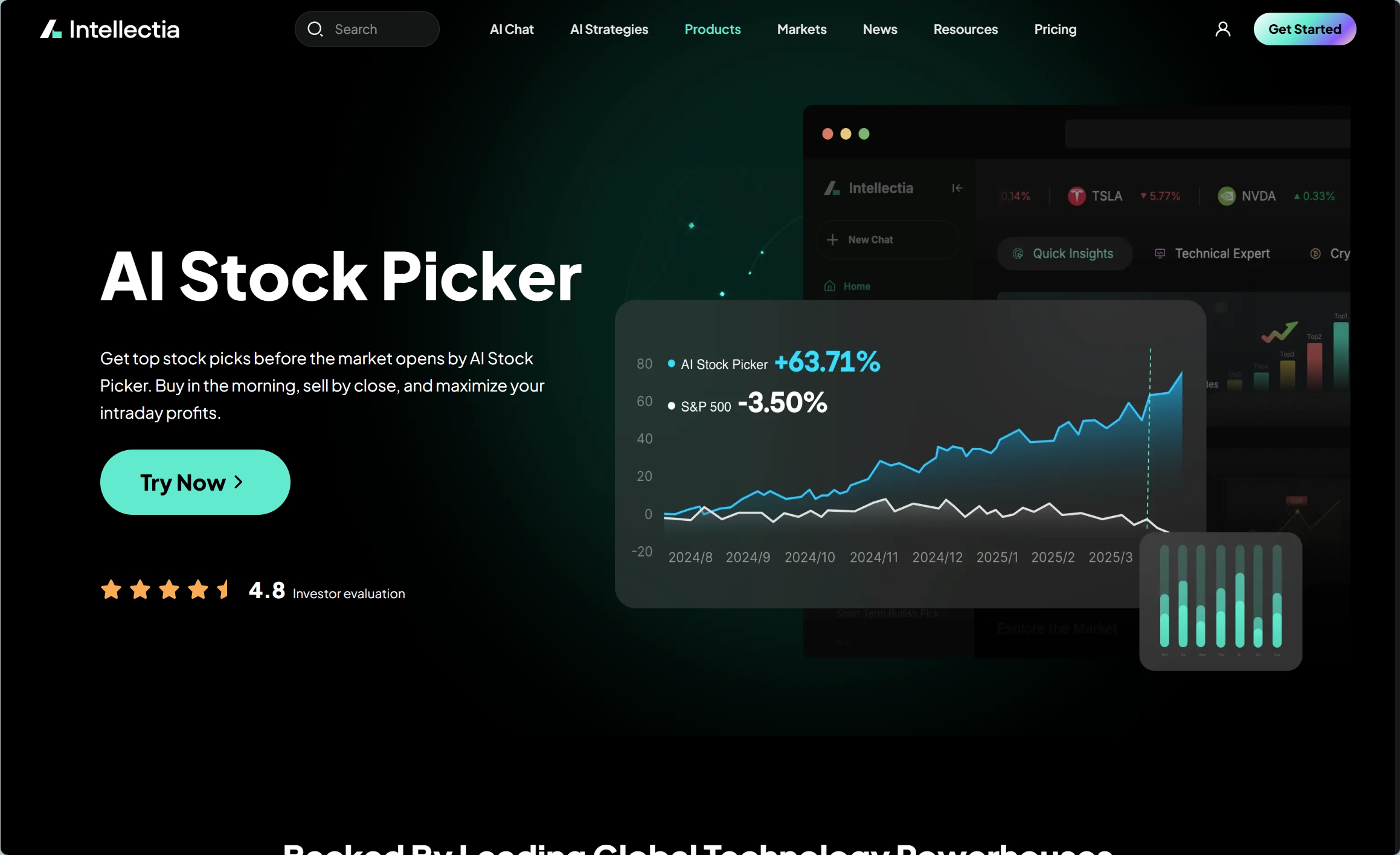
Ready to harness the power of AI for your investment decisions? Explore Intellectia.AI's AI-powered stock screener to identify the most promising AI investment opportunities tailored to your strategy. Our advanced algorithms analyze thousands of data points to surface the stocks best positioned to benefit from the AI supercycle.

Alternatively, discover how Intellectia.AI's AI stock picker can help you build a diversified portfolio that captures AI-driven growth while managing concentration risks. Start your journey toward AI-enhanced investing today by signing up for a free trial and experience the future of investment research.