
Key Takeaway
The artificial intelligence revolution has evolved from a speculative technology theme into a structural economic force that is reshaping global markets in 2026. With Morgan Stanley projecting nearly $3 trillion in AI-related infrastructure investment flowing through the global economy by 2028, investors are facing a once-in-a-generation opportunity to participate in what analysts are calling the "AI supercycle." This transformation extends far beyond the technology sector, touching everything from energy and utilities to real estate and manufacturing.
What makes this cycle particularly compelling is that unlike previous technology bubbles, leading AI companies are generating substantial revenues and positive cash flows. BlackRock's 2026 outlook identifies AI as the "dominant theme" for the investment community, with data center construction alone commanding more than $500 billion in 2025. The key question for investors is not whether to participate in this trend, but how to position portfolios strategically to capture value while managing concentration risks in an increasingly polarized market.
The landscape presents both extraordinary opportunities and significant challenges. While the top 10 companies in the S&P 500 now account for over 40% of the index's total market capitalization, creating heightened correlation risk, the breadth of the AI infrastructure buildout offers multiple entry points for savvy investors. From semiconductor manufacturers and cloud infrastructure providers to power utilities and real estate investment trusts specializing in data centers, the ecosystem supporting AI expansion is vast and still in its early innings.
Understanding the AI Infrastructure Supercycle
The term "supercycle" refers to an extended period of elevated investment and growth driven by structural changes in the economy. In the context of artificial intelligence, this supercycle is characterized by massive capital expenditures directed toward building the physical and digital infrastructure necessary to support AI workloads at scale. According to industry analysts, total AI infrastructure spending could reach between $5 trillion and $8 trillion by 2030, suggesting that the current buildout represents merely the beginning of a multi-year expansion.
The drivers behind this unprecedented investment wave are multifaceted. Hyperscale cloud providers including Amazon, Microsoft, and Google are racing to expand their AI capabilities, each committing tens of billions of dollars annually to data center construction and specialized hardware. Enterprise adoption of AI tools is accelerating across industries, from healthcare and finance to manufacturing and retail, creating sustained demand for computational resources. Meanwhile, geopolitical competition between the United States and China has elevated AI infrastructure to a matter of national security, prompting government support for domestic semiconductor manufacturing and AI research initiatives.
The semiconductor sector sits at the heart of this transformation. Nvidia, which has become the poster child for AI investment, has seen its market capitalization surge as demand for its graphics processing units (GPUs) has outstripped supply. However, the opportunity extends well beyond a single company. The entire semiconductor value chain, from chip designers and equipment manufacturers to memory producers and packaging specialists, is experiencing unprecedented demand growth. For investors seeking exposure to this trend, understanding the ecosystem's various components is essential for constructing a well-diversified portfolio.
The Memory Revolution: High-Bandwidth Memory Leads the Way
One of the most striking developments in the 2026 semiconductor landscape is the meteoric rise of High-Bandwidth Memory (HBM), a specialized memory technology uniquely suited to the parallel processing demands of AI workloads. According to a report by Deloitte, the HBM market alone is expected to reach $54.6 billion in 2026, driven by hyperscalers and Big Tech companies racing to deploy AI-centric data centers. This represents a fundamental shift in memory architecture, as traditional DRAM solutions cannot deliver the bandwidth necessary for training and running large AI models efficiently.
SK Hynix has emerged as the dominant force in this space, commanding over 50% of the HBM market share through its leadership in HBM3E and upcoming HBM4 technologies. The company's strategic focus on AI-optimized memory has paid dividends, with HBM products commanding premium pricing and generating significantly higher margins than commodity DRAM. Competitors including Samsung and Micron are rapidly pivoting their strategies to capture share in this high-growth segment, investing heavily in advanced packaging technologies and capacity expansion to meet surging demand.
The implications for investors extend beyond pure-play memory manufacturers. Companies supplying equipment for HBM production, such as Lam Research, have seen their order books swell as memory makers reallocate wafer capacity toward these higher-value products. The shift toward HBM has also created supply constraints in traditional DRAM markets, particularly for automotive and industrial applications, where demand for DDR5 is expected to surge through 2028. Analysts project that DRAM prices could rise by 70-100% compared to 2025 levels, creating both challenges for downstream customers and opportunities for memory producers with exposure to the right market segments.
Semiconductor Equipment: The Picks and Shovels Play
While much attention focuses on chip designers and memory manufacturers, the companies producing the equipment used to manufacture semiconductors represent a compelling "picks and shovels" investment thesis. These businesses benefit from the AI supercycle regardless of which specific chip designs ultimately win market share, as increasing capacity and advancing process technology requires continuous investment in manufacturing equipment.
ASML Holdings stands as the most critical company in this ecosystem, holding a monopoly on extreme ultraviolet (EUV) lithography systems required to produce the most advanced semiconductors. The Dutch company's machines, which cost over $200 million each and take years to manufacture, are essential for producing chips at the 5nm node and below. With Intel, TSMC, and Samsung all racing to advance their process technology capabilities, ASML's order backlog extends years into the future. The company's role as "gatekeeper" for next-generation computing has made its performance a primary metric for the health of the entire tech sector.
Beyond lithography, companies like Applied Materials and Lam Research provide essential equipment for deposition, etching, and inspection processes. As chip architectures become more complex and three-dimensional, the number of process steps required to manufacture each wafer increases, driving demand for equipment across the entire production flow. The transition to advanced packaging technologies, necessary for integrating HBM with logic chips, creates additional demand for specialized equipment. For investors seeking exposure to the AI buildout with potentially lower volatility than individual chip stocks, the semiconductor equipment sector offers an attractive alternative.
Data Center Real Estate and Power Infrastructure
The physical infrastructure supporting AI expansion extends beyond semiconductors to encompass data center real estate and power generation. Training large AI models requires enormous computational resources, which in turn demand significant physical space and electrical power. A single large-scale AI training cluster can consume as much electricity as a small city, creating both challenges and opportunities for investors.
Data center real estate investment trusts (REITs) like Digital Realty Trust and Equinix are experiencing unprecedented demand for their facilities. The specialized requirements of AI workloads, including higher power density per rack and advanced cooling systems, command premium pricing compared to traditional cloud computing facilities. Development pipelines for new AI-optimized data centers stretch across multiple years, creating a supply-constrained environment that benefits existing facility owners. Geographic concentration of AI infrastructure in regions with abundant power and favorable regulatory environments has also created localized real estate booms.
The power sector represents another critical component of the AI infrastructure ecosystem. Utilities serving data center hubs are investing billions in generation and transmission infrastructure to meet surging demand. Nuclear power, long considered uneconomical for new construction, is experiencing a renaissance as tech companies seek carbon-free baseload power for their operations. Companies like Constellation Energy and Vistra have seen their valuations surge as investors recognize the strategic importance of reliable power supply for AI infrastructure. For investors willing to look beyond traditional technology stocks, the energy and utility sectors offer compelling exposure to AI-driven demand growth.
Investment Strategies for the AI Supercycle
Navigating the AI supercycle requires a balanced approach that captures upside potential while managing the significant risks inherent in such a rapidly evolving market. The concentration of market gains in a handful of mega-cap technology stocks has created a challenging environment for portfolio construction, as the correlation between these names has increased dramatically. A pullback in any of the major AI leaders could disproportionately impact broad-market portfolios given their outsized index weights.
One approach to managing concentration risk involves diversifying across the AI value chain rather than concentrating in the most obvious beneficiaries. While Nvidia and Microsoft have delivered spectacular returns, the next phase of the AI buildout may favor companies in less crowded segments of the ecosystem. Thematic ETFs focused on semiconductor equipment, data center REITs, or AI-enabled software companies offer exposure to the trend without the single-stock risk of the mega-caps.
For investors seeking individual stock exposure, focusing on companies with demonstrated profitability and reasonable valuations may provide better risk-adjusted returns than chasing the highest-growth names. Morningstar's analysis suggests that while large technology firms with diversified AI capabilities command premium valuations, investors should scrutinize which companies can "utilize AI to improve their products and services" rather than simply participate in AI-related marketing narratives. The distinction between companies genuinely benefiting from AI adoption and those merely riding the hype cycle will become increasingly important as the market matures.
Risks and Challenges to Monitor
Despite the compelling long-term opportunity, investors must remain cognizant of the risks that could derail the AI supercycle thesis. Geopolitical tensions, particularly the ongoing technology competition between the United States and China, threaten to disrupt supply chains and limit market access for key players. Export restrictions on advanced semiconductors and manufacturing equipment to China have already impacted revenue for several companies in the ecosystem, and further escalation could create additional headwinds.
The capital intensity of AI infrastructure also raises questions about returns on investment. With hyperscalers collectively committing hundreds of billions of dollars to AI capacity, the pressure to monetize these investments through AI-powered products and services is intense. If adoption rates fail to meet expectations or if AI capabilities plateau, the massive capital expenditures could weigh on profitability for years to come. Recent volatility in software sector stocks reflects this uncertainty, with group valuations retreating to levels last seen during prior disruption scares.
Regulatory risks also loom on the horizon. As AI systems become more powerful and pervasive, governments worldwide are grappling with how to ensure their safe and ethical deployment. Potential regulations around AI model training, data privacy, and algorithmic transparency could impact the economics of AI development and deployment. Investors should monitor regulatory developments closely, as significant policy changes could alter the competitive landscape and growth trajectory of the AI ecosystem.
Conclusion
The AI supercycle of 2026 represents one of the most significant investment opportunities in decades, driven by structural shifts in technology adoption and massive infrastructure investment. With nearly $3 trillion in spending projected through 2028, the breadth of this transformation extends across multiple sectors and geographies, offering numerous entry points for investors seeking exposure to this powerful trend.
Success in navigating this environment requires a nuanced understanding of the AI ecosystem and a willingness to look beyond the most obvious beneficiaries. While mega-cap technology stocks have delivered impressive returns, the next phase of the supercycle may favor companies in less crowded segments such as semiconductor equipment, data center infrastructure, and power generation. Diversification across the value chain can help manage concentration risk while maintaining exposure to the structural growth drivers.
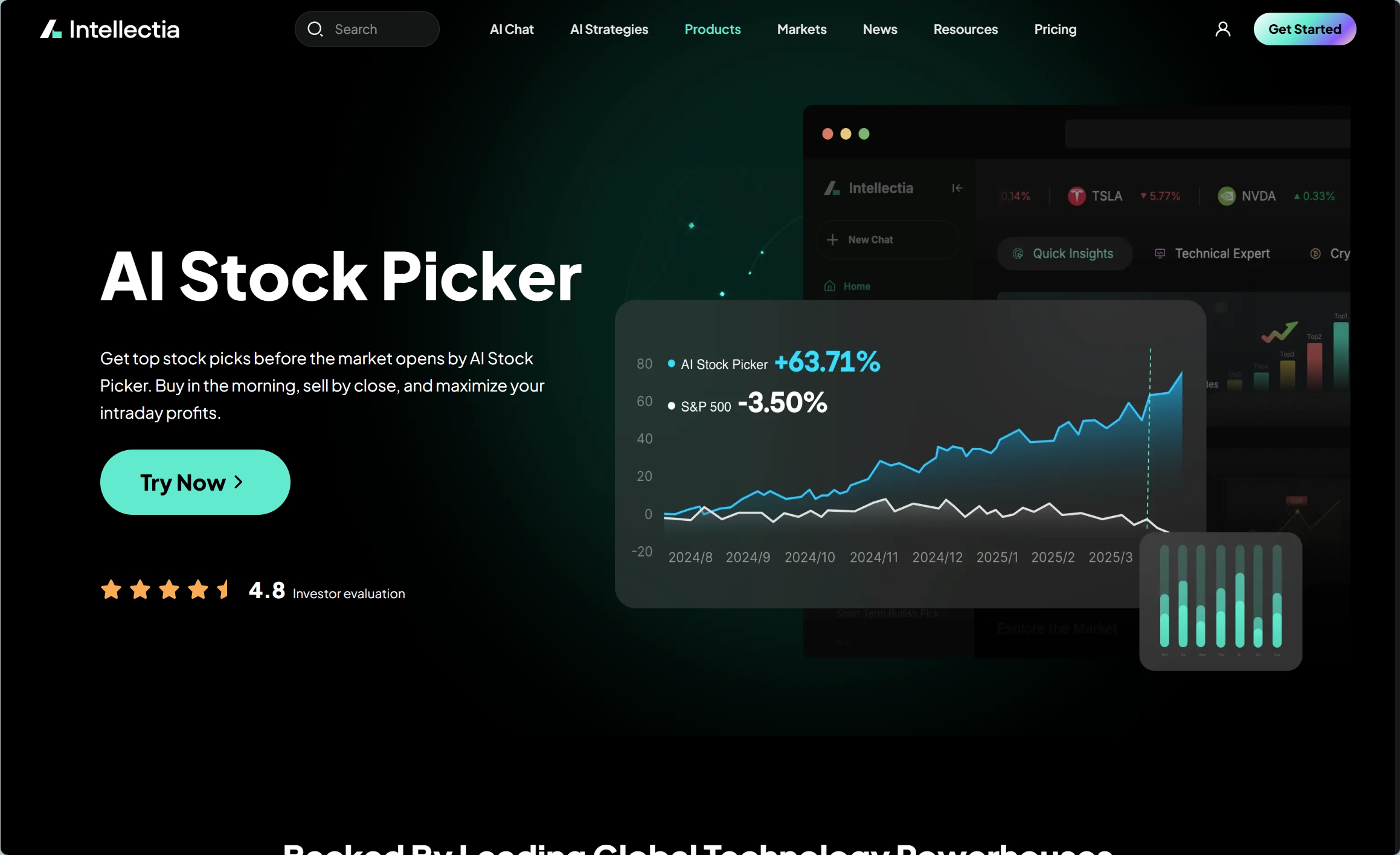
For investors seeking to capitalize on the AI revolution, tools like Intellectia AI's AI Stock Picker can provide valuable insights into emerging opportunities within the AI ecosystem. The platform's ability to analyze vast amounts of market data and identify high-potential stocks before market open offers a significant advantage in this rapidly evolving landscape.
As the AI supercycle continues to unfold, investors who maintain a long-term perspective while remaining vigilant about risks will be best positioned to capture the extraordinary wealth creation this transformation promises. The infrastructure buildout is still in its early stages, and the full implications of AI adoption across the global economy have yet to be realized. For those willing to do the research and construct thoughtful portfolios, the opportunities are as vast as the technology's potential.
Ready to enhance your AI investment strategy? Explore Intellectia AI's comprehensive suite of investment tools and gain access to AI-powered stock screening, swing trading signals, and real-time market analysis designed to help you navigate the complexities of the AI supercycle.