Trump Proposes 10% Credit Card Interest Rate Cap, Potential Economic Impact
- Interest Rate Cap Proposal: Trump has proposed a 10% cap on credit card interest rates effective January 20, 2026, significantly lower than the average 21% rate in November 2025, which may lead credit card companies to reduce lending, impacting consumer access to credit.
- High-Risk Lending Impact: Credit card companies price APRs based on borrower risk, and if the cap is implemented, it could force these companies to limit credit availability, potentially stunting economic growth, especially since consumer spending accounts for over two-thirds of U.S. GDP.
- Capital One's Yield: In Q3 2025, Capital One reported a loan portfolio yield of 13.83% with a net charge-off rate of 3.16%, resulting in a net interest margin of 8.36%, highlighting the high-risk, high-reward nature of credit card lending, which could be undermined by a rate cap.
- Economic Risk Warning: Experts warn that enforcing a 10% interest rate cap could lead to a collapse in the credit market, triggering a recession, as consumer spending is a primary driver of economic growth, and the challenge lies in managing market forces effectively.
Trade with 70% Backtested Accuracy
Analyst Views on COF

About COF
About the author

Optimistic Outlook for Bank Stocks' Rebound


- Market Sentiment Recovery: The two-day rally on Wall Street, driven by hopes of a resolution to the U.S.-Iran conflict, indicates a renewed optimism for bank stocks, which could see reduced downside risk and a potential revival in investment banking if a ceasefire is achieved.
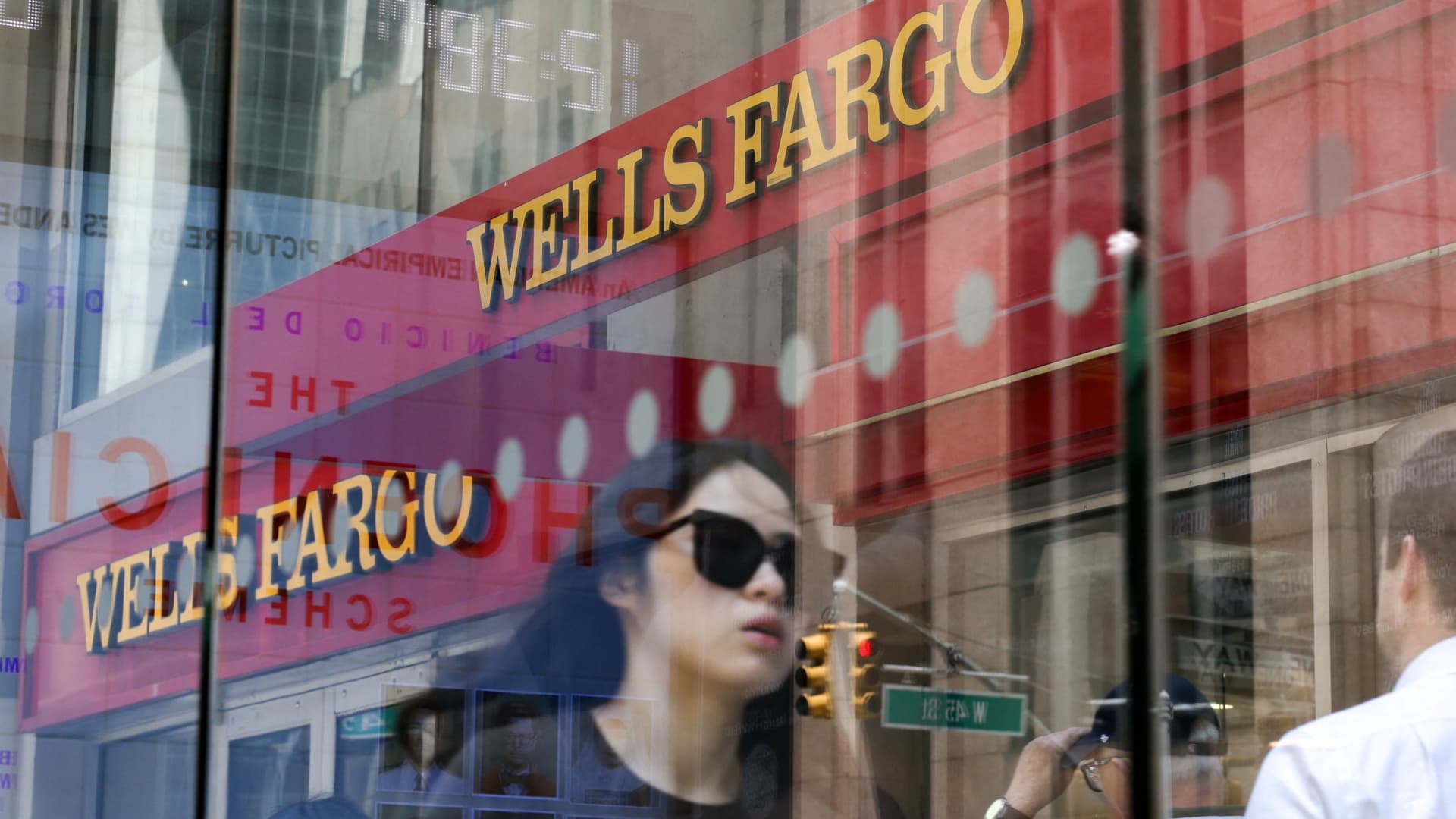
- Massive IPO Potential: The anticipated IPOs of companies like OpenAI and SpaceX, with SpaceX valued at $1.75 trillion and collaborating with banks like Goldman Sachs and Wells Fargo, highlight strong market demand for large transactions that could significantly boost banks' revenues.
- Interest Rate Policy Impact: The potential for a new Fed chair to implement more accommodative monetary policy could lead to lower borrowing costs; while this may compress banks' net interest income, it could also stimulate loan demand, supporting revenue growth for Goldman Sachs and Wells Fargo.
- Earnings Outlook Positive: Upcoming earnings reports from Goldman Sachs and Wells Fargo are highly anticipated, particularly with Goldman expected to see a 25% year-over-year revenue increase in its investment banking division, and Wells Fargo projecting net interest income of $50 billion, indicating robust growth potential.

High Interest Rates Impact Credit Card Spending

- Decline in Credit Card Spending: Research from the Federal Reserve Bank of Boston indicates that a 1 percentage point increase in credit card APR leads to a roughly 9% decrease in consumer spending, suggesting that consumer responses to interest rate changes are economically significant, potentially resulting in reduced overall consumption and impacting economic growth.
- Financial Status Impact: The study highlights that financially constrained consumers are more responsive to interest rate changes, with spending reductions of up to 15% for those carrying balances, reflecting increased financial pressure on lower-income households in a high-rate environment, which may lead to further contraction in spending.
- Interest Rates and Consumer Behavior: While some cardholders may be insensitive to rate changes, data shows that many adjust their spending behavior when rates rise, indicating that consumer spending decisions become more rational in high-interest contexts, which could affect revenues in retail and service sectors.
- Future Rate Expectations: Despite the federal funds rate remaining stable between 3.5% and 3.75%, market expectations for future rate hikes are increasing, which may further tighten consumer spending, especially against a backdrop of rising energy costs and growing concerns about stagflation.

Market Dynamics and Investment Opportunities Analysis


- Market Opening Outlook: The S&P 500 is set for a higher open as President Trump signals progress in U.S.-Iran war talks, reflecting investor optimism despite typically rising oil prices dragging down stocks, indicating a potential shift in market sentiment.
- S&P 500 Performance Review: The S&P 500 has faced nearly a 6% decline in March, marking its fifth consecutive weekly loss, yet it narrowly avoids entering correction territory, with upcoming job reports expected to provide insights into economic health.
- Meta Platforms Investment Advice: Morgan Stanley recommends buying Meta Platforms, asserting that sentiment has bottomed out, and despite the company facing two litigation losses last week that impacted stock prices, early trading shows a slight recovery, indicating renewed investor confidence.
- Oracle's Positive Outlook: Bernstein analysts view Oracle's cloud and database sectors as potential AI winners, setting a price target of $319, which is more than double Friday's closing price of nearly $140, reflecting strong market confidence in its growth prospects.

Rising Negative Equity Among New Car Buyers

- Rising Negative Equity: According to J.D. Power, 30.5% of new car buyers are facing negative equity on trade-ins, up 4.2 percentage points from last year, indicating increasing market pressures that affect consumer purchasing decisions.
- Record High Debt Levels: As of Q4 2025, the average amount owed on underwater trade-ins reached $7,214, a record high, with 27% of these trade-ins carrying over $10,000 in negative equity, reflecting a deterioration in consumer financial health.
- Increased Payment Burden: The average monthly payment for buyers rolling negative equity into new loans hit $916, which is $144 higher than the average payment for all new car purchases, indicating greater financial strain on consumers when buying vehicles.
- Extended Loan Terms Trend: Among new car purchases involving negative equity, 40.7% are financed with 84-month loans, suggesting that consumers are extending loan terms to cope with high vehicle prices, thereby increasing future negative equity risks.

Will Capital One Demonstrate Its Worth in 2026?
Capital One's Performance: Capital One reported higher-than-expected revenue and net income, driven by its acquisition of Discover Financial, despite missing fourth-quarter earnings estimates.
Acquisitions and Growth Strategy: The company is focusing on acquisitions, including a $5.15 billion purchase of Brex Inc., to enhance its fintech capabilities and integrate payment systems.
Financial Results and Provisions: In 2025, Capital One's net income was approximately $2.1 billion, with adjusted earnings per share of $3.86, while provisions for credit losses increased significantly due to rising delinquencies.
Market Position and Future Outlook: Despite a challenging market and a 25% drop in stock price, analysts maintain a moderate buy rating on Capital One, highlighting its potential for growth through vertical integration and improved efficiencies.

Bank Stocks Rebound with Positive Outlook
- Bank Stock Recovery: The KBW Nasdaq Bank Index indicates a 2% rise in bank stocks over the past two weeks, despite a year-to-date decline of about 7%, reflecting a gradual restoration of market confidence in the banking sector.
- Attractive Valuation for BofA: Bank of America is trading at a low P/E ratio of 11 times, with projected net interest income growth of 5% to 7% for 2026, surpassing JPMorgan Chase's forecast of 2.6%, positioning it as a compelling investment opportunity.
- Synergies from Capital One Acquisition: Following its acquisition of Discover, Capital One anticipates $2.5 billion in benefits by 2027, primarily from cost reductions and new revenue streams, highlighting the strategic value of the merger.
- Analyst Optimism: Wall Street analysts have set a price target of $62 for Bank of America, suggesting a 29% upside, while Capital One's target of $275 implies a potential 51% return, reflecting strong market confidence in both banks.
Optimistic Outlook for Bank Stocks' Rebound
- Market Sentiment Recovery: The two-day rally on Wall Street, driven by hopes of a resolution to the U.S.-Iran conflict, indicates a renewed optimism for bank stocks, which could see reduced downside risk and a potential revival in investment banking if a ceasefire is achieved.
- Massive IPO Potential: The anticipated IPOs of companies like OpenAI and SpaceX, with SpaceX valued at $1.75 trillion and collaborating with banks like Goldman Sachs and Wells Fargo, highlight strong market demand for large transactions that could significantly boost banks' revenues.
- Interest Rate Policy Impact: The potential for a new Fed chair to implement more accommodative monetary policy could lead to lower borrowing costs; while this may compress banks' net interest income, it could also stimulate loan demand, supporting revenue growth for Goldman Sachs and Wells Fargo.
- Earnings Outlook Positive: Upcoming earnings reports from Goldman Sachs and Wells Fargo are highly anticipated, particularly with Goldman expected to see a 25% year-over-year revenue increase in its investment banking division, and Wells Fargo projecting net interest income of $50 billion, indicating robust growth potential.
High Interest Rates Impact Credit Card Spending
- Decline in Credit Card Spending: Research from the Federal Reserve Bank of Boston indicates that a 1 percentage point increase in credit card APR leads to a roughly 9% decrease in consumer spending, suggesting that consumer responses to interest rate changes are economically significant, potentially resulting in reduced overall consumption and impacting economic growth.
- Financial Status Impact: The study highlights that financially constrained consumers are more responsive to interest rate changes, with spending reductions of up to 15% for those carrying balances, reflecting increased financial pressure on lower-income households in a high-rate environment, which may lead to further contraction in spending.
- Interest Rates and Consumer Behavior: While some cardholders may be insensitive to rate changes, data shows that many adjust their spending behavior when rates rise, indicating that consumer spending decisions become more rational in high-interest contexts, which could affect revenues in retail and service sectors.
- Future Rate Expectations: Despite the federal funds rate remaining stable between 3.5% and 3.75%, market expectations for future rate hikes are increasing, which may further tighten consumer spending, especially against a backdrop of rising energy costs and growing concerns about stagflation.
Market Dynamics and Investment Opportunities Analysis
- Market Opening Outlook: The S&P 500 is set for a higher open as President Trump signals progress in U.S.-Iran war talks, reflecting investor optimism despite typically rising oil prices dragging down stocks, indicating a potential shift in market sentiment.
- S&P 500 Performance Review: The S&P 500 has faced nearly a 6% decline in March, marking its fifth consecutive weekly loss, yet it narrowly avoids entering correction territory, with upcoming job reports expected to provide insights into economic health.
- Meta Platforms Investment Advice: Morgan Stanley recommends buying Meta Platforms, asserting that sentiment has bottomed out, and despite the company facing two litigation losses last week that impacted stock prices, early trading shows a slight recovery, indicating renewed investor confidence.
- Oracle's Positive Outlook: Bernstein analysts view Oracle's cloud and database sectors as potential AI winners, setting a price target of $319, which is more than double Friday's closing price of nearly $140, reflecting strong market confidence in its growth prospects.
Rising Negative Equity Among New Car Buyers
- Rising Negative Equity: According to J.D. Power, 30.5% of new car buyers are facing negative equity on trade-ins, up 4.2 percentage points from last year, indicating increasing market pressures that affect consumer purchasing decisions.
- Record High Debt Levels: As of Q4 2025, the average amount owed on underwater trade-ins reached $7,214, a record high, with 27% of these trade-ins carrying over $10,000 in negative equity, reflecting a deterioration in consumer financial health.
- Increased Payment Burden: The average monthly payment for buyers rolling negative equity into new loans hit $916, which is $144 higher than the average payment for all new car purchases, indicating greater financial strain on consumers when buying vehicles.
- Extended Loan Terms Trend: Among new car purchases involving negative equity, 40.7% are financed with 84-month loans, suggesting that consumers are extending loan terms to cope with high vehicle prices, thereby increasing future negative equity risks.
Will Capital One Demonstrate Its Worth in 2026?
Capital One's Performance: Capital One reported higher-than-expected revenue and net income, driven by its acquisition of Discover Financial, despite missing fourth-quarter earnings estimates.
Acquisitions and Growth Strategy: The company is focusing on acquisitions, including a $5.15 billion purchase of Brex Inc., to enhance its fintech capabilities and integrate payment systems.
Financial Results and Provisions: In 2025, Capital One's net income was approximately $2.1 billion, with adjusted earnings per share of $3.86, while provisions for credit losses increased significantly due to rising delinquencies.
Market Position and Future Outlook: Despite a challenging market and a 25% drop in stock price, analysts maintain a moderate buy rating on Capital One, highlighting its potential for growth through vertical integration and improved efficiencies.
Bank Stocks Rebound with Positive Outlook
- Bank Stock Recovery: The KBW Nasdaq Bank Index indicates a 2% rise in bank stocks over the past two weeks, despite a year-to-date decline of about 7%, reflecting a gradual restoration of market confidence in the banking sector.
- Attractive Valuation for BofA: Bank of America is trading at a low P/E ratio of 11 times, with projected net interest income growth of 5% to 7% for 2026, surpassing JPMorgan Chase's forecast of 2.6%, positioning it as a compelling investment opportunity.
- Synergies from Capital One Acquisition: Following its acquisition of Discover, Capital One anticipates $2.5 billion in benefits by 2027, primarily from cost reductions and new revenue streams, highlighting the strategic value of the merger.
- Analyst Optimism: Wall Street analysts have set a price target of $62 for Bank of America, suggesting a 29% upside, while Capital One's target of $275 implies a potential 51% return, reflecting strong market confidence in both banks.