Rocket Lab and the Future of the Space Economy
Written by Emily J. Thompson, Senior Investment Analyst
Updated: 2 days ago
0mins


Source: NASDAQ.COM
- Rocket Lab's Revenue Surge: In 2025, Rocket Lab reported approximately $602 million in revenue, a 38% year-over-year increase, and ended the year with a record backlog of $1.85 billion, indicating strong visibility for future business.
- Redwire's Market Positioning: Redwire generated about $335 million in revenue in 2025, focusing on providing critical technologies for commercial, civil, and defense customers, with Q1 2026 revenue at $97 million and a backlog of $498.1 million, highlighting its significant role in space infrastructure.
- AST SpaceMobile's Market Potential: AST SpaceMobile aims to create a satellite network that connects directly to ordinary smartphones, and if successful, could generate $3 billion in annual revenue from just 50 million users, showcasing its enormous market opportunity.
- Impact of SpaceX IPO: The upcoming SpaceX IPO is expected to attract more investors to the space industry, potentially benefiting companies like Rocket Lab, Redwire, and AST SpaceMobile through a halo effect that enhances their market valuations and investor interest.
Trade with 70% Backtested Accuracy
Stop guessing "Should I Buy RKLB?" and start using high-conviction signals backed by rigorous historical data.
Sign up today to access powerful investing tools and make smarter, data-driven decisions.
Analyst Views on RKLB
Wall Street analysts forecast RKLB stock price to fall
11 Analyst Rating
7 Buy
4 Hold
0 Sell
Moderate Buy
Current: 108.230

Low
63.00
Averages
86.89
High
120.00
Current: 108.230
Low
63.00
Averages
86.89
High
120.00
About RKLB
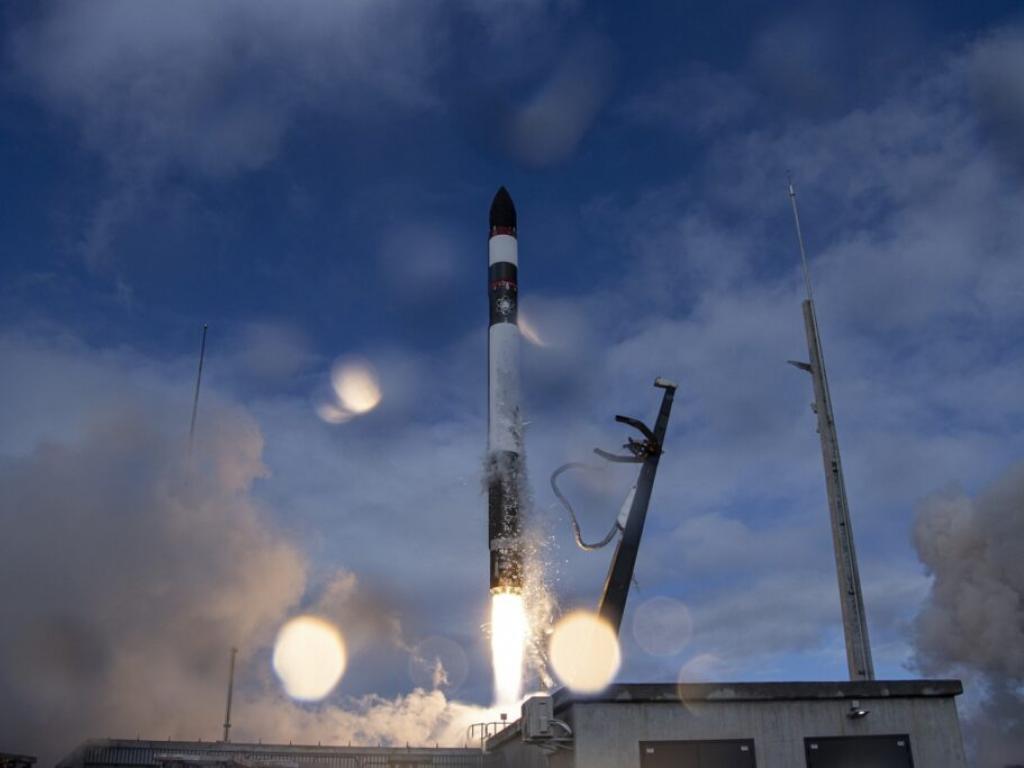
Rocket Lab Corporation is an end-to-end space company. The Company designs and manufactures small and medium-class rockets, spacecraft and spacecraft components, and related software and services to support the space economy. The Company delivers reliable launch services, satellite manufacture, spacecraft design services, spacecraft components, spacecraft manufacturing, and other spacecraft and on-orbit management solutions that make it easier to access space. Its Launch Services segment provides launch and launch-related services to customers on a dedicated mission or ride-share basis. Its Space Systems segment comprises the design and manufacture of spacecraft components and spacecraft program management services, space data applications, and mission operations. Its space systems solutions are the building blocks for spacecraft, which include composite structures, reaction wheels, star trackers, solar solutions, radios, separation systems, and command and control spacecraft software.
About the author

Emily J. Thompson
Emily J. Thompson, a Chartered Financial Analyst (CFA) with 12 years in investment research, graduated with honors from the Wharton School. Specializing in industrial and technology stocks, she provides in-depth analysis for Intellectia’s earnings and market brief reports.
Investment Comparison: SpaceX vs. Rocket Lab

- Market Size Comparison: SpaceX generated $18.7 billion in revenue in 2025 with an IPO target valuation of $1.77 trillion, while Rocket Lab only achieved $602 million in revenue, reflecting a significant disparity in market scale.
- Profitability Analysis: Neither company is profitable yet, but SpaceX's Starlink business contributed $4.4 billion in operating income in 2025, serving as its main profit driver, whereas Rocket Lab's free cash flow was negative $321.8 million in 2025, leaving its profitability outlook uncertain.
- Technology and Product Differences: SpaceX has transformed into a diversified tech company, with 93% of its market opportunities stemming from AI and other non-space businesses, while Rocket Lab focuses on aerospace, becoming the second-largest launch provider in the U.S. with its Electron rocket, and the successful launch of its Neutron rocket will directly challenge SpaceX's core business.
- Risks and Valuation: Both companies face execution risks, with Rocket Lab's Neutron rocket experiencing multiple delays, while SpaceX's AI segment lost $6.4 billion in 2025, prompting investors to consider their high valuations and potential strategic risks.
See More

SpaceX IPO Valuation Approaches 100x Sales

- IPO Valuation Insight: SpaceX is set to go public on June 12 with a share price of $135, aiming to raise $75 billion and achieve a valuation of approximately $1.77 trillion, marking the largest IPO in history; however, its 95x sales valuation appears excessively high.
- Profitability Challenges: While SpaceX is projected to grow its revenue by 33% to $18.67 billion in 2024, its primary profit source, Starlink, is offset by massive losses from its new AI division, which reached $4.3 billion in Q1 2025, putting overall profitability under pressure.
- Market Reaction Expectations: Although SpaceX's stock may initially surge post-IPO, it is anticipated that investors will quickly cash out, leading to a price pullback and a reevaluation to a more sustainable price-to-sales ratio in the near term.
- Investor Strategy: By offering less than 5% of its shares, SpaceX protects founder Elon Musk's voting power while allocating up to 30% to retail investors, indicating a strategy to attract
See More

SpaceX to Go Public on June 12 with $1.77 Trillion Valuation

- IPO Pricing and Valuation: SpaceX is set to go public at $135 per share, aiming to raise $75 billion and achieving a valuation of approximately $1.77 trillion, marking the largest IPO in history and reflecting strong market expectations for its future growth.
- Financial Challenges: Despite projected revenue of $18.67 billion in 2025, representing a 33% increase, SpaceX's price-to-sales ratio stands at a staggering 95 times, indicating high risk in its current valuation, particularly as its rocket division remains unprofitable.
- AI Investment and Profitability: The newly established AI division incurred a loss of $4.3 billion in Q1 2025, completely offsetting Starlink's profits, which poses significant challenges to future profitability and compels the company to urgently raise new funds to support AI investments.
- Equity Structure and Market Strategy: The IPO offers less than 5% of shares, allowing Musk to retain 82% voting power, while allocating up to 30% of shares to retail investors, targeting
See More
SpaceX IPO Set to Become Largest in History

- Staggering Valuation: SpaceX is set to go public on June 12 with a target valuation of $1.77 trillion, equating to 95 times its projected 2025 sales, reflecting strong market confidence in its future growth.
- Oversubscription: The IPO is more than four times oversubscribed, indicating heightened investor enthusiasm that could lead to a significant price surge on its debut, further solidifying its market position.
- Alternative Investment Opportunities: Investors are advised to consider Rocket Lab and AST SpaceMobile, both of which will benefit from the same growth trends in the space market while presenting lower volatility compared to SpaceX, thus reducing investment risk.
- Future Growth Potential: Analysts project that Rocket Lab's revenue will more than double from 2025 to 2028, while AST's revenue is expected to surge over 26 times, showcasing the strong growth potential of these companies in the space industry, making them attractive investment options.
See More
SpaceX Set to Achieve Largest IPO in History

- Historic IPO: SpaceX plans to issue over 555.5 million shares at $135 each, raising approximately $75 billion and achieving a valuation of about $1.77 trillion, positioning it as the seventh or eighth most valuable company globally, highlighting its significant role in the rapidly growing space economy.
- Revenue Growth and Losses: Despite generating $18.7 billion in revenue in 2025, a 33% year-over-year increase, SpaceX recorded a net loss of $4.9 billion, indicating financial challenges amid rapid expansion, while adjusted EBITDA of $6.6 billion suggests potential profitability.
- Intensifying Competition: SpaceX's Starlink segment generated $11.4 billion in revenue in 2025, up 50%, but faces threats from competitors like Amazon, necessitating ongoing market share growth to maintain profitability in a competitive landscape.
- AI Business Outlook: SpaceX's AI segment achieved $3.2 billion in revenue in 2025, despite a $6.3 billion operating loss due to R&D spending; however, a $920 million monthly deal with Alphabet is expected to significantly improve its financial outlook.
See More
Rocket Lab Expands Space Services Amid SpaceX IPO Buzz
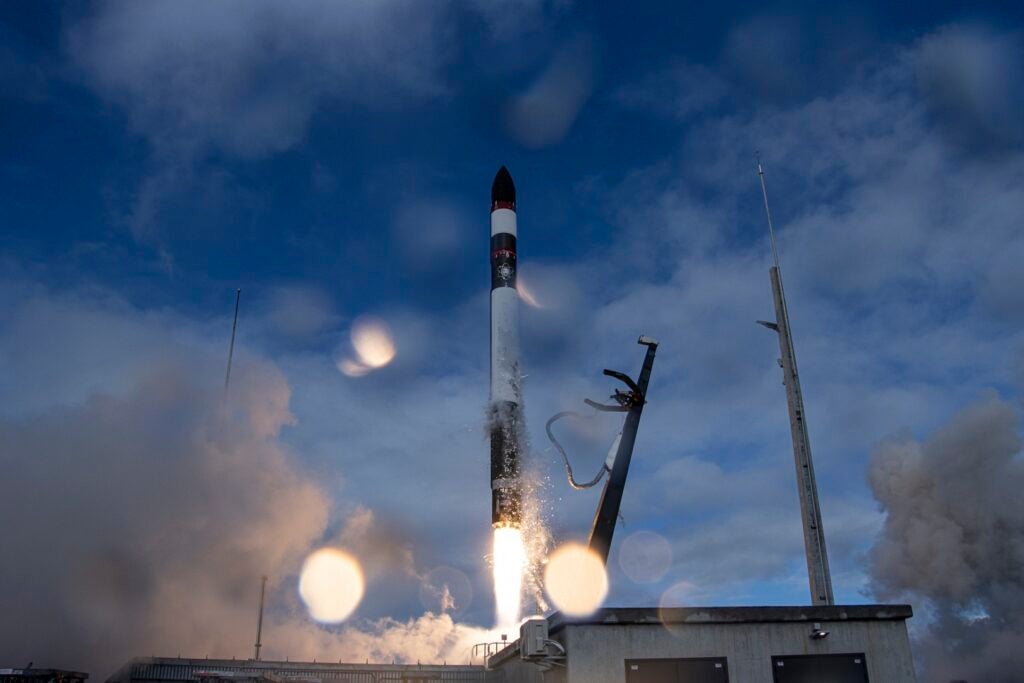
- Increased Launch Frequency: Rocket Lab has successfully launched 88 rockets to date and plans to expand its business by adding more orbital and spacecraft manufacturing services, which is expected to significantly enhance its market share and revenue potential.
- Satellite Network Expansion: AST SpaceMobile aims to deploy 45 to 60 satellites in orbit by the end of 2026, with a long-term goal of reaching 248 satellites, thereby enhancing its capability to provide wireless satellite connections in rural areas and driving revenue growth.
- Significant Revenue Projections: Analysts expect Rocket Lab's revenue to more than double from 2025 to 2028, while AST's revenue is projected to surge over 26 times, indicating substantial growth potential for both companies in the coming years.
- Market Competitive Advantage: Although Rocket Lab and AST do not directly compete with SpaceX, they will benefit from growth in the same markets, and both stocks appear more attractive relative to SpaceX in terms of near-term growth potential.
See More
Investment Comparison: SpaceX vs. Rocket Lab
- Market Size Comparison: SpaceX generated $18.7 billion in revenue in 2025 with an IPO target valuation of $1.77 trillion, while Rocket Lab only achieved $602 million in revenue, reflecting a significant disparity in market scale.
- Profitability Analysis: Neither company is profitable yet, but SpaceX's Starlink business contributed $4.4 billion in operating income in 2025, serving as its main profit driver, whereas Rocket Lab's free cash flow was negative $321.8 million in 2025, leaving its profitability outlook uncertain.
- Technology and Product Differences: SpaceX has transformed into a diversified tech company, with 93% of its market opportunities stemming from AI and other non-space businesses, while Rocket Lab focuses on aerospace, becoming the second-largest launch provider in the U.S. with its Electron rocket, and the successful launch of its Neutron rocket will directly challenge SpaceX's core business.
- Risks and Valuation: Both companies face execution risks, with Rocket Lab's Neutron rocket experiencing multiple delays, while SpaceX's AI segment lost $6.4 billion in 2025, prompting investors to consider their high valuations and potential strategic risks.
See More
SpaceX IPO Valuation Approaches 100x Sales
- IPO Valuation Insight: SpaceX is set to go public on June 12 with a share price of $135, aiming to raise $75 billion and achieve a valuation of approximately $1.77 trillion, marking the largest IPO in history; however, its 95x sales valuation appears excessively high.
- Profitability Challenges: While SpaceX is projected to grow its revenue by 33% to $18.67 billion in 2024, its primary profit source, Starlink, is offset by massive losses from its new AI division, which reached $4.3 billion in Q1 2025, putting overall profitability under pressure.
- Market Reaction Expectations: Although SpaceX's stock may initially surge post-IPO, it is anticipated that investors will quickly cash out, leading to a price pullback and a reevaluation to a more sustainable price-to-sales ratio in the near term.
- Investor Strategy: By offering less than 5% of its shares, SpaceX protects founder Elon Musk's voting power while allocating up to 30% to retail investors, indicating a strategy to attract
See More
SpaceX to Go Public on June 12 with $1.77 Trillion Valuation
- IPO Pricing and Valuation: SpaceX is set to go public at $135 per share, aiming to raise $75 billion and achieving a valuation of approximately $1.77 trillion, marking the largest IPO in history and reflecting strong market expectations for its future growth.
- Financial Challenges: Despite projected revenue of $18.67 billion in 2025, representing a 33% increase, SpaceX's price-to-sales ratio stands at a staggering 95 times, indicating high risk in its current valuation, particularly as its rocket division remains unprofitable.
- AI Investment and Profitability: The newly established AI division incurred a loss of $4.3 billion in Q1 2025, completely offsetting Starlink's profits, which poses significant challenges to future profitability and compels the company to urgently raise new funds to support AI investments.
- Equity Structure and Market Strategy: The IPO offers less than 5% of shares, allowing Musk to retain 82% voting power, while allocating up to 30% of shares to retail investors, targeting
See More
SpaceX IPO Set to Become Largest in History
- Staggering Valuation: SpaceX is set to go public on June 12 with a target valuation of $1.77 trillion, equating to 95 times its projected 2025 sales, reflecting strong market confidence in its future growth.
- Oversubscription: The IPO is more than four times oversubscribed, indicating heightened investor enthusiasm that could lead to a significant price surge on its debut, further solidifying its market position.
- Alternative Investment Opportunities: Investors are advised to consider Rocket Lab and AST SpaceMobile, both of which will benefit from the same growth trends in the space market while presenting lower volatility compared to SpaceX, thus reducing investment risk.
- Future Growth Potential: Analysts project that Rocket Lab's revenue will more than double from 2025 to 2028, while AST's revenue is expected to surge over 26 times, showcasing the strong growth potential of these companies in the space industry, making them attractive investment options.
See More
SpaceX Set to Achieve Largest IPO in History
- Historic IPO: SpaceX plans to issue over 555.5 million shares at $135 each, raising approximately $75 billion and achieving a valuation of about $1.77 trillion, positioning it as the seventh or eighth most valuable company globally, highlighting its significant role in the rapidly growing space economy.
- Revenue Growth and Losses: Despite generating $18.7 billion in revenue in 2025, a 33% year-over-year increase, SpaceX recorded a net loss of $4.9 billion, indicating financial challenges amid rapid expansion, while adjusted EBITDA of $6.6 billion suggests potential profitability.
- Intensifying Competition: SpaceX's Starlink segment generated $11.4 billion in revenue in 2025, up 50%, but faces threats from competitors like Amazon, necessitating ongoing market share growth to maintain profitability in a competitive landscape.
- AI Business Outlook: SpaceX's AI segment achieved $3.2 billion in revenue in 2025, despite a $6.3 billion operating loss due to R&D spending; however, a $920 million monthly deal with Alphabet is expected to significantly improve its financial outlook.
See More
Rocket Lab Expands Space Services Amid SpaceX IPO Buzz
- Increased Launch Frequency: Rocket Lab has successfully launched 88 rockets to date and plans to expand its business by adding more orbital and spacecraft manufacturing services, which is expected to significantly enhance its market share and revenue potential.
- Satellite Network Expansion: AST SpaceMobile aims to deploy 45 to 60 satellites in orbit by the end of 2026, with a long-term goal of reaching 248 satellites, thereby enhancing its capability to provide wireless satellite connections in rural areas and driving revenue growth.
- Significant Revenue Projections: Analysts expect Rocket Lab's revenue to more than double from 2025 to 2028, while AST's revenue is projected to surge over 26 times, indicating substantial growth potential for both companies in the coming years.
- Market Competitive Advantage: Although Rocket Lab and AST do not directly compete with SpaceX, they will benefit from growth in the same markets, and both stocks appear more attractive relative to SpaceX in terms of near-term growth potential.
See More