Rivian Automotive's 2026 Outlook and Challenges
Written by Emily J. Thompson, Senior Investment Analyst
Updated: 1 hour ago
0mins
Should l Buy RIVN?
Source: Fool
- Stock Performance Analysis: In 2025, Rivian Automotive's stock experienced significant volatility, ending the year up 48%, which notably outperformed the S&P 500's 16% return, reflecting a mix of market optimism and uncertainty about its future.
- Market Environment Challenges: The uncertainty stemming from the Trump administration, including tariffs and changes to environmental regulations, poses significant challenges for Rivian and other EV manufacturers in managing their supply chains, potentially impacting their product roadmaps.
- 2026 Delivery Expectations: Rivian anticipates delivering between 62,000 and 67,000 vehicles in 2026, representing a 53% increase at the midpoint compared to 2025, indicating strong expectations tied to the launch of its new R2 model.
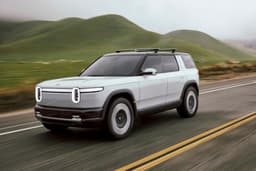
- R2 Model Market Potential: The new R2 model is priced starting at $45,000, below the average new vehicle price of $49,000 in the U.S., which is expected to attract a broader consumer base, although there remains a risk of low demand affecting its performance.
Trade with 70% Backtested Accuracy
Stop guessing "Should I Buy RIVN?" and start using high-conviction signals backed by rigorous historical data.
Sign up today to access powerful investing tools and make smarter, data-driven decisions.
Analyst Views on RIVN
Wall Street analysts forecast RIVN stock price to rise
18 Analyst Rating
8 Buy
7 Hold
3 Sell
Moderate Buy
Current: 16.470

Low
10.00
Averages
17.78
High
25.00
Current: 16.470
Low
10.00
Averages
17.78
High
25.00
About RIVN
Rivian Automotive, Inc. is an automotive manufacturer, which is engaged in developing and building category-defining electric vehicles (EVs) and accessories, as well as software and services that address the entire lifecycle of the vehicle. The Company’s R1 platform consists of two vehicles: the R1T, a two-row five-passenger pickup truck, and the R1S, a three-row seven-passenger sport utility vehicle (SUV). In the commercial market, the Company offers a Rivian Commercial Vehicle (RCV) platform. The vehicle on this platform is the Electric Delivery Van (EDV), designed and engineered by Rivian in collaboration with Amazon. The Company also offers FleetOS, its proprietary, end-to-end centralized fleet management subscription platform. It also offers a variety of services, including vehicle repair and maintenance, financing, insurance, software subscriptions and FleetOS solutions. Its value-added services include vehicle electrical architecture and software development services, and more.
About the author

Emily J. Thompson
Emily J. Thompson, a Chartered Financial Analyst (CFA) with 12 years in investment research, graduated with honors from the Wharton School. Specializing in industrial and technology stocks, she provides in-depth analysis for Intellectia’s earnings and market brief reports.
Rivian Shares Surge 25% After Quarterly Earnings Report

- Quarterly Report Highlights: Rivian's latest earnings report revealed an 8% increase in annual revenue and a $1.3 billion improvement in gross profits year-over-year, despite a 15% decline in automotive revenue for 2025 compared to 2024, showcasing the company's success in diversifying its revenue streams.
- Delivery Forecast Boost: The company anticipates delivering between 62,000 and 67,000 vehicles in 2026, which would represent a 59% increase if the upper range is achieved, indicating strong expansion potential and confidence in future demand within the electric vehicle market.
- New Model Launch: Rivian is set to unveil its first mass-market electric vehicle, the R2, on March 12, with details on pricing yet to be announced; however, the vehicle is expected to offer over 650 horsepower and a range of over 300 miles, receiving extremely positive pre-production reviews that could attract more consumers.
- Profitability Challenges Ahead: Although Rivian projects an adjusted EBITDA loss of $1.8 billion to $2.1 billion for 2026, the potential success of the R2 could signal a turning point towards profitability, reflecting the company's resilience and adaptability in a high-cost business environment.
See More
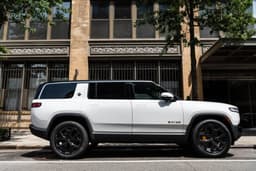
Rivian's Electric Vehicle Market Outlook Turns Positive
- Profitability Improvement: Rivian achieved a gross profit of $1.44 billion in 2025, a significant recovery from a negative $1.2 billion in 2024, primarily driven by a $775 million increase in automotive sales gross profit, indicating effective strategies in cost control and price enhancement.
- Market Expansion Plans: Rivian is set to launch the R2 model in 2026, aiming to enter the mass market with a more competitive price point, and the vehicle has received extremely positive reviews in pre-production, potentially reshaping the company's competitive landscape in the EV sector.
- Sales Data Comparison: Despite delivering only 42,247 vehicles in 2025 with a market capitalization of $21.7 billion, Rivian's stock has outperformed Tesla and other EV manufacturers over the past year, reflecting investor confidence in its future growth prospects.
- High-End Market Performance: Rivian's R1S SUV has become the best-selling premium electric vehicle priced above $70,000 in several states, demonstrating strong performance in the high-end market and establishing a solid brand foundation for the upcoming more affordable model.
See More
Rivian Automotive's 2026 Outlook Amid Uncertainty
- Delivery Expectations Rise: Rivian anticipates delivering between 62,000 and 67,000 vehicles in 2026, representing a 53% increase from 2025's midpoint, indicating strong hopes for the new R2 model to capture a broader market.
- Financial Performance Beats Expectations: In its Q4 2025 report, Rivian posted $1.29 billion in revenue and a loss of $0.54 per share, both surpassing analyst expectations of a $0.68 loss and $1.26 billion in sales, showcasing the company's resilience in a volatile environment.
- Market Competition Pressure: Although the R2 model starts at $45,000, below the U.S. average new vehicle price of $49,000, uncertainty around EV demand may still impact its stock performance and market penetration.
- Increased Policy Risks: The shifting tariff policies and environmental regulations under the Trump administration create uncertainty for Rivian and other EV manufacturers, complicating supply chain management and potentially undermining future business strategies and investor confidence.
See More

Rivian Automotive's 2026 Outlook and Challenges
- Stock Performance Analysis: In 2025, Rivian Automotive's stock experienced significant volatility, ending the year up 48%, which notably outperformed the S&P 500's 16% return, reflecting a mix of market optimism and uncertainty about its future.
- Market Environment Challenges: The uncertainty stemming from the Trump administration, including tariffs and changes to environmental regulations, poses significant challenges for Rivian and other EV manufacturers in managing their supply chains, potentially impacting their product roadmaps.
- 2026 Delivery Expectations: Rivian anticipates delivering between 62,000 and 67,000 vehicles in 2026, representing a 53% increase at the midpoint compared to 2025, indicating strong expectations tied to the launch of its new R2 model.
- R2 Model Market Potential: The new R2 model is priced starting at $45,000, below the average new vehicle price of $49,000 in the U.S., which is expected to attract a broader consumer base, although there remains a risk of low demand affecting its performance.
See More
Rivian Automotive Sees Major Profit Improvement in 2025
- Profitability Recovery: Rivian reported a gross profit of $144 million in 2025, a remarkable turnaround of $1.3 billion from a loss of $1.2 billion in 2024, indicating significant improvements in vehicle sales and cost management, which boosts investor confidence.
- Sales and Market Share: Despite delivering only 42,247 vehicles in 2025 and having a market cap of $21.7 billion, Rivian has outperformed Tesla and other competitors in the premium EV market, showcasing its competitive edge in a niche segment.
- R2 Model Launch: Rivian is set to introduce the R2 model in 2026, aiming to penetrate the mass market with a competitively priced vehicle, and the CEO noted that the R2 has received extremely positive reviews in preproduction, potentially transforming the company and the industry.
- Optimistic Market Outlook: Should Rivian continue to enhance its profitability and operational efficiencies, the success of the R2 model could provide new growth momentum for the company, leading to increased investor optimism and potential stock price appreciation.
See More
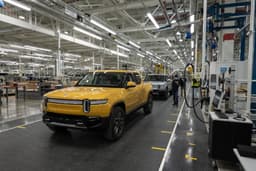
Electric Vehicle Market Faces Challenges and Opportunities
- Sales Growth Slowdown: According to Cox Automotive, while 2024 saw a record 1.3 million EVs sold in the U.S., the growth rate has significantly slowed since 2023, indicating a weakening market demand.
- Impact of Tax Incentive Removal: The federal government’s removal of EV sales tax incentives in October 2025 led to a staggering 46% drop in sales in Q4 compared to Q3, and a 36% year-over-year decline, highlighting the direct impact of policy changes on the market.
- Rivian Stock Volatility: Rivian Automotive's stock has plummeted 86% since its public debut in November 2021; however, it surged approximately 26% on February 13 following its Q4 earnings report, reflecting renewed market optimism about its recovery prospects.
- Delivery Forecast Increase: Rivian forecasts deliveries of 62,000 to 67,000 vehicles in 2026, representing a potential 59% increase if the upper range is achieved, indicating the company's growth potential in the EV market despite facing an adjusted loss guidance of $1.8 billion to $2.1 billion.
See More
Rivian Shares Surge 25% After Quarterly Earnings Report
- Quarterly Report Highlights: Rivian's latest earnings report revealed an 8% increase in annual revenue and a $1.3 billion improvement in gross profits year-over-year, despite a 15% decline in automotive revenue for 2025 compared to 2024, showcasing the company's success in diversifying its revenue streams.
- Delivery Forecast Boost: The company anticipates delivering between 62,000 and 67,000 vehicles in 2026, which would represent a 59% increase if the upper range is achieved, indicating strong expansion potential and confidence in future demand within the electric vehicle market.
- New Model Launch: Rivian is set to unveil its first mass-market electric vehicle, the R2, on March 12, with details on pricing yet to be announced; however, the vehicle is expected to offer over 650 horsepower and a range of over 300 miles, receiving extremely positive pre-production reviews that could attract more consumers.
- Profitability Challenges Ahead: Although Rivian projects an adjusted EBITDA loss of $1.8 billion to $2.1 billion for 2026, the potential success of the R2 could signal a turning point towards profitability, reflecting the company's resilience and adaptability in a high-cost business environment.
See More
Rivian's Electric Vehicle Market Outlook Turns Positive
- Profitability Improvement: Rivian achieved a gross profit of $1.44 billion in 2025, a significant recovery from a negative $1.2 billion in 2024, primarily driven by a $775 million increase in automotive sales gross profit, indicating effective strategies in cost control and price enhancement.
- Market Expansion Plans: Rivian is set to launch the R2 model in 2026, aiming to enter the mass market with a more competitive price point, and the vehicle has received extremely positive reviews in pre-production, potentially reshaping the company's competitive landscape in the EV sector.
- Sales Data Comparison: Despite delivering only 42,247 vehicles in 2025 with a market capitalization of $21.7 billion, Rivian's stock has outperformed Tesla and other EV manufacturers over the past year, reflecting investor confidence in its future growth prospects.
- High-End Market Performance: Rivian's R1S SUV has become the best-selling premium electric vehicle priced above $70,000 in several states, demonstrating strong performance in the high-end market and establishing a solid brand foundation for the upcoming more affordable model.
See More
Rivian Automotive's 2026 Outlook Amid Uncertainty
- Delivery Expectations Rise: Rivian anticipates delivering between 62,000 and 67,000 vehicles in 2026, representing a 53% increase from 2025's midpoint, indicating strong hopes for the new R2 model to capture a broader market.
- Financial Performance Beats Expectations: In its Q4 2025 report, Rivian posted $1.29 billion in revenue and a loss of $0.54 per share, both surpassing analyst expectations of a $0.68 loss and $1.26 billion in sales, showcasing the company's resilience in a volatile environment.
- Market Competition Pressure: Although the R2 model starts at $45,000, below the U.S. average new vehicle price of $49,000, uncertainty around EV demand may still impact its stock performance and market penetration.
- Increased Policy Risks: The shifting tariff policies and environmental regulations under the Trump administration create uncertainty for Rivian and other EV manufacturers, complicating supply chain management and potentially undermining future business strategies and investor confidence.
See More
Rivian Automotive's 2026 Outlook and Challenges
- Stock Performance Analysis: In 2025, Rivian Automotive's stock experienced significant volatility, ending the year up 48%, which notably outperformed the S&P 500's 16% return, reflecting a mix of market optimism and uncertainty about its future.
- Market Environment Challenges: The uncertainty stemming from the Trump administration, including tariffs and changes to environmental regulations, poses significant challenges for Rivian and other EV manufacturers in managing their supply chains, potentially impacting their product roadmaps.
- 2026 Delivery Expectations: Rivian anticipates delivering between 62,000 and 67,000 vehicles in 2026, representing a 53% increase at the midpoint compared to 2025, indicating strong expectations tied to the launch of its new R2 model.
- R2 Model Market Potential: The new R2 model is priced starting at $45,000, below the average new vehicle price of $49,000 in the U.S., which is expected to attract a broader consumer base, although there remains a risk of low demand affecting its performance.
See More
Rivian Automotive Sees Major Profit Improvement in 2025
- Profitability Recovery: Rivian reported a gross profit of $144 million in 2025, a remarkable turnaround of $1.3 billion from a loss of $1.2 billion in 2024, indicating significant improvements in vehicle sales and cost management, which boosts investor confidence.
- Sales and Market Share: Despite delivering only 42,247 vehicles in 2025 and having a market cap of $21.7 billion, Rivian has outperformed Tesla and other competitors in the premium EV market, showcasing its competitive edge in a niche segment.
- R2 Model Launch: Rivian is set to introduce the R2 model in 2026, aiming to penetrate the mass market with a competitively priced vehicle, and the CEO noted that the R2 has received extremely positive reviews in preproduction, potentially transforming the company and the industry.
- Optimistic Market Outlook: Should Rivian continue to enhance its profitability and operational efficiencies, the success of the R2 model could provide new growth momentum for the company, leading to increased investor optimism and potential stock price appreciation.
See More
Electric Vehicle Market Faces Challenges and Opportunities
- Sales Growth Slowdown: According to Cox Automotive, while 2024 saw a record 1.3 million EVs sold in the U.S., the growth rate has significantly slowed since 2023, indicating a weakening market demand.
- Impact of Tax Incentive Removal: The federal government’s removal of EV sales tax incentives in October 2025 led to a staggering 46% drop in sales in Q4 compared to Q3, and a 36% year-over-year decline, highlighting the direct impact of policy changes on the market.
- Rivian Stock Volatility: Rivian Automotive's stock has plummeted 86% since its public debut in November 2021; however, it surged approximately 26% on February 13 following its Q4 earnings report, reflecting renewed market optimism about its recovery prospects.
- Delivery Forecast Increase: Rivian forecasts deliveries of 62,000 to 67,000 vehicles in 2026, representing a potential 59% increase if the upper range is achieved, indicating the company's growth potential in the EV market despite facing an adjusted loss guidance of $1.8 billion to $2.1 billion.
See More