Rising Oil Prices Trigger Inflation Concerns
Written by Emily J. Thompson, Senior Investment Analyst
Updated: Mar 19 2026
0mins

Source: Fool
- Surging Oil Prices: Oil prices have jumped approximately 27% since the onset of the war in Iran, leading to increased transportation costs and raising widespread inflation concerns that could affect retail and industrial product pricing.
- Producer Price Index: The Producer Price Index (PPI) rose by 0.7% month-over-month in February, significantly exceeding the expected 0.3%, indicating that rising wholesale prices may foreshadow higher consumer prices, exacerbating inflationary pressures.
- Food Price Increases: The surge in fertilizer prices due to the war is expected to drive food prices higher, increasing living costs for consumers and potentially impacting overall economic spending capacity.
- Investor Strategy Shift: In light of escalating inflation, investors are advised to consider incorporating inflation-proof stocks into their portfolios to navigate potential economic challenges ahead.
Trade with 70% Backtested Accuracy
Stop guessing "Should I Buy AZO?" and start using high-conviction signals backed by rigorous historical data.
Sign up today to access powerful investing tools and make smarter, data-driven decisions.
Analyst Views on AZO
Wall Street analysts forecast AZO stock price to rise
19 Analyst Rating
16 Buy
3 Hold
0 Sell
Strong Buy
Current: 2949.060

Low
3550
Averages
4225
High
4800
Current: 2949.060
Low
3550
Averages
4225
High
4800
About AZO
AutoZone, Inc. is a retailer and distributor of automotive replacement parts and accessories in the Americas. Its Auto Parts Stores segment is a retailer and distributor of automotive parts and accessories through its approximately 7,353 stores in the United States, Mexico and Brazil. Each store carries an extensive product line for cars, sport utility vehicles, vans and light duty trucks, including new and remanufactured automotive hard parts, maintenance items, accessories and non-automotive products. The Company also sells automotive hard parts, maintenance items, accessories and non-automotive products through www.autozone.com, and its commercial customers can make purchases through www.autozonepro.com. In addition, the Company sells the ALLDATA brand of automotive diagnostic, repair, collision and shop management software through www.alldata.com. It also provides product information on its Duralast branded products through www.duralastparts.com.
About the author

Emily J. Thompson
Emily J. Thompson, a Chartered Financial Analyst (CFA) with 12 years in investment research, graduated with honors from the Wharton School. Specializing in industrial and technology stocks, she provides in-depth analysis for Intellectia’s earnings and market brief reports.

AutoZone Authorizes Additional $1.5 Billion Share Buyback

- Buyback Program Expansion: AutoZone's Board has authorized an additional $1.5 billion in share repurchases, bringing the total to $42.2 billion since 1998, reflecting the company's strong confidence in its value and ongoing capital management capabilities.
- Financial Health: CFO Jamere Jackson emphasized that the company's disciplined capital allocation strategy continues to generate strong free cash flow, allowing for increased buyback authorization while maintaining investment-grade credit ratings to support shareholder returns.
- Stock Performance: As of Tuesday, AZO shares closed at $3,127.79, up $22.31 or 0.72%, with overnight trading showing a slight increase to $3,130.00, indicating positive market reaction to the company's buyback plan.
- Increased Market Confidence: The expansion of this buyback program not only boosts investor confidence in AutoZone but may also attract more investors, further driving up stock prices and enhancing the company's competitiveness in the automotive parts market.
See More

AutoZone Approves Additional $1.5B Share Buyback
- Buyback Program Expansion: AutoZone's board has approved an additional $1.5 billion share buyback, bringing the total repurchase authorization to $42.2 billion since inception, reflecting strong confidence in the company's stock value.
- Cash Flow Supports Growth: Management indicated that robust free cash flow underpins growth and shareholder returns, ensuring the ability to maintain investment-grade credit ratings while continuing buybacks.
- Disciplined Capital Allocation: By implementing a disciplined capital allocation strategy, AutoZone effectively manages financial risks and maintains stable investment returns amid market fluctuations, thereby enhancing investor confidence.
- Valuation Advantage: Among large-cap consumer discretionary stocks, AutoZone is considered one of the cheapest in terms of valuation, indicating its competitive position and future growth potential, which attracts increased investor interest.
See More

AutoZone Authorizes $1.5 Billion Stock Buyback
- Buyback Program Expansion: AutoZone's Board has authorized an additional $1.5 billion stock buyback, bringing the total repurchase amount since 1998 to $42.2 billion, demonstrating the company's ongoing commitment to shareholder returns.
- Capital Allocation Strategy: CFO Jamere Jackson stated that the disciplined capital allocation approach enables strong free cash flow generation while increasing buyback authorization, reflecting the company's solid financial health and maintenance of investment-grade credit ratings.
- Store Network Scale: As of May 26, 2026, AutoZone operates 6,766 stores in the U.S., 933 in Mexico, and 157 in Brazil, totaling 7,856 stores, solidifying its leadership position in the automotive parts market across the Americas.
- Commercial Sales Program: Most stores have a Commercial sales program that provides prompt delivery and credit services to local, regional, and national repair garages, enhancing the company's competitive edge in the market.
See More

Market Analysis: Stock Performance and Investment Recommendations

- Stock Performance Analysis: Constellation Energy's stock has significantly declined, with analysts recommending a 'buy' as they believe the price has fallen too low, potentially offering a good entry point for investors.
- Investment Recommendation: Credo Technology is described as an 'excellent networking company,' with analysts suggesting to hold and gradually reduce cost basis, indicating its stock is on a rapid upward trajectory with substantial future potential.
- Market Sentiment: ManpowerGroup's performance has not been satisfactory, with analysts stating it has 'never really been a great win,' reflecting a lack of confidence in the company that may impact its future stock price.
- Value Trap Warning: Perrigo is viewed as a 'value trap,' with analysts noting a lack of growth potential and advising caution, which could lead to capital outflows from the stock.
See More
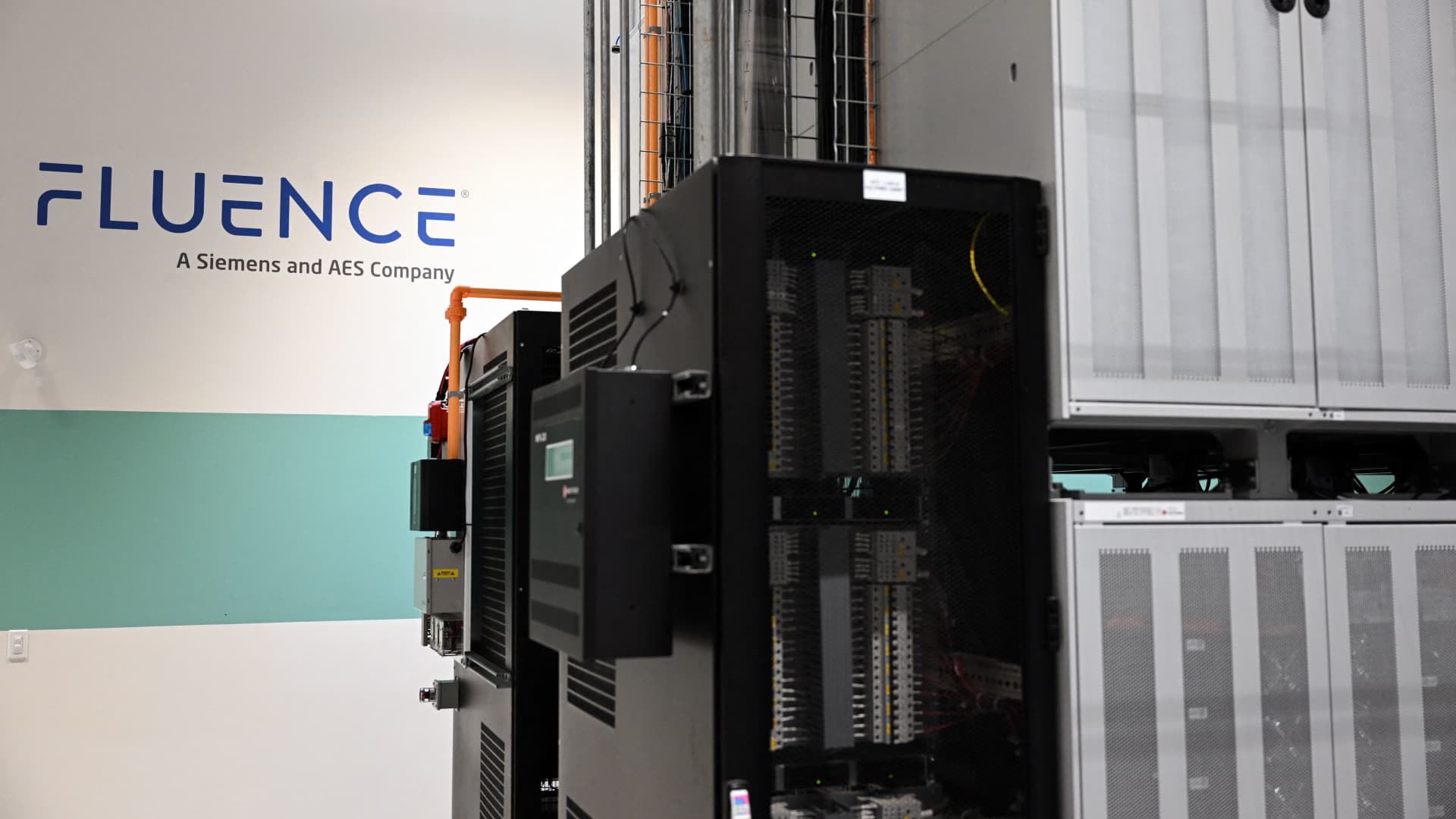
Fluence Energy's Profitability Outlook Under Scrutiny

- Profitability Concerns: Fluence Energy's profitability issues have raised market concerns, with analysts emphasizing that the company must achieve profitability to drive stock price increases, reflecting investor worries about its future financial performance.
- Lackluster Market Response: Despite Fluence Energy's significant potential in the renewable energy sector, its inability to achieve profitability has prevented its stock price from rising as expected, indicating market caution regarding its business model.
- Investor Confidence Shaken: Analysts express skepticism about Fluence's profitability outlook, suggesting that the company needs to implement effective measures to restore investor confidence, which is crucial for driving stock price recovery and impacting its long-term strategic direction.
- Intensifying Industry Competition: In the context of increasing competition within the renewable energy sector, Fluence Energy faces pressure from other companies and must accelerate its path to profitability to maintain market share and attract investment.
See More

SpaceX IPO Attracts Billionaire Investments


- Investment Opportunities: Billionaire investors, including former eBay President Jeff Skoll and AutoZone's Pitt Hyde, are set to benefit from SpaceX's IPO, highlighting strong interest in the space sector, particularly in infrastructure and defense investments.
- Technological Appeal: Investor Gary Lauder has invested in SpaceX through a special purpose vehicle and venture funds, emphasizing the strength of its Starlink satellite technology over space tourism prospects, indicating a market preference for practical technologies.
- Market Dynamics: Robin Lauber of Infinitas Capital invested in SpaceX in 2025 through a secondary offering, viewing its valuation as relatively reasonable, demonstrating confidence in future space investments while considering investments in European space companies to seize market opportunities.
- Risks and Challenges: Jon Kutler of Admiralty Partners points out that while the enthusiasm around the SpaceX IPO is high, aerospace investments face risks from federal spending fluctuations, emphasizing that defense spending will remain a recurring theme, urging investors to approach market changes cautiously.
See More
AutoZone Authorizes Additional $1.5 Billion Share Buyback
- Buyback Program Expansion: AutoZone's Board has authorized an additional $1.5 billion in share repurchases, bringing the total to $42.2 billion since 1998, reflecting the company's strong confidence in its value and ongoing capital management capabilities.
- Financial Health: CFO Jamere Jackson emphasized that the company's disciplined capital allocation strategy continues to generate strong free cash flow, allowing for increased buyback authorization while maintaining investment-grade credit ratings to support shareholder returns.
- Stock Performance: As of Tuesday, AZO shares closed at $3,127.79, up $22.31 or 0.72%, with overnight trading showing a slight increase to $3,130.00, indicating positive market reaction to the company's buyback plan.
- Increased Market Confidence: The expansion of this buyback program not only boosts investor confidence in AutoZone but may also attract more investors, further driving up stock prices and enhancing the company's competitiveness in the automotive parts market.
See More
AutoZone Approves Additional $1.5B Share Buyback
- Buyback Program Expansion: AutoZone's board has approved an additional $1.5 billion share buyback, bringing the total repurchase authorization to $42.2 billion since inception, reflecting strong confidence in the company's stock value.
- Cash Flow Supports Growth: Management indicated that robust free cash flow underpins growth and shareholder returns, ensuring the ability to maintain investment-grade credit ratings while continuing buybacks.
- Disciplined Capital Allocation: By implementing a disciplined capital allocation strategy, AutoZone effectively manages financial risks and maintains stable investment returns amid market fluctuations, thereby enhancing investor confidence.
- Valuation Advantage: Among large-cap consumer discretionary stocks, AutoZone is considered one of the cheapest in terms of valuation, indicating its competitive position and future growth potential, which attracts increased investor interest.
See More
AutoZone Authorizes $1.5 Billion Stock Buyback
- Buyback Program Expansion: AutoZone's Board has authorized an additional $1.5 billion stock buyback, bringing the total repurchase amount since 1998 to $42.2 billion, demonstrating the company's ongoing commitment to shareholder returns.
- Capital Allocation Strategy: CFO Jamere Jackson stated that the disciplined capital allocation approach enables strong free cash flow generation while increasing buyback authorization, reflecting the company's solid financial health and maintenance of investment-grade credit ratings.
- Store Network Scale: As of May 26, 2026, AutoZone operates 6,766 stores in the U.S., 933 in Mexico, and 157 in Brazil, totaling 7,856 stores, solidifying its leadership position in the automotive parts market across the Americas.
- Commercial Sales Program: Most stores have a Commercial sales program that provides prompt delivery and credit services to local, regional, and national repair garages, enhancing the company's competitive edge in the market.
See More
Market Analysis: Stock Performance and Investment Recommendations
- Stock Performance Analysis: Constellation Energy's stock has significantly declined, with analysts recommending a 'buy' as they believe the price has fallen too low, potentially offering a good entry point for investors.
- Investment Recommendation: Credo Technology is described as an 'excellent networking company,' with analysts suggesting to hold and gradually reduce cost basis, indicating its stock is on a rapid upward trajectory with substantial future potential.
- Market Sentiment: ManpowerGroup's performance has not been satisfactory, with analysts stating it has 'never really been a great win,' reflecting a lack of confidence in the company that may impact its future stock price.
- Value Trap Warning: Perrigo is viewed as a 'value trap,' with analysts noting a lack of growth potential and advising caution, which could lead to capital outflows from the stock.
See More
Fluence Energy's Profitability Outlook Under Scrutiny
- Profitability Concerns: Fluence Energy's profitability issues have raised market concerns, with analysts emphasizing that the company must achieve profitability to drive stock price increases, reflecting investor worries about its future financial performance.
- Lackluster Market Response: Despite Fluence Energy's significant potential in the renewable energy sector, its inability to achieve profitability has prevented its stock price from rising as expected, indicating market caution regarding its business model.
- Investor Confidence Shaken: Analysts express skepticism about Fluence's profitability outlook, suggesting that the company needs to implement effective measures to restore investor confidence, which is crucial for driving stock price recovery and impacting its long-term strategic direction.
- Intensifying Industry Competition: In the context of increasing competition within the renewable energy sector, Fluence Energy faces pressure from other companies and must accelerate its path to profitability to maintain market share and attract investment.
See More
SpaceX IPO Attracts Billionaire Investments
- Investment Opportunities: Billionaire investors, including former eBay President Jeff Skoll and AutoZone's Pitt Hyde, are set to benefit from SpaceX's IPO, highlighting strong interest in the space sector, particularly in infrastructure and defense investments.
- Technological Appeal: Investor Gary Lauder has invested in SpaceX through a special purpose vehicle and venture funds, emphasizing the strength of its Starlink satellite technology over space tourism prospects, indicating a market preference for practical technologies.
- Market Dynamics: Robin Lauber of Infinitas Capital invested in SpaceX in 2025 through a secondary offering, viewing its valuation as relatively reasonable, demonstrating confidence in future space investments while considering investments in European space companies to seize market opportunities.
- Risks and Challenges: Jon Kutler of Admiralty Partners points out that while the enthusiasm around the SpaceX IPO is high, aerospace investments face risks from federal spending fluctuations, emphasizing that defense spending will remain a recurring theme, urging investors to approach market changes cautiously.
See More