Repsol (REPYF) Reports Q4 Production Below Expectations, Stock Drops 6.2%
Written by Emily J. Thompson, Senior Investment Analyst
Updated: Jan 15 2026
0mins
Should l Buy E?
Source: seekingalpha
- Production Decline: Repsol's Q4 production averaged 544K boe/day, nearly 2% lower than last year and short of the 562K boe/day expected by investors, likely leading to a 5%-10% downward revision in adjusted income consensus expectations.
- Weak Upstream Performance: Analysts noted that Repsol's production in Trinidad and Tobago and the U.S. Eagle Ford fell short of expectations, indicating challenges in production capacity in these key markets that could impact future revenue growth.
- Stable Downstream Performance: Despite the weak upstream results, Repsol's downstream and industrial customer segments performed broadly in line with expectations, suggesting the company can maintain profitability amid an improved refining environment.
- Export License Applications: Repsol, along with European partner Eni, has applied for U.S. licenses to export oil from Venezuela's state-run PDVSA, indicating the company's strategic positioning in international markets.
Trade with 70% Backtested Accuracy
Stop guessing "Should I Buy E?" and start using high-conviction signals backed by rigorous historical data.
Sign up today to access powerful investing tools and make smarter, data-driven decisions.
Analyst Views on E
Wall Street analysts forecast E stock price to fall over the next 12 months. According to Wall Street analysts, the average 1-year price target for E is 18.24 USD with a low forecast of 17.25 USD and a high forecast of 19.23 USD. However, analyst price targets are subjective and often lag stock prices, so investors should focus on the objective reasons behind analyst rating changes, which better reflect the company's fundamentals.
3 Analyst Rating
1 Buy
2 Hold
0 Sell
Moderate Buy
Current: 41.490

Low
17.25
Averages
18.24
High
19.23
Current: 41.490
Low
17.25
Averages
18.24
High
19.23
About E
Eni SpA (Eni) is an Italy-based company engaged in the exploration, development and production of hydrocarbons, in the supply and marketing of gas, liquefied natural gas (LNG) and power, in the refining and marketing of petroleum products, in the production and marketing of basic petrochemicals, plastics and elastomers and in commodity trading. The Company's segments include Exploration & Production, Gas & Power, and Refining & Marketing. Its Exploration & Production segment engages in oil and natural gas exploration and field development and production, as well as LNG operations in over 40 countries, including Italy, Libya, Egypt, Norway, the United Kingdom, Angola, Congo, Nigeria, the United States, Kazakhstan, Algeria, Australia, Venezuela, Iraq, Ghana and Mozambique. Its Gas & Power segment engages in supply, trading and marketing of gas, LNG and electricity, international gas transport activities and commodity trading and derivatives.
About the author

Emily J. Thompson
Emily J. Thompson, a Chartered Financial Analyst (CFA) with 12 years in investment research, graduated with honors from the Wharton School. Specializing in industrial and technology stocks, she provides in-depth analysis for Intellectia’s earnings and market brief reports.

Shell and Eni Face $4B Arbitration Ruling in Kazakhstan

- Arbitration Outcome: Shell and Eni lost an international arbitration case regarding the Karachaganak field in Kazakhstan, making them liable for up to $4 billion in compensation, highlighting increased risks in the international investment landscape.
- Compensation Range: While the final compensation amount is yet to be determined, external legal advice suggests that the consortium may need to repay between $2 billion and $4 billion, potentially impacting future financial planning and investment decisions.
- Contractual Changes: The arbitration ruling upheld the Kazakh government's position that the companies recovered unapproved cost overruns, which is expected to lead to changes in the oil distribution formula within the field's production sharing contract, affecting the project's profitability model.
- Consortium Structure: Shell and Eni each hold a 29.25% stake in the project, with other partners including Chevron at 18%, Russia's Lukoil at 13.5%, and KazMunayGaz at 10%, illustrating the diversified investment structure of the consortium.
See More
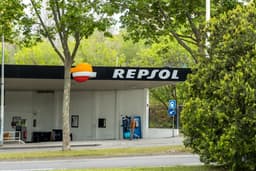
Repsol (REPYF) Reports Q4 Production Below Expectations, Stock Drops 6.2%
- Production Decline: Repsol's Q4 production averaged 544K boe/day, nearly 2% lower than last year and short of the 562K boe/day expected by investors, likely leading to a 5%-10% downward revision in adjusted income consensus expectations.
- Weak Upstream Performance: Analysts noted that Repsol's production in Trinidad and Tobago and the U.S. Eagle Ford fell short of expectations, indicating challenges in production capacity in these key markets that could impact future revenue growth.
- Stable Downstream Performance: Despite the weak upstream results, Repsol's downstream and industrial customer segments performed broadly in line with expectations, suggesting the company can maintain profitability amid an improved refining environment.
- Export License Applications: Repsol, along with European partner Eni, has applied for U.S. licenses to export oil from Venezuela's state-run PDVSA, indicating the company's strategic positioning in international markets.
See More
Italy's PM Meloni Backs Eni CEO Descalzi for Fifth Term
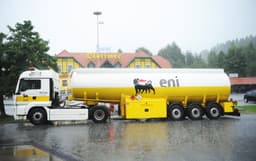
- Leadership Endorsement: Italy's Prime Minister Meloni is preparing to support Eni (E) CEO Claudio Descalzi for a new three-year term, which, if successful, would make him the longest-serving leader in the company's history, reflecting the government's commitment to state-owned enterprises.
- Shareholder Meeting Authority: With Meloni's administration controlling nearly 32% of Eni, they will dictate the management team's appointments at the shareholder meeting in May, ensuring alignment between corporate strategy and national interests, thereby boosting investor confidence.
- Other Executive Extensions: Meloni is also expected to extend CEO mandates at other key Italian state-backed companies, including defense contractor Leonardo (FINMF) and energy firm Enel (ENLAY), indicating a focus on stability within the leadership of state enterprises.
- Future Challenges: Analysts highlight that Descalzi's primary challenge over the next three years will be to drive growth in the company's new units while ensuring that promised returns to investment partners are delivered, which will directly impact the company's long-term development and market performance.
See More

March GL Plans $60 Million Investment for Oil Exploration in Greenland
- Resource Potential: U.S. government studies suggest that the Arctic could hold up to 90 billion barrels of oil and nearly 1,700 trillion cubic feet of natural gas, which, if successfully developed, could have a profound impact on the global energy market.
- Strategic Investment Plan: March GL plans to raise hundreds of millions through an upcoming SPAC merger, with drilling of the first well at Jameson Land set for 2026, budgeting $40 million for the first well and approximately $20 million for the second, demonstrating confidence in future oil and gas markets.
- Geopolitical Implications: As the U.S. seeks to reduce dependence on Russian oil, the development of Greenland's oil resources could inject new supply into U.S. and European markets, potentially altering the current energy landscape.
- Operational Challenges: Due to Greenland's harsh climate, March GL faces delays in transporting equipment, with plans to begin road construction to drilling sites only after thawing in spring, reflecting the complexities of operating in the region.
See More

Morgan Stanley Surpasses $8 Trillion AUM with 22.4% Dividend Growth


- Asset Management Breakthrough: Morgan Stanley has surpassed $8 trillion in assets under management, indicating strong growth potential in wealth management, which is expected to enhance the company's market position by 2026.
- Significant Dividend Growth: The company offers a dividend yield of 2.14%, and despite being relatively low, its 41% payout ratio and 22.4% five-year annualized growth rate demonstrate strong financial stability and attractiveness to investors.
- Optimistic Earnings Outlook: Morgan Stanley is set to report earnings on January 15, with analysts expecting Q4 revenue to exceed $17.4 billion, further solidifying investor confidence in the stock.
- Positive Technical Signals: The stock's 50-day and 200-day simple moving averages are trending upwards, and the MACD indicator shows strong buying signals, indicating a significant price increase over the past two sessions and suggesting future growth potential.
See More

TechnipFMC Awarded Subsea Contract by Eni

- Contract Award: TechnipFMC has been awarded a subsea contract valued between $250 million.
- Announcement Timing: The announcement regarding the contract was made late Thursday.
See More
Shell and Eni Face $4B Arbitration Ruling in Kazakhstan
- Arbitration Outcome: Shell and Eni lost an international arbitration case regarding the Karachaganak field in Kazakhstan, making them liable for up to $4 billion in compensation, highlighting increased risks in the international investment landscape.
- Compensation Range: While the final compensation amount is yet to be determined, external legal advice suggests that the consortium may need to repay between $2 billion and $4 billion, potentially impacting future financial planning and investment decisions.
- Contractual Changes: The arbitration ruling upheld the Kazakh government's position that the companies recovered unapproved cost overruns, which is expected to lead to changes in the oil distribution formula within the field's production sharing contract, affecting the project's profitability model.
- Consortium Structure: Shell and Eni each hold a 29.25% stake in the project, with other partners including Chevron at 18%, Russia's Lukoil at 13.5%, and KazMunayGaz at 10%, illustrating the diversified investment structure of the consortium.
See More
Repsol (REPYF) Reports Q4 Production Below Expectations, Stock Drops 6.2%
- Production Decline: Repsol's Q4 production averaged 544K boe/day, nearly 2% lower than last year and short of the 562K boe/day expected by investors, likely leading to a 5%-10% downward revision in adjusted income consensus expectations.
- Weak Upstream Performance: Analysts noted that Repsol's production in Trinidad and Tobago and the U.S. Eagle Ford fell short of expectations, indicating challenges in production capacity in these key markets that could impact future revenue growth.
- Stable Downstream Performance: Despite the weak upstream results, Repsol's downstream and industrial customer segments performed broadly in line with expectations, suggesting the company can maintain profitability amid an improved refining environment.
- Export License Applications: Repsol, along with European partner Eni, has applied for U.S. licenses to export oil from Venezuela's state-run PDVSA, indicating the company's strategic positioning in international markets.
See More
Italy's PM Meloni Backs Eni CEO Descalzi for Fifth Term
- Leadership Endorsement: Italy's Prime Minister Meloni is preparing to support Eni (E) CEO Claudio Descalzi for a new three-year term, which, if successful, would make him the longest-serving leader in the company's history, reflecting the government's commitment to state-owned enterprises.
- Shareholder Meeting Authority: With Meloni's administration controlling nearly 32% of Eni, they will dictate the management team's appointments at the shareholder meeting in May, ensuring alignment between corporate strategy and national interests, thereby boosting investor confidence.
- Other Executive Extensions: Meloni is also expected to extend CEO mandates at other key Italian state-backed companies, including defense contractor Leonardo (FINMF) and energy firm Enel (ENLAY), indicating a focus on stability within the leadership of state enterprises.
- Future Challenges: Analysts highlight that Descalzi's primary challenge over the next three years will be to drive growth in the company's new units while ensuring that promised returns to investment partners are delivered, which will directly impact the company's long-term development and market performance.
See More
March GL Plans $60 Million Investment for Oil Exploration in Greenland
- Resource Potential: U.S. government studies suggest that the Arctic could hold up to 90 billion barrels of oil and nearly 1,700 trillion cubic feet of natural gas, which, if successfully developed, could have a profound impact on the global energy market.
- Strategic Investment Plan: March GL plans to raise hundreds of millions through an upcoming SPAC merger, with drilling of the first well at Jameson Land set for 2026, budgeting $40 million for the first well and approximately $20 million for the second, demonstrating confidence in future oil and gas markets.
- Geopolitical Implications: As the U.S. seeks to reduce dependence on Russian oil, the development of Greenland's oil resources could inject new supply into U.S. and European markets, potentially altering the current energy landscape.
- Operational Challenges: Due to Greenland's harsh climate, March GL faces delays in transporting equipment, with plans to begin road construction to drilling sites only after thawing in spring, reflecting the complexities of operating in the region.
See More
Morgan Stanley Surpasses $8 Trillion AUM with 22.4% Dividend Growth
- Asset Management Breakthrough: Morgan Stanley has surpassed $8 trillion in assets under management, indicating strong growth potential in wealth management, which is expected to enhance the company's market position by 2026.
- Significant Dividend Growth: The company offers a dividend yield of 2.14%, and despite being relatively low, its 41% payout ratio and 22.4% five-year annualized growth rate demonstrate strong financial stability and attractiveness to investors.
- Optimistic Earnings Outlook: Morgan Stanley is set to report earnings on January 15, with analysts expecting Q4 revenue to exceed $17.4 billion, further solidifying investor confidence in the stock.
- Positive Technical Signals: The stock's 50-day and 200-day simple moving averages are trending upwards, and the MACD indicator shows strong buying signals, indicating a significant price increase over the past two sessions and suggesting future growth potential.
See More
TechnipFMC Awarded Subsea Contract by Eni
- Contract Award: TechnipFMC has been awarded a subsea contract valued between $250 million.
- Announcement Timing: The announcement regarding the contract was made late Thursday.
See More