Jim Cramer Identifies Three High-Dividend Stocks with Lower Risk Amid Market Volatility


Cramer's Stock Picks: Jim Cramer highlighted three reliable dividend stocks—Enbridge, Pfizer, and Realty Income—after a volatile week on Wall Street, emphasizing their safety compared to other high-yielders.
Enbridge's Stability: As an oil pipeline company, Enbridge benefits from commodity volume rather than price, offering a yield of over 5.6% and solid long-term growth potential, with minimal regulatory concerns under the current administration.
Pfizer's Potential: Cramer views Pfizer as a "bond equivalent" with a nearly 6.9% yield, noting its strong cash flow and potential to leverage recent acquisitions to navigate upcoming patent expirations.
Realty Income's Resilience: Despite concerns over its tenant base, Realty Income offers a 5.7% yield and maintains a high occupancy rate of 98.7%, with tenants in essential sectors likely to withstand economic downturns.
Trade with 70% Backtested Accuracy
Analyst Views on O

About O
About the author


Investors Should Focus on High Dividend Stocks

- Altria's Dividend Appeal: As the largest tobacco company in the U.S., Altria offers a forward dividend yield of 5.8% and has raised its dividend 60 times over the past 57 years, establishing itself as a 'Dividend King'; despite declining adult smoking rates, it has offset revenue pressures through price increases and share buybacks, with expectations of generating $5 billion in smoke-free revenue by 2028, driving a projected 13% CAGR in EPS.
- Realty Income's Stability: Realty Income owns over 15,500 commercial properties leased to recession-resistant businesses, currently boasting a forward dividend yield of 5.2% and having raised its dividend 134 times since its 1994 IPO; despite challenges from high interest rates, its occupancy rate remains robust at 98.9%, demonstrating strong market adaptability.
- Market Environment Impact: With the S&P 500 trading near all-time highs, investor reluctance to buy stocks may increase, yet the appeal of high dividend stocks could rise significantly if the market pulls back, positioning Altria and Realty Income as attractive defensive investment options for income-seeking investors.
- Investment Strategy Recommendation: In the current market context, investors should consider allocating $500 or more into Altria and Realty Income, as both stocks not only provide dividends exceeding the 10-year Treasury yield but also exhibit strong growth potential in their respective sectors, making them suitable for conservative investors seeking passive income.

Real Estate Investment Trusts Present Compelling Investment Opportunities
- Market Environment Analysis: According to Will Barton, while elevated interest rates have pressured commercial real estate, capitalization rates have reached 20-year highs, attracting private equity investors into the sector, indicating potential valuation growth opportunities.
- Quality Asset Recommendation: Barton highlights Realty Income (O) as a prime undervalued asset in the REIT space, currently trading at 14 to 15 times funds from operations, significantly below its fair valuation range of high teens to low twenties, showcasing strong investment appeal.
- Yield Changes: Although yields in the REIT sector have compressed to the 3% to 6% range, down from 8% to 10% in the early 2000s, there are still pockets of high-yield investment opportunities in distressed areas, albeit with corresponding risks.
- Future Outlook: Barton believes that as interest rates gradually decline, REITs are positioned for significant valuation improvements, allowing investors to accept lower yields while potentially benefiting from capital appreciation.

Realty Income's Consistent Dividend Growth and Strong Financials
- Stable Dividend Record: Realty Income recently declared its 671st consecutive monthly dividend, showcasing over 50 years of income consistency, which attracts investors seeking passive income.
- High Yield Advantage: The REIT offers a dividend yield exceeding 5%, several times higher than the S&P 500's approximately 1.1%, allowing investors to generate more passive income per dollar invested.
- Strong Financial Profile: Realty Income maintains a low dividend payout ratio of 71.7%, retaining nearly $1 billion in free cash flow annually for new investments, ensuring financial stability and growth potential.
- Market Expansion Potential: The company estimates the total addressable market for net-lease real estate at around $14 trillion across the U.S. and Europe, planning to invest $9.5 billion in 2023 to support future dividend increases, indicating a strategic growth trajectory.
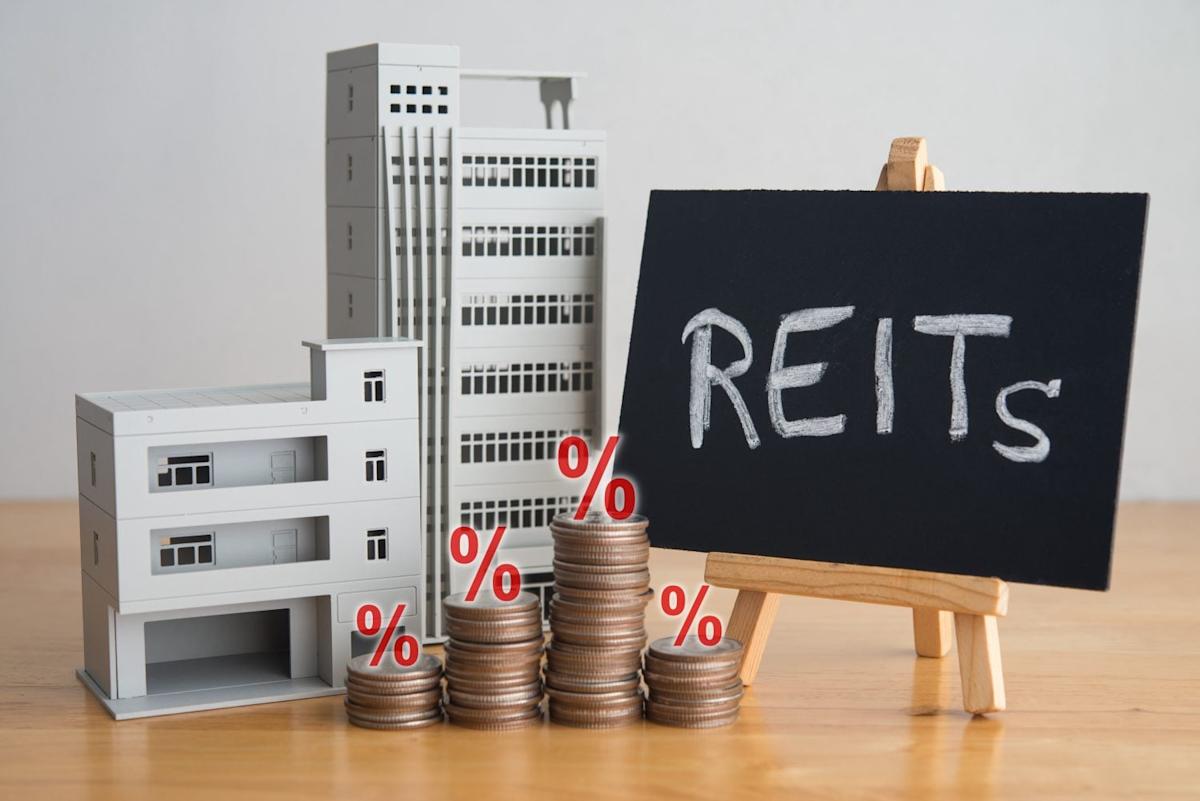
Strategies for Generating Income with Real Estate Investment Trusts


- Capital Requirement Analysis: To achieve an annual retirement income of $50,000, investors need approximately $1.11 million in capital, with half sourced from traditional dividend stocks and the other half from real estate investments, significantly impacting income performance over the next two decades.
- Yield Tier Breakdown: Conservative investors require about $1.43 million in capital to achieve a 3% to 4% yield, while a moderate 5.5% yield necessitates around $909,091, illustrating how different yield tiers directly influence capital needs.
- Tax Implications for REITs: REIT distributions are typically taxed as ordinary income, but the Section 199A deduction allows investors to deduct 20% of eligible REIT dividends, effectively lowering the tax rate to approximately 17.6%, which is crucial for enhancing after-tax income.
- Diversification Investment Advice: Investors are advised to diversify their REIT investments across subsectors to mitigate concentration risk, especially in the current environment where the 10-year Treasury yield stands at 4.59%, significantly increasing risks associated with any single REIT category.

Realty Income's Consistent Monthly Dividends Highlight Investment Appeal
- Stable Dividend Record: Realty Income recently declared its 671st consecutive monthly dividend, showcasing over half a century of income consistency, which attracts investors seeking passive income.
- High Yield Advantage: The REIT offers a dividend yield exceeding 5%, significantly higher than the current S&P 500 yield of approximately 1.1%, allowing investors to generate more passive income per dollar invested, enhancing its investment appeal.
- Strong Financial Profile: Realty Income maintains a low dividend payout ratio of 71.7%, retaining nearly $1 billion in free cash flow annually for new investments, ensuring its ongoing dividend capacity and future growth potential.
- Market Expansion Potential: The company plans to invest $9.5 billion in new properties in 2023 and has entered the U.S. data center market and Mexico, indicating growth opportunities within the estimated $14 trillion net-lease real estate market.

Realty Income and Coca-Cola: Reliable Dividend Stocks

- Advantage of Realty Income: Realty Income, a REIT that pays monthly dividends, has raised its payouts for over 30 years since its IPO in 1994, with the latest monthly dividend exceeding $0.27 per share and a current yield of 5.3%, showcasing its stability and appeal amid economic fluctuations.
- Strong Financial Performance: By 2025, Realty Income's annual revenue grew by 9%, with funds from operations (FFO) improving by 11% to nearly $3.9 billion, indicating its success in the retail property sector, particularly with recession-resistant tenants like supermarkets and convenience stores.
- Coca-Cola's Brand Power: Coca-Cola's revenue rose from $38.7 billion in 2020 to nearly $48.4 billion in 2025, with net income increasing by 23% to $13.1 billion in the same year, demonstrating its strong profitability even as consumer health consciousness rises.
- Dividend King Status: Coca-Cola is one of the few
Investors Should Focus on High Dividend Stocks
- Altria's Dividend Appeal: As the largest tobacco company in the U.S., Altria offers a forward dividend yield of 5.8% and has raised its dividend 60 times over the past 57 years, establishing itself as a 'Dividend King'; despite declining adult smoking rates, it has offset revenue pressures through price increases and share buybacks, with expectations of generating $5 billion in smoke-free revenue by 2028, driving a projected 13% CAGR in EPS.
- Realty Income's Stability: Realty Income owns over 15,500 commercial properties leased to recession-resistant businesses, currently boasting a forward dividend yield of 5.2% and having raised its dividend 134 times since its 1994 IPO; despite challenges from high interest rates, its occupancy rate remains robust at 98.9%, demonstrating strong market adaptability.
- Market Environment Impact: With the S&P 500 trading near all-time highs, investor reluctance to buy stocks may increase, yet the appeal of high dividend stocks could rise significantly if the market pulls back, positioning Altria and Realty Income as attractive defensive investment options for income-seeking investors.
- Investment Strategy Recommendation: In the current market context, investors should consider allocating $500 or more into Altria and Realty Income, as both stocks not only provide dividends exceeding the 10-year Treasury yield but also exhibit strong growth potential in their respective sectors, making them suitable for conservative investors seeking passive income.
Real Estate Investment Trusts Present Compelling Investment Opportunities
- Market Environment Analysis: According to Will Barton, while elevated interest rates have pressured commercial real estate, capitalization rates have reached 20-year highs, attracting private equity investors into the sector, indicating potential valuation growth opportunities.
- Quality Asset Recommendation: Barton highlights Realty Income (O) as a prime undervalued asset in the REIT space, currently trading at 14 to 15 times funds from operations, significantly below its fair valuation range of high teens to low twenties, showcasing strong investment appeal.
- Yield Changes: Although yields in the REIT sector have compressed to the 3% to 6% range, down from 8% to 10% in the early 2000s, there are still pockets of high-yield investment opportunities in distressed areas, albeit with corresponding risks.
- Future Outlook: Barton believes that as interest rates gradually decline, REITs are positioned for significant valuation improvements, allowing investors to accept lower yields while potentially benefiting from capital appreciation.
Realty Income's Consistent Dividend Growth and Strong Financials
- Stable Dividend Record: Realty Income recently declared its 671st consecutive monthly dividend, showcasing over 50 years of income consistency, which attracts investors seeking passive income.
- High Yield Advantage: The REIT offers a dividend yield exceeding 5%, several times higher than the S&P 500's approximately 1.1%, allowing investors to generate more passive income per dollar invested.
- Strong Financial Profile: Realty Income maintains a low dividend payout ratio of 71.7%, retaining nearly $1 billion in free cash flow annually for new investments, ensuring financial stability and growth potential.
- Market Expansion Potential: The company estimates the total addressable market for net-lease real estate at around $14 trillion across the U.S. and Europe, planning to invest $9.5 billion in 2023 to support future dividend increases, indicating a strategic growth trajectory.
Strategies for Generating Income with Real Estate Investment Trusts
- Capital Requirement Analysis: To achieve an annual retirement income of $50,000, investors need approximately $1.11 million in capital, with half sourced from traditional dividend stocks and the other half from real estate investments, significantly impacting income performance over the next two decades.
- Yield Tier Breakdown: Conservative investors require about $1.43 million in capital to achieve a 3% to 4% yield, while a moderate 5.5% yield necessitates around $909,091, illustrating how different yield tiers directly influence capital needs.
- Tax Implications for REITs: REIT distributions are typically taxed as ordinary income, but the Section 199A deduction allows investors to deduct 20% of eligible REIT dividends, effectively lowering the tax rate to approximately 17.6%, which is crucial for enhancing after-tax income.
- Diversification Investment Advice: Investors are advised to diversify their REIT investments across subsectors to mitigate concentration risk, especially in the current environment where the 10-year Treasury yield stands at 4.59%, significantly increasing risks associated with any single REIT category.
Realty Income's Consistent Monthly Dividends Highlight Investment Appeal
- Stable Dividend Record: Realty Income recently declared its 671st consecutive monthly dividend, showcasing over half a century of income consistency, which attracts investors seeking passive income.
- High Yield Advantage: The REIT offers a dividend yield exceeding 5%, significantly higher than the current S&P 500 yield of approximately 1.1%, allowing investors to generate more passive income per dollar invested, enhancing its investment appeal.
- Strong Financial Profile: Realty Income maintains a low dividend payout ratio of 71.7%, retaining nearly $1 billion in free cash flow annually for new investments, ensuring its ongoing dividend capacity and future growth potential.
- Market Expansion Potential: The company plans to invest $9.5 billion in new properties in 2023 and has entered the U.S. data center market and Mexico, indicating growth opportunities within the estimated $14 trillion net-lease real estate market.
Realty Income and Coca-Cola: Reliable Dividend Stocks
- Advantage of Realty Income: Realty Income, a REIT that pays monthly dividends, has raised its payouts for over 30 years since its IPO in 1994, with the latest monthly dividend exceeding $0.27 per share and a current yield of 5.3%, showcasing its stability and appeal amid economic fluctuations.
- Strong Financial Performance: By 2025, Realty Income's annual revenue grew by 9%, with funds from operations (FFO) improving by 11% to nearly $3.9 billion, indicating its success in the retail property sector, particularly with recession-resistant tenants like supermarkets and convenience stores.
- Coca-Cola's Brand Power: Coca-Cola's revenue rose from $38.7 billion in 2020 to nearly $48.4 billion in 2025, with net income increasing by 23% to $13.1 billion in the same year, demonstrating its strong profitability even as consumer health consciousness rises.
- Dividend King Status: Coca-Cola is one of the few