

Elon Musk's xAI Faces EPA Restrictions on Data Center Expansion
Written by Emily J. Thompson, Senior Investment Analyst
Updated: Jan 17 2026
0mins


Source: Newsfilter
- EPA Regulation Impact: The EPA's updated rule mandates that xAI must obtain Clean Air Act permits for future data center construction, prohibiting the use of natural gas turbines as temporary equipment, thereby limiting its expansion plans in Memphis.
- Pollution Concerns: Research indicates that xAI's use of gas turbines in Memphis has exacerbated air pollution, particularly affecting the Boxtown community, where residents have voiced health concerns due to foul odors and smog, highlighting the company's social responsibility issues.
- Increased Regulatory Scrutiny: The EPA's closure of legal loopholes exploited by xAI requires strict environmental review processes for new facilities, potentially slowing its expansion in Memphis and surrounding areas, which could impact its competitiveness in the rapidly growing generative AI market.
- Investment and Controversy: Despite raising $20 billion from investors, xAI faces multiple investigations related to deepfake content, which may affect its reputation and future funding capabilities, especially under the pressure of environmental regulations and public scrutiny.
Trade with 70% Backtested Accuracy
Stop guessing "Should I Buy NVDA?" and start using high-conviction signals backed by rigorous historical data.
Sign up today to access powerful investing tools and make smarter, data-driven decisions.
Analyst Views on NVDA
Wall Street analysts forecast NVDA stock price to rise
41 Analyst Rating
39 Buy
1 Hold
1 Sell
Strong Buy
Current: 200.090

Low
200.00
Averages
264.97
High
352.00
Current: 200.090
Low
200.00
Averages
264.97
High
352.00
About NVDA
NVIDIA Corporation is an artificial intelligence (AI) infrastructure company. The Company is engaged in accelerated computing to help solve the challenging computational problems. Its segments include Compute & Networking and Graphics. The Compute & Networking segment includes its Data Center accelerated computing and networking platforms and AI solutions and software, and automotive platforms and autonomous and electric vehicle solutions, including software. The Graphics segment includes GeForce GPUs for gaming and personal computers (PCs), and Quadro/NVIDIA RTX GPUs for enterprise workstation graphics. Its technology stack includes the foundational NVIDIA CUDA development platform that runs on all NVIDIA GPUs, as well as hundreds of domain-specific software libraries, frameworks, algorithms, software development kits (SDKs), and application programming interfaces (APIs). Its platforms address four markets, which include Data Center, Gaming, Professional Visualization, and Automotive.
About the author

Emily J. Thompson
Emily J. Thompson, a Chartered Financial Analyst (CFA) with 12 years in investment research, graduated with honors from the Wharton School. Specializing in industrial and technology stocks, she provides in-depth analysis for Intellectia’s earnings and market brief reports.

Nvidia's Stock Performance and Future Outlook

- Staggering Returns: Nvidia has achieved a compound annual growth rate of 59.49% since 2021, meaning a $1,000 investment five years ago would now be worth $10,319.71, significantly outperforming the S&P 500's 13.06% growth, highlighting its exceptional investment potential.
- Market Leadership: Nvidia remains the undisputed leader in the GPU market, and with hyperscalers investing heavily in AI infrastructure, this trend is expected to continue, further solidifying its market dominance and driving future growth.
- Relative Valuation: Despite Nvidia's stock appearing cheap relative to its growth potential, trading at a forward P/E of 22.2x compared to the tech sector's average of 22.4x, this suggests the market may be undervaluing its future growth prospects.
- Investor Confidence: Although the stock has seen recent declines, analysts believe Nvidia can still deliver above-average returns, prompting investors to seize the opportunity to buy its shares for solid returns in the coming years.
See More

Nvidia Caps Off Strong Trading Quarter Amid Market Shifts
- Stock Price Fluctuations: Despite an 8% drop in June, Nvidia's stock has risen 24% over the past year, indicating its long-term growth potential, even as market leadership shifts.
- Strong Financial Performance: The latest financial report reveals an 85% year-over-year revenue increase and a 55.7% adjusted net margin, showcasing robust profitability despite declining sales in China and rising competition.
- Future Earnings Expectations: Analysts project Nvidia's earnings at $8.97 per share for this fiscal year and $12.76 for the new fiscal year, reflecting optimism about its growth, even as the current stock trades at less than 22 times earnings.
- Market Competition Dynamics: While competitors are emerging in the AI space, Nvidia is still trading at a lower price-to-earnings ratio compared to many slower-growing tech companies, indicating its relative value and potential investment opportunities.
See More

Magnificent Seven Stocks Lose $2 Trillion in Market Cap


- Significant Market Cap Loss: As of Tuesday, the combined valuation of the Magnificent Seven stood at $21.7 trillion, yet they collectively lost approximately $2 trillion in June, indicating a waning investor confidence in these once-dominant tech giants.
- ETF Underperformance: The Roundhill Magnificent Seven ETF fell 9% in June, marking its second worst month since its 2023 launch, only behind a 10.5% drop in March 2025, reflecting increasing market concerns about these companies' future prospects.
- Declining Cash Flows: Free cash flow for four firms—Meta, Alphabet, Microsoft, and Amazon—has sharply declined from its 2024 peak into 2026, raising investor anxiety as these companies shift focus from buybacks to substantial AI expenditures.
- Diverging Investor Sentiment: Despite the overall decline in the Magnificent Seven, some Wall Street analysts remain bullish on companies like Amazon and Alphabet, suggesting that the recent pullback may be overdone and that AI investments could lead to future revenue growth.
See More
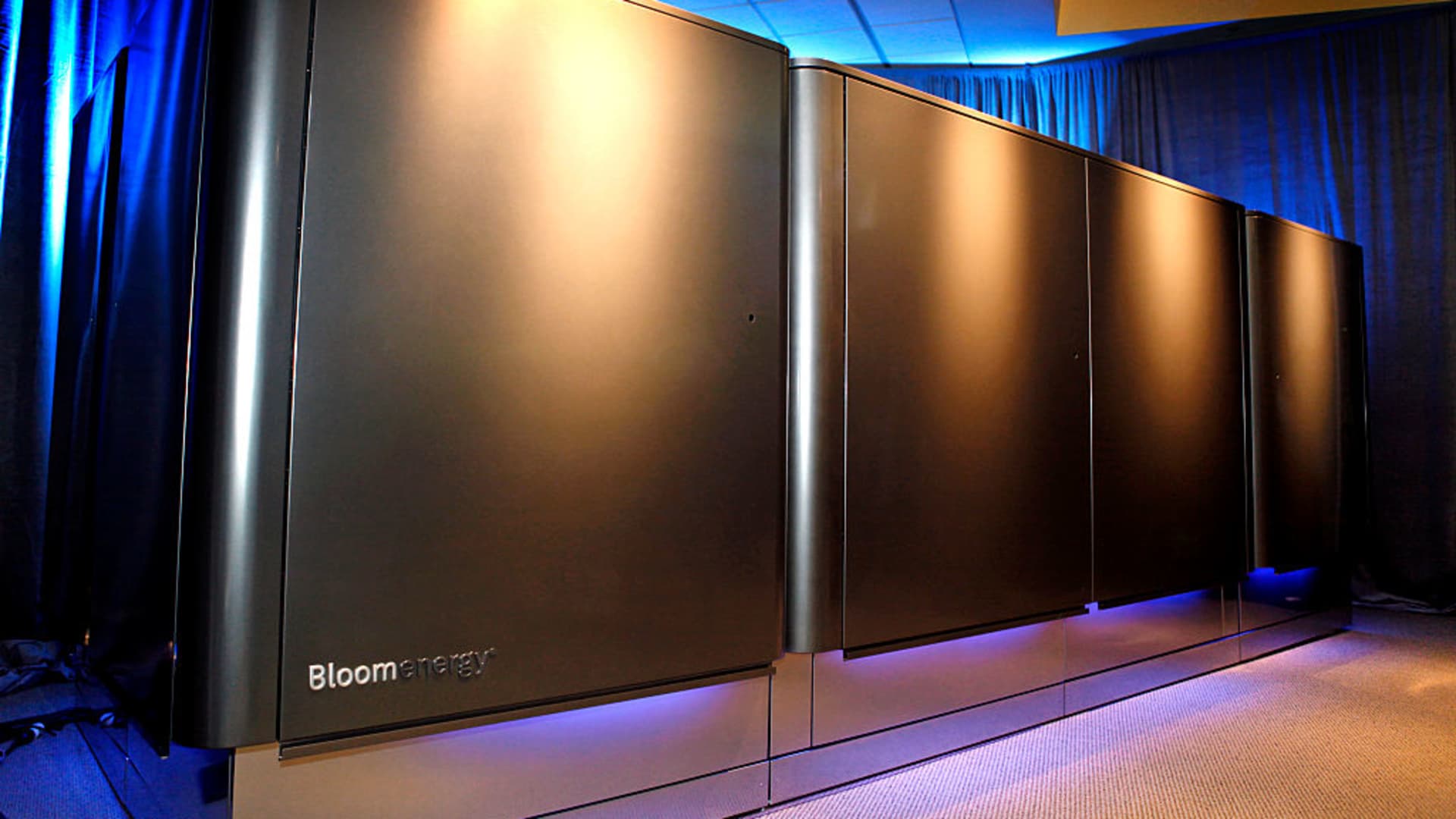
Key Takeaways from Wednesday's Investing Club Meeting


- Market Dynamics: The S&P 500 is up at the start of the new month, while the Nasdaq faces pressure as investors take profits in semiconductor stocks like Micron, Sandisk, Nvidia, and Broadcom, indicating volatility in market sentiment.
- Nike Exit: Jim Cramer exited his position in Nike after a disappointing quarter, acknowledging a 40% loss, and despite previous confidence in a turnaround, he opted to reallocate funds to FedEx Freight for potentially better returns.
- Salesforce Stock Surge: Salesforce shares jumped over 5% after Guggenheim upgraded the stock to buy with a $228 price target, although Jim Cramer remains cautious about the company's growth prospects, noting that AI pressure won't be fatal but overall business growth is lacking.
- Rapid Trade Review: Stocks mentioned at the end of the video include Micron, Constellation Brands, General Mills, Lockheed Martin, and Bloom Energy, reflecting Jim Cramer's focus on a diversified investment portfolio.
See More

BofA's Bubble Risk Indicator Warns for U.S. Tech Stocks

- Bubble Risk Warning: BofA's Bubble Risk Indicator indicates a score of 0.91 for the PHLX Semiconductor Sector and 0.82 for the Technology Select Sector, with the Nasdaq 100 at 0.69, suggesting significant bubble risks that could undermine investor confidence.
- Semiconductor Stock Decline: On the first trading day of the second half of 2026, shares of Micron, Intel, and AMD fell between 3% and 9%, reflecting market concerns over bubble risks that may adversely affect these companies' short-term stock performance.
- ETF Performance Decline: Despite the VanEck Semiconductor ETF rising nearly 76% in the first half of 2026, it was down nearly 5% at the time of writing, while the iShares Semiconductor ETF, which gained nearly 108%, was down over 5%, indicating a waning investor confidence in tech stocks.
- Unresolved AI Bubble: The BlackRock Investment Institute highlighted that while it remains bullish on AI's long-term growth potential, questions about whether AI is forming a bubble remain unresolved, which could impact investor decisions regarding related tech stocks.
See More

Palantir Stock Surges on AI Partnership and Investor Sentiment

- Strong Price Rebound: Palantir's stock surged 9% on Wednesday, reaching $10.83 per share, reflecting renewed investor interest in AI software stocks, particularly as the S&P 500 only rose 0.3%, indicating its relative strength in the market.
- Market Trend Reversal: As selling pressures mount on AI semiconductor stocks, investment capital is shifting back to top software companies, positioning Palantir as a potential beneficiary of this trend, especially after experiencing significant price volatility over the past year.
- Strategic Partnership Impact: Palantir's new partnership with Nvidia aims to deliver new AI models for U.S. government clients, which is expected to enhance the company's competitive edge and future revenue potential in government infrastructure projects.
- Improved Investor Sentiment: The news that renowned investor Michael Burry has reduced his short position against Palantir has boosted market confidence, leading investors to believe that Palantir's stock price may have recently reached a near-term bottom, further driving the stock's rise.
See More
Nvidia's Stock Performance and Future Outlook
- Staggering Returns: Nvidia has achieved a compound annual growth rate of 59.49% since 2021, meaning a $1,000 investment five years ago would now be worth $10,319.71, significantly outperforming the S&P 500's 13.06% growth, highlighting its exceptional investment potential.
- Market Leadership: Nvidia remains the undisputed leader in the GPU market, and with hyperscalers investing heavily in AI infrastructure, this trend is expected to continue, further solidifying its market dominance and driving future growth.
- Relative Valuation: Despite Nvidia's stock appearing cheap relative to its growth potential, trading at a forward P/E of 22.2x compared to the tech sector's average of 22.4x, this suggests the market may be undervaluing its future growth prospects.
- Investor Confidence: Although the stock has seen recent declines, analysts believe Nvidia can still deliver above-average returns, prompting investors to seize the opportunity to buy its shares for solid returns in the coming years.
See More
Nvidia Caps Off Strong Trading Quarter Amid Market Shifts
- Stock Price Fluctuations: Despite an 8% drop in June, Nvidia's stock has risen 24% over the past year, indicating its long-term growth potential, even as market leadership shifts.
- Strong Financial Performance: The latest financial report reveals an 85% year-over-year revenue increase and a 55.7% adjusted net margin, showcasing robust profitability despite declining sales in China and rising competition.
- Future Earnings Expectations: Analysts project Nvidia's earnings at $8.97 per share for this fiscal year and $12.76 for the new fiscal year, reflecting optimism about its growth, even as the current stock trades at less than 22 times earnings.
- Market Competition Dynamics: While competitors are emerging in the AI space, Nvidia is still trading at a lower price-to-earnings ratio compared to many slower-growing tech companies, indicating its relative value and potential investment opportunities.
See More
Magnificent Seven Stocks Lose $2 Trillion in Market Cap
- Significant Market Cap Loss: As of Tuesday, the combined valuation of the Magnificent Seven stood at $21.7 trillion, yet they collectively lost approximately $2 trillion in June, indicating a waning investor confidence in these once-dominant tech giants.
- ETF Underperformance: The Roundhill Magnificent Seven ETF fell 9% in June, marking its second worst month since its 2023 launch, only behind a 10.5% drop in March 2025, reflecting increasing market concerns about these companies' future prospects.
- Declining Cash Flows: Free cash flow for four firms—Meta, Alphabet, Microsoft, and Amazon—has sharply declined from its 2024 peak into 2026, raising investor anxiety as these companies shift focus from buybacks to substantial AI expenditures.
- Diverging Investor Sentiment: Despite the overall decline in the Magnificent Seven, some Wall Street analysts remain bullish on companies like Amazon and Alphabet, suggesting that the recent pullback may be overdone and that AI investments could lead to future revenue growth.
See More
Key Takeaways from Wednesday's Investing Club Meeting
- Market Dynamics: The S&P 500 is up at the start of the new month, while the Nasdaq faces pressure as investors take profits in semiconductor stocks like Micron, Sandisk, Nvidia, and Broadcom, indicating volatility in market sentiment.
- Nike Exit: Jim Cramer exited his position in Nike after a disappointing quarter, acknowledging a 40% loss, and despite previous confidence in a turnaround, he opted to reallocate funds to FedEx Freight for potentially better returns.
- Salesforce Stock Surge: Salesforce shares jumped over 5% after Guggenheim upgraded the stock to buy with a $228 price target, although Jim Cramer remains cautious about the company's growth prospects, noting that AI pressure won't be fatal but overall business growth is lacking.
- Rapid Trade Review: Stocks mentioned at the end of the video include Micron, Constellation Brands, General Mills, Lockheed Martin, and Bloom Energy, reflecting Jim Cramer's focus on a diversified investment portfolio.
See More
BofA's Bubble Risk Indicator Warns for U.S. Tech Stocks
- Bubble Risk Warning: BofA's Bubble Risk Indicator indicates a score of 0.91 for the PHLX Semiconductor Sector and 0.82 for the Technology Select Sector, with the Nasdaq 100 at 0.69, suggesting significant bubble risks that could undermine investor confidence.
- Semiconductor Stock Decline: On the first trading day of the second half of 2026, shares of Micron, Intel, and AMD fell between 3% and 9%, reflecting market concerns over bubble risks that may adversely affect these companies' short-term stock performance.
- ETF Performance Decline: Despite the VanEck Semiconductor ETF rising nearly 76% in the first half of 2026, it was down nearly 5% at the time of writing, while the iShares Semiconductor ETF, which gained nearly 108%, was down over 5%, indicating a waning investor confidence in tech stocks.
- Unresolved AI Bubble: The BlackRock Investment Institute highlighted that while it remains bullish on AI's long-term growth potential, questions about whether AI is forming a bubble remain unresolved, which could impact investor decisions regarding related tech stocks.
See More
Palantir Stock Surges on AI Partnership and Investor Sentiment
- Strong Price Rebound: Palantir's stock surged 9% on Wednesday, reaching $10.83 per share, reflecting renewed investor interest in AI software stocks, particularly as the S&P 500 only rose 0.3%, indicating its relative strength in the market.
- Market Trend Reversal: As selling pressures mount on AI semiconductor stocks, investment capital is shifting back to top software companies, positioning Palantir as a potential beneficiary of this trend, especially after experiencing significant price volatility over the past year.
- Strategic Partnership Impact: Palantir's new partnership with Nvidia aims to deliver new AI models for U.S. government clients, which is expected to enhance the company's competitive edge and future revenue potential in government infrastructure projects.
- Improved Investor Sentiment: The news that renowned investor Michael Burry has reduced his short position against Palantir has boosted market confidence, leading investors to believe that Palantir's stock price may have recently reached a near-term bottom, further driving the stock's rise.
See More





