DATROWAY Shows Significant Survival Improvement for TNBC Patients
Written by Emily J. Thompson, Senior Investment Analyst
Updated: 1h ago
0mins
Should l Buy AZN?
Source: Newsfilter
- Clinical Trial Results: In the TROPION-Breast02 trial, DATROWAY demonstrated a 5-month improvement in median overall survival (OS) compared to chemotherapy, with a 43% reduction in the risk of disease progression, indicating its potential in treating unresectable or metastatic triple-negative breast cancer (TNBC).
- Priority Review Approval: The supplemental Biologics License Application (sBLA) for DATROWAY has been accepted for Priority Review by the FDA, and if approved, it will set a new standard of care in this setting, addressing the urgent need for effective treatments.
- Global Collaborative Development: The partnership between Daiichi Sankyo and AstraZeneca facilitates the global development of DATROWAY, which is expected to accelerate regulatory submissions for breast and lung cancer, further expanding market reach.
- Safety Profile Analysis: The safety profile of DATROWAY aligns with previous trials, with 33% of patients experiencing grade 3 or higher adverse events; however, its treatment response rate of 62.5% indicates good tolerability and efficacy.
Discover Tomorrow's Bullish Stocks Today
Analyst Views on AZN
Wall Street analysts forecast AZN stock price to rise over the next 12 months. According to Wall Street analysts, the average 1-year price target for AZN is 102.75 USD with a low forecast of 95.00 USD and a high forecast of 108.00 USD. However, analyst price targets are subjective and often lag stock prices, so investors should focus on the objective reasons behind analyst rating changes, which better reflect the company's fundamentals.
5 Analyst Rating
5 Buy
0 Hold
0 Sell
Strong Buy
Current: 92.770

Low
95.00
Averages
102.75
High
108.00
Current: 92.770
Low
95.00
Averages
102.75
High
108.00
About AZN
AstraZeneca PLC is a United Kingdom-based science-led biopharmaceutical company. The Company focuses on the discovery, development, and commercialization of prescription medicines. The Company operates across therapy areas, including Oncology; Cardiovascular, Renal and Metabolism (CVRM); Respiratory and Immunology (R&I); Vaccines and Immune Therapies (V&I), and Rare Disease. In the Oncology area, its key products include Tagrisso, Imfinzi, Calquence, Lynparza, and Enhertu. The key products of CVRM area include Farxiga/Forxiga, Brilinta/Brilique, Crestor, and Lokelma. In the R&I area, the key products are Symbicort, Fasenra, Breztri/Trixeo, and Tezspire. In the V&I Therapies area, the products are Beyfortus and FluMist. The products in the Rare Disease area are Ultomiris, Soliris, Strensiq, and Koselugo. It has about 191 projects in its development pipeline, including 19 new molecular entities (NMEs) in the late-stage pipeline. The Company distributes its products in over 125 countries.
About the author

Emily J. Thompson
Emily J. Thompson, a Chartered Financial Analyst (CFA) with 12 years in investment research, graduated with honors from the Wharton School. Specializing in industrial and technology stocks, she provides in-depth analysis for Intellectia’s earnings and market brief reports.

AstraZeneca's aPREMIUM Receives FDA Priority Review

- FDA Priority Review: AstraZeneca announced that its aPREMIUM product has received priority review from the U.S. Food and Drug Administration, a decision that could expedite the product's market entry and enhance the company's competitive position in the biopharmaceutical sector.
- Market Potential: If approved, aPREMIUM as a next-generation therapeutic option could provide AstraZeneca with significant revenue growth opportunities, especially against the backdrop of increasing demand for innovative therapies in the current market.
- R&D Investment: This priority review reflects AstraZeneca's ongoing commitment to research and development, aiming to meet unmet medical needs through innovative products, thereby enhancing the company's long-term growth potential.
- Investor Confidence Boost: The FDA's priority review decision is likely to bolster investor confidence in AstraZeneca's future performance, potentially having a positive impact on the company's stock price and further solidifying its position in the global pharmaceutical industry.
See More
DATROWAY Shows Significant Survival Improvement for TNBC Patients
- Clinical Trial Results: In the TROPION-Breast02 trial, DATROWAY demonstrated a 5-month improvement in median overall survival (OS) compared to chemotherapy, with a 43% reduction in the risk of disease progression, indicating its potential in treating unresectable or metastatic triple-negative breast cancer (TNBC).
- Priority Review Approval: The supplemental Biologics License Application (sBLA) for DATROWAY has been accepted for Priority Review by the FDA, and if approved, it will set a new standard of care in this setting, addressing the urgent need for effective treatments.
- Global Collaborative Development: The partnership between Daiichi Sankyo and AstraZeneca facilitates the global development of DATROWAY, which is expected to accelerate regulatory submissions for breast and lung cancer, further expanding market reach.
- Safety Profile Analysis: The safety profile of DATROWAY aligns with previous trials, with 33% of patients experiencing grade 3 or higher adverse events; however, its treatment response rate of 62.5% indicates good tolerability and efficacy.
See More

Comparative Analysis of IonQ and D-Wave Quantum Computing


- IonQ Technological Breakthrough: IonQ claims to be the 'world's leading quantum computing company,' achieving record 'two-qubit gate fidelity' through breakthroughs in electronic qubit control systems, which enhances the complexity of quantum algorithms while reducing error rates, thus gaining a competitive edge in a crowded market.
- Financial Condition Analysis: Despite reporting a negative free cash flow of $216 million in the first nine months of 2025, IonQ maintains approximately $1.1 billion in liquidity, allowing it to sustain operations without incurring additional debt or issuing more shares, providing some reassurance to investors.
- D-Wave Innovation Progress: D-Wave Quantum positions itself as the 'practical quantum computing company,' making strides in multiplexing and bump bonding that enhance chip communication, which has led to partnerships with companies like Volkswagen and Mastercard, showcasing its commercial appeal.
- Market Performance Comparison: While D-Wave Quantum's stock has surged nearly 400% over the past year, its price-to-sales ratio exceeds 275 and its price-to-book ratio stands at 12, indicating a disconnect between valuation and business performance, whereas IonQ's lower valuation and technological advancements may render it a more attractive investment option.
See More

Comparative Analysis of IonQ and D-Wave in Quantum Computing
- IonQ Financial Status: IonQ reported a negative free cash flow of $216 million in the first nine months of 2025, yet with nearly $1.1 billion in liquidity, it can sustain operations without incurring more debt, providing some reassurance to investors.
- D-Wave Quantum Breakthroughs: D-Wave Quantum's stock surged nearly 400% over the past year, with advancements in multiplexing and bump bonding enhancing chip communication, securing partnerships with companies like Volkswagen and Mastercard, showcasing its commercial appeal.
- Market Competitive Landscape: Both IonQ and D-Wave Quantum are competing in the quantum computing space against giants like Google and IBM, and while both face profitability challenges, IonQ's lower valuation may make it a more attractive investment option.
- Investment Risk Assessment: Both companies are considered high-risk investments; despite D-Wave's impressive stock performance, IonQ's technological advancements and lower valuation could make it more appealing for future investment, especially for risk-tolerant investors.
See More
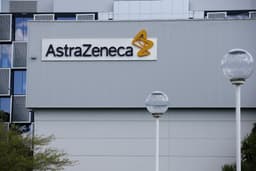
AstraZeneca Transitions U.S. Listing to NYSE
- Listing Structure Simplification: AstraZeneca will delist from Nasdaq on January 30, 2026, and directly list its ordinary shares on the NYSE starting February 2, 2026, replacing the two-for-one ADS structure, which simplifies trading for global investors and enhances market liquidity.
- Trading Timeline: After market close on January 30, 2026, ADS and certain debt securities will cease trading on Nasdaq, while ordinary shares and debt securities will begin trading on the NYSE on February 2, 2026, ensuring a seamless transition for investors.
- Investment in China: AstraZeneca plans to invest $15 billion in China by 2030, covering the entire value chain from drug discovery to clinical development and manufacturing, aiming to bring Chinese innovation to the global market and strengthen its competitive position in the rapidly growing Chinese market.
- Strategic Partnerships: AstraZeneca is partnering with a Chinese biotech firm to develop long-acting obesity drugs, further solidifying its leadership in the global pharmaceutical industry while promoting the application of Chinese innovation worldwide.
See More

Central Bank Decisions and Corporate Earnings Impact Markets

- Fed Policy Unchanged: The Federal Reserve kept its policy rate steady at 3.50%-3.75%, pausing the easing from its last three meetings, which indicates a cautious approach to economic conditions and may influence future monetary policy directions.
- Strong Corporate Earnings: Of the 101 S&P 500 companies reporting this week, 82 exceeded EPS expectations, demonstrating resilience in corporate profitability, even as the overall market saw slight declines with the S&P 500 and Nasdaq down 0.1% and 0.6%, respectively.
- EU-India Free Trade Agreement: After nearly two decades of negotiations, the European Union and India reached a free trade agreement expected to double EU exports by 2032, providing new momentum for economic growth on both sides.
- Adidas Share Buyback: Adidas announced a share buyback of up to €1 billion, citing record sales in 2025 despite U.S. tariff pressures, indicating strong market performance and strategic confidence in its business model.
See More
AstraZeneca's aPREMIUM Receives FDA Priority Review
- FDA Priority Review: AstraZeneca announced that its aPREMIUM product has received priority review from the U.S. Food and Drug Administration, a decision that could expedite the product's market entry and enhance the company's competitive position in the biopharmaceutical sector.
- Market Potential: If approved, aPREMIUM as a next-generation therapeutic option could provide AstraZeneca with significant revenue growth opportunities, especially against the backdrop of increasing demand for innovative therapies in the current market.
- R&D Investment: This priority review reflects AstraZeneca's ongoing commitment to research and development, aiming to meet unmet medical needs through innovative products, thereby enhancing the company's long-term growth potential.
- Investor Confidence Boost: The FDA's priority review decision is likely to bolster investor confidence in AstraZeneca's future performance, potentially having a positive impact on the company's stock price and further solidifying its position in the global pharmaceutical industry.
See More
DATROWAY Shows Significant Survival Improvement for TNBC Patients
- Clinical Trial Results: In the TROPION-Breast02 trial, DATROWAY demonstrated a 5-month improvement in median overall survival (OS) compared to chemotherapy, with a 43% reduction in the risk of disease progression, indicating its potential in treating unresectable or metastatic triple-negative breast cancer (TNBC).
- Priority Review Approval: The supplemental Biologics License Application (sBLA) for DATROWAY has been accepted for Priority Review by the FDA, and if approved, it will set a new standard of care in this setting, addressing the urgent need for effective treatments.
- Global Collaborative Development: The partnership between Daiichi Sankyo and AstraZeneca facilitates the global development of DATROWAY, which is expected to accelerate regulatory submissions for breast and lung cancer, further expanding market reach.
- Safety Profile Analysis: The safety profile of DATROWAY aligns with previous trials, with 33% of patients experiencing grade 3 or higher adverse events; however, its treatment response rate of 62.5% indicates good tolerability and efficacy.
See More
Comparative Analysis of IonQ and D-Wave Quantum Computing
- IonQ Technological Breakthrough: IonQ claims to be the 'world's leading quantum computing company,' achieving record 'two-qubit gate fidelity' through breakthroughs in electronic qubit control systems, which enhances the complexity of quantum algorithms while reducing error rates, thus gaining a competitive edge in a crowded market.
- Financial Condition Analysis: Despite reporting a negative free cash flow of $216 million in the first nine months of 2025, IonQ maintains approximately $1.1 billion in liquidity, allowing it to sustain operations without incurring additional debt or issuing more shares, providing some reassurance to investors.
- D-Wave Innovation Progress: D-Wave Quantum positions itself as the 'practical quantum computing company,' making strides in multiplexing and bump bonding that enhance chip communication, which has led to partnerships with companies like Volkswagen and Mastercard, showcasing its commercial appeal.
- Market Performance Comparison: While D-Wave Quantum's stock has surged nearly 400% over the past year, its price-to-sales ratio exceeds 275 and its price-to-book ratio stands at 12, indicating a disconnect between valuation and business performance, whereas IonQ's lower valuation and technological advancements may render it a more attractive investment option.
See More
Comparative Analysis of IonQ and D-Wave in Quantum Computing
- IonQ Financial Status: IonQ reported a negative free cash flow of $216 million in the first nine months of 2025, yet with nearly $1.1 billion in liquidity, it can sustain operations without incurring more debt, providing some reassurance to investors.
- D-Wave Quantum Breakthroughs: D-Wave Quantum's stock surged nearly 400% over the past year, with advancements in multiplexing and bump bonding enhancing chip communication, securing partnerships with companies like Volkswagen and Mastercard, showcasing its commercial appeal.
- Market Competitive Landscape: Both IonQ and D-Wave Quantum are competing in the quantum computing space against giants like Google and IBM, and while both face profitability challenges, IonQ's lower valuation may make it a more attractive investment option.
- Investment Risk Assessment: Both companies are considered high-risk investments; despite D-Wave's impressive stock performance, IonQ's technological advancements and lower valuation could make it more appealing for future investment, especially for risk-tolerant investors.
See More
AstraZeneca Transitions U.S. Listing to NYSE
- Listing Structure Simplification: AstraZeneca will delist from Nasdaq on January 30, 2026, and directly list its ordinary shares on the NYSE starting February 2, 2026, replacing the two-for-one ADS structure, which simplifies trading for global investors and enhances market liquidity.
- Trading Timeline: After market close on January 30, 2026, ADS and certain debt securities will cease trading on Nasdaq, while ordinary shares and debt securities will begin trading on the NYSE on February 2, 2026, ensuring a seamless transition for investors.
- Investment in China: AstraZeneca plans to invest $15 billion in China by 2030, covering the entire value chain from drug discovery to clinical development and manufacturing, aiming to bring Chinese innovation to the global market and strengthen its competitive position in the rapidly growing Chinese market.
- Strategic Partnerships: AstraZeneca is partnering with a Chinese biotech firm to develop long-acting obesity drugs, further solidifying its leadership in the global pharmaceutical industry while promoting the application of Chinese innovation worldwide.
See More
Central Bank Decisions and Corporate Earnings Impact Markets
- Fed Policy Unchanged: The Federal Reserve kept its policy rate steady at 3.50%-3.75%, pausing the easing from its last three meetings, which indicates a cautious approach to economic conditions and may influence future monetary policy directions.
- Strong Corporate Earnings: Of the 101 S&P 500 companies reporting this week, 82 exceeded EPS expectations, demonstrating resilience in corporate profitability, even as the overall market saw slight declines with the S&P 500 and Nasdaq down 0.1% and 0.6%, respectively.
- EU-India Free Trade Agreement: After nearly two decades of negotiations, the European Union and India reached a free trade agreement expected to double EU exports by 2032, providing new momentum for economic growth on both sides.
- Adidas Share Buyback: Adidas announced a share buyback of up to €1 billion, citing record sales in 2025 despite U.S. tariff pressures, indicating strong market performance and strategic confidence in its business model.
See More