Class Action Filed Against AMC Entertainment for Securities Violations
Written by Emily J. Thompson, Senior Investment Analyst
Updated: Feb 22 2026
0mins
Source: Globenewswire
- Class Action Initiated: Bronstein, Gewirtz & Grossman, LLC has announced a class action lawsuit against AMC Entertainment and certain executives, seeking damages for investors who purchased APEs between August 18, 2022, and November 1, 2023, highlighting serious concerns regarding corporate governance and transparency.
- Legal Basis: The lawsuit alleges that AMC failed to disclose the constraints on APE holders' rights after the conversion to common stock, particularly a technical loophole that excluded APE holders from receiving special dividends, potentially undermining investor confidence.
- Investor Action Deadline: Affected investors must apply to be lead plaintiffs by April 20, 2026, to share in any potential recovery from the lawsuit, reflecting the importance of legal proceedings in protecting investor rights.
- No-Risk Representation: The law firm operates on a contingency fee basis, meaning they will only charge fees if they successfully recover funds, which reduces the financial burden on investors and encourages broader participation in the lawsuit to safeguard their interests.
Trade with 70% Backtested Accuracy
Stop guessing "Should I Buy AMC?" and start using high-conviction signals backed by rigorous historical data.
Sign up today to access powerful investing tools and make smarter, data-driven decisions.
Analyst Views on AMC
Wall Street analysts forecast AMC stock price to fall
4 Analyst Rating
0 Buy
3 Hold
1 Sell
Hold
Current: 2.120

Low
1.30
Averages
2.02
High
3.00
Current: 2.120
Low
1.30
Averages
2.02
High
3.00
About AMC
AMC Entertainment Holdings, Inc. is a movie exhibition company. The Company is principally involved in the theatrical exhibition business and owns, operates or has interests in theatres primarily located in the United States and Europe. The Company operates through two segments: U.S. markets and International markets. In the U.S. markets segment, it owns, leases or operates theatres in 41 states and the District of Columbia. The International markets segment has operations in or partial interest in theatres in the United Kingdom, Germany, Spain, Italy, Ireland, Portugal, Sweden, Finland, Norway, and Denmark. Its brands include AMC, AMC CLASSIC and others. It also offers food and beverage alternatives beyond traditional concession items, including collectible concession vessels, made-to-order meals, customized coffee, healthy snacks, beer, wine, premium cocktails, and dine-in theatre options. It operates approximately 870 theatres and 9,700 screens across the globe.
About the author

Emily J. Thompson
Emily J. Thompson, a Chartered Financial Analyst (CFA) with 12 years in investment research, graduated with honors from the Wharton School. Specializing in industrial and technology stocks, she provides in-depth analysis for Intellectia’s earnings and market brief reports.

AMC Reports Record May Attendance Amid Strong Film Lineup

- Record Attendance: AMC welcomed 25.5 million guests in May 2026, marking the highest attendance since 2019, which underscores robust market demand and audience enthusiasm for both established blockbusters and new intellectual properties, thereby solidifying AMC's leadership in the cinema industry.
- Strong Holiday Performance: During the Memorial Day weekend in 2026, AMC attracted over 4.2 million moviegoers, making it the best Thursday-through-Monday period of the year so far, reflecting the positive impact of holiday releases on box office performance.
- Debt Management Progress: AMC has successfully eliminated approximately $183 million of exchangeable notes and another $156 million in May 2026 through a series of refinancing transactions and debt-for-equity exchanges, significantly alleviating near-term financial pressure and enhancing the company's financial flexibility.
- Shift in Market Sentiment: Retail sentiment around AMC surged from 'neutral' to 'bullish' in the past 24 hours, with message volume increasing from 'normal' to 'high', indicating growing investor confidence in AMC's future performance, despite analysts maintaining mixed ratings on the stock.
See More

Analysis of Investment Opportunities and Risks in Low-Priced Stocks

- Overbought Stocks Overview: Among stocks priced under $10, Digital Turbine, Inc. (NASDAQ:APPS) leads with a Relative Strength Index (RSI) of 93, indicating strong market momentum but also potential short-term profit-taking risks.
- Importance of Technical Indicators: The Relative Strength Index (RSI) is one of the most widely used momentum indicators in technical analysis, with readings above 70 suggesting overbought conditions and below 30 indicating oversold, aiding traders in monitoring market trends and potential pullbacks.
- Other Overbought Stocks: BlackBerry Limited (NYSE:BB) follows closely with an RSI of 91, while Backblaze, Inc. (NASDAQ:BLZE) and Alpha Teknova, Inc. (NASDAQ:TKNO) show strong momentum with RSIs of 83 and 80, respectively, despite the risks of market volatility.
- Market Dynamics Analysis: AMC Entertainment Holdings, Inc. (NYSE:AMC) recently gained 22.54%, showcasing strong price movement; however, traders should be cautious of the high RSI indicating overbought conditions and the potential for increased market volatility.
See More

AMC, FLNC, and HUBC Stocks Surge Amid Positive Market Sentiment
- AMC Attendance Surge: AMC Entertainment reported its highest domestic and global attendance since 2019, welcoming 25.5 million guests in May, which propelled its stock price up over 22%, indicating a strong recovery in cinema attendance and CEO Adam Aron's confidence in upcoming releases.
- FLNC's Nvidia Partnership: Fluence Energy's stock soared more than 43% after being named the exclusive energy storage partner for Nvidia's new AI factory architecture, with investors optimistic about potential benefits from accelerating investments in AI infrastructure, despite no immediate revenue commitments.
- HUBC Shareholder Activity: Hub Cyber Security's shares surged over 97% amid significant ownership activity, with major shareholder HRT Financial LP purchasing 599,115 shares at $0.12 each, reflecting growing market confidence in the company's future prospects.
- Retail Sentiment Shift: Retail investor sentiment for AMC, FLNC, and HUBC shifted from 'bearish' to 'extremely bullish', particularly for HUBC, where message volumes surged, indicating strong interest and a recovery in market confidence for these stocks.
See More

AMC Entertainment Shows Strong Recovery Signs
- Visitor Surge: AMC Entertainment recorded 25.5 million visitors in May, marking its strongest performance since 2019, indicating a robust recovery in cinema attendance that could lay the groundwork for future box office growth.
- Significant Trading Volume: The trading volume reached 116.5 million shares, approximately 276% above the three-month average, reflecting heightened market interest and investor optimism regarding AMC's future performance.
- Optimistic Outlook: CEO Adam Aron noted that with major upcoming releases like 'Toy Story 5', 'Supergirl', and 'Minions and Monsters', the box office momentum is expected to continue into 2026, further driving the company's recovery.
- Financial Caution Required: Despite AMC's positive cash flow over the past year, the company still faces a net debt of about $7 billion against a market cap of only $1.1 billion, indicating that its financial situation remains precarious and investors should proceed with caution.
See More

AMC Entertainment Sees Record May Attendance Boosting Stock
- Record Attendance: AMC Entertainment reported 25.5 million visitors in May 2023, marking its strongest performance since 2019, indicating a robust recovery in cinema attendance that could support future box office growth.
- Significant Stock Surge: The stock price of AMC rose by 21.97% to close at $2.11 on Monday, with trading volume reaching 115.3 million shares, approximately 276% above its three-month average, reflecting renewed market enthusiasm for theater operators.
- Optimistic Future Outlook: CEO Adam Aron highlighted that upcoming blockbuster releases like 'Toy Story 5', 'Supergirl', and 'Minions and Monsters' could sustain box office momentum into 2026, further enhancing the company's performance prospects.
- Financial Health Concerns: Despite AMC's positive cash flow from operations over the past year, the company still carries a net debt of around $7 billion against a market cap of only $1.1 billion, necessitating cautious evaluation of its financial stability by investors.
See More
Nasdaq 100 Rises 0.6% Following Nvidia Chip Launch


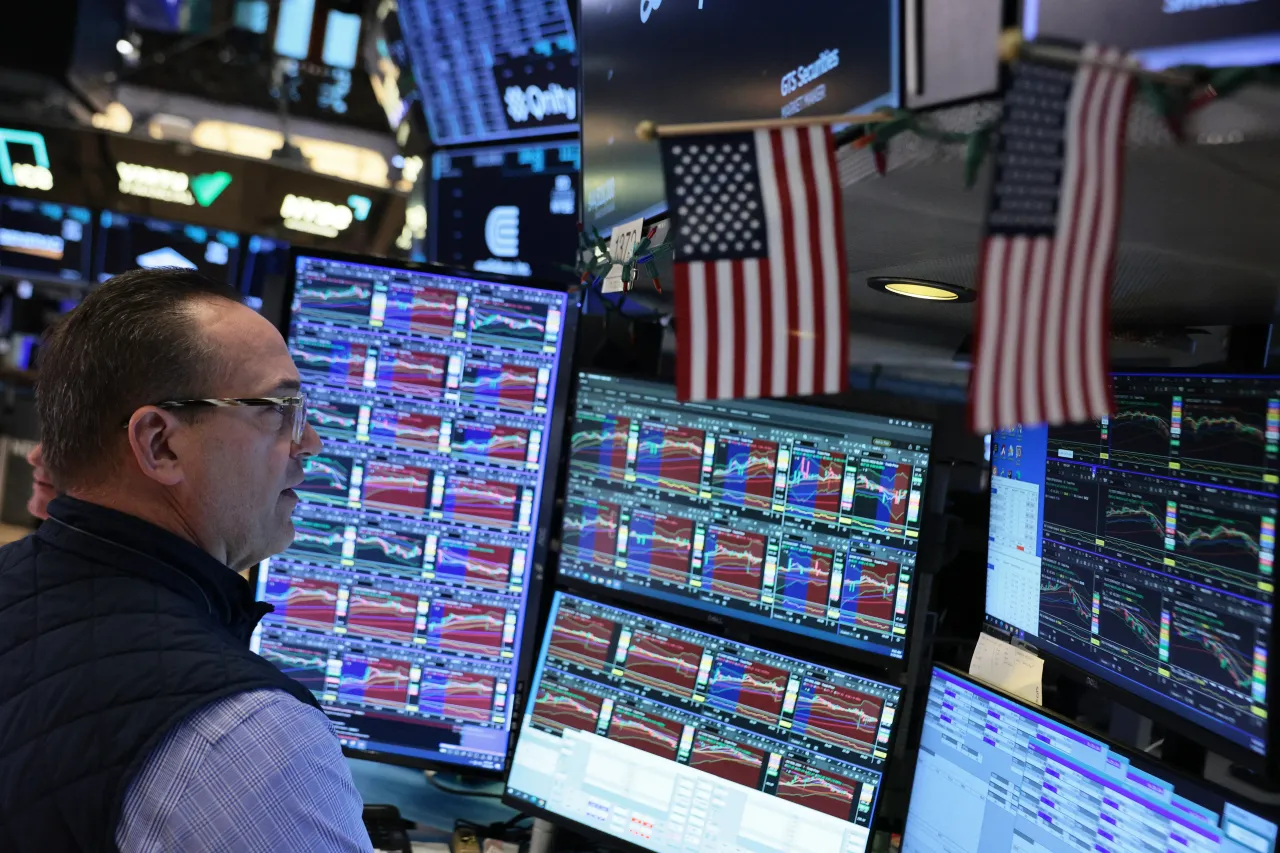
- Strong Market Performance: The S&P 500 rose by 0.3%, the Nasdaq 100 increased by 0.6%, and the Dow Jones inched up by 0.1%, marking the eighth consecutive day of gains for the S&P 500, reflecting strong market confidence in tech stocks.
- Software Stocks Rally: Following positive commentary from Nvidia's CEO Jensen Huang, software stocks surged across the board, indicating a bullish outlook on the future of artificial intelligence and software development, which further propelled the overall market upward.
- Nvidia Chip Launch: Nvidia unveiled its 'RTX Spark' chip at the Computex event in Taiwan, aimed at competing with Intel and AMD, with major PC manufacturers like Dell and Lenovo expected to launch systems powered by the new chips later this year, potentially reshaping the competitive landscape of the personal computer market.
- Investor Sentiment Optimistic: Retail sentiment on Stocktwits for SPY, QQQ, and DIA was all in the 'extremely bullish' territory, indicating high investor confidence in market prospects, which could further drive stock market gains.
See More
AMC Reports Record May Attendance Amid Strong Film Lineup
- Record Attendance: AMC welcomed 25.5 million guests in May 2026, marking the highest attendance since 2019, which underscores robust market demand and audience enthusiasm for both established blockbusters and new intellectual properties, thereby solidifying AMC's leadership in the cinema industry.
- Strong Holiday Performance: During the Memorial Day weekend in 2026, AMC attracted over 4.2 million moviegoers, making it the best Thursday-through-Monday period of the year so far, reflecting the positive impact of holiday releases on box office performance.
- Debt Management Progress: AMC has successfully eliminated approximately $183 million of exchangeable notes and another $156 million in May 2026 through a series of refinancing transactions and debt-for-equity exchanges, significantly alleviating near-term financial pressure and enhancing the company's financial flexibility.
- Shift in Market Sentiment: Retail sentiment around AMC surged from 'neutral' to 'bullish' in the past 24 hours, with message volume increasing from 'normal' to 'high', indicating growing investor confidence in AMC's future performance, despite analysts maintaining mixed ratings on the stock.
See More
Analysis of Investment Opportunities and Risks in Low-Priced Stocks
- Overbought Stocks Overview: Among stocks priced under $10, Digital Turbine, Inc. (NASDAQ:APPS) leads with a Relative Strength Index (RSI) of 93, indicating strong market momentum but also potential short-term profit-taking risks.
- Importance of Technical Indicators: The Relative Strength Index (RSI) is one of the most widely used momentum indicators in technical analysis, with readings above 70 suggesting overbought conditions and below 30 indicating oversold, aiding traders in monitoring market trends and potential pullbacks.
- Other Overbought Stocks: BlackBerry Limited (NYSE:BB) follows closely with an RSI of 91, while Backblaze, Inc. (NASDAQ:BLZE) and Alpha Teknova, Inc. (NASDAQ:TKNO) show strong momentum with RSIs of 83 and 80, respectively, despite the risks of market volatility.
- Market Dynamics Analysis: AMC Entertainment Holdings, Inc. (NYSE:AMC) recently gained 22.54%, showcasing strong price movement; however, traders should be cautious of the high RSI indicating overbought conditions and the potential for increased market volatility.
See More
AMC, FLNC, and HUBC Stocks Surge Amid Positive Market Sentiment
- AMC Attendance Surge: AMC Entertainment reported its highest domestic and global attendance since 2019, welcoming 25.5 million guests in May, which propelled its stock price up over 22%, indicating a strong recovery in cinema attendance and CEO Adam Aron's confidence in upcoming releases.
- FLNC's Nvidia Partnership: Fluence Energy's stock soared more than 43% after being named the exclusive energy storage partner for Nvidia's new AI factory architecture, with investors optimistic about potential benefits from accelerating investments in AI infrastructure, despite no immediate revenue commitments.
- HUBC Shareholder Activity: Hub Cyber Security's shares surged over 97% amid significant ownership activity, with major shareholder HRT Financial LP purchasing 599,115 shares at $0.12 each, reflecting growing market confidence in the company's future prospects.
- Retail Sentiment Shift: Retail investor sentiment for AMC, FLNC, and HUBC shifted from 'bearish' to 'extremely bullish', particularly for HUBC, where message volumes surged, indicating strong interest and a recovery in market confidence for these stocks.
See More
AMC Entertainment Shows Strong Recovery Signs
- Visitor Surge: AMC Entertainment recorded 25.5 million visitors in May, marking its strongest performance since 2019, indicating a robust recovery in cinema attendance that could lay the groundwork for future box office growth.
- Significant Trading Volume: The trading volume reached 116.5 million shares, approximately 276% above the three-month average, reflecting heightened market interest and investor optimism regarding AMC's future performance.
- Optimistic Outlook: CEO Adam Aron noted that with major upcoming releases like 'Toy Story 5', 'Supergirl', and 'Minions and Monsters', the box office momentum is expected to continue into 2026, further driving the company's recovery.
- Financial Caution Required: Despite AMC's positive cash flow over the past year, the company still faces a net debt of about $7 billion against a market cap of only $1.1 billion, indicating that its financial situation remains precarious and investors should proceed with caution.
See More
AMC Entertainment Sees Record May Attendance Boosting Stock
- Record Attendance: AMC Entertainment reported 25.5 million visitors in May 2023, marking its strongest performance since 2019, indicating a robust recovery in cinema attendance that could support future box office growth.
- Significant Stock Surge: The stock price of AMC rose by 21.97% to close at $2.11 on Monday, with trading volume reaching 115.3 million shares, approximately 276% above its three-month average, reflecting renewed market enthusiasm for theater operators.
- Optimistic Future Outlook: CEO Adam Aron highlighted that upcoming blockbuster releases like 'Toy Story 5', 'Supergirl', and 'Minions and Monsters' could sustain box office momentum into 2026, further enhancing the company's performance prospects.
- Financial Health Concerns: Despite AMC's positive cash flow from operations over the past year, the company still carries a net debt of around $7 billion against a market cap of only $1.1 billion, necessitating cautious evaluation of its financial stability by investors.
See More
Nasdaq 100 Rises 0.6% Following Nvidia Chip Launch
- Strong Market Performance: The S&P 500 rose by 0.3%, the Nasdaq 100 increased by 0.6%, and the Dow Jones inched up by 0.1%, marking the eighth consecutive day of gains for the S&P 500, reflecting strong market confidence in tech stocks.
- Software Stocks Rally: Following positive commentary from Nvidia's CEO Jensen Huang, software stocks surged across the board, indicating a bullish outlook on the future of artificial intelligence and software development, which further propelled the overall market upward.
- Nvidia Chip Launch: Nvidia unveiled its 'RTX Spark' chip at the Computex event in Taiwan, aimed at competing with Intel and AMD, with major PC manufacturers like Dell and Lenovo expected to launch systems powered by the new chips later this year, potentially reshaping the competitive landscape of the personal computer market.
- Investor Sentiment Optimistic: Retail sentiment on Stocktwits for SPY, QQQ, and DIA was all in the 'extremely bullish' territory, indicating high investor confidence in market prospects, which could further drive stock market gains.
See More