Citigroup Optimistic on GM's EV Cost Realignment, Raises Price Target to $98
Written by Emily J. Thompson, Senior Investment Analyst
Updated: Jan 12 2026
0mins

Should l Buy GM?
Source: CNBC
- Earnings Growth Outlook: Citigroup analysts believe that General Motors' fourth-quarter electric vehicle cost realignment will support profit margins and earnings growth, with the 2026 earnings estimate raised from $11.50 to $12.25, indicating sustained improvement in profitability.
- Price Target Increase: Citigroup raised GM's 12-month price target by 12% from $86 to $98, reflecting analysts' optimistic outlook on the company's future performance, with the new target approximately 18% above Friday's closing price.
- One-Time Charge Impact: GM will incur a $6 billion one-time charge in the fourth quarter to realign electric vehicle costs and capacity, primarily for settling contract cancellations and supplier settlements, which will lower future operating expenses and enhance financial performance.
- Market Share Gains: GM's production and pricing have exceeded expectations, and Citigroup believes that market share gains, improved product alignment with market trends, and cost reductions will justify a higher valuation multiple, reflecting the company's competitive advantage post-pandemic.
Trade with 70% Backtested Accuracy
Stop guessing "Should I Buy GM?" and start using high-conviction signals backed by rigorous historical data.
Sign up today to access powerful investing tools and make smarter, data-driven decisions.
Analyst Views on GM
Wall Street analysts forecast GM stock price to rise
19 Analyst Rating
14 Buy
4 Hold
1 Sell
Moderate Buy
Current: 83.670

Low
57.00
Averages
95.06
High
122.00
Current: 83.670
Low
57.00
Averages
95.06
High
122.00
About GM
General Motors Company designs, builds and sells trucks, crossovers, cars and automobile parts and provides software-enabled services and subscriptions worldwide. The Company's segments include GMNA, GMI, Cruise and GM Financial. Its GM North America (GMNA) and GM International (GMI) develop, manufacture and/or markets vehicles under the Buick, Cadillac, Chevrolet and GMC brands. The Company provides automotive financing services through its General Motors Financial Company, Inc. (GM Financial) segment. Its Cruise segment is engaged in the development and commercialization of autonomous vehicle technology. Its software-enabled services and subscriptions, including OnStar, its advanced driver-assistance systems (ADAS), including Super Cruise driver assistance technology, and its end-to-end software platform. The Company is also focused on investing in electric vehicles (EVs) and AVs, software-enabled services and subscriptions and new business opportunities.
About the author

Emily J. Thompson
Emily J. Thompson, a Chartered Financial Analyst (CFA) with 12 years in investment research, graduated with honors from the Wharton School. Specializing in industrial and technology stocks, she provides in-depth analysis for Intellectia’s earnings and market brief reports.
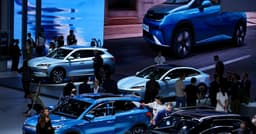
GM Invests C$63 Million in Oshawa for Truck Production

- Continued Investment: GM's total investment in Oshawa has reached C$1.5 billion since 2020, including the recent C$63 million announced for upgrading stamping operations, reinforcing its significance in the full-size truck portfolio.
- Production Capacity Enhancement: This investment will support preparations for the next generation of gas-powered full-size pickups while enhancing capabilities in the service parts business, ensuring Oshawa Assembly meets customer demands in the coming years.
- Unique Production Line: Oshawa Assembly is GM's only North American facility producing both light and heavy-duty full-size pickups on the same line, currently operating on two shifts, highlighting its critical role in the company's overall production strategy.
- Future Outlook: GM plans to share product details and launch timing for the next-generation pickups in the future, indicating the company's long-term commitment to the Oshawa facility and its keen insight into market demands.
See More
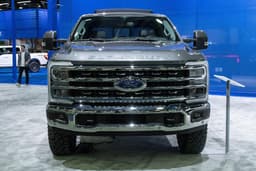
New York State Withdraws Commercial Robotaxi Proposal


- Proposal Withdrawal Impact: New York Governor Hochul's withdrawal of the commercial robotaxi proposal significantly impacts Waymo, which plans to expand its services to several new cities, indicating a lack of support for autonomous vehicle technology in the state.
- Market Potential Limited: The proposal aimed to allow limited deployment of robotaxis outside New York City, but opposition from labor unions and transit workers prevented it from gaining necessary support, restricting Waymo's market expansion opportunities in New York.
- Testing Permit Unaffected: Despite the proposal's withdrawal, Waymo's testing in New York City will continue, having received a permit from the Department of Transportation, indicating that the company's long-term strategy in the region remains intact.
- Intensifying Competition: Waymo plans to launch its commercial driverless ride-hailing service in cities like Dallas, Denver, and Washington D.C., but faces increasing pressure from competitors such as Tesla and Amazon-owned Zoox, intensifying market competition.
See More

Ford Shifts Focus to Hybrid Vehicles Amid EV Challenges
- Hybrid Profitability Surge: Ford CEO Jim Farley highlighted that some of Ford's hybrid models have become profitable, with increasing customer demand indicating a sustainable path for the company amid its electric vehicle transition challenges.
- Significant Sales Growth: In 2025, Ford sold over 228,000 hybrids in the U.S., marking a nearly 22% increase year-over-year, which not only set a quarterly and annual sales record for Ford but also solidified the F-150 hybrid's status as America's best-selling full-size hybrid pickup.
- Decline in EV Market Share: Despite the strong performance of hybrids, Ford's full EV sales fell by 14% in 2025 and plummeted 52% in Q4, primarily due to the loss of the $7,500 federal EV tax credit, highlighting challenges in the electric vehicle market.
- Future Strategic Planning: Ford is not abandoning the EV market but plans to introduce a new Universal EV Platform and a midsize electric pickup in 2027, demonstrating the company's long-term commitment to electric vehicles, even as it shifts focus to hybrids for immediate profitability.
See More

Ford's Hybrid Sales Hit Record Highs Amid EV Strategy Shift
- Hybrid Profitability Surge: Ford CEO Jim Farley noted that in 2024, some of Ford's hybrid models became more profitable than their gasoline counterparts, indicating a positive shift in consumer preference towards these transitional solutions, which is expected to enhance the company's financial performance.
- Record Sales Performance: In 2025, Ford sold over 228,000 hybrids in the U.S., marking a nearly 22% increase year-over-year, setting both fourth-quarter and full-year sales records, while the F-150 hybrid maintained its status as America's best-selling full-size hybrid pickup, reflecting strong market demand.
- EV Market Challenges: Despite the robust hybrid sales, Ford's full EV sales declined by 14% in 2025 and plummeted 52% in Q4, primarily due to the loss of the $7,500 federal EV tax credit, highlighting the complexities of the market transition.
- Future EV Strategy: Ford is not abandoning the EV market but plans to launch a new Universal EV Platform and a midsize electric pickup in 2027, demonstrating the company's long-term commitment to electric vehicles, even as hybrids remain the focus for profitability in the short term.
See More
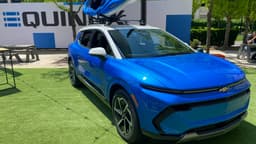
Trump Administration Rescinds EV Incentive Rule
- Policy Rescission Impact: The Trump administration's Department of Energy has rescinded a rule that incentivized automakers to produce more EVs, which could further pressure the EV market already affected by the rollback of the 2009 EPA Endangerment Finding.
- Fuel Economy Calculation: The rescinded 'fuel content factor' allowed automakers to calculate fleetwide fuel economy by assigning higher efficiency figures to EVs, thus lowering overall fuel consumption metrics, and its removal will diminish the competitive edge of EVs.
- Court Ruling Basis: The DOE cited a September appeals court decision as the basis for this policy reversal, indicating that the legal environment is increasingly influencing EV policies, which may lead to more adjustments in similar regulations in the future.
- Market Reaction Expectations: With this policy change, major automakers like GM and Ford may need to reassess their EV strategies to navigate the increasingly challenging market environment and policy hurdles.
See More
Ford's EV Business Losses Exceed $16 Billion
- EV Business Losses: Ford has incurred over $16 billion in losses on its electric vehicle business since 2022, with a slight improvement to $4.8 billion in Q4 2023, yet it still anticipates losses of $4 billion to $4.5 billion in 2026, highlighting the high costs of its EV strategy amid an unprepared market.
- Shareholder Return Comparison: While Ford returns most value to shareholders through dividends, General Motors has initiated a $10 billion stock buyback in 2023, with an additional $6 billion authorized for both 2024 and 2025, reflecting differing capital allocation strategies between the two automakers.
- Future Outlook: Ford plans to launch a new midsize electric truck priced around $30,000 by 2027, utilizing its new
See More
GM Invests C$63 Million in Oshawa for Truck Production
- Continued Investment: GM's total investment in Oshawa has reached C$1.5 billion since 2020, including the recent C$63 million announced for upgrading stamping operations, reinforcing its significance in the full-size truck portfolio.
- Production Capacity Enhancement: This investment will support preparations for the next generation of gas-powered full-size pickups while enhancing capabilities in the service parts business, ensuring Oshawa Assembly meets customer demands in the coming years.
- Unique Production Line: Oshawa Assembly is GM's only North American facility producing both light and heavy-duty full-size pickups on the same line, currently operating on two shifts, highlighting its critical role in the company's overall production strategy.
- Future Outlook: GM plans to share product details and launch timing for the next-generation pickups in the future, indicating the company's long-term commitment to the Oshawa facility and its keen insight into market demands.
See More
New York State Withdraws Commercial Robotaxi Proposal
- Proposal Withdrawal Impact: New York Governor Hochul's withdrawal of the commercial robotaxi proposal significantly impacts Waymo, which plans to expand its services to several new cities, indicating a lack of support for autonomous vehicle technology in the state.
- Market Potential Limited: The proposal aimed to allow limited deployment of robotaxis outside New York City, but opposition from labor unions and transit workers prevented it from gaining necessary support, restricting Waymo's market expansion opportunities in New York.
- Testing Permit Unaffected: Despite the proposal's withdrawal, Waymo's testing in New York City will continue, having received a permit from the Department of Transportation, indicating that the company's long-term strategy in the region remains intact.
- Intensifying Competition: Waymo plans to launch its commercial driverless ride-hailing service in cities like Dallas, Denver, and Washington D.C., but faces increasing pressure from competitors such as Tesla and Amazon-owned Zoox, intensifying market competition.
See More
Ford Shifts Focus to Hybrid Vehicles Amid EV Challenges
- Hybrid Profitability Surge: Ford CEO Jim Farley highlighted that some of Ford's hybrid models have become profitable, with increasing customer demand indicating a sustainable path for the company amid its electric vehicle transition challenges.
- Significant Sales Growth: In 2025, Ford sold over 228,000 hybrids in the U.S., marking a nearly 22% increase year-over-year, which not only set a quarterly and annual sales record for Ford but also solidified the F-150 hybrid's status as America's best-selling full-size hybrid pickup.
- Decline in EV Market Share: Despite the strong performance of hybrids, Ford's full EV sales fell by 14% in 2025 and plummeted 52% in Q4, primarily due to the loss of the $7,500 federal EV tax credit, highlighting challenges in the electric vehicle market.
- Future Strategic Planning: Ford is not abandoning the EV market but plans to introduce a new Universal EV Platform and a midsize electric pickup in 2027, demonstrating the company's long-term commitment to electric vehicles, even as it shifts focus to hybrids for immediate profitability.
See More
Ford's Hybrid Sales Hit Record Highs Amid EV Strategy Shift
- Hybrid Profitability Surge: Ford CEO Jim Farley noted that in 2024, some of Ford's hybrid models became more profitable than their gasoline counterparts, indicating a positive shift in consumer preference towards these transitional solutions, which is expected to enhance the company's financial performance.
- Record Sales Performance: In 2025, Ford sold over 228,000 hybrids in the U.S., marking a nearly 22% increase year-over-year, setting both fourth-quarter and full-year sales records, while the F-150 hybrid maintained its status as America's best-selling full-size hybrid pickup, reflecting strong market demand.
- EV Market Challenges: Despite the robust hybrid sales, Ford's full EV sales declined by 14% in 2025 and plummeted 52% in Q4, primarily due to the loss of the $7,500 federal EV tax credit, highlighting the complexities of the market transition.
- Future EV Strategy: Ford is not abandoning the EV market but plans to launch a new Universal EV Platform and a midsize electric pickup in 2027, demonstrating the company's long-term commitment to electric vehicles, even as hybrids remain the focus for profitability in the short term.
See More
Trump Administration Rescinds EV Incentive Rule
- Policy Rescission Impact: The Trump administration's Department of Energy has rescinded a rule that incentivized automakers to produce more EVs, which could further pressure the EV market already affected by the rollback of the 2009 EPA Endangerment Finding.
- Fuel Economy Calculation: The rescinded 'fuel content factor' allowed automakers to calculate fleetwide fuel economy by assigning higher efficiency figures to EVs, thus lowering overall fuel consumption metrics, and its removal will diminish the competitive edge of EVs.
- Court Ruling Basis: The DOE cited a September appeals court decision as the basis for this policy reversal, indicating that the legal environment is increasingly influencing EV policies, which may lead to more adjustments in similar regulations in the future.
- Market Reaction Expectations: With this policy change, major automakers like GM and Ford may need to reassess their EV strategies to navigate the increasingly challenging market environment and policy hurdles.
See More
Ford's EV Business Losses Exceed $16 Billion
- EV Business Losses: Ford has incurred over $16 billion in losses on its electric vehicle business since 2022, with a slight improvement to $4.8 billion in Q4 2023, yet it still anticipates losses of $4 billion to $4.5 billion in 2026, highlighting the high costs of its EV strategy amid an unprepared market.
- Shareholder Return Comparison: While Ford returns most value to shareholders through dividends, General Motors has initiated a $10 billion stock buyback in 2023, with an additional $6 billion authorized for both 2024 and 2025, reflecting differing capital allocation strategies between the two automakers.
- Future Outlook: Ford plans to launch a new midsize electric truck priced around $30,000 by 2027, utilizing its new
See More