

Baidu Takes on Tesla, Secures License To Test Self-Driving Tech in Hong Kong
Written by Emily J. Thompson, Senior Investment Analyst
Updated: Dec 02 2024
0mins

Source: Benzinga
Baidu's Autonomous Vehicle License: Baidu, Inc. has received a Hong Kong license to test autonomous vehicles, marking the first pilot license since new legislation was enacted in March 2024. The license allows for one self-driving car to operate on designated roads from December 9, 2024, to December 8, 2029.
Financial Performance and Expansion Plans: Despite a 3% revenue decline in the fiscal third quarter, Baidu's earnings exceeded analyst expectations. The company aims to expand its Apollo Go robotaxi service to multiple regions, including Hong Kong and Singapore, while facing challenges such as U.S. semiconductor sanctions and a weak economy.
Trade with 70% Backtested Accuracy
Stop guessing "Should I Buy WRD?" and start using high-conviction signals backed by rigorous historical data.
Sign up today to access powerful investing tools and make smarter, data-driven decisions.
Analyst Views on WRD
Wall Street analysts forecast WRD stock price to rise
3 Analyst Rating
3 Buy
0 Hold
0 Sell
Strong Buy
Current: 5.520

Low
12.00
Averages
14.77
High
17.00
Current: 5.520
Low
12.00
Averages
14.77
High
17.00
About WRD
WeRide Inc is a holding company mainly engaged in the commercialization of autonomous driving technology. The Company mainly operates three businesses. The company sells autonomous driving vehicles, primarily including robobuses, robotaxis and robosweepers, and related sensor suites. The Company provides autonomous driving related operational and technical support services. The Company also offers other technology services, including advanced driver-assistance system (ADAS) research and development services, and intelligent data services. The Company's autonomous driving products and solutions are available in multiple countries including China, the United Arab Emirates, Saudi Arabia, Switzerland, France, Singapore and Japan.
About the author

Emily J. Thompson
Emily J. Thompson, a Chartered Financial Analyst (CFA) with 12 years in investment research, graduated with honors from the Wharton School. Specializing in industrial and technology stocks, she provides in-depth analysis for Intellectia’s earnings and market brief reports.

WeRide Annual Meeting Approves All Proposed Resolutions

- Approval of Shareholder Proposals: At the annual general meeting on June 26, 2026, WeRide's shareholders approved all proposed resolutions, ensuring stability and continuity in corporate governance.
- Board Re-election: Seven board members, including Dr. Tony Xu Han, were successfully re-elected, reflecting shareholder confidence in the current management team and supporting strategic continuity.
- Share Management Authorization: The board received an unconditional mandate to issue additional Class A ordinary shares and repurchase company shares, providing flexibility for future capital operations and enhancing market competitiveness.
- Industry Leadership: As a global leader in autonomous driving technology, WeRide has deployed vehicles in over 40 cities across 12 countries, further solidifying its pioneering position in the industry and likely attracting increased investor interest.
See More
WeRide GENESIS Wins Two Major Industry Awards
- Industry Recognition: WeRide GENESIS was awarded 'Overall Gen-AI Solution of the Year' at the 2026 AI Breakthrough Awards and received the Simulation Innovation Award at the 2026 ATTI Awards within 48 hours, highlighting its technological prowess and market position in the autonomous driving sector.
- Cost Reduction: The model reduces autonomous driving data collection and annotation costs by over 75% through the application of a physical AI world model, significantly enhancing R&D efficiency and accelerating global commercialization efforts.
- Global Expansion: WeRide's autonomous driving products have been deployed in over 40 cities across 12 countries, covering cross-city and cross-border commercial validations, marking rapid expansion and maturity of technology application in the global market.
- Market Competitiveness: The WRD 3.0 solution achieved a historic milestone by becoming the first vehicle to win six consecutive championships at the Second China Intelligent Driving Competition, demonstrating strong competitiveness in the L2++ mass-production assisted driving market and enhancing WeRide's product competitiveness in the passenger vehicle sector.
See More
WeRide Partners with Geely to Develop Right-Hand-Drive Robotaxis
- Strategic Partnership: WeRide announced a collaboration with Geely Farizon and Kwoon Chung Bus Holdings at the 2026 International Automotive & Supply Chain Expo to develop Robotaxis specifically for right-hand-drive markets, addressing a significant market gap and expected to enhance smart mobility solutions in Hong Kong and globally.
- Market Demand: The new Robotaxi will be mass-produced based on the existing GXR platform to meet transportation needs in Hong Kong and other right-hand-drive countries, with plans to expand WeRide's fleet to 2,600 vehicles by the end of 2026, accelerating global Robotaxi expansion.
- Technological Innovation: This Robotaxi will integrate perception, decision-making, control, and human-machine interaction technologies to ensure a safe and smooth experience for riders, marking a significant breakthrough for WeRide in achieving autonomous driving in complex urban environments.
- Global Strategy: The collaboration not only provides a model for smart transportation in Hong Kong but also lays the groundwork for entry into other right-hand-drive markets such as Singapore, the UK, Japan, and Australia, supporting WeRide's broader global expansion efforts.
See More
Waymo Recalls 3,900 Robotaxis to Address Software Issues


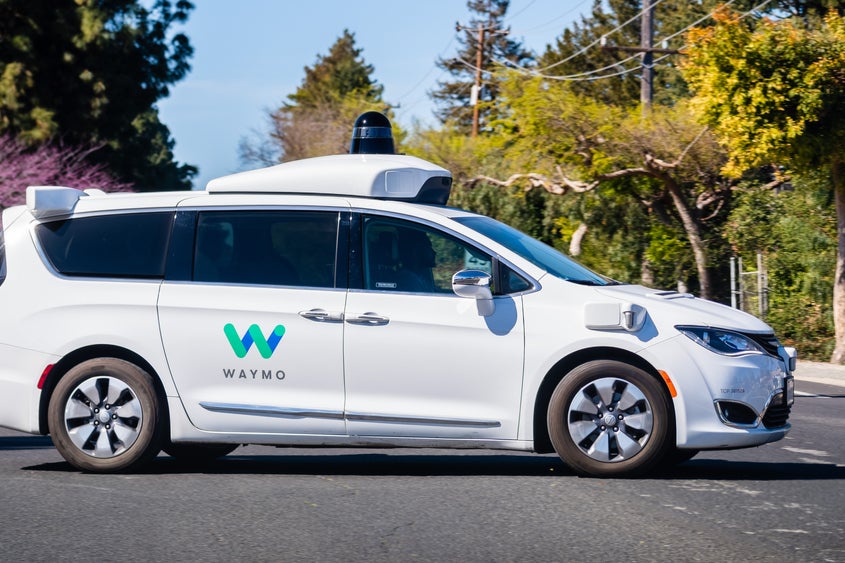
- Recall Announcement: Waymo is recalling nearly 3,900 robotaxis to address software issues, marking the company's second recall in just over a month, following 13 incidents where robotaxis entered freeway construction zones, highlighting deficiencies in its autonomous driving systems under complex conditions.
- Safety Risks: According to notices from the National Highway Traffic Safety Administration, Waymo's fifth-generation automated driving systems exhibit performance issues in construction zones, increasing the likelihood of accidents, which has compelled the company to restrict freeway operations to ensure passenger safety.
- Expansion Constraints: Waymo currently operates commercial robotaxi services in 11 U.S. markets, but the ongoing freeway issues are limiting the company's expansion velocity, particularly against the backdrop of plans to enter international markets like London and Tokyo.
- New Subscription Model: Waymo recently introduced a $29.99 monthly subscription service aimed at high-demand cities, but until the freeway issues are resolved, user experience and market confidence may be adversely affected.
See More

WeRide and Uber Launch Robotaxi Service in Zurich
- Market Expansion Plan: WeRide (WRD) and Uber (UBER) announced plans to launch a commercial robotaxi service in the Greater Zurich Region in 2023, marking their second European deployment and advancing their global strategy to roll out autonomous ride-hailing in 15 cities.
- Technology Application: The Zurich deployment will utilize WeRide's autonomous driving technology integrated into its latest robotaxi vehicles, with local mobility provider Rydera acting as the fleet operator under an asset-light model designed to support scalable expansion.
- Regulatory Approval: The launch will be subject to regulatory approval from Switzerland's Federal Roads Office, with WeRide's existing driverless permit in Switzerland facilitating operations on public roads, which is expected to enhance the company's competitiveness in the European market.
- Market Reaction: Shares of WeRide (WRD) rose 0.6% in premarket trading, while Uber (UBER) slipped 0.2%, indicating cautious optimism in the market regarding this partnership and reflecting investor interest in the potential of the autonomous taxi market.
See More

Uber and WeRide Launch Robotaxi Services in Zurich

- Robotaxi Service Launch: Uber and Chinese autonomous driving provider WeRide are set to launch driverless taxi services in the Greater Zurich Region, allowing users to book rides via the Uber app upon regulatory approval, marking a significant expansion in Uber's autonomous driving initiatives.
- Global Collaboration Exploration: Uber, Stellantis, and Wayve have signed a memorandum of understanding to jointly explore opportunities for developing and deploying Level 4 robotaxis globally, leveraging their respective technological strengths to enhance market competitiveness.
- Intensifying Market Competition: With leaders like Waymo and Baidu's Apollo Go dominating the robotaxi market, the entry of new players such as Tesla and Mobileye intensifies competition, prompting Uber to accelerate its technological advancements to maintain market share.
- Investor Sentiment Shift: Despite a slight premarket uptick in Uber's stock, the share price has fallen over 10% this year, leading retail investors to shift their sentiment from 'bullish' to 'neutral', reflecting a cautious outlook on the company's future developments.
See More
WeRide Annual Meeting Approves All Proposed Resolutions
- Approval of Shareholder Proposals: At the annual general meeting on June 26, 2026, WeRide's shareholders approved all proposed resolutions, ensuring stability and continuity in corporate governance.
- Board Re-election: Seven board members, including Dr. Tony Xu Han, were successfully re-elected, reflecting shareholder confidence in the current management team and supporting strategic continuity.
- Share Management Authorization: The board received an unconditional mandate to issue additional Class A ordinary shares and repurchase company shares, providing flexibility for future capital operations and enhancing market competitiveness.
- Industry Leadership: As a global leader in autonomous driving technology, WeRide has deployed vehicles in over 40 cities across 12 countries, further solidifying its pioneering position in the industry and likely attracting increased investor interest.
See More
WeRide GENESIS Wins Two Major Industry Awards
- Industry Recognition: WeRide GENESIS was awarded 'Overall Gen-AI Solution of the Year' at the 2026 AI Breakthrough Awards and received the Simulation Innovation Award at the 2026 ATTI Awards within 48 hours, highlighting its technological prowess and market position in the autonomous driving sector.
- Cost Reduction: The model reduces autonomous driving data collection and annotation costs by over 75% through the application of a physical AI world model, significantly enhancing R&D efficiency and accelerating global commercialization efforts.
- Global Expansion: WeRide's autonomous driving products have been deployed in over 40 cities across 12 countries, covering cross-city and cross-border commercial validations, marking rapid expansion and maturity of technology application in the global market.
- Market Competitiveness: The WRD 3.0 solution achieved a historic milestone by becoming the first vehicle to win six consecutive championships at the Second China Intelligent Driving Competition, demonstrating strong competitiveness in the L2++ mass-production assisted driving market and enhancing WeRide's product competitiveness in the passenger vehicle sector.
See More
WeRide Partners with Geely to Develop Right-Hand-Drive Robotaxis
- Strategic Partnership: WeRide announced a collaboration with Geely Farizon and Kwoon Chung Bus Holdings at the 2026 International Automotive & Supply Chain Expo to develop Robotaxis specifically for right-hand-drive markets, addressing a significant market gap and expected to enhance smart mobility solutions in Hong Kong and globally.
- Market Demand: The new Robotaxi will be mass-produced based on the existing GXR platform to meet transportation needs in Hong Kong and other right-hand-drive countries, with plans to expand WeRide's fleet to 2,600 vehicles by the end of 2026, accelerating global Robotaxi expansion.
- Technological Innovation: This Robotaxi will integrate perception, decision-making, control, and human-machine interaction technologies to ensure a safe and smooth experience for riders, marking a significant breakthrough for WeRide in achieving autonomous driving in complex urban environments.
- Global Strategy: The collaboration not only provides a model for smart transportation in Hong Kong but also lays the groundwork for entry into other right-hand-drive markets such as Singapore, the UK, Japan, and Australia, supporting WeRide's broader global expansion efforts.
See More
Waymo Recalls 3,900 Robotaxis to Address Software Issues
- Recall Announcement: Waymo is recalling nearly 3,900 robotaxis to address software issues, marking the company's second recall in just over a month, following 13 incidents where robotaxis entered freeway construction zones, highlighting deficiencies in its autonomous driving systems under complex conditions.
- Safety Risks: According to notices from the National Highway Traffic Safety Administration, Waymo's fifth-generation automated driving systems exhibit performance issues in construction zones, increasing the likelihood of accidents, which has compelled the company to restrict freeway operations to ensure passenger safety.
- Expansion Constraints: Waymo currently operates commercial robotaxi services in 11 U.S. markets, but the ongoing freeway issues are limiting the company's expansion velocity, particularly against the backdrop of plans to enter international markets like London and Tokyo.
- New Subscription Model: Waymo recently introduced a $29.99 monthly subscription service aimed at high-demand cities, but until the freeway issues are resolved, user experience and market confidence may be adversely affected.
See More
WeRide and Uber Launch Robotaxi Service in Zurich
- Market Expansion Plan: WeRide (WRD) and Uber (UBER) announced plans to launch a commercial robotaxi service in the Greater Zurich Region in 2023, marking their second European deployment and advancing their global strategy to roll out autonomous ride-hailing in 15 cities.
- Technology Application: The Zurich deployment will utilize WeRide's autonomous driving technology integrated into its latest robotaxi vehicles, with local mobility provider Rydera acting as the fleet operator under an asset-light model designed to support scalable expansion.
- Regulatory Approval: The launch will be subject to regulatory approval from Switzerland's Federal Roads Office, with WeRide's existing driverless permit in Switzerland facilitating operations on public roads, which is expected to enhance the company's competitiveness in the European market.
- Market Reaction: Shares of WeRide (WRD) rose 0.6% in premarket trading, while Uber (UBER) slipped 0.2%, indicating cautious optimism in the market regarding this partnership and reflecting investor interest in the potential of the autonomous taxi market.
See More
Uber and WeRide Launch Robotaxi Services in Zurich
- Robotaxi Service Launch: Uber and Chinese autonomous driving provider WeRide are set to launch driverless taxi services in the Greater Zurich Region, allowing users to book rides via the Uber app upon regulatory approval, marking a significant expansion in Uber's autonomous driving initiatives.
- Global Collaboration Exploration: Uber, Stellantis, and Wayve have signed a memorandum of understanding to jointly explore opportunities for developing and deploying Level 4 robotaxis globally, leveraging their respective technological strengths to enhance market competitiveness.
- Intensifying Market Competition: With leaders like Waymo and Baidu's Apollo Go dominating the robotaxi market, the entry of new players such as Tesla and Mobileye intensifies competition, prompting Uber to accelerate its technological advancements to maintain market share.
- Investor Sentiment Shift: Despite a slight premarket uptick in Uber's stock, the share price has fallen over 10% this year, leading retail investors to shift their sentiment from 'bullish' to 'neutral', reflecting a cautious outlook on the company's future developments.
See More





