Precigen's PAPZIMEOS FDA Approval Drives Stock Surge
Precigen Inc's stock surged by 27.74% as it crossed above the 5-day SMA, reflecting strong market interest following the FDA approval of its product PAPZIMEOS.
The company reported that PAPZIMEOS received FDA approval for treating recurrent respiratory papillomatosis, marking a significant transition to commercial sales with first revenues of $3.4 million. This approval has garnered robust support from the medical community, with over 300 patient enrollments, indicating a successful market entry and potential for future growth. Additionally, the CEO projected optimistic revenue forecasts for Q1 2026, further boosting investor confidence.
This positive momentum suggests that Precigen is on a path to capitalize on its recent FDA approval, with expectations of increased market share and revenue growth, despite facing challenges in managing operational expenses.
Trade with 70% Backtested Accuracy
Analyst Views on PGEN

About PGEN
About the author


Precigen Secures Orphan Drug Exclusivity for PAPZIMEOS
- Orphan Drug Exclusivity: Precigen's PAPZIMEOS™ has received orphan drug exclusivity from the FDA, ensuring no similar drugs can be approved for seven years, extending market exclusivity until August 2032, significantly enhancing the product's market value and long-term revenue potential.
- Innovative Mechanism: PAPZIMEOS utilizes a modified adenovirus to train the immune system to recognize and attack HPV 6 and HPV 11 proteins, reducing the number of surgeries required for patients and providing a more effective airway clearance method, marking a new therapeutic paradigm for RRP treatment.
- Clinical Data Support: Long-term study results presented at the 2026 ASCO Annual Meeting showed that 83% of complete responders maintained their response for at least 36 months without additional treatment, with five patients remaining surgery-free after four years, further solidifying PAPZIMEOS's role as the new standard of care.
- Market Penetration Progress: PAPZIMEOS is commercially available in the U.S. and is being prescribed across major medical centers and community practices, with patients of varying disease severities, showcasing Precigen's market penetration capabilities and future growth potential in RRP treatment.

Precigen CFO Sells Shares, Ownership Stake Decreases
- Executive Sale Details: Precigen CFO Harry Thomasian Jr. sold 41,884 shares of common stock on May 28, 2026, for a total value of $182,614, reducing his direct ownership stake by 7% to 554,535 shares post-sale.
- Market Performance Insight: On the transaction date, Precigen's shares were priced at $4.36, reflecting a 190.23% increase over the past year, indicating strong market confidence despite the CFO's stock sale.
- FDA Drug Approval: The company received full FDA approval for its lead drug, Papzimeos, last August, which is the only approved treatment for adults with recurrent respiratory papillomatosis, showcasing Precigen's innovative capabilities in rare disease therapies.
- Strong Sales Performance: Papzimeos achieved annualized sales of $86.4 million in the first quarter of 2026, highlighting robust market demand for the drug and further solidifying Precigen's position in the biopharmaceutical industry.
Biotech Companies See Significant Stock Gains


- Gelteq Stock Surge: Australia-based Gelteq's shares soared over 197% without specific news, as the company commenced its first clinical trial for an antiparasitic drug candidate, which is expected to drive an FDA submission and enhance market competitiveness.
- Adial Acquires Azora: Adial Pharmaceuticals announced the acquisition of Azora Therapeutics with up to $64 million in financing, which will strengthen its pipeline for treating serious inflammatory diseases, with a Phase I clinical trial planned for 2027 expected to create new growth opportunities.
- Precigen Commercial Momentum: Precigen's PAPZIMEOS sales reached $21.6 million in Q1 2026, a significant increase from $3.4 million in Q4 2025, indicating strong commercialization momentum in the U.S. market, with expectations for further market share expansion.
- Eloxx Nasdaq Uplisting: Eloxx Pharmaceuticals' stock rose over 14% following its uplisting to Nasdaq, with plans to initiate a Phase 2b clinical trial for its lead drug Exaluren targeting Alport syndrome in Q3 2026, which is expected to provide new growth opportunities for the company.

Precigen Collaborates with RRPF to Raise RRP Awareness
- RRP Awareness Day: Celebrated annually on June 11, RRP Awareness Day aims to raise awareness of recurrent respiratory papillomatosis (RRP), a condition caused by HPV 6 or 11 affecting approximately 27,000 adults in the U.S., where patients face the burden of multiple surgeries impacting their quality of life.
- FDA Approval of New Therapy: In August 2025, the FDA approved Precigen's HPV-specific immunotherapy for adults with RRP, marking the first approved treatment for this condition and representing a significant breakthrough in treatment options that could enhance patient quality of life.
- Importance of Patient Voices: This year's RRP Awareness Day focuses on sharing stories from patients, caregivers, and healthcare providers to increase public understanding of RRP, helping those affected feel seen and supported, thereby driving greater societal awareness of the disease.
- Precigen's Strategic Commitment: Helen Sabzevari, CEO of Precigen, emphasized that the company's immunotherapy not only represents scientific progress but also demonstrates a commitment to RRP patients, with plans to continue collaborating with RRPF to advance research and treatment options.
Precigen Releases Long-Term Data on PAPZIMEOS for RRP Treatment
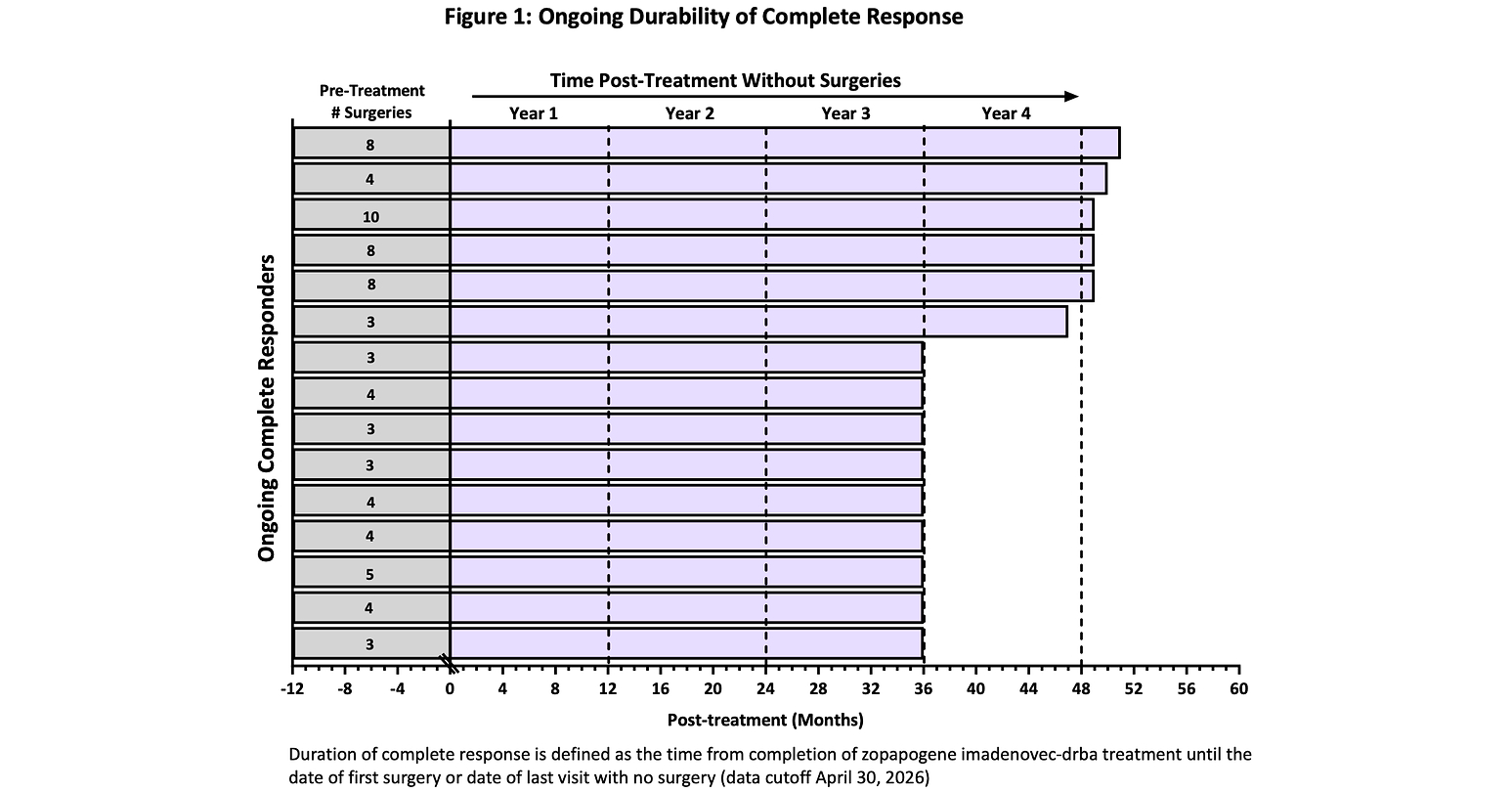
- Durability of Efficacy: At the 2026 ASCO Annual Meeting, Precigen presented updated long-term follow-up data for PAPZIMEOS, revealing that all complete responders have been followed for over 36 months, with 83% maintaining response and five patients surgery-free for over four years, indicating the therapy's durability and potential to redefine treatment standards for RRP.
- Market Exclusivity: PAPZIMEOS has received full FDA approval and seven years of market exclusivity, establishing itself as the first and only approved therapy for adults with recurrent respiratory papillomatosis, thereby reinforcing Precigen's leadership position in the biopharmaceutical sector.
- Patient Impact Analysis: An internal analysis indicates approximately 27,000 adult RRP patients in the U.S., with traditional management relying heavily on repeated surgeries; the introduction of PAPZIMEOS not only alleviates the surgical burden on patients but also enhances quality of life and reduces healthcare system strain.
- Innovative Treatment Platform: PAPZIMEOS is developed using Precigen's proprietary AdenoVerse therapeutic platform as a non-replicating adenoviral vector-based immunotherapy designed to elicit immune responses against HPV 6 and HPV 11 proteins, representing a new paradigm in RRP treatment that may offer patients more effective long-term solutions.
Precigen Reports Long-Term Follow-Up Data on PAPZIMEOS for RRP
- Efficacy Durability: As of April 30, 2026, 15 out of 18 complete responders (83%) maintained ongoing complete responses without additional treatments, demonstrating the effectiveness and tolerability of PAPZIMEOS in treating recurrent respiratory papillomatosis (RRP).
- Long-Term Follow-Up Data: All complete responders had at least 36 months of follow-up, with an average of 40 months, and five patients have ongoing responses beyond four years, indicating the therapy's potential for long-term management of RRP.
- FDA Approval and Market Exclusivity: PAPZIMEOS received full FDA approval and was granted a seven-year orphan drug market exclusivity, further solidifying its position as the only approved therapy for RRP, which may drive future revenue growth for the company.
- Safety Assessment: No new adverse safety events were observed during long-term follow-up, supporting its role as a new standard of care and enhancing confidence in its safety profile.
Precigen Secures Orphan Drug Exclusivity for PAPZIMEOS
- Orphan Drug Exclusivity: Precigen's PAPZIMEOS™ has received orphan drug exclusivity from the FDA, ensuring no similar drugs can be approved for seven years, extending market exclusivity until August 2032, significantly enhancing the product's market value and long-term revenue potential.
- Innovative Mechanism: PAPZIMEOS utilizes a modified adenovirus to train the immune system to recognize and attack HPV 6 and HPV 11 proteins, reducing the number of surgeries required for patients and providing a more effective airway clearance method, marking a new therapeutic paradigm for RRP treatment.
- Clinical Data Support: Long-term study results presented at the 2026 ASCO Annual Meeting showed that 83% of complete responders maintained their response for at least 36 months without additional treatment, with five patients remaining surgery-free after four years, further solidifying PAPZIMEOS's role as the new standard of care.
- Market Penetration Progress: PAPZIMEOS is commercially available in the U.S. and is being prescribed across major medical centers and community practices, with patients of varying disease severities, showcasing Precigen's market penetration capabilities and future growth potential in RRP treatment.
Precigen CFO Sells Shares, Ownership Stake Decreases
- Executive Sale Details: Precigen CFO Harry Thomasian Jr. sold 41,884 shares of common stock on May 28, 2026, for a total value of $182,614, reducing his direct ownership stake by 7% to 554,535 shares post-sale.
- Market Performance Insight: On the transaction date, Precigen's shares were priced at $4.36, reflecting a 190.23% increase over the past year, indicating strong market confidence despite the CFO's stock sale.
- FDA Drug Approval: The company received full FDA approval for its lead drug, Papzimeos, last August, which is the only approved treatment for adults with recurrent respiratory papillomatosis, showcasing Precigen's innovative capabilities in rare disease therapies.
- Strong Sales Performance: Papzimeos achieved annualized sales of $86.4 million in the first quarter of 2026, highlighting robust market demand for the drug and further solidifying Precigen's position in the biopharmaceutical industry.
Biotech Companies See Significant Stock Gains
- Gelteq Stock Surge: Australia-based Gelteq's shares soared over 197% without specific news, as the company commenced its first clinical trial for an antiparasitic drug candidate, which is expected to drive an FDA submission and enhance market competitiveness.
- Adial Acquires Azora: Adial Pharmaceuticals announced the acquisition of Azora Therapeutics with up to $64 million in financing, which will strengthen its pipeline for treating serious inflammatory diseases, with a Phase I clinical trial planned for 2027 expected to create new growth opportunities.
- Precigen Commercial Momentum: Precigen's PAPZIMEOS sales reached $21.6 million in Q1 2026, a significant increase from $3.4 million in Q4 2025, indicating strong commercialization momentum in the U.S. market, with expectations for further market share expansion.
- Eloxx Nasdaq Uplisting: Eloxx Pharmaceuticals' stock rose over 14% following its uplisting to Nasdaq, with plans to initiate a Phase 2b clinical trial for its lead drug Exaluren targeting Alport syndrome in Q3 2026, which is expected to provide new growth opportunities for the company.
Precigen Collaborates with RRPF to Raise RRP Awareness
- RRP Awareness Day: Celebrated annually on June 11, RRP Awareness Day aims to raise awareness of recurrent respiratory papillomatosis (RRP), a condition caused by HPV 6 or 11 affecting approximately 27,000 adults in the U.S., where patients face the burden of multiple surgeries impacting their quality of life.
- FDA Approval of New Therapy: In August 2025, the FDA approved Precigen's HPV-specific immunotherapy for adults with RRP, marking the first approved treatment for this condition and representing a significant breakthrough in treatment options that could enhance patient quality of life.
- Importance of Patient Voices: This year's RRP Awareness Day focuses on sharing stories from patients, caregivers, and healthcare providers to increase public understanding of RRP, helping those affected feel seen and supported, thereby driving greater societal awareness of the disease.
- Precigen's Strategic Commitment: Helen Sabzevari, CEO of Precigen, emphasized that the company's immunotherapy not only represents scientific progress but also demonstrates a commitment to RRP patients, with plans to continue collaborating with RRPF to advance research and treatment options.
Precigen Releases Long-Term Data on PAPZIMEOS for RRP Treatment
- Durability of Efficacy: At the 2026 ASCO Annual Meeting, Precigen presented updated long-term follow-up data for PAPZIMEOS, revealing that all complete responders have been followed for over 36 months, with 83% maintaining response and five patients surgery-free for over four years, indicating the therapy's durability and potential to redefine treatment standards for RRP.
- Market Exclusivity: PAPZIMEOS has received full FDA approval and seven years of market exclusivity, establishing itself as the first and only approved therapy for adults with recurrent respiratory papillomatosis, thereby reinforcing Precigen's leadership position in the biopharmaceutical sector.
- Patient Impact Analysis: An internal analysis indicates approximately 27,000 adult RRP patients in the U.S., with traditional management relying heavily on repeated surgeries; the introduction of PAPZIMEOS not only alleviates the surgical burden on patients but also enhances quality of life and reduces healthcare system strain.
- Innovative Treatment Platform: PAPZIMEOS is developed using Precigen's proprietary AdenoVerse therapeutic platform as a non-replicating adenoviral vector-based immunotherapy designed to elicit immune responses against HPV 6 and HPV 11 proteins, representing a new paradigm in RRP treatment that may offer patients more effective long-term solutions.
Precigen Reports Long-Term Follow-Up Data on PAPZIMEOS for RRP
- Efficacy Durability: As of April 30, 2026, 15 out of 18 complete responders (83%) maintained ongoing complete responses without additional treatments, demonstrating the effectiveness and tolerability of PAPZIMEOS in treating recurrent respiratory papillomatosis (RRP).
- Long-Term Follow-Up Data: All complete responders had at least 36 months of follow-up, with an average of 40 months, and five patients have ongoing responses beyond four years, indicating the therapy's potential for long-term management of RRP.
- FDA Approval and Market Exclusivity: PAPZIMEOS received full FDA approval and was granted a seven-year orphan drug market exclusivity, further solidifying its position as the only approved therapy for RRP, which may drive future revenue growth for the company.
- Safety Assessment: No new adverse safety events were observed during long-term follow-up, supporting its role as a new standard of care and enhancing confidence in its safety profile.