Impinj Issues Q4 Guidance Amid Market Weakness
Impinj Inc (PI) shares fell 8.90% as the stock crossed below the 20-day SMA, reflecting broader market weakness with the Nasdaq-100 down 1.60% and S&P 500 down 0.95%.
Despite the decline, Impinj issued strong Q4 revenue guidance, expecting to approach the high end of its prior range of $90M to $93M, exceeding analyst estimates. The anticipated adjusted EBITDA is also expected to surpass the midpoint of previous guidance, indicating improvements in profitability. The company's co-founder and CEO is presenting at an investment conference, which may attract investor interest.
The strong guidance suggests that Impinj is navigating market challenges effectively, particularly in the food and e-commerce sectors. Investors will be closely watching the upcoming earnings report on February 5 for further insights into the company's performance.
Trade with 70% Backtested Accuracy
Analyst Views on PI

About PI
About the author

Comparing Growth Paths of Intel and Impinj in Semiconductors

- Intel Financial Performance: In FY 2025, Intel reported nearly $52.9 billion in revenue, a slight decline of 0.5% year-over-year, with a net loss of $267 million, indicating resilience amid its ongoing transformation despite previous larger losses.
- Impinj Customer Concentration Risk: Impinj's revenue for FY 2025 was $361.1 million, down 1.4% from the prior year, with three major customers accounting for 61% of total revenue, highlighting significant business risk due to high customer concentration in a competitive market.
- Cash Flow and Debt Ratios: Intel's free cash flow was negative $4.9 billion, with a debt-to-equity ratio of 0.4, suggesting lower debt usage in operations, while Impinj's ratio of 1.6 indicates higher financial leverage, potentially impacting future financing capabilities.
- Market Outlook and Strategic Choices: With rapid advancements in AI and IoT, Intel's sales in the AI sector grew 7% year-over-year, while Impinj anticipates Q2 sales to reach at least $103 million, reflecting both companies' growth potential and market opportunities in their respective fields.
Comparing Intel and Impinj in Semiconductor Growth
- Intel's Strategic Shift: Intel's revenue for FY 2025 reached nearly $52.9 billion, reflecting a slight 0.5% decline year-over-year; however, its pivot towards foundry services and AI accelerators indicates a strategic transformation aimed at enhancing competitiveness in high-growth sectors.
- Impinj's Customer Concentration Risk: Impinj reported revenue of $361.1 million for FY 2025, down 1.4% from the previous year, with three major customers accounting for 61% of total revenue, highlighting a significant reliance on a few clients that increases market risk.
- Financial Health Comparison: As of December 2025, Intel's debt-to-equity ratio stood at 0.4, indicating a lower debt level, while Impinj's ratio was 1.6, suggesting higher financial leverage that could impact its long-term stability.
- Market Outlook and Competition: Intel's sales in the AI sector grew 7% year-over-year to $13.6 billion, showcasing its potential in emerging markets, while Impinj remains competitive in the IoT space despite facing intense competition from companies like NXP Semiconductors.
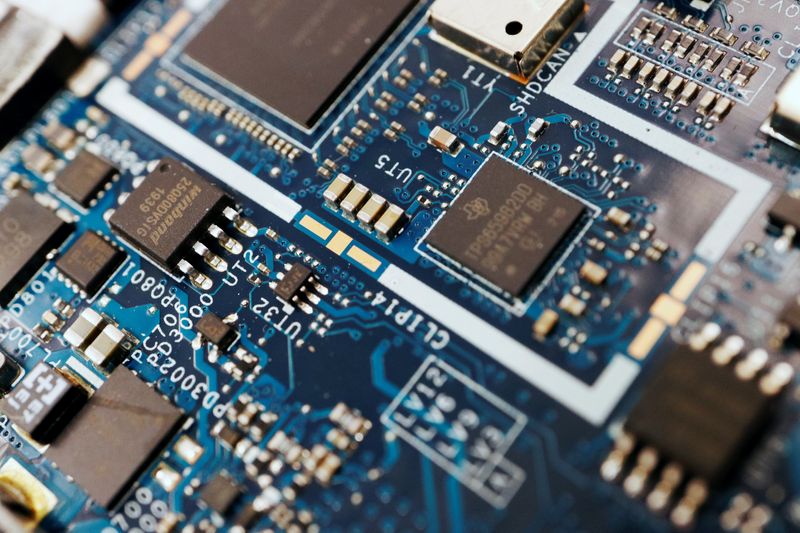
Global Chip Market Sees Significant Decline


- Market Reaction: Following Broadcom's disappointing earnings and a stronger-than-expected jobs report, the global chip market experienced one of its broadest sell-offs this year, with South Korea's Kospi index falling 5.5%, Samsung down 6.4%, and SK Hynix nearly 10%.
- Industry Outlook Deterioration: Broadcom's guidance miss reset expectations for hyperscaler AI chip spending, removing the sector's most visible growth catalyst and negatively impacting investor confidence in semiconductor stocks.
- Rising Rate Risks: The jobs report eliminated hopes for near-term rate cuts and introduced risks of rate hikes by year-end, as indicated by the CME FedWatch tool, which heightened sensitivity to interest rate movements and further affected semiconductor valuations.
- Increased Stock Volatility: Several semiconductor companies saw significant stock declines, with Semtech down 8.4%, Impinj down 8.7%, and Western Digital down 8.6%, reflecting the market's reaction to perceived buying opportunities in high-quality stocks amidst the downturn.

Impinj Major Shareholder Sells 73,810 Shares
- Transaction Overview: Sylebra Capital LLC indirectly sold 73,810 shares of Impinj common stock for approximately $11.31 million, indicating a shift in its ownership structure, with no direct shares remaining post-sale.
- Historical Trade Comparison: Over the past year, Sylebra has averaged about 13 sell transactions annually, and this sale's volume is moderate compared to previous single-event sales, reflecting a consistent pattern of gradual reductions in their holdings.
- Market Reaction Analysis: The weighted average sale price of $153.21 per share was slightly below the market close of $153.74 on May 11, 2026, suggesting that the sale occurred against a backdrop of a 10.93% stock price increase over the past year, indicating no negative sentiment towards the company's outlook.
- Investor Focus: Despite the reduction, Sylebra still holds over 1 million shares of Impinj, prompting investors to monitor the company's valuation and growth expectations, especially in a volatile market where gradual accumulation may be prudent.

Sylebra Capital Reduces Impinj Holdings
- Transaction Overview: On May 8 and 11, 2026, Sylebra Capital LLC indirectly sold 73,810 shares of Impinj through multiple open-market transactions, totaling approximately $11.31 million at an average price of $153.21 per share, resulting in a 6.73% reduction in its indirect holdings from about 1.1 million to 1,022,171 shares.
- Ownership Structure Analysis: All shares involved were held indirectly via investment entities, with no direct ownership before or after the transaction, and the disposition did not involve derivative securities or options, indicating a routine portfolio management action rather than a lack of confidence in the company.
- Market Reaction and Impact: Despite the reduction, Sylebra Capital still holds over 1 million shares of Impinj, reflecting ongoing investor confidence in the company's strong market position and technological advantages in the RFID industry, particularly in retail and logistics applications.
- Investor Considerations: Impinj recently reported first-quarter results that exceeded analyst expectations, and while the stock is volatile, investors should monitor its valuation and consider gradually increasing their positions rather than trying to time the market to align with future growth expectations.

Identifying Potentially Profitable Stocks
- Impinj Risk Analysis: Impinj (PI) has a trailing 12-month GAAP operating margin of -1.8%, with projected sales growth of only 9.3% over the next year indicating sluggish demand, and its forward P/E ratio of 64.7 suggests overvaluation, posing a risk of value destruction for investors.
- Myriad Genetics Financial Struggles: Myriad Genetics (MYGN) reports a GAAP operating margin of -46.9% over the past year, with annual revenue growth of just 3.5%, significantly below healthcare sector standards, and negative returns on capital indicate management's failure to generate profits while expanding, warranting caution from investors.
- Gevo Growth Potential: Gevo (GEVO) has achieved an impressive 19% annual revenue growth over the past decade, despite a GAAP operating margin of -2.9%, as its EBITDA profits and efficiency have improved due to fixed cost leverage, highlighting its competitive position in the renewable fuel market.
- Market Watch Recommendations: While Impinj and Myriad Genetics face significant challenges, Gevo's performance suggests potential long-term growth opportunities, making it a stock to watch for investors interested in sustainable aviation fuel market share expansion.
Comparing Growth Paths of Intel and Impinj in Semiconductors
- Intel Financial Performance: In FY 2025, Intel reported nearly $52.9 billion in revenue, a slight decline of 0.5% year-over-year, with a net loss of $267 million, indicating resilience amid its ongoing transformation despite previous larger losses.
- Impinj Customer Concentration Risk: Impinj's revenue for FY 2025 was $361.1 million, down 1.4% from the prior year, with three major customers accounting for 61% of total revenue, highlighting significant business risk due to high customer concentration in a competitive market.
- Cash Flow and Debt Ratios: Intel's free cash flow was negative $4.9 billion, with a debt-to-equity ratio of 0.4, suggesting lower debt usage in operations, while Impinj's ratio of 1.6 indicates higher financial leverage, potentially impacting future financing capabilities.
- Market Outlook and Strategic Choices: With rapid advancements in AI and IoT, Intel's sales in the AI sector grew 7% year-over-year, while Impinj anticipates Q2 sales to reach at least $103 million, reflecting both companies' growth potential and market opportunities in their respective fields.
Comparing Intel and Impinj in Semiconductor Growth
- Intel's Strategic Shift: Intel's revenue for FY 2025 reached nearly $52.9 billion, reflecting a slight 0.5% decline year-over-year; however, its pivot towards foundry services and AI accelerators indicates a strategic transformation aimed at enhancing competitiveness in high-growth sectors.
- Impinj's Customer Concentration Risk: Impinj reported revenue of $361.1 million for FY 2025, down 1.4% from the previous year, with three major customers accounting for 61% of total revenue, highlighting a significant reliance on a few clients that increases market risk.
- Financial Health Comparison: As of December 2025, Intel's debt-to-equity ratio stood at 0.4, indicating a lower debt level, while Impinj's ratio was 1.6, suggesting higher financial leverage that could impact its long-term stability.
- Market Outlook and Competition: Intel's sales in the AI sector grew 7% year-over-year to $13.6 billion, showcasing its potential in emerging markets, while Impinj remains competitive in the IoT space despite facing intense competition from companies like NXP Semiconductors.
Global Chip Market Sees Significant Decline
- Market Reaction: Following Broadcom's disappointing earnings and a stronger-than-expected jobs report, the global chip market experienced one of its broadest sell-offs this year, with South Korea's Kospi index falling 5.5%, Samsung down 6.4%, and SK Hynix nearly 10%.
- Industry Outlook Deterioration: Broadcom's guidance miss reset expectations for hyperscaler AI chip spending, removing the sector's most visible growth catalyst and negatively impacting investor confidence in semiconductor stocks.
- Rising Rate Risks: The jobs report eliminated hopes for near-term rate cuts and introduced risks of rate hikes by year-end, as indicated by the CME FedWatch tool, which heightened sensitivity to interest rate movements and further affected semiconductor valuations.
- Increased Stock Volatility: Several semiconductor companies saw significant stock declines, with Semtech down 8.4%, Impinj down 8.7%, and Western Digital down 8.6%, reflecting the market's reaction to perceived buying opportunities in high-quality stocks amidst the downturn.
Impinj Major Shareholder Sells 73,810 Shares
- Transaction Overview: Sylebra Capital LLC indirectly sold 73,810 shares of Impinj common stock for approximately $11.31 million, indicating a shift in its ownership structure, with no direct shares remaining post-sale.
- Historical Trade Comparison: Over the past year, Sylebra has averaged about 13 sell transactions annually, and this sale's volume is moderate compared to previous single-event sales, reflecting a consistent pattern of gradual reductions in their holdings.
- Market Reaction Analysis: The weighted average sale price of $153.21 per share was slightly below the market close of $153.74 on May 11, 2026, suggesting that the sale occurred against a backdrop of a 10.93% stock price increase over the past year, indicating no negative sentiment towards the company's outlook.
- Investor Focus: Despite the reduction, Sylebra still holds over 1 million shares of Impinj, prompting investors to monitor the company's valuation and growth expectations, especially in a volatile market where gradual accumulation may be prudent.
Sylebra Capital Reduces Impinj Holdings
- Transaction Overview: On May 8 and 11, 2026, Sylebra Capital LLC indirectly sold 73,810 shares of Impinj through multiple open-market transactions, totaling approximately $11.31 million at an average price of $153.21 per share, resulting in a 6.73% reduction in its indirect holdings from about 1.1 million to 1,022,171 shares.
- Ownership Structure Analysis: All shares involved were held indirectly via investment entities, with no direct ownership before or after the transaction, and the disposition did not involve derivative securities or options, indicating a routine portfolio management action rather than a lack of confidence in the company.
- Market Reaction and Impact: Despite the reduction, Sylebra Capital still holds over 1 million shares of Impinj, reflecting ongoing investor confidence in the company's strong market position and technological advantages in the RFID industry, particularly in retail and logistics applications.
- Investor Considerations: Impinj recently reported first-quarter results that exceeded analyst expectations, and while the stock is volatile, investors should monitor its valuation and consider gradually increasing their positions rather than trying to time the market to align with future growth expectations.
Identifying Potentially Profitable Stocks
- Impinj Risk Analysis: Impinj (PI) has a trailing 12-month GAAP operating margin of -1.8%, with projected sales growth of only 9.3% over the next year indicating sluggish demand, and its forward P/E ratio of 64.7 suggests overvaluation, posing a risk of value destruction for investors.
- Myriad Genetics Financial Struggles: Myriad Genetics (MYGN) reports a GAAP operating margin of -46.9% over the past year, with annual revenue growth of just 3.5%, significantly below healthcare sector standards, and negative returns on capital indicate management's failure to generate profits while expanding, warranting caution from investors.
- Gevo Growth Potential: Gevo (GEVO) has achieved an impressive 19% annual revenue growth over the past decade, despite a GAAP operating margin of -2.9%, as its EBITDA profits and efficiency have improved due to fixed cost leverage, highlighting its competitive position in the renewable fuel market.
- Market Watch Recommendations: While Impinj and Myriad Genetics face significant challenges, Gevo's performance suggests potential long-term growth opportunities, making it a stock to watch for investors interested in sustainable aviation fuel market share expansion.