GameStop's $56 Billion Bid for eBay Sparks Intense Debate
GameStop Corp's stock price fell by 5.01% as it crossed below the 5-day SMA, reflecting investor uncertainty amid mixed reactions to its $56 billion bid for eBay.
The acquisition proposal has ignited intense discussions on social media, with retail investors expressing a mix of excitement and skepticism. While some are optimistic about the deal's prospects, others doubt GameStop's ability to successfully acquire eBay, reflecting the unique cultural impact of meme stocks on market perceptions. Although there is currently no clear progress on the deal, the exposure of this proposal is likely to influence the stock price movements of both GameStop and eBay, prompting investors to closely monitor subsequent developments to assess potential risks and opportunities.
The mixed sentiment surrounding the acquisition bid highlights the challenges GameStop faces in its strategic direction. As investors weigh the potential benefits against the risks, the company's future remains uncertain, and its stock price may continue to experience volatility.
Trade with 70% Backtested Accuracy
Analyst Views on GME
About GME
About the author

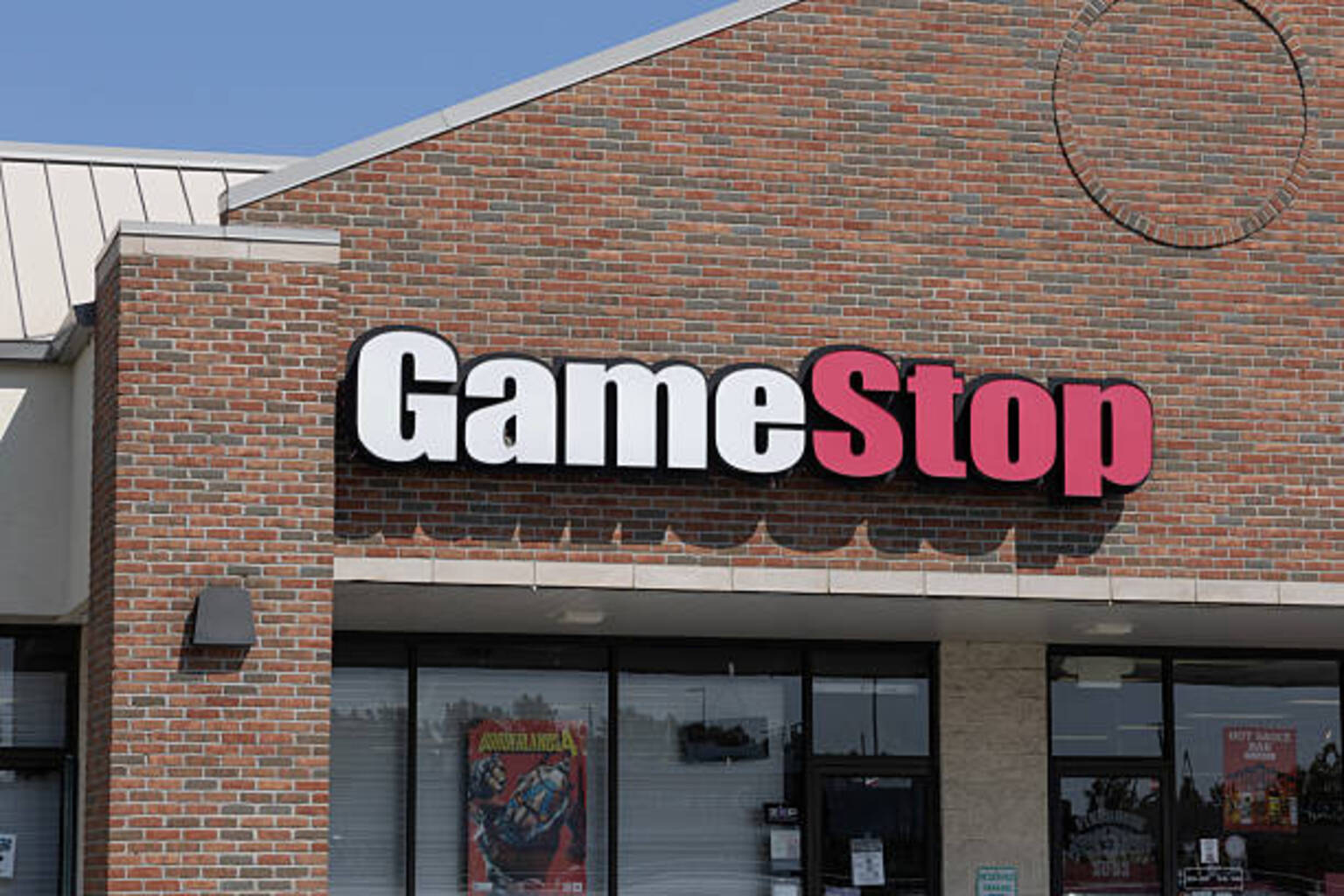
GameStop Shareholders Approve All Proposals at 2026 Annual Meeting

- Shareholder Approval: At the 2026 Annual Meeting, 68.7% of votes supported increasing the number of authorized Class A common shares, providing GameStop with flexibility for strategic transactions, particularly its proposed acquisition of eBay.
- Board Re-election: Shareholders re-elected all five directors and approved executive compensation, demonstrating confidence in the management team, which is crucial for maintaining governance stability and ongoing development.
- Auditor Appointment: The appointment of the independent registered public accounting firm was ratified by shareholders, ensuring financial transparency and compliance, which is vital for boosting investor confidence.
- Market Reaction: Despite the positive outcomes from the shareholder meeting, GameStop's stock fell 2.46% to approximately $22.20, indicating market caution regarding the company's future strategies.

GameStop Shareholders Approve Increase in Authorized Common Shares

- Approval of Share Increase: GameStop shareholders supported the increase in authorized Class A common shares with 68.7% of votes at the 2026 Annual Meeting, providing the company with greater flexibility for strategic transactions, particularly regarding the proposed acquisition of eBay.
- eBay Acquisition Proposal: GameStop made an unsolicited offer to acquire eBay for $125 per share, although the proposal was rejected by eBay's board, it underscores GameStop's strong intent to expand its business operations.
- Shareholder Voting Results: At the annual meeting, shareholders re-elected all five director nominees and approved the advisory vote on executive compensation, indicating ongoing shareholder engagement and support for corporate governance.
- Improved Market Sentiment: According to Stocktwits data, retail sentiment for GME shifted from 'neutral' to 'bullish', with message volume surging 1,418% over the past 30 days, reflecting investor optimism about the company's future prospects.
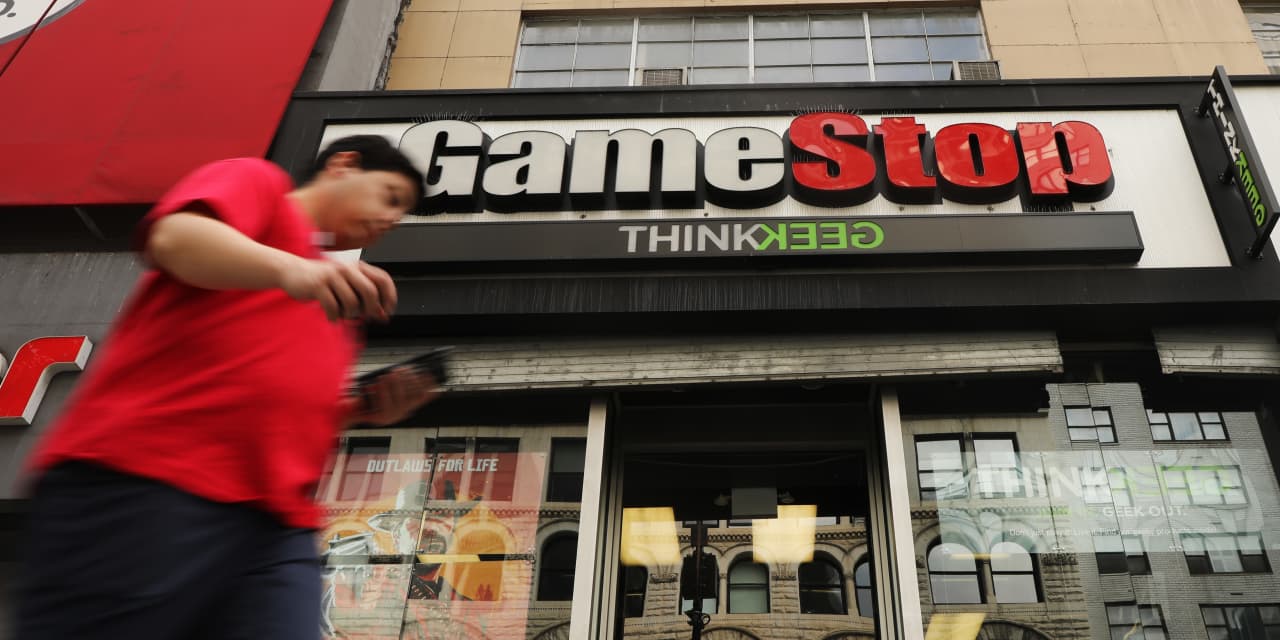
GameStop Faces Challenges Amid Digital Shift

- Revenue Decline: GameStop's annual revenue has plummeted 61% compared to its peak 14 years ago, with sales contracting for four consecutive fiscal years, indicating severe challenges in a competitive market that necessitates a reevaluation of its business model.
- Digital Transition Pressure: Sony's announcement to cease physical game disc production starting in 2028 accelerates the industry's shift to digital distribution, posing a risk of declining foot traffic for GameStop, which heavily relies on sales of used discs for profitability.
- Improved Profitability: Despite declining sales, GameStop's profitability is on the rise, with a surprising 14% increase in net sales driven entirely by heightened interest in trading cards, apparel, and pop culture merchandise; however, excluding collectibles, net sales actually fell by 7%, raising concerns about the sustainability of its business model.
- Strong Cash Position: GameStop maintains a cash-rich balance sheet, which, while insufficient for acquiring eBay, provides potential for future acquisitions, although any forthcoming deals may need to target smaller companies given the decline in its stock price over the past year.
Sony to Cease Physical Game Disc Production by 2028
- Decline of Physical Games: Sony's announcement to stop producing physical game discs for new PlayStation releases by 2028 accelerates the industry's shift to digital, likely leading to further declines in GameStop's store traffic and undermining its previously profitable used game market.
- Revenue Contraction: GameStop's annual revenue has plummeted 61% from its peak 14 years ago, and while sales in collectibles have surged, overall net sales still fell by 7% due to the decline in its used game business, indicating challenges to its business model sustainability.
- Strong Cash Position: Despite a 4% drop in stock price over the past year and a staggering 56% decline over five years, GameStop's cash-rich balance sheet provides potential for future acquisitions, although it may need to pursue smaller deals to adapt to the current market landscape.
- Increased Market Competition: With Sony's move, other console makers may follow suit, intensifying competitive pressures on GameStop; although profitability has improved amidst declining sales, the future market outlook remains uncertain.

eBay Revives Growth Narrative Amid GameStop Bid
- Significant Revenue Growth: In Q1 2026, eBay reported a 19% year-over-year revenue increase and an 18% growth in Gross Merchandise Volume (GMV), indicating a resurgence in market share and sales, showcasing the potential for core business recovery.
- Strong Advertising Revenue: First-party advertising revenue surged by 33%, adding a high-margin lever to eBay's marketplace model, which enhances the company's profitability and competitive positioning in the market.
- Acquisition of Depop Expands Youth Market: The acquisition of Depop adds approximately 7 million active buyers, with nearly 90% under 35, providing eBay with a fresh growth angle in the resale market, particularly in fashion.
- Stock Support and Upside Potential: eBay's stock has built a solid base above the $105 support level, and a sustained move above the $112-$115 range could lead to a retest of recent highs and open the door to new 52-week highs.
TPG RE Finance Trust Sees Surge in Options Trading Volume

- Surge in Options Volume: TPG RE Finance Trust (TRTX) recorded an options trading volume of 8,003 contracts today, equivalent to approximately 800,300 shares, which is about 108% of its average daily trading volume of 741,050 shares over the past month, indicating strong market interest in the stock.
- Strike Price Focus: Notably, the $9 strike call option expiring on October 16, 2026, saw a trading volume of 8,003 contracts today, suggesting investor optimism regarding TRTX's future performance, which could influence its stock price trajectory.
- NVIDIA Options Activity: Concurrently, NVIDIA (NVDA) experienced an options trading volume of 1.7 million contracts today, representing approximately 173.9 million shares, which is 106.8% of its average daily trading volume of 162.9 million shares over the past month, reflecting ongoing market interest in the stock.
- Strike Price Insights: Within NVIDIA, the $200 strike call option expiring on July 1, 2026, recorded a trading volume of 229,539 contracts today, equivalent to about 23 million shares, indicating strong investor confidence in its future growth prospects.
GameStop Shareholders Approve All Proposals at 2026 Annual Meeting
- Shareholder Approval: At the 2026 Annual Meeting, 68.7% of votes supported increasing the number of authorized Class A common shares, providing GameStop with flexibility for strategic transactions, particularly its proposed acquisition of eBay.
- Board Re-election: Shareholders re-elected all five directors and approved executive compensation, demonstrating confidence in the management team, which is crucial for maintaining governance stability and ongoing development.
- Auditor Appointment: The appointment of the independent registered public accounting firm was ratified by shareholders, ensuring financial transparency and compliance, which is vital for boosting investor confidence.
- Market Reaction: Despite the positive outcomes from the shareholder meeting, GameStop's stock fell 2.46% to approximately $22.20, indicating market caution regarding the company's future strategies.
GameStop Shareholders Approve Increase in Authorized Common Shares
- Approval of Share Increase: GameStop shareholders supported the increase in authorized Class A common shares with 68.7% of votes at the 2026 Annual Meeting, providing the company with greater flexibility for strategic transactions, particularly regarding the proposed acquisition of eBay.
- eBay Acquisition Proposal: GameStop made an unsolicited offer to acquire eBay for $125 per share, although the proposal was rejected by eBay's board, it underscores GameStop's strong intent to expand its business operations.
- Shareholder Voting Results: At the annual meeting, shareholders re-elected all five director nominees and approved the advisory vote on executive compensation, indicating ongoing shareholder engagement and support for corporate governance.
- Improved Market Sentiment: According to Stocktwits data, retail sentiment for GME shifted from 'neutral' to 'bullish', with message volume surging 1,418% over the past 30 days, reflecting investor optimism about the company's future prospects.
GameStop Faces Challenges Amid Digital Shift
- Revenue Decline: GameStop's annual revenue has plummeted 61% compared to its peak 14 years ago, with sales contracting for four consecutive fiscal years, indicating severe challenges in a competitive market that necessitates a reevaluation of its business model.
- Digital Transition Pressure: Sony's announcement to cease physical game disc production starting in 2028 accelerates the industry's shift to digital distribution, posing a risk of declining foot traffic for GameStop, which heavily relies on sales of used discs for profitability.
- Improved Profitability: Despite declining sales, GameStop's profitability is on the rise, with a surprising 14% increase in net sales driven entirely by heightened interest in trading cards, apparel, and pop culture merchandise; however, excluding collectibles, net sales actually fell by 7%, raising concerns about the sustainability of its business model.
- Strong Cash Position: GameStop maintains a cash-rich balance sheet, which, while insufficient for acquiring eBay, provides potential for future acquisitions, although any forthcoming deals may need to target smaller companies given the decline in its stock price over the past year.
Sony to Cease Physical Game Disc Production by 2028
- Decline of Physical Games: Sony's announcement to stop producing physical game discs for new PlayStation releases by 2028 accelerates the industry's shift to digital, likely leading to further declines in GameStop's store traffic and undermining its previously profitable used game market.
- Revenue Contraction: GameStop's annual revenue has plummeted 61% from its peak 14 years ago, and while sales in collectibles have surged, overall net sales still fell by 7% due to the decline in its used game business, indicating challenges to its business model sustainability.
- Strong Cash Position: Despite a 4% drop in stock price over the past year and a staggering 56% decline over five years, GameStop's cash-rich balance sheet provides potential for future acquisitions, although it may need to pursue smaller deals to adapt to the current market landscape.
- Increased Market Competition: With Sony's move, other console makers may follow suit, intensifying competitive pressures on GameStop; although profitability has improved amidst declining sales, the future market outlook remains uncertain.
eBay Revives Growth Narrative Amid GameStop Bid
- Significant Revenue Growth: In Q1 2026, eBay reported a 19% year-over-year revenue increase and an 18% growth in Gross Merchandise Volume (GMV), indicating a resurgence in market share and sales, showcasing the potential for core business recovery.
- Strong Advertising Revenue: First-party advertising revenue surged by 33%, adding a high-margin lever to eBay's marketplace model, which enhances the company's profitability and competitive positioning in the market.
- Acquisition of Depop Expands Youth Market: The acquisition of Depop adds approximately 7 million active buyers, with nearly 90% under 35, providing eBay with a fresh growth angle in the resale market, particularly in fashion.
- Stock Support and Upside Potential: eBay's stock has built a solid base above the $105 support level, and a sustained move above the $112-$115 range could lead to a retest of recent highs and open the door to new 52-week highs.
TPG RE Finance Trust Sees Surge in Options Trading Volume
- Surge in Options Volume: TPG RE Finance Trust (TRTX) recorded an options trading volume of 8,003 contracts today, equivalent to approximately 800,300 shares, which is about 108% of its average daily trading volume of 741,050 shares over the past month, indicating strong market interest in the stock.
- Strike Price Focus: Notably, the $9 strike call option expiring on October 16, 2026, saw a trading volume of 8,003 contracts today, suggesting investor optimism regarding TRTX's future performance, which could influence its stock price trajectory.
- NVIDIA Options Activity: Concurrently, NVIDIA (NVDA) experienced an options trading volume of 1.7 million contracts today, representing approximately 173.9 million shares, which is 106.8% of its average daily trading volume of 162.9 million shares over the past month, reflecting ongoing market interest in the stock.
- Strike Price Insights: Within NVIDIA, the $200 strike call option expiring on July 1, 2026, recorded a trading volume of 229,539 contracts today, equivalent to about 23 million shares, indicating strong investor confidence in its future growth prospects.